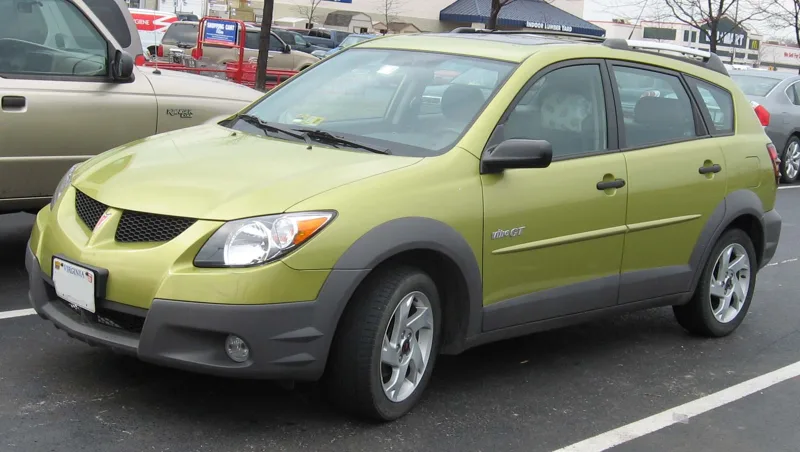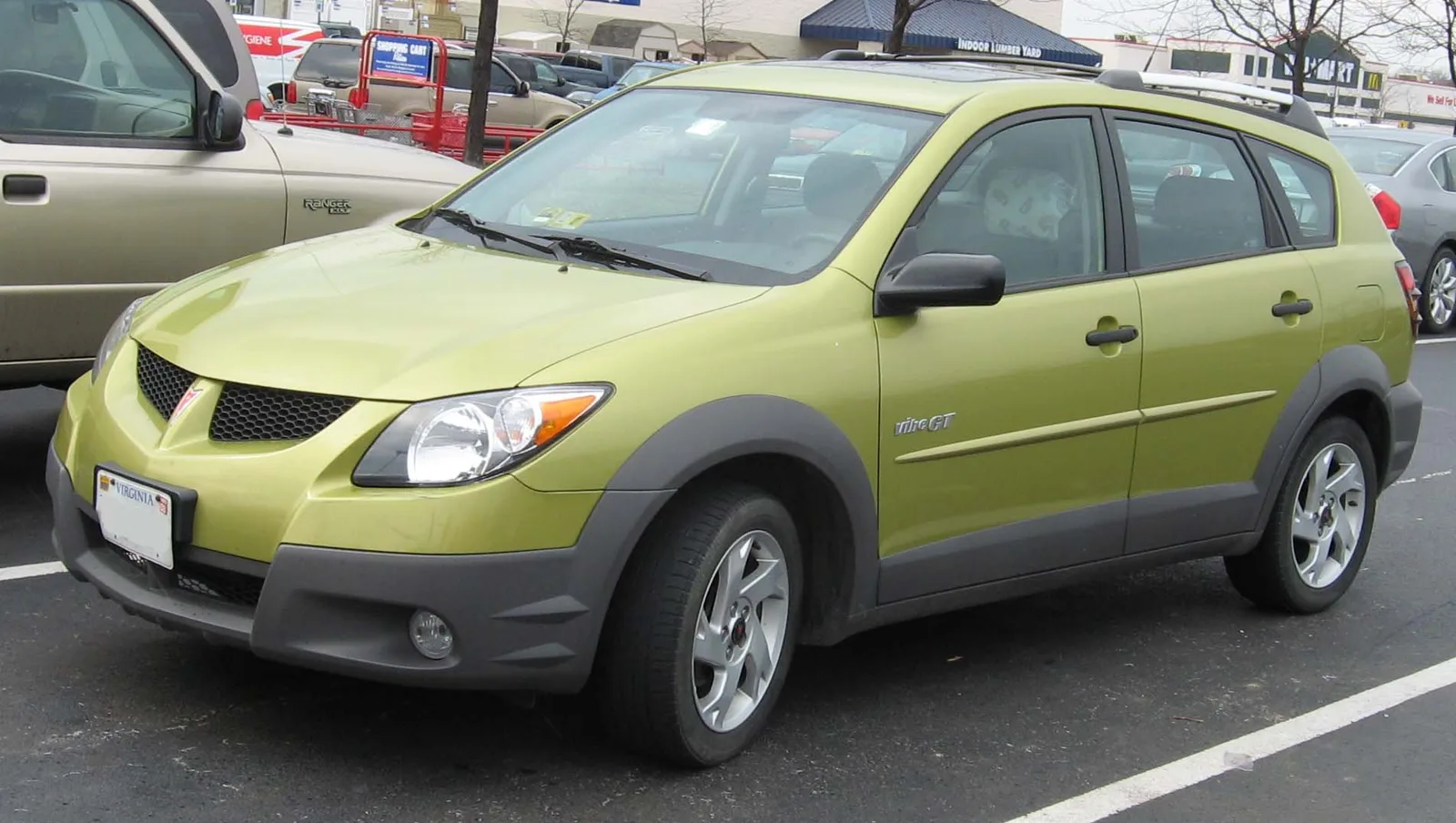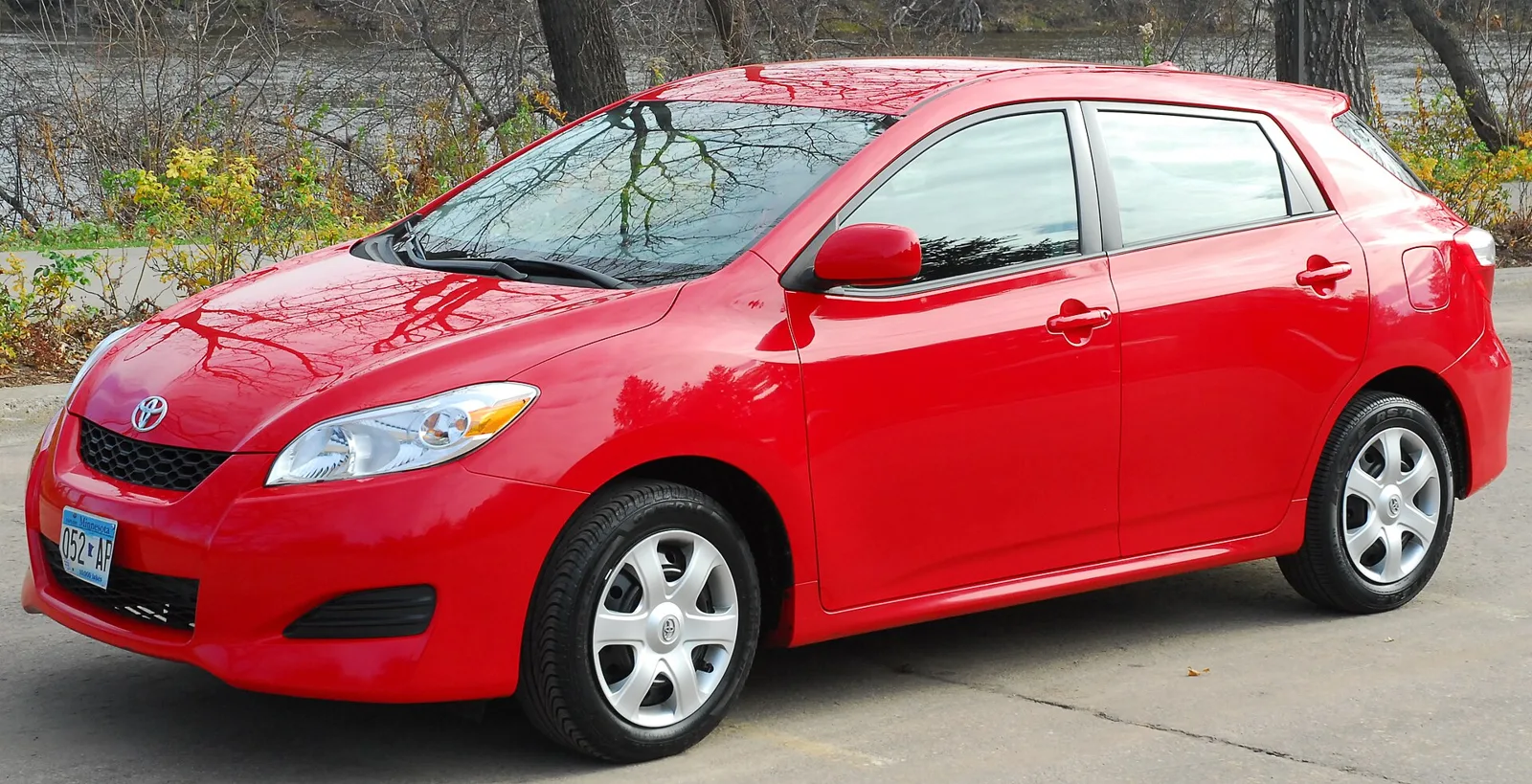
A Corolla-derived hatchback with a Pontiac Vibe twin, the Matrix offered a folding cargo area, a 180 horsepower XRS and two generations before Toyota ended its North American run.
The Toyota Matrix was a compact sport wagon built in Cambridge, Ontario, from 2002 to 2014. It came from a Toyota and General Motors partnership, with the Pontiac Vibe as its twin, and its first generation used Corolla-based engines.
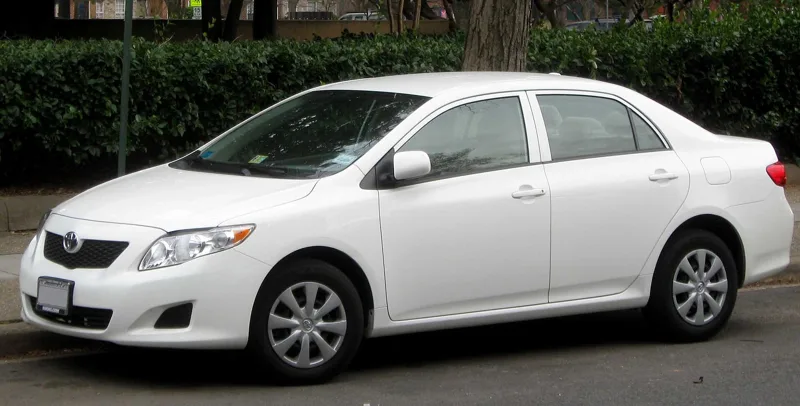
The Toyota Matrix, officially named the Toyota Corolla Matrix, was a compact hatchback built in Cambridge, Ontario, by Toyota Motor Manufacturing Canada. It was derived from the Corolla and positioned as the sporty counterpart of the North American Corolla. Toyota counted its sales within the Corolla totals, and the model was discontinued in Canada after the 2014 model year.
How did the Matrix come about?
The Matrix came from a partnership between Toyota and General Motors. The General Motors counterpart, the Pontiac Vibe, was built by NUMMI in Fremont, California. The two cars were mechanically identical and nearly identical inside, but each brand gave its own sheet metal and exterior trim.
Both vehicles were narrow, tall station wagons styled in a quasi-SUV fashion, which Toyota called a crossover utility vehicle. They were aimed at a fairly youthful market segment, and they are often described as sport wagons. The Matrix first went on sale in February 2002 as a 2003 model.
A Corolla-based sport wagon with a Pontiac Vibe twin, a 180 horsepower XRS and a cargo floor that still outlasted its rivals.
How did the first-generation Matrix change?
The first generation, code E130, was based on the Corolla platform and launched as a 2003 model. For the 2005 model year it received a facelift that revised the front fascia, after owners complained that the nose rubbed the ground. The red taillamp lenses were also replaced with clear ones.
The centre instrument panel was slightly redesigned, and a Toyota head unit replaced the GM-sourced radio. The first year's instrument cluster was entirely red, and in the following year Toyota made the numbers white while keeping the other gauges red. A digital clock was added to the radio bezel when the car was updated in 2005.
Which engines did the Matrix use?
Two 1.8-litre four-cylinder engines were offered. The 1ZZ-FE came from the Corolla and produced 130 horsepower (97 kW) in the 2003 to 2005 models, falling to 126 horsepower (94 kW) in 2006. The performance-oriented 2ZZ-GE was taken from the Celica GT-S and produced 164 horsepower (122 kW) in later years.
The 2ZZ-GE had earlier produced 180 horsepower (134 kW) in 2003, then 173 horsepower in 2004 and 170 horsepower in 2005. The 2006 drop in the ratings came from new testing standards, not from any change in the engine's actual performance.
In late 2006 Toyota stopped using the 2ZZ-GE and dropped the XRS, which was replaced for a time by the M-Theory edition. All-wheel drive was offered from 2003 to 2006, but only with the 1ZZ engine and an automatic transmission, and it went when the XRS was withdrawn.
What trims did the first-generation Matrix come in?
The base model started at US$14,670 in 2003. It included air conditioning but few other features, and it had no body-coloured mirrors or handles, and no power mirrors. By the final year, 2008, the price had risen to $15,510.
The mid-grade XR brought body-coloured mirrors and handles, a wrapped leather steering wheel and a key-fob panic button. Buyers could add a sunroof, a body kit or 17-inch alloy wheels. A 2003 XR started at US$16,180, and its price rose to $16,990 in later years.
The XRS was the top model at US$18,750 in 2003. It came with four-wheel disc brakes and six speakers as standard, along with anti-lock brakes, 16-inch alloy wheels and cruise control. In 2005 the XRS started at $18,850, and in its last year it sold for at least $19,250.
The M-Theory of 2007 was an appearance package rather than a trim level. It came in an exclusive Speedway Blue colour, and for US$1,500 buyers received 17-inch wheels, a chrome exhaust tip, a numbered plaque, four-wheel disc brakes and a spoiler. A sport-tuned suspension and a strut tower brace improved the handling.
What made the XRS different under the skin?
The XRS used the 2ZZ-GE, a 1,796 cc engine that produced 180 horsepower (134 kW) and 130 lb ft (176 Nm). Its 11.5:1 compression ratio was a major factor in that output, and it could switch to a second cam profile at higher revs through Toyota's VVTL-i system.
The engine was designed to run up to 8,500 rpm and needed premium fuel rated 91 octane or above. A six-speed manual was the only gearbox, with an automatic available only in 2003. The first year was rated a Transitional Low Emission Vehicle, and in 2004 a smog pump moved the 2ZZ into the ULEV category.
The XRS could stop from 60 mph (97 km/h) in 114 feet (35 m). Because it was front-wheel drive, it had a 59/41 front-to-rear weight split, which could cause understeer when driven hard. It weighed 2,800 lb (1,300 kg).
How much cargo could the first Matrix carry?
The rear seats were 60/40 units with rigid plastic backs that folded flat, creating a cargo area of 53.2 cubic feet (1.51 m3). In a practicality test Motor Trend found the Matrix could haul more cargo than a Subaru WRX wagon, which offered 61.1 cubic feet (1.73 m3).
The front passenger seat also folded flat, so long items such as surfboards could be carried, or the seat back could hold a laptop. Eight tie-downs in the rear and integrated rails in the seats and floor allowed extra loads to be secured, and US models offered a 115-volt, 100-watt power inverter.
How did the second generation arrive?
Toyota and the motoring press had rumoured a replacement called the Blade, but the second-generation Matrix was unveiled on 31 October 2007 at the SEMA show in Las Vegas. It reached dealerships in February 2008 as a 2009 model. The Pontiac Vibe was also upgraded, but its production ended after 2009 when the Pontiac brand was retired.
In the United States the second generation used two inline-fours: a 1,797 cc 2ZR-FE for the base model, and a 2,362 cc 2AZ-FE for the S and XRS. The base engine came with a five-speed manual or a four-speed automatic, and the larger engine with a manual or a five-speed automatic.
Canadian buyers had a 1.8-litre base model, and XR, XRS and AWD versions with a 2.4-litre engine. The Matrix was sold in Mexico for the first time in this generation, with only Base and XR trims available.
How did the second-generation trims change?
From 2008 the trim lineups diverged between the two countries. The XR became exclusive to Canada, and the S was released only in the United States, while all-wheel drive remained available in both markets after 2009. Every model had independent front suspension with MacPherson struts.
Only the XRS and the all-wheel drive cars with 158 horsepower had an independent rear suspension, using double wishbones instead of the semi-independent torsion beam. The 2009 cars had 48.9 cubic feet (1.38 m3) of interior space, against 53.2 cubic feet (1.51 m3) in the original car. The XRS was dropped from the US lineup for the 2011 model year.
What changed in 2011 and how did the Matrix rate for safety?
For the 2011 model year the Matrix received redesigned front and rear fascias, new wheels and seat fabrics, and its radio was changed to allow Bluetooth. Smart Stop Technology was also added for 2011.
Side torso airbags, side curtain airbags, anti-lock brakes and electronic brakeforce distribution were standard on every model. Stability and traction control, which had been optional, were standard from the 2010 model year.
The second generation was rated Good in both the frontal and side crash tests of the Insurance Institute for Highway Safety.
Which recalls affected the Matrix?
In May 2008 Toyota recalled 2003 and 2004 Corollas and Matrixes because two bolts in each front door could let the window come off its track and break. General Motors recalled the same problem on 2003 and 2004 Pontiac Vibes with power windows at the same time.
In August 2010 Toyota recalled 2005 to 2008 Corollas and Matrixes with the 1ZZ-FE engine and two-wheel drive. An improperly made engine control module could crack, causing a check engine light, harsh shifting or a stall. In October 2012 a further recall covered 2009 Matrix models for a driver's window switch that could feel notchy because of improper lubrication.
In November 2019 the 2003 to 2008 Matrix was recalled in Mexico because its Takata frontal passenger airbags could degrade with weather exposure and high temperature swings. Toyota of Mexico told the consumer agency PROFECO that 618 further vehicles in the market were affected by the same replacement campaign.
Why did production of the Matrix end?
On 5 August 2013 Toyota announced the end of Matrix production for the US market after the 2013 model year, citing declining sales and no plans for a replacement. The Canadian market continued for the 2014 model year, with cars assembled in Cambridge, Ontario, and the car was not offered for 2015.
Toyota still offered compact hatchbacks in North America under the Scion badge. Scion transitioned to Toyota on 1 September 2016, and the Corolla iM succeeded the Matrix for 2017. The newest iteration arrived as the Corolla hatchback for 2019.
What are the Toyota Matrix specifications?
| Specification | Detail |
|---|---|
| Type | Compact hatchback with sport wagon styling |
| Built at | Cambridge, Ontario, by Toyota Motor Manufacturing Canada |
| Platform | Toyota Corolla |
| First generation (E130) | 2003 to 2008 model years |
| First-generation base engine | 1ZZ-FE 1.8 L four, 130 horsepower (97 kW), falling to 126 horsepower (94 kW) in 2006 |
| XRS engine | 2ZZ-GE, 1,796 cc, 180 horsepower (134 kW), 130 lb ft (176 Nm) |
| XRS weight | 2,800 lb (1,300 kg) |
| Cargo area (seats folded) | 53.2 cu ft (1.51 m3) |
| Second generation (E140) | Unveiled 31 October 2007; sold as a 2009 model |
| Second-generation base engine | 1,797 cc 2ZR-FE |
| Second-generation S and XRS engine | 2,362 cc 2AZ-FE |
| Final US model year | 2013 |
| Successor | Corolla iM for 2017; Corolla hatchback for 2019 |