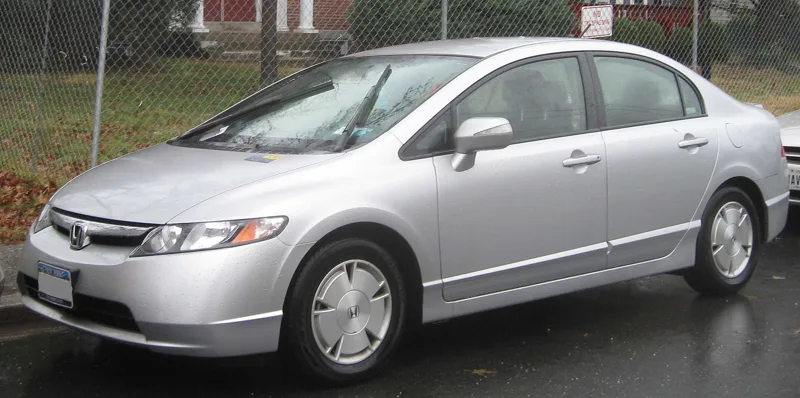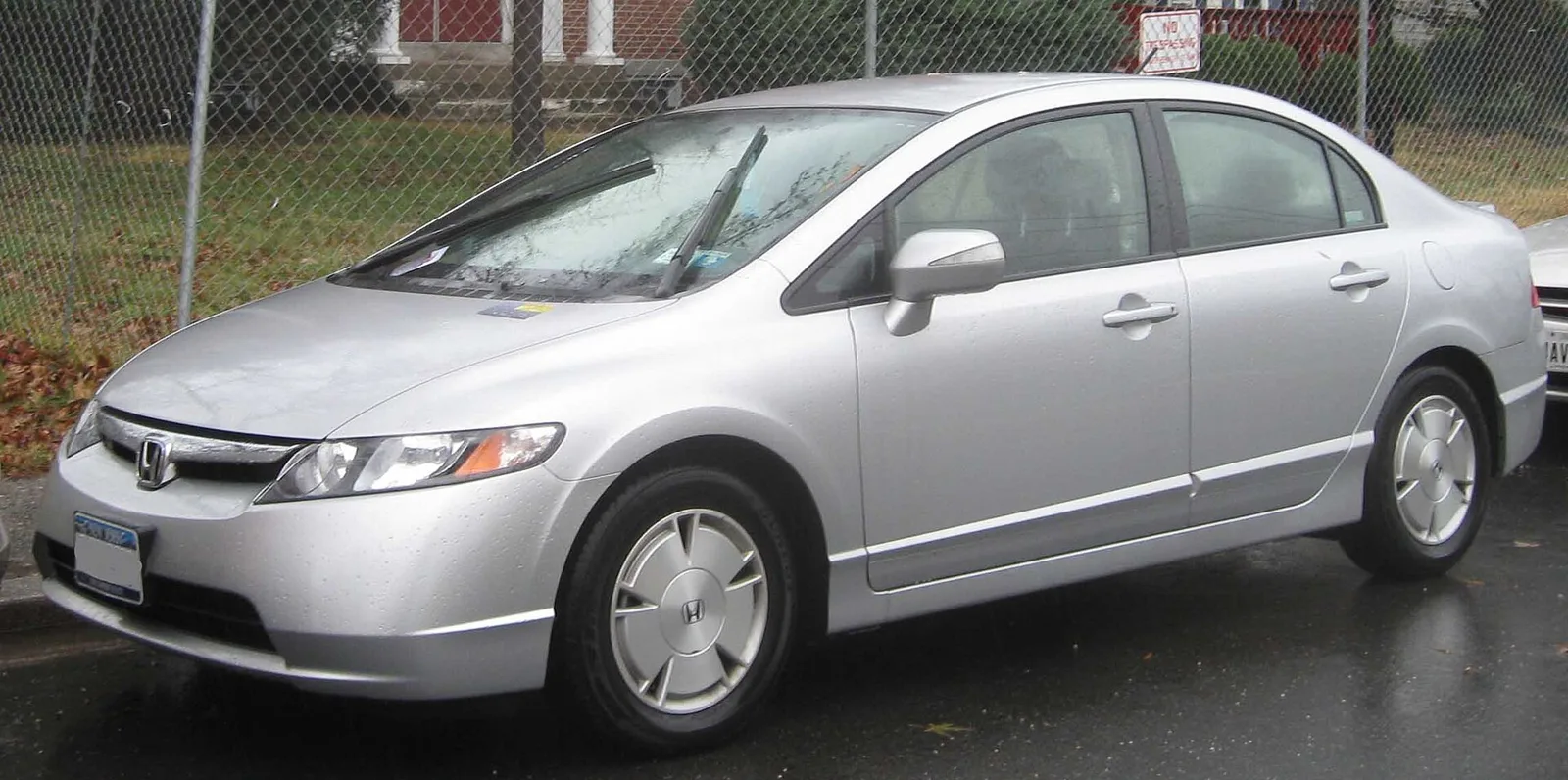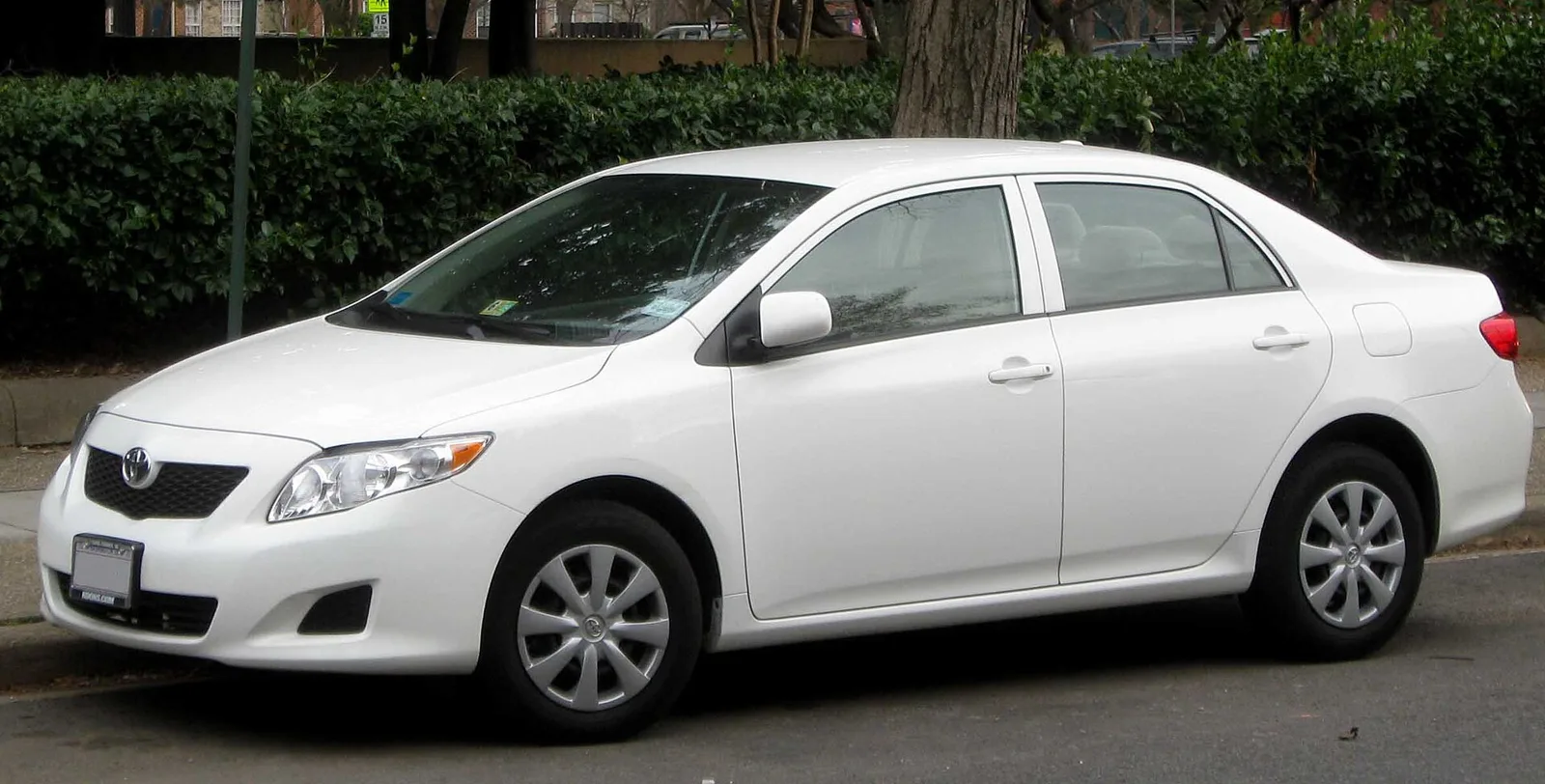
A global family car from 2006 to 2014, built on two platforms and sold as the Axio, Altis, Corolla and Fielder across Asia, the Americas, Africa and Australasia.
Built on the MC and New MC platforms, this global car was sold as the Axio in Japan and the Altis across much of Asia. Its Corolla badge covered Australia, New Zealand, South Africa and North America, and production in China ended in June 2014.
The Toyota Corolla E140 and E150 was the tenth generation of the Corolla nameplate, sold from 2006 to about 2014. It was built on two related platforms and sold under different names in different markets. Japan called the saloon the Axio, while much of Asia used the Altis name, and the Auris replaced the Corolla hatchback in Japan and Europe.
What platform was the Corolla E140 built on?
The E140 was based on the Toyota MC platform, and the E150 used the New MC platform. The Japanese E140 carried its MC platform over from the previous E120 and kept a narrow body. The Americas, Southeast Asia and the Middle East received a widened version of the same platform.
The E150 code went to cars sold in Australia, Europe and South Africa, which sat on the more advanced New MC underpinnings. The wide-body E150 reached China and Europe in early 2007, while the wide-body E140 followed in the Americas and parts of Asia later that year. The E150 wide body looks almost identical to the E140, with a subtle difference in the front and rear fender lines.
One car sold under many names, from Japan's Axio to the Altis across Asia and Africa, and to the Corolla in Australasia.
How did the Japanese Corolla Axio differ?
The tenth-generation Corolla went on sale in Japan on 10 October 2006. The saloon became the Corolla Axio, a name derived from the Greek word for things with value, and the estate kept the Corolla Fielder name. Japanese dimensions were smaller than export cars, so the car met the country's rules on exterior size and engine displacement.
The Axio offered Toyota's latest intelligent parking-assist system, which cost 105,000 yen, or about US$879 at the time. A backup camera monitor was standard, and the optional G-BOOK telematics subscription was available only on Japanese models. The top Luxel trim added radar cruise control and a tiptronic transmission, while the G mid-range had projector headlamps and push-button start.
Toyota also introduced a Pre-Crash Safety System using millimetre-wave radar. When the radar detected a high collision risk, the Pre-Crash Seatbelts improved initial restraint, and the Pre-Crash Brake Assist slowed the car to reduce the impact. Radar Cruise Control kept a set distance from the vehicle ahead. The Axio and Fielder were facelifted on 28 October 2008, and 70,758 Axios were sold in Japan in 2011.
What was the Axio GT?
The Axio GT was based on the Axio N2 race car and used a turbocharged 1NZ-FE rated at 150 PS (110 kW; 148 bhp) and 196 Nm (145 lb ft). It came with a five-speed manual, TRD Sportivo suspension, a TRD Turbo aero grille and 17-inch wheels with Michelin tyres. It went on sale in Japan in February 2009. Accessory GT TRD and TRD GT packages were also offered for the Axio and Fielder.
Team apr entered the GT300 class of Super GT in 2009 with a mid-engined Axio, replacing its MR-S. The apr GT used a 3.5-litre 2GR-FSE V6 rated above 300 PS (221 kW; 296 bhp) at 6,800 rpm and a Hewland six-speed sequential gearbox. It weighed roughly 1,100 kg, and the car was unveiled at the 2009 Tokyo Auto Salon.
How did the wide-body Corolla reach the rest of the world?
The wide-body E140 arrived from late 2007 as a 2008 model year car, larger than the Japanese model but still sharing much of its styling. A facelift in July 2010 brought new ZR engines in place of the ZZ units in the 1.6 and 1.8 models, along with new bumpers, grille, air dams and rear combination lamps.
The E140 wide body had built-in side skirts that blended into the car's profile, which the E150 lacked. Its styling borrowed from the Camry, and the cabin offered a longer list of standard equipment. The mid-2010 facelift revised the front and rear fascia with a slimmer grille reminiscent of the Camry.
Which Asian markets sold the Corolla Altis?
In Hong Kong the Corolla used the 1.5-litre 1NZ-FE and was made in Japan, with minor front changes such as headlamps and air dams. It came in Luxury and Advantage variants. In India the car was sold as the Corolla Altis, assembled at Bidadi near Bangalore. The pre-facelift model had a 1.8-litre ZZ engine with 132 bhp, and a 1.4-litre 1ND-TV diesel with 88 bhp appeared in 2010.
The 2011 Indian facelift replaced the ZZ engine with a 1.8 ZR producing 140 bhp, mated to a six-speed manual, and a CVT replaced the old four-speed automatic. Indonesia launched the Altis on 28 February 2008 in base J, mid-level G and luxury V trims. The V's 1.8-litre engine was swapped for a 2.0-litre 3ZR-FE in April 2009, and a July 2010 facelift added the 1.8-litre 2ZR-FE.
Malaysia launched the Altis in March 2008 in five variants, all with the 1ZZ-FE except the 1.6E, which had the 3ZZ-FE. The 1.8 managed 97 kW (132 hp) at 6,000 rpm, and its 170 Nm (125 lb ft) peaked at 4,200 rpm. The 1.6 made 80 kW (109 hp) with 145 Nm (107 lb ft) of torque. A facelift followed on 23 September 2010, and the CVT replaced the older automatic on most variants.
Thailand introduced the Altis on 29 January 2008, offering five grades across its run. The taxi-focused Corolla Limo, with a 1.6-litre CNG engine, arrived in October 2008 and was sold only to taxi companies and co-operatives. The 2.0-litre 3ZR-FE with the S and V grades followed in May 2009, and a facelift was unveiled on 6 August 2010.
The Philippines launched its Altis on 7 March 2008, and Taiwan followed on 2 February 2008. Singapore was the first Asian market to receive the tenth-generation Corolla, on 6 December 2007. The 1.6 was the more popular choice, and the Altis was Singapore's best-selling car for consecutive years. Sri Lanka received a Japanese-built saloon known locally as the Corolla 141.
What did Pakistan's Corolla offer?
Pakistan launched the E140 in August 2008 in four trim levels: XLi, GLi, Altis and Corolla Diesel. The XLi used the 2NZ-FE, which was the only use of that engine in the Corolla anywhere, and it had no airbags, ABS or power windows. The GLi added ABS and power windows, but still no airbags.
The Corolla 2.0D used Toyota's 1,974 cc 2C diesel with 74 hp, and the 2.0D Saloon added alloy rims, side skirts, Optitron gauges, wooden interior inserts and a single driver airbag. The facelift arrived on 11 April 2011 with a 1.6-litre 1ZR-FE producing 122 bhp in place of the 1.8-litre.
What were the North American Corolla specifications?
The North American car debuted at the SEMA show in Las Vegas on 31 October 2007. Production began that November, and US dealers received the car in January 2008 as a 2009 model. It used the ASEAN-marketed Altis design rather than the Axio's styling, and it had Camry-like cues and Yaris commonality. Only the saloon was sold, while the Corolla Matrix shared its platform and engines as the hatchback.
Trims were Standard, S, LE, XLE and XRS in the United States, and CE, LE, Sport and XRS in Canada. The XRS used the 2.4-litre 2AZ-FE from the Camry, giving 158 hp (118 kW) and 162 lb ft (220 Nm). It reached 60 mph in 7.9 seconds and covered the quarter mile in 16.0 seconds. The other trims used the new 1.8-litre 2ZR-FE with 132 hp (98 kW) and 128 lb ft (174 Nm).
| North American model | Engine | Output | Notes |
|---|---|---|---|
| Standard, S, LE, XLE | 1.8-litre 2ZR-FE | 132 hp (98 kW), 128 lb ft (174 Nm) | 27 mpg city, 35 mpg highway |
| XRS | 2.4-litre 2AZ-FE | 158 hp (118 kW), 162 lb ft (220 Nm) | 7.9 seconds to 60 mph |
| 2.4-litre automatic | 2.4-litre 2AZ-FE | As XRS | 22 mpg city, 30 mpg highway |
| 2.4-litre manual | 2.4-litre 2AZ-FE | As XRS | 22 mpg city, 29 mpg highway |
Fuel economy and handling were both targets. Toyota kept the 13.2-gallon fuel tank of its predecessor, and it replaced the belt-driven hydraulic pump with an electric power-steering unit to save fuel. Overall dynamics improved through the new steering, a revised suspension and a stiffer chassis, although reviewers called the car a gradual evolution rather than a leap.
The Corolla offered an MP3 auxiliary jack, upgraded JBL audio, a purse hook and hands-free Bluetooth. Traction control and Vehicle Stability Control were standard on the XRS and optional on the LE and XLE. Starting in 2009 for the 2010 model year, Toyota's stability and traction control became standard across the range.
For the 2011 model year the XRS and XLE were dropped in the United States, although the XRS stayed in Canada and Mexico. The revision brought a new grille, headlights, bumpers, wheel designs and boot lid, and the LE and S gained metallic trim. Mexico's Corolla was built at the Cambridge plant in Ontario, which also supplied Canada and the United States.
How did the Corolla fare in safety tests?
The IIHS named the Corolla a Top Safety Pick. It earned a Good overall score in the front impact test with Good marks in all six front categories, and another Good overall score in the side impact test. Rear passenger pelvis and leg protection was rated Average, while the side structure was a Good result that is uncommon in the compact segment.
The 2009 and 2010 model years were affected by Toyota's floor mat and accelerator pedal recalls, which covered US-built cars with certain VIN prefixes. On 10 October 2012 Toyota recalled the 2009 Corolla and Matrix, along with ten other models, over a power window switch that could feel notchy or sticky. The repair involved special grease for the switch.
What did the Corolla look like in Latin America?
The tenth-generation Corolla launched in Brazil on 26 March 2008 and in Argentina that April. Brazil produced it with 1.6 and 1.8-litre petrol engines capable of running on ethanol, in XLi, XEi and SE-G models. The 2.0 VVT-i Flex followed in March 2010, and all Brazilian versions used the wide-body saloon.
Bolivia received Japanese-built E150s through Toyota Bolivia, while grey imports brought US-spec cars and Japanese Axios. Jamaica sold 1.5 and 1.8-litre models from October 2007, and the 1.8 came with leather seats and a sunroof. The Corolla XEI earned four stars for adult occupants and one star for toddlers from Latin NCAP in 2010.
What was the E150 in China and Africa?
The E150 was launched at the 2006 Beijing Auto Show and began production in 2007 at Toyota's Tianjin plant. Its engines were the 1ZR-FE at 1.6 litres, the 2ZR-FE at 1.8 litres and the 3ZR-FE at 2.0 litres, and the facelift arrived in September 2010 for the 2011 model year. Prices ranged from 131,800 to 199,800 yuan (about US$25,730 to US$39,000). Production ended in June 2014 when the Corolla E180 replaced it.
South Africa received the generation in September 2007. There, Corolla refers mainly to the saloon, and the hatchback is called the Auris. Toyota's Durban plant exported Corollas to Europe, and the European-spec car earned a five-star Euro NCAP rating. From June 2014 the Corolla Quest, a scaled-down 1.6-litre model with fewer features, targeted entry-level buyers.
What arrived in Australia and New Zealand?
The new Corolla reached Australia on 18 May 2007. Its only engine was the 1.8-litre 2ZR-FE Dual VVT-i, which kept about 100 kW while promising better economy than its predecessor. Earlier 1.8 engines had dropped to 93 kW and 161 Nm in late 2005 to meet Euro IV rules. A six-speed manual and a four-speed automatic were offered, and the Australian car ran on the E150 platform, so chassis parts were not interchangeable with other markets.
Australia offered five hatch trims (Ascent, Ascent Sport, Conquest, Levin SX and Levin ZR) and four saloon trims, the Ultima being automatic only. The Levin ZR and Ultima had xenon headlamps, rain-sensing wipers and smart entry. The Ultima switched to the 2.0-litre 3ZR-FE for the 2011 and 2012 model years, producing 105 kW (141 hp) at 5,600 rpm, while its 194.0 Nm (143.1 lb ft) peaked at 3,900 rpm. Its ANCAP rating was four stars for occupants and three for pedestrians.
New Zealand sold the same engines and drivetrains under the GX and GLX names, but it added the Fielder estate, the only export market for the wagon. The estate used the Japanese 1.5-litre 1NZ-FE and was aimed at fleet buyers. Diesel 1.4 and 2.0 D-4D engines joined the hatch and saloon in June 2008, with manual gearboxes only.
Why did Toyota face criticism over stability control?
The motoring press sharply criticised Toyota for launching the car in Australia and New Zealand without Electronic Stability Control, a system that can cut the chance of a fatal crash by up to 55 percent. ESC had been standard on American Corollas for years. The concern was partly addressed because diesel Corollas came with ESC as standard, and the 2010 facelift added it to every model except the Japanese-spec estate.
How did the E150 reach Europe?
Ireland was one of the first countries to receive the E150, with sales starting in January 2007 after a December 2006 launch. The saloon was sold alongside the Auris hatchback and van, with a 1.4-litre 4ZZ-FE petrol engine rated at 97 bhp (72 kW) or a 1.4-litre 90 bhp D-4D diesel. Terra, Strata, Luna and Sol trims were offered, and no estate was available. European models were built in Turkey and Japan.
British buyers were offered only the Auris, although Toyota sold the E150 in Belgium, Luxembourg, Bulgaria and Spain. The global debut of the international E150 had taken place at the Beijing show in November 2006.