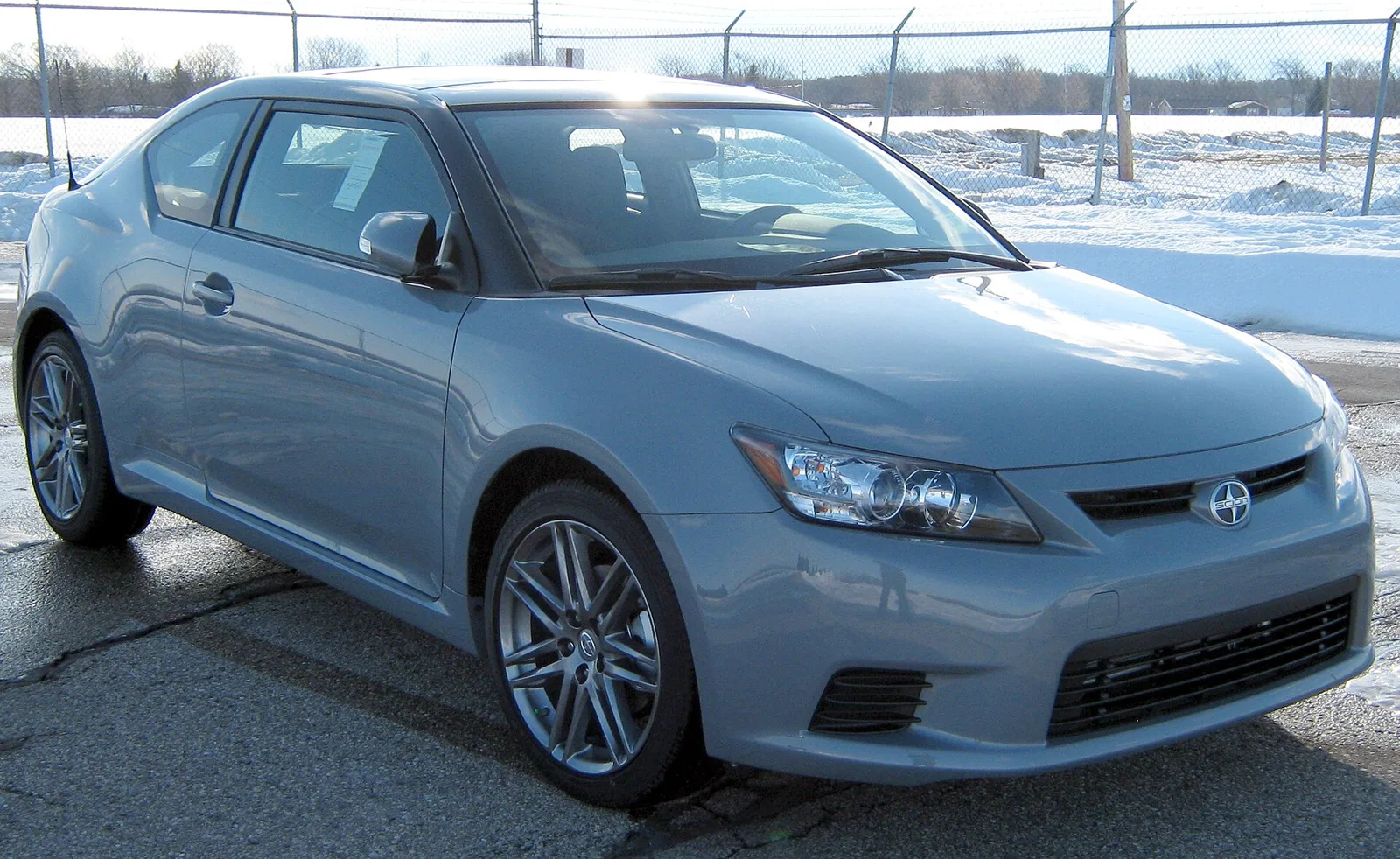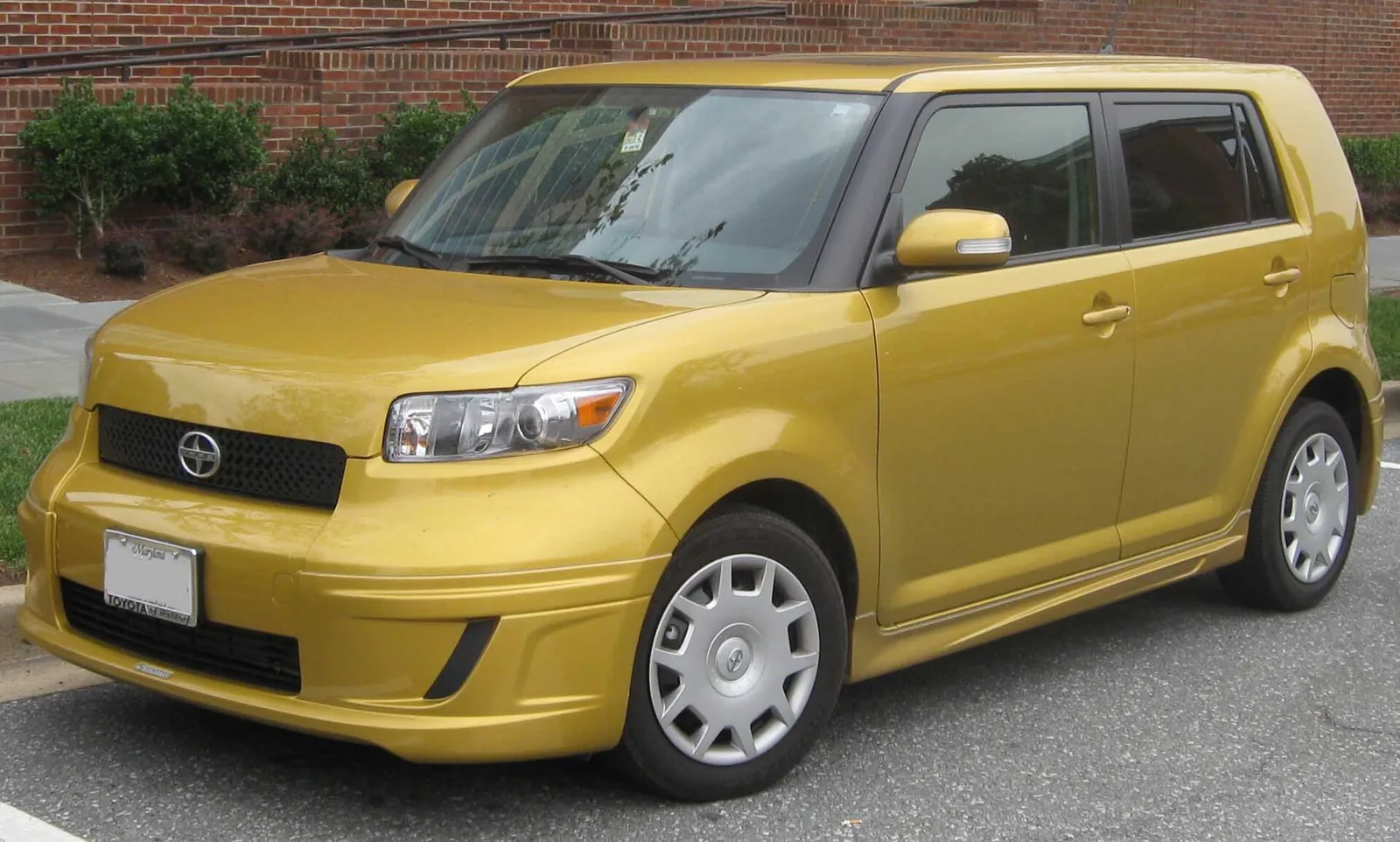
From the bbX concept and the rebadged Toyota bB to the Corolla-based second generation, the xB ran from 2004 to 2015.
The Scion xB was a compact hatchback sold by Scion from 2004 to 2015. The first generation was a rebadged Toyota bB, and the second, launched in 2007, was based on the Corolla and reached 158 hp from a 2.4-litre engine.
Scion's xB started life as a rebadged Toyota and went on to become the brand's most popular US model until 2011. It was built for about a decade, through two generations.
What was the Scion xB?
Scion, once a Toyota marque, built the xB as a five-door compact hatchback from 2004 to 2015. It was one of the two launch models of the Scion brand, alongside the xA. Its body was a five-door hatchback throughout both generations.
The first-generation xB was aimed at young adults, in line with the wider positioning of the brand. In 2007 Scion launched a second generation, a compact car based on the E150 series Corolla, which was also sold abroad as the Corolla Rumion in Japan and the Rukus in Australia.
A rebadged Toyota bB that became Scion's best-selling car in America, then a Corolla-based hatchback before the brand closed.
What was the first-generation xB based on?
The first-generation xB, codenamed XP30, was a lightly modified and rebadged version of the Japanese-market Toyota bB subcompact. It sat on the Toyota Echo and Yaris platform, and it was one of two models in the Scion lineup at the brand's 2003 launch.
The other launch model was the xA, which was based on the Toyota Ist. Both models were exclusive to the American market, and both were built to appeal to younger buyers.
The xB was previewed by the bbX concept, which was revealed alongside the ccX concept for the brand's public debut at the New York International Auto Show in April 2002. The concept had very few differences from the production car, being a Scion-badged bB with performance and minor cosmetic changes.
How did the xB differ from the Toyota bB?
Only the first-generation xB and bB are related, because the second generation sat on a different platform. To make the xB, Toyota changed the bB from right-hand to left-hand drive and replaced the front bench with bucket seats. The front passenger area was also changed significantly.
The column-mounted shifter was also moved to the floor. Engines differed too: the bB offered either a 1.3-litre 2NZ-FE or a 1.5-litre 1NZ-FE, with a four-speed automatic and optional all-wheel drive. The xB used only the 1NZ-FE, which produced 108 hp (81 kW) and 142 Nm (105 lb ft) in US specification, and it came with a four-speed automatic or a five-speed manual.
The bB carried a compact spare under the floor of the luggage area. On the xB the compact spare sat under the left side of a raised rear cargo floor. Because the spare raised the floor by several inches, a storage bin was added beside it to win back some space, and the jack went under the driver's seat.
The bB also had a pull-out storage tray under the passenger seat, which the xB lacked. Its launch came in February 2000, and the xB followed in June 2003. The first-generation bB closed out in December 2005, and the first-generation xB in June 2007.
What was the Scion t2B concept?
The t2B, short for Tall-Two Box, was a concept from Calty Design Research, built by Five Axis Models in Huntington Beach, California. Its interior was designed by Calty senior designer Bill Chergosky together with Naoki Hamajima, and it was unveiled at the 2005 New York Auto Show.
The concept had a 2.4-litre four-cylinder engine with a four-speed automatic, 14-inch brakes with slotted rotors and 20-inch billet aluminium wheels. Its extras included a remotely operated power rear hatch, a tri-level instrument panel with a large information ticker, an MP3 docking station, a dual moonroof and half-length rear-hinged doors.
The concept previewed the look that the second-generation xB later took, which Toyota developed into the production car.
How did the first-generation xB perform in safety tests?
The first generation earned a Good overall score in the frontal offset test, and every measured category in that test was also rated Good. Its side-impact result was Poor. Frontal protection was therefore rated more highly than side protection, and the gap is worth noting for buyers of those years.
The 2003 to 2006 model years did not offer side airbags. Side airbags were introduced for the 2008 to 2015 model years, so the early and later cars offered different protection.
What were the Release Series editions?
Scion offered Release Series versions in most model years, with limited-edition paint, matching seat colours and special modifications such as DVD players, custom tail lamps and special wheels. Each car carried a badge showing its serial number. Each edition was built in a fixed run, which gave every car a degree of scarcity.
Scion's Pure Price programme required dealers to sell at the advertised price. Resale values for Release Series cars commanded a premium because of their packaged options and their scarcity.
Limited editions were used to build buzz for the brand, and their colours tended to be loud or bright, such as orange, yellow, red, blue and green.
What were the early Release Series models?
The 2004 RS 1.0 was the first of the series. It came only in Hot Lava Orange, with 2100 units produced, of which 504 had a five-speed and 1596 were automatics. It had a colour-keyed rear spoiler, an orange powder-coated strut tie-bar and a custom grille.
The 2005 RS 2.0 came in Solar Yellow, with 2500 units. It added $1,375 to the MSRP, and its features included LED-lit mirror overlays, a rear spoiler, a tunable stainless steel sport muffler and a metal mesh grille.
The 2006 RS 3.0 was Envy Green, a run of 2200 cars, and it added $2,310 to the MSRP. It had Alpine DVD audio, iPod connectivity, a headrest entertainment system and numbered badging.
The 2006 RS 4.0 used Maziora Torched Penny, a colour-shifting polarised paint made by Nippon Paint, with 2500 units produced. It had a rear spoiler, a Modellista grille, a rear bumper protector and embroidered floor mats.
What engines did the second-generation xB use?
The second generation used a 2.4-litre straight-four, the 2AZ-FE, rated at 158 hp (118 kW) and 220 Nm (162 lb ft). It was shared with the first-generation tC and the Toyota Camry, and it replaced the earlier 1.5-litre engine. It was the first xB to use a 2.4-litre engine.
A five-speed manual and a sequential-shift four-speed automatic were the only factory options, aside from colour and stereo. The 2.4-litre car used more fuel than the 1.5-litre one, returning 22 mpg-US (11 L/100 km) in the city and 28 mpg-US (8.4 L/100 km) on the highway.
The 1.5-litre xB managed 26 mpg-US (9.0 L/100 km; 31 mpg-imp) around town and 31 mpg-US (7.6 L/100 km; 37 mpg-imp) on the highway, so the step up in power came with a fuel economy cost.
What did the second-generation xB look like?
The second-generation xB was styled as a five-door hatchback based on the t2B concept. Toyota unveiled the production car at the 2007 Chicago Auto Show, and it was rounder in shape and larger than its predecessor. It was also wider and heavier, which marked a clear step up in size.
The 2008 model was 2.8 inches (71 mm) wider, 12 inches (300 mm) longer, with 4 inches (100 mm) more length between the wheels, and 600 pounds (270 kg) heavier than the first generation. The first generation had been based on the Yaris platform, while the new car used the Corolla platform.
Design changes were said to reflect what American buyers wanted compared with the first generation. The xB was produced by Kanto Auto Works in Japan.
The 2011 Japanese earthquake suspended production from 14 March 2011 to 18 April 2011, affecting several Toyota vehicles including the xB and the xD. The affected plants included the Toyota Motor Hokkaido and Tohoku plants and the Central Motor Miyagi plant, which builds the Yaris.
What safety and technology features came with the second generation?
All xBs came with four-wheel anti-lock brakes, brake assist, electronic brakeforce distribution and vehicle stability control. Dual-stage front airbags came as standard, along with side torso airbags mounted in the seats, curtain airbags for both rows and a first-aid kit.
Three new head units were offered on 2008 Scions, and all the sound systems had six speakers and iPod connectivity. The base unit could be set to any of three Scion presets, while the premium unit added a small LCD screen that displayed pictures and movies. A navigation system was also available.
The SNS 100 system could play DVD movies alongside GPS functions. Its backlit colour choices were a minor difference from the base system.
The second-generation xB won the Top Safety Pick award from the Insurance Institute for Highway Safety for six years in a row. It was rated Good in the frontal offset test, Good overall in the side impact test with all nine measured categories rated Good, and Good for roof strength.
Cars.com named the xB a Top 10 Best Base Model in 2013, and Car and Driver rated the 2008 xB among the top ten safe vehicles under US$25,000.
How did the xB change in later model years?
Scion announced in March 2010 that the 2011 model would be facelifted, with two new colours, a revised front and rear bumper, a new grille and new headlamps and tail lamps. The manual's MSRP went up by US$150, to US$16,000, and the automatic reached US$16,950.
The xB went on sale in Canada for the first time that year, alongside the entire Scion lineup. A new radio with Bluetooth became standard for the 2012 model year.
For the 2013 model year the xB received remodelled front and rear bumpers, interior upgrades and an optional BeSpoke radio. Absolutely Red and Nautical Blue Metallic were the new colours, while Stingray Metallic and Elusive Blue Metallic were dropped.
The 2014 model, on sale from December 2013, brought a standard 6.1-inch touchscreen audio system. The 2015 model arrived in December 2014 with a standard backup camera.
What replaced the xB?
The xB, along with the Toyota Matrix, was replaced by the Scion iM, which was based on the second-generation Toyota Auris and launched in April 2015 for the 2016 model year. When the Scion marque was discontinued, the iM was rebranded as the Toyota Corolla iM for 2017.
The Australian Rukus was discontinued in October 2015, and the Japanese Corolla Rumion ended in December 2015.
Which later Release Series cars were built?
The 2008 RS 5.0 came in Gold Rush Mica, with 2500 units, and it was the second Scion with a sunroof after the tC. The 2009 RS 6.0 came in Absolutely Red and added $1,743 to the MSRP. Some of these later editions were offered with new wheels, body kits or sunroofs.
The 2010 RS 7.0 had a four-piece DAMD body kit in Murasaki purple, with 2000 units, and it added $3000 to the base MSRP. The 2011 RS 8.0 had a four-piece Kenstyle body kit and a sunroof in Voodoo Blue, with 2000 units and $2,405 added.
The 2012 RS 9.0 came in Hot Lava with 1500 units and added $1,810. The 2013 10 Series marked the tenth anniversary of the brand, in Silver Ignition with 2100 units, and it added $2,410 to the MSRP.
The 2014 RS 10.0 came in Electric Quartz, with 1500 units, a wireless charging bin, a backup camera and Tungsten wheel covers. The final model, the 2015 Parklan Edition, was limited to 686 cars in Cocoa Bean Metallic, with 16-inch black alloy wheels.
What were the Scion xB specifications?
| Specification | Detail |
|---|---|
| Production span | 2004 to 2015 model years |
| First-generation engine | 1.5-litre 1NZ-FE, 108 hp (81 kW) |
| First-generation torque | 142 Nm (105 lb ft), US specification |
| Second-generation engine | 2.4-litre 2AZ-FE, 158 hp (118 kW) |
| Second-generation torque | 220 Nm (162 lb ft) |
| Second-generation economy | 22 mpg-US (11 L/100 km) city; 28 mpg-US (8.4 L/100 km) highway |
| Second-generation platform | Corolla (E150) |
| 2008 size change | 2.8 in (71 mm) wider, 12 in (300 mm) longer, 600 lb (270 kg) heavier |
| Production halt | 14 March to 18 April 2011 |
| 2011 MSRP | US$16,000 manual, US$16,950 automatic |
| Top Safety Pick | Six years in a row |
| Peak US sales | Above 60,000 cars |