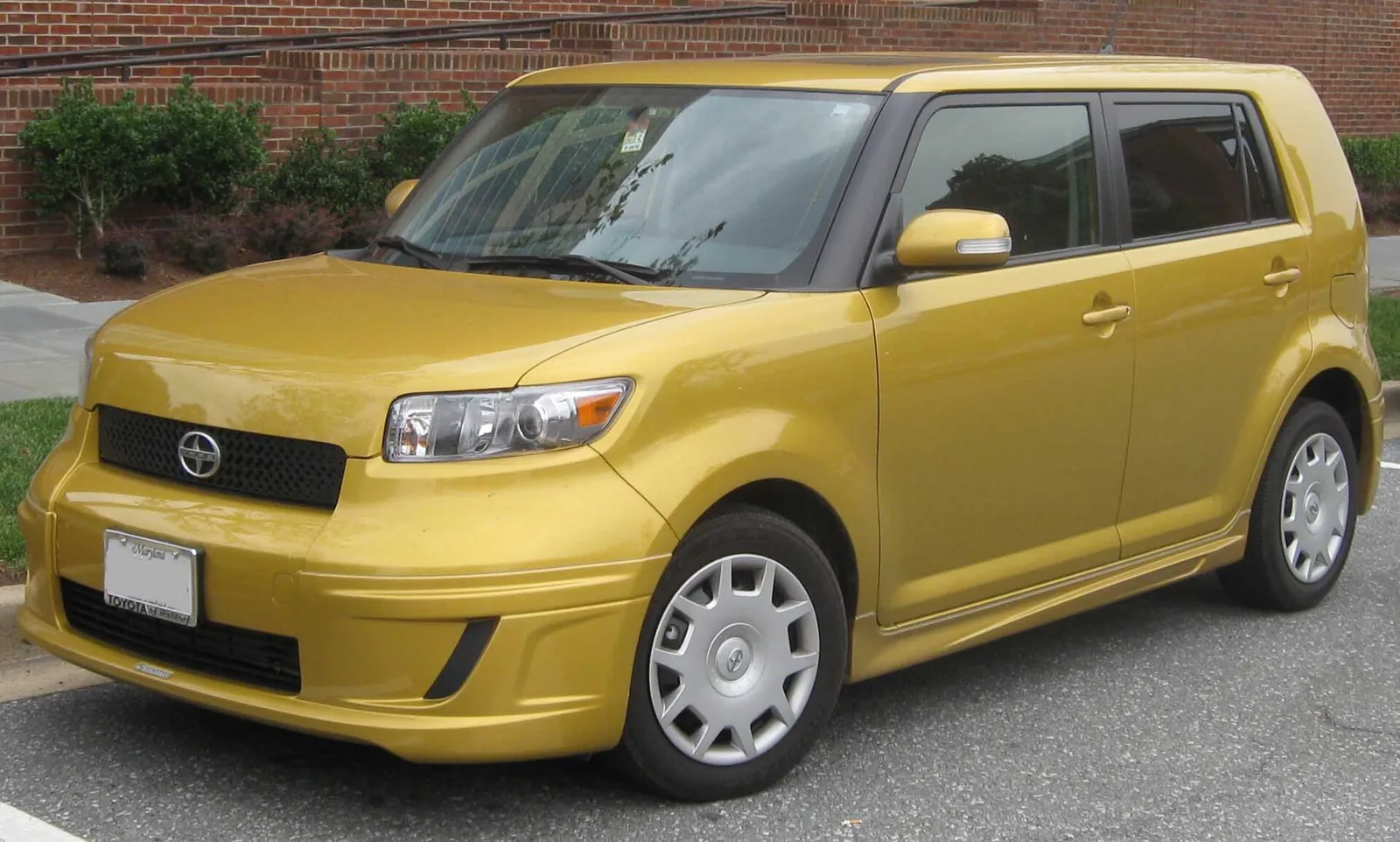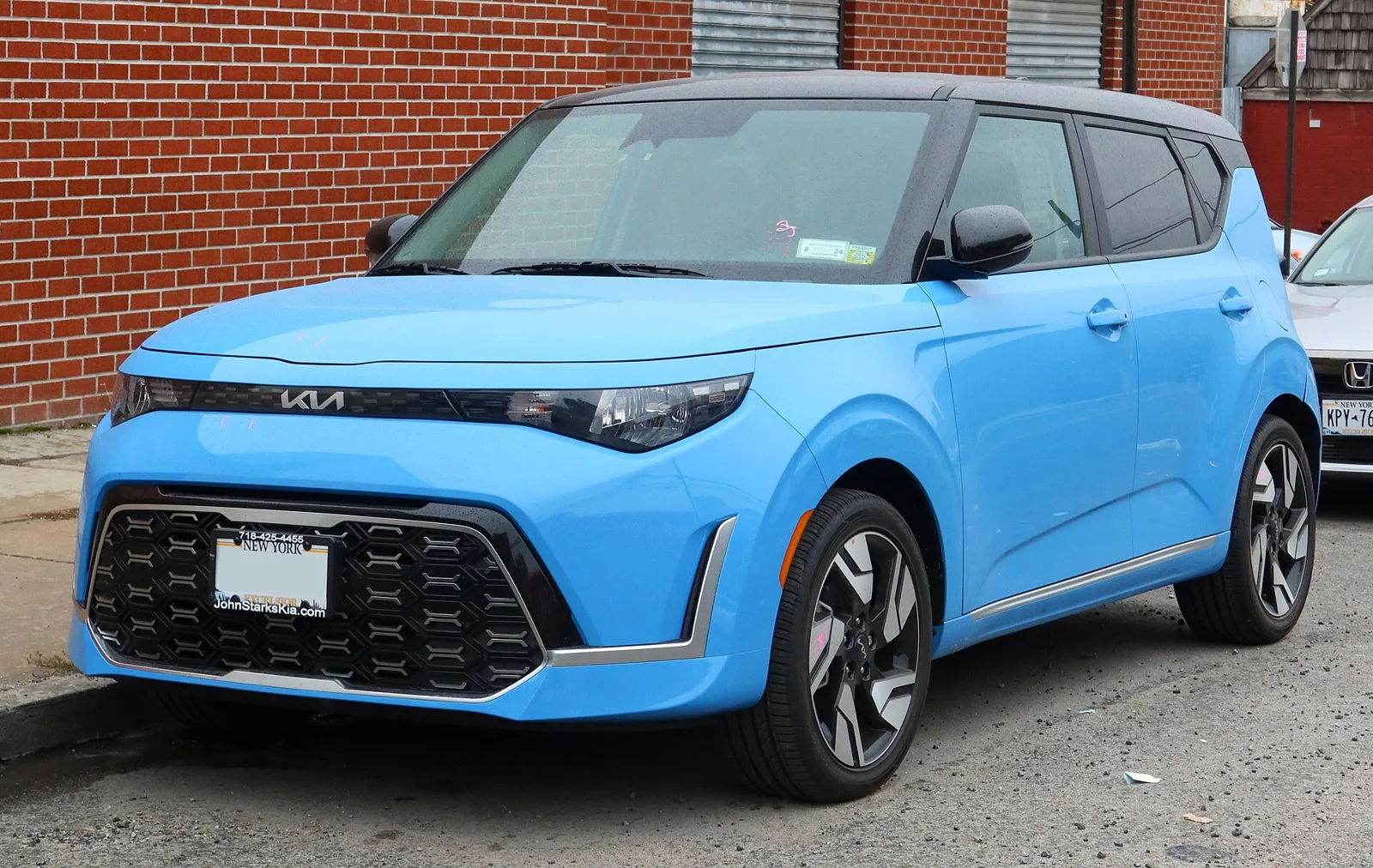
Two tall, square hatchbacks aimed at young American buyers, judged on engines, fuel use, safety scores and the limited editions that kept both alive.
The Kia Soul, a subcompact crossover hatchback built from 2008 to 2025, and the Scion xB, a compact five-door built from 2004 to 2015, were both boxy American-market hatchbacks. The Soul earned five stars from Euro NCAP, while the second-generation xB won six consecutive IIHS Top Safety Pick awards.
The Kia Soul and the Scion xB were both tall, boxy hatchbacks built for young buyers in the United States, where they competed with rivals of the same shape. The Soul ran from 2008 to 2025 across three generations, while the xB was built for the 2004 to 2015 model years. The Soul earned the maximum five stars from Euro NCAP, and the second-generation xB won the IIHS Top Safety Pick award for six years in a row.
Why were the Soul and xB seen as rivals?
Both cars were small, tall-roofed five-door hatchbacks aimed at buyers who wanted interior space in a compact package. The Soul was aimed at North American buyers aged 18 to 35, while Scion, Toyota's youth-focused brand, built the xB as one of its two launch models in 2003.
The Soul concept debuted at the 2006 North American International Auto Show in Detroit, and Kia then unveiled the production car at the 2008 Paris Motor Show. Scion's xB arrived in June 2003 for the 2004 model year as a rebadged Toyota bB, and the Soul's boxy shape placed it alongside the xB in a group of small, boxy cars alongside the Element and the Cube.
The Soul's name doubles as a homophone of Seoul, the city that hosts Kia's headquarters.
Two tall, boxy hatchbacks built for the same young American buyers, separated by crash results, engines and how long they stayed on sale.
Where did the Soul's design come from?
The Soul concept was styled at Kia's Design Center in California by Michael Torpey, who had earlier worked with General Motors. Kia then sent Torpey to its Namyang Design Center in Korea, where a team was brainstorming a new vehicle, and the idea came from a documentary about Korean wildlife.
Torpey saw that the wild boar had qualities that could inspire a small, boxy car. He drew many sketches of a boar with outdoor gear, including a backpack, and the result was the 2006 concept with a tough, compact stance. The New York Times reported that the boar's strength and capability was the image Torpey wanted for a model aimed at urban youth.
United States design patent drawings for the car were filed in 2004 and credited to Yongpil Jang, a different name from the designer usually associated with the Soul. The concept itself was first shown as a five-seat compact crossover with suicide doors, and Kia announced production as a 2009 model by late 2008.
What did the two hatchbacks look like?
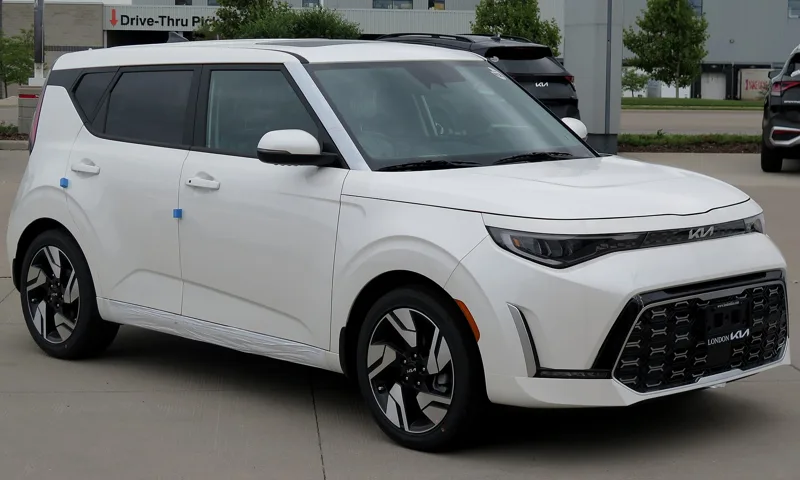
Built as a five-door hatchback for five passengers, the Soul had a squared-off shape and a tall roof that maximised room inside. Despite its crossover-like styling, it was offered only with front-wheel drive, and that remained true across its generations.
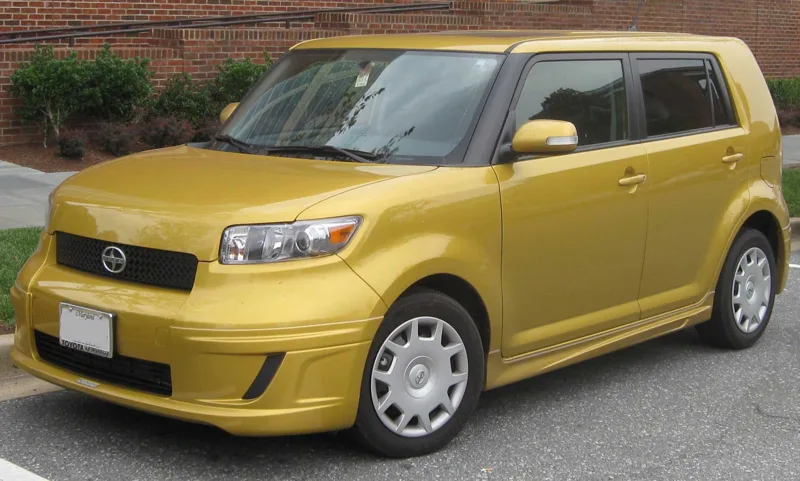
The first xB was a lightly modified, rebadged version of Toyota's Japanese subcompact bB, built on the Yaris platform. Its design converted the bB from right-hand to left-hand drive, swapped the bench seat for bucket seats and moved the shifter to the floor.
The bB had a pull-out storage tray under the passenger seat that the xB lacked. The xB stored its compact spare under a raised cargo floor, with a bin added beside it to win back some of the lost space. The bB went on sale in February 2000, while the xB arrived in June 2003, and the first bB ended in December 2005 against June 2007 for the first xB.
The second-generation xB was rounder and larger, and it moved onto the Corolla platform. The 2008 car was 2.8 inches (71 mm) wider, 12 inches (300 mm) longer and 600 pounds (270 kg) heavier than the first, and its styling followed the t2B concept hatchback that Toyota's Calty Design Research had shown in 2005.
The Soul's interior plastics and harsh ride drew criticism in its first year of production, and both were upgraded during that year. For 2011 it gained more conventional pull-out door handles, metallic interior trim, a redesigned instrument cluster and a fold-in key.
The 2012 Soul then received revised exterior and interior styling along with new powertrains, and the 2013 North American car added three new colours, a bulged hood and LED lighting. Kia also showed a Soul Hybrid concept in 2008 with a 1.6-litre Gamma engine and a 15 kW electric motor, and a Soul'ster cabriolet concept followed in 2009 with an open roof over the rear seats.
How did the first engines compare?
The first Soul offered a 1.6-litre engine with 122 bhp paired with a five-speed manual, and higher trims used a 2.0-litre with 142 bhp. The first xB used a 1.5-litre 1NZ-FE making 108 hp (81 kW), with a choice of a four-speed automatic or a five-speed manual.
The xB's first-generation engine produced 105 lb-ft (142 N-m) in US specification. All-wheel drive was never offered on the xB, although the bB it was based on had been available with it.
For 2012 the Soul's 1.6-litre gained direct injection and produced 138 hp (103 kW) and 123 lb-ft (167 N-m), while the 2.0-litre made 164 hp (122 kW) and 148 lb-ft (201 N-m). Six-speed manual and automatic transmissions replaced the older five-speed choices.
The second-generation xB used a 2.4-litre 2AZ-FE rated at 158 hp (118 kW) and 162 lb-ft (220 N-m). That engine was shared with the first-generation tC and the Toyota Camry, and the xB's manual or sequential four-speed automatic were its only factory transmission choices.
Specifications side by side
| Specification | Kia Soul | Scion xB |
|---|---|---|
| Production | 2008 to 2025, three generations | 2004 to 2015 model years, two generations |
| Body | Five-door, five-passenger hatchback with a tall roof | Five-door compact hatchback |
| Drivetrain | Front-wheel drive only | No all-wheel drive on the first generation |
| First-generation engine | 1.6-litre, 122 bhp; 2.0-litre, 142 bhp | 1.5-litre 1NZ-FE, 108 hp (81 kW) |
| Later engine | 2012: 1.6-litre 138 hp (103 kW); 2.0-litre 164 hp (122 kW) | Second generation: 2.4-litre 2AZ-FE, 158 hp (118 kW) |
| Fuel economy | 2012 1.6: 25 to 26 mpg-US city, 30 to 31 mpg-US highway | Second-generation 2.4: 22 mpg-US city, 28 mpg-US highway |
| Crash rating | Euro NCAP five stars | IIHS Top Safety Pick for six years in a row (second generation) |
| 2011 price | Not given | US$16,000 manual; US$16,950 automatic |
| Electric version | Soul EV, 2014 to 2024 | Not given |
Which was more economical?
The Soul's 2012 1.6-litre was rated at 25 to 26 mpg-US in the city and 30 to 31 mpg-US on the highway. The 2.0-litre managed 23 to 24 mpg-US in the city and 28 to 29 mpg-US on the highway, which left the bigger engine well behind in the economy stakes.
The second-generation xB's 2.4-litre was rated at 22 mpg-US in the city and 28 mpg-US on the highway. That was a step back from the first xB's 1.5-litre, which managed 26 mpg-US in the city and 31 mpg-US on the highway.
European Souls ran a 1.6-litre CRDi diesel rated at 4.90 L/100 km, or 48.0 mpg-US. The diesel cut CO2 from 138 g/km to 129 g/km, which mattered in a market where taxation was tied to carbon emissions.
Kia also built a flexible-fuel version, the Soul Flex, which it presented at the 2010 Sao Paulo show. It was the first Korean flex-fuel vehicle able to run on any blend from E20 to E100 ethanol.
How did the two cars fare in crash tests?
Euro NCAP awarded the Soul its top rating, and said that put it among the safest B-segment family cars in the world. ANCAP gave five stars only to the New Zealand version, while Australian Souls received four.
The first-generation xB was less impressive. It scored Good in the frontal offset test but Poor in the side impact test, and its 2003 to 2006 model years had no side airbags at all.
Car and Driver rated the 2008 xB among its top ten safe vehicles under US$25,000.
The second-generation xB came out much better. It achieved Good scores in the frontal offset, side impact and roof strength tests, and IIHS gave it the Top Safety Pick honour in six consecutive years.
What special editions did each brand produce?
Kia offered the Soul Denim in a limited run of 1200 units, with a blue body, white racing stripes and 18-inch wheels. The Dragon edition, limited to about 1,900 units, had shadow black paint, matte-black dragon graphics and heated black leather seats.
Scion's Release Series cars were limited-run xBs with bold colours and extras, used to build buzz for the brand. Scion's Pure Price programme required dealers to sell at the advertised price, and each car carried a numbered badge. The RS 1.0 came only in Hot Lava Orange, with 2100 units built, and the RS 2.0 in Solar Yellow, with 2500 units and a $1,375 rise in MSRP.
The 2010 Soul Ghost was based on the Soul+ and gained gray-blue paint, a gray stripe running from the headlights to the C-pillar and unique 18-inch wheels. It also took fog lights, a sunroof and heated leather seats from pricier trims.
The RS 3.0 in Envy Green had 2200 units and added $2,310 to the MSRP. The RS 4.0 used a colour-shifting Maziora Torched Penny paint on 2500 units, and the RS 6.0 in Absolutely Red added $1,743 to the MSRP.
How did the two models change late in life?
Scion announced the 2011 facelift in March 2010, bringing revised bumpers, a new grille, new headlights and tail lights, and new seats with new materials. The manual's MSRP rose by US$150 to US$16,000 and the automatic reached US$16,950, and the xB went on sale in Canada for the first time. For 2013 the car received remodelled bumpers and an optional BeSpoke radio, and the 2015 model added a standard backup camera.
Kia's Soul carried on through a second generation in 2013 for the 2014 model year and a third in 2018 for the 2019 model year. The Soul EV ran alongside them from 2014 to 2024.
The xB was replaced by the Scion iM, which used a second-generation Auris-based platform and launched in April 2015 for the 2016 model year. The Scion brand closed, so the iM was rebadged the Toyota Corolla iM for 2017.
Which car suits which buyer?
On the figures, the Soul suits a buyer who wants a boxy hatchback with a long production run, five stars from Euro NCAP and a choice of engines across its generations. The xB suits a buyer who values a six-year run of IIHS Top Safety Picks and collectable Release Series cars.
Release Series cars command a resale premium because of their packaged options and limited numbers. A buyer hoping to collect should check which colour and build number an individual car carries before paying the premium.
Neither car is the clear winner. The Soul kept front-wheel drive throughout and lasted longer, while the xB's second generation had the stronger IIHS record and the Corolla-based platform. The choice rests on whether a buyer values a longer model run or that crash-test record.