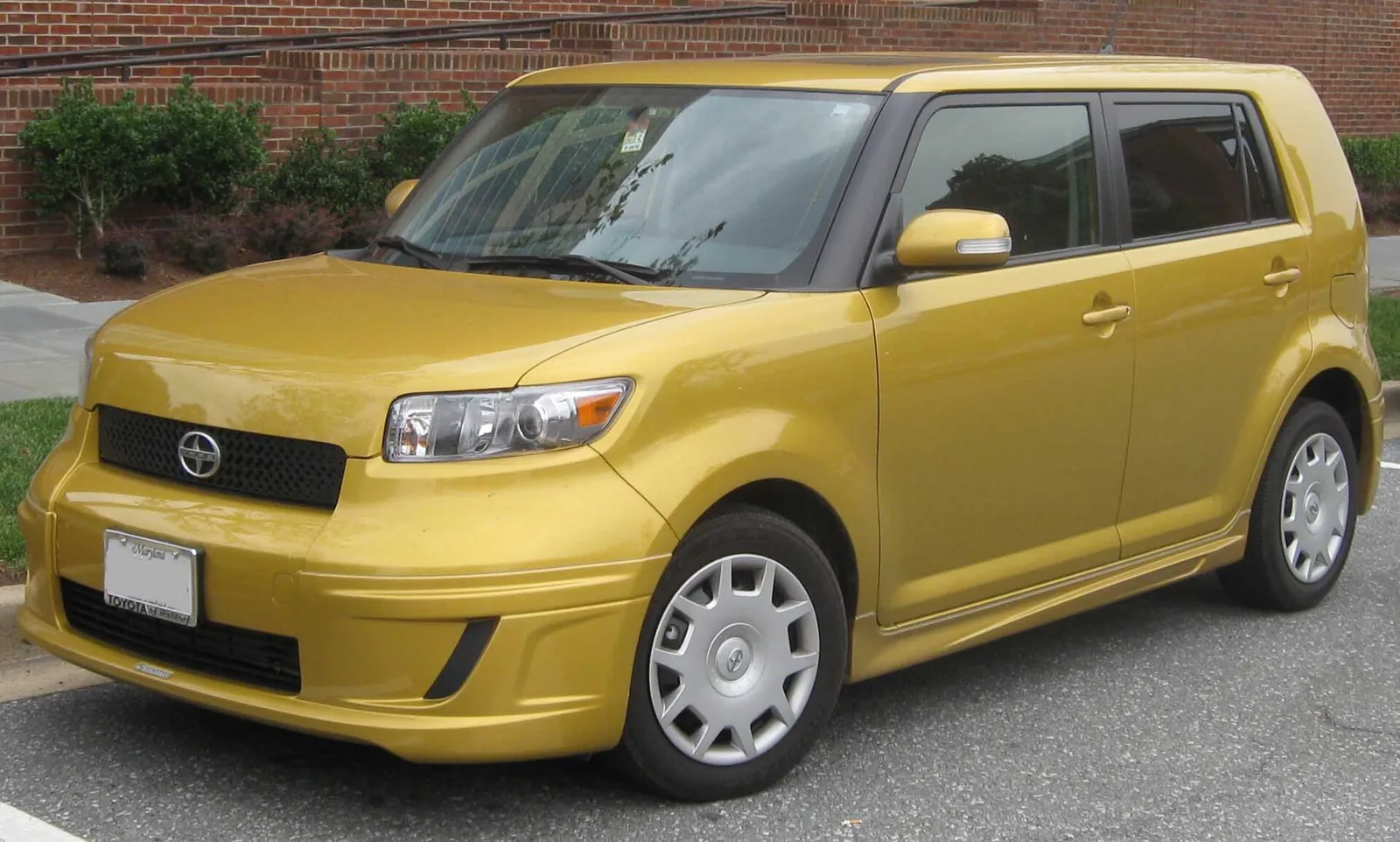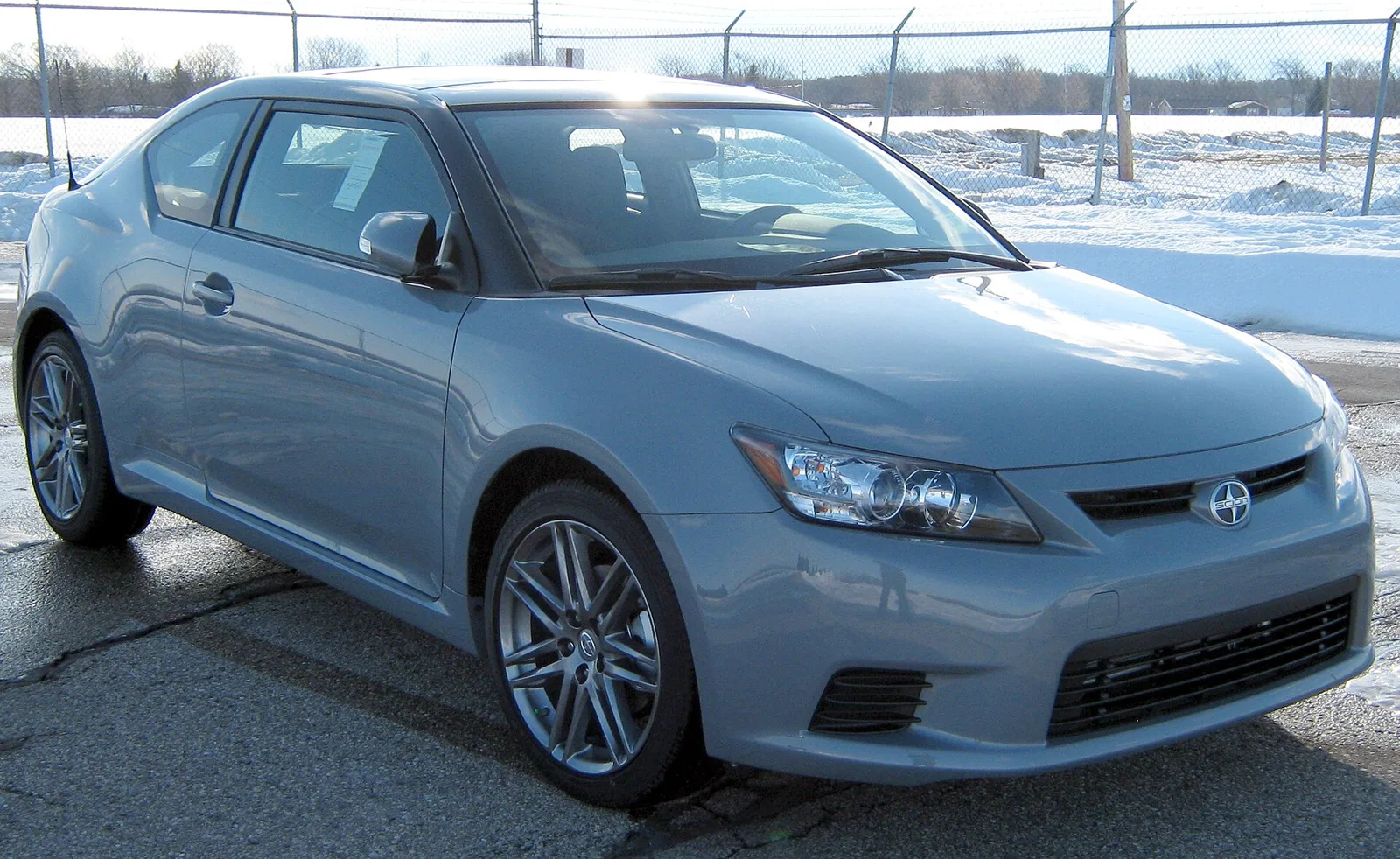
A two-generation coupe from 2004 to 2016 that drove Scion's sales, carried a Celica spirit and ended with a 10th anniversary send-off.
Built by Toyota for Scion from 2004 to 2016, the tC came in two generations, both assembled in Japan. The first's 2.4 litre engine made 161 hp (120 kW) from 2007, and the model became the best seller in the Scion range.
The Scion tC was a compact coupe that Toyota built under its Scion brand from 2004 to 2016 across two generations, both made in Japan. It became Scion's best-selling model, accounting for almost 40% of the brand's total sales. Its name stood for touring coupe, and its later years brought a string of special editions.
What did the Scion tC set out to do?
Toyota positioned the tC as a spiritual successor to the Celica, aimed at buyers from the Millennial generation. It was shown first at the January 2004 North American International Auto Show, and sales began in May 2004 as a 2005 model year car.
Toyota packed the base car with standard equipment. Power windows, cruise control, air conditioning and keyless entry came as standard, along with four-wheel anti-lock disc brakes and a 160-watt Pioneer sound system with a CD player. Accessories were easy to add later, which suited the brand's approach.
The price was kept low under the pure, one-spec pricing approach that Toyota adopted for Scion. The base MSRP for the 2009 manual car was US$17,670, which made the tC an accessible way into a sporty coupe.
A Celica spirit in a budget coupe that carried a brand for a decade and ended with a numbered farewell.
What was the Spec Package?
The Spec Package was a stripped-back tC that dropped many standard accessories. It swapped the 17-inch alloy wheels for 16-inch steel wheels with seven-spoke covers, and it fitted a fixed glass roof in place of the powered unit. It was priced $1,400 below the standard model and was dropped for the 2009 model year.
Cruise control and the steering wheel audio controls were removed, and the steering wheel received a urethane finish in place of wrapped leather. Toyota aimed the package at tuners, who could treat it as a blank canvas.
The Spec Package came in only four colours: Super White, Flint Mica, Black Sand Pearl and Classic Silver Metallic. Its limited palette was another sign of how lean the specification was.
The first generation received a minor refresh for the 2008 model year, which brought a revised grille along with new head and taillights. That update came in 2007, a year before the cars carrying it reached showrooms.
How fast was the Scion tC?
The first-generation tC used a 2.4 litre DOHC 16-valve four-cylinder with VVT-i, displacing 2362 cc. Output was 161 hp (120 kW) at 6000 rpm from 2007 onward, and the figure for 0-60 mph (97 km/h) was 7.4 seconds. Those were the numbers Toyota published for the car.
Earlier 2005 and 2006 cars produced 160 hp (119 kW) at 5700 rpm, with a compression ratio of 9.6:1. Later engines ran at 9.8:1, and torque reached 162 lb ft (220 N m) at 4000 rpm from 2007, against 163 lb ft (221 N m) for the earlier cars.
A TRD supercharger lifted the car to 200 hp (149 kW) and 185 lb ft (251 N m). With that fitted, the quarter mile took 14.2 seconds, against 15.6 seconds at 89.9 mph (144.7 km/h) for the standard car.
The standard gearbox was a five-speed manual, with an optional four-speed electronically controlled automatic. The automatic was labelled as a four-speed sequential unit in some Scion brochures, which caused some confusion among buyers.
How economical was the tC?
For the manual car from 2007 onward, the EPA rated the tC at 20 mpg-US (12 L/100 km; 24 mpg-imp) in the city and 27 mpg-US (8.7 L/100 km; 32 mpg-imp) on the highway. The automatic achieved 21 mpg-US (11 L/100 km; 25 mpg-imp) in the city and 29 mpg-US (8.1 L/100 km; 35 mpg-imp) on the highway.
Curb weight was 2,970 lb (1,347 kg) for the automatic and 2,905 lb (1,318 kg) for the manual. The fuel tank held 14.5 US gallons (55 L; 12 imp gal), which gave the car a reasonable touring range.
Earlier 2005 and 2006 cars were rated slightly lower in the city, at 19 mpg-US (12 L/100 km; 23 mpg-imp) for the manual, while the highway figure stayed at 27 mpg-US.
How did the Scion tC sell?
The tC became Scion's most popular model at once, representing almost half of the brand's sales in its peak years from 2005 to 2007. Its best year was 2006, when more than 79,125 units were sold, before the redesigned xB overtook it in 2008.
Sales then fell sharply, and only 15,204 units were moved in 2010. Scion hoped the second generation would sell 40,000 to 60,000 units a year once the economy recovered, but actual sales fell well short of that figure.
Despite the decline, the tC regained the sales lead in the Scion range in 2011. It was ultimately the best-selling Scion of all, accounting for almost 40% of total Scion sales between 2004 and 2015, the final full year before the brand was absorbed into Toyota.
How did the second generation differ?
The second generation, code AT20, debuted at the April 2010 New York International Auto Show and reached US dealers in October 2010. It received a performance boost from a 2.5 litre four-cylinder, the 2AR-FE carried over from the Toyota Camry, which produced 180 hp (130 kW) and 174 lb ft (236 N m).
Visually the car was a toned-down version of the 2006 Scion Fuse concept. It kept the all-glass roof and the hatchback layout, but it gained blacked-out A-pillars borrowed from the xB and a more muscular look from its redesigned headlights, taillights and grille.
Other changes included a wider track, standard 18-inch wheels, larger brake discs, a six-speed transmission and performance-tuned electric power steering. Vehicle Stability Control became standard, and a TRD supercharger and a FiveAxis body kit were offered for a time before being discontinued.
Why did sales fall in the second generation?
Initial sales of the second generation fell short of expectations, and analysts believe that the similar Scion FR-S took some of the tC's buyers. The FR-S and tC shared a broadly similar sporting purpose, which made choosing between them easy for many customers.
Scion responded with a facelift for the 2014 model year, timed to coincide with the launch of the FR-S. Inspired by the FR-S design, the updated tC received new headlamps, a revised grille, LED taillights, 18-inch alloy rims, a body kit, sport-tuned suspension and shocks, a faster-shifting transmission and a touch screen audio system.
The 2014 model year also brought a Series 10 anniversary edition for the ten-year anniversary of the brand, limited to 3500 units. It had a new silver colour, silver seatbelts, a solar-powered illuminated shift knob and a sequentially numbered interior badge.
The tC ended production in August 2016, after a final release edition marked the phasing out of the Scion brand. Toyota said the tC sports coupe had the lowest-average buyer age in the industry, at 29 years old.
Was the tC sold under another name?
Yes. At the 2010 Abu Dhabi Motor Show the tC was introduced under the Toyota Zelas nameplate, and the car later went on sale in the Middle East. The Zelas name was derived from the Italian word zelante, meaning passionate or zealous.
The Middle East version wore an aggressive body kit that was not offered on the Scion tC. From 2011 the car was also sold as the Zelas in China and South America, which spread the nameplate across several markets.
What were the Release Series editions?
Scion used a simplified pure-price sales model that avoided most factory options, so the tC came in a single standard trim. Limited-production special editions added factory equipment and exclusive colours, and the Release Series line began in late spring 2004.
Each year brought a numbered Release Series car with its own exclusive colour. The RS 1.0 came in Absolutely Red in 2005, with 2,500 units, while the RS 2.0 in Blue Blitz Mica followed in 2006 with 2,600 units. The RS 3.0 in Blizzard Pearl, the RS 4.0 in Galactic Gray Mica and the RS 5.0 in Gloss Black followed with 2,500, 2,300 and 2,000 units.
The later editions were smaller. The RS 6.0 in Speedway Blue had 1,100 units in 2010, the RS 7.0 in High Voltage Yellow had 2,200 in 2012, and the RS 8.0 in Absolutely Red had 2,000 in 2013. The 2014 10th Anniversary Series in Silver Ignition had 3,500 units, and the line ended with the RS 10.0 in Barcelona Red, of which 1,200 were made in 2016.
How did the tC perform in motorsport?
With the Toyota Celica gone from the track, the tC took its place in the Toyota Pro/Celebrity Race at the Long Beach Grand Prix from 2006 to 2012. It was replaced in that event by the FR-S. The series gave the car a visible, if modest, racing role.
In drag racing, Kenny Tran won the 2007 NHRA Sport Compact hotrod championship and recorded a best run of 7.91 ET at 184 mph (296 km/h) at Pomona Raceway. Jotech Motorsports won back-to-back Pro Import titles in 2007 and 2008.
In 2009 and 2010, Tanner Foust competed in a Scion tC converted to rear-wheel drive and powered by a TRD V8. In the 2010 World Challenge season, the team of Dan Gardner won the manufacturer's championship for Scion, the first time any Toyota brand had won that title.
What tuning parts did TRD offer?
Toyota Racing Development also sold lowering springs, racing struts, complete coil-over setups, upgraded brakes, rear sway bars, limited-slip differentials and cold-air intakes for the tC. TRD also offered branded valve covers and oil caps. TRD stopped producing parts for the tC in 2016, when the last ones were discontinued.
The TRD supercharger was a rebadged Vortech unit that could produce 20 psi (1.4 bar), although a dealer-installed unit under warranty was set to 6 psi (0.4 bar). Scion began fitting tamper-proof pulleys in 2008, and TRD stopped making superchargers for the tC by mid-2009.
How safe was the Scion tC?
The Insurance Institute for Highway Safety gave the tC an Acceptable overall score in both the frontal offset and side impact tests. Both IIHS and NHTSA published ratings for the car in its early years. Every car came with four-wheel disc brakes and anti-lock brakes as standard.
From 2008, side torso airbags, side curtain airbags and a driver's knee airbag became standard, and passenger classification was added to adjust airbag release to the weight of the occupant. Vehicle Stability Control only arrived with the 2011 cars, when Toyota rolled out electronic stability control across its brands.
Scion tC specifications
| Specification | Detail |
|---|---|
| Generations | ANT10 (2004 to 2010) and AGT20 (2011 to 2016) |
| Engine (first generation) | 2362 cc, 2.4 litre four-cylinder with VVT-i and 16 valves |
| Power (2007 onward) | 161 hp (120 kW) at 6000 rpm |
| Torque (2007 onward) | 220 N m (162 lb ft), 4000 rpm |
| Supercharged output | 200 hp (149 kW); 185 lb ft (251 N m) |
| Second-generation engine | 2.5 L 2AR-FE, 180 hp (130 kW), 174 lb ft (236 N m) |
| Transmission | Five-speed manual or four-speed automatic; six-speed in the second generation |
| Curb weight | 2,905 lb (1,318 kg) manual |
| Fuel tank | 14.5 US gal (55 L; 12 imp gal) |
| Peak sales year | 79,125 units in 2006 |
| Production ended | August 2016 |