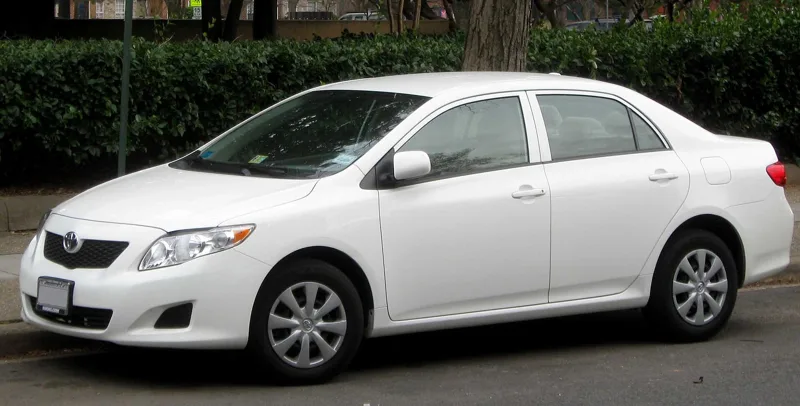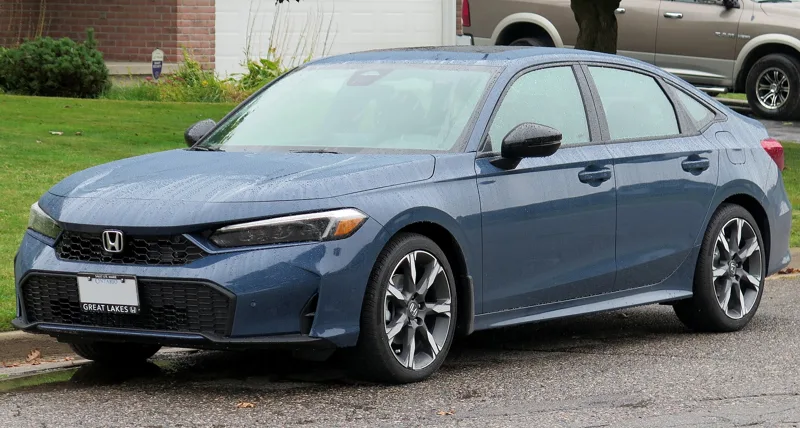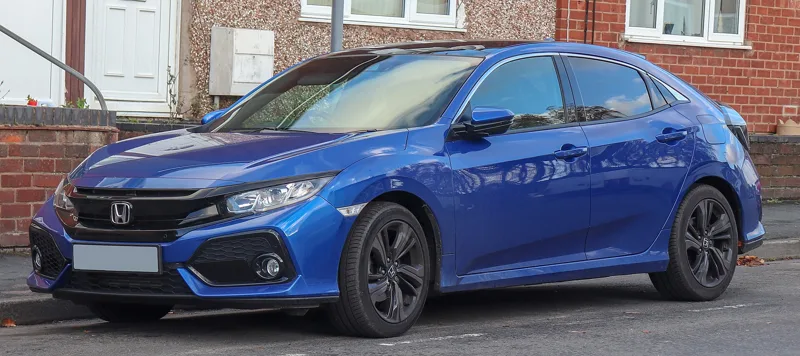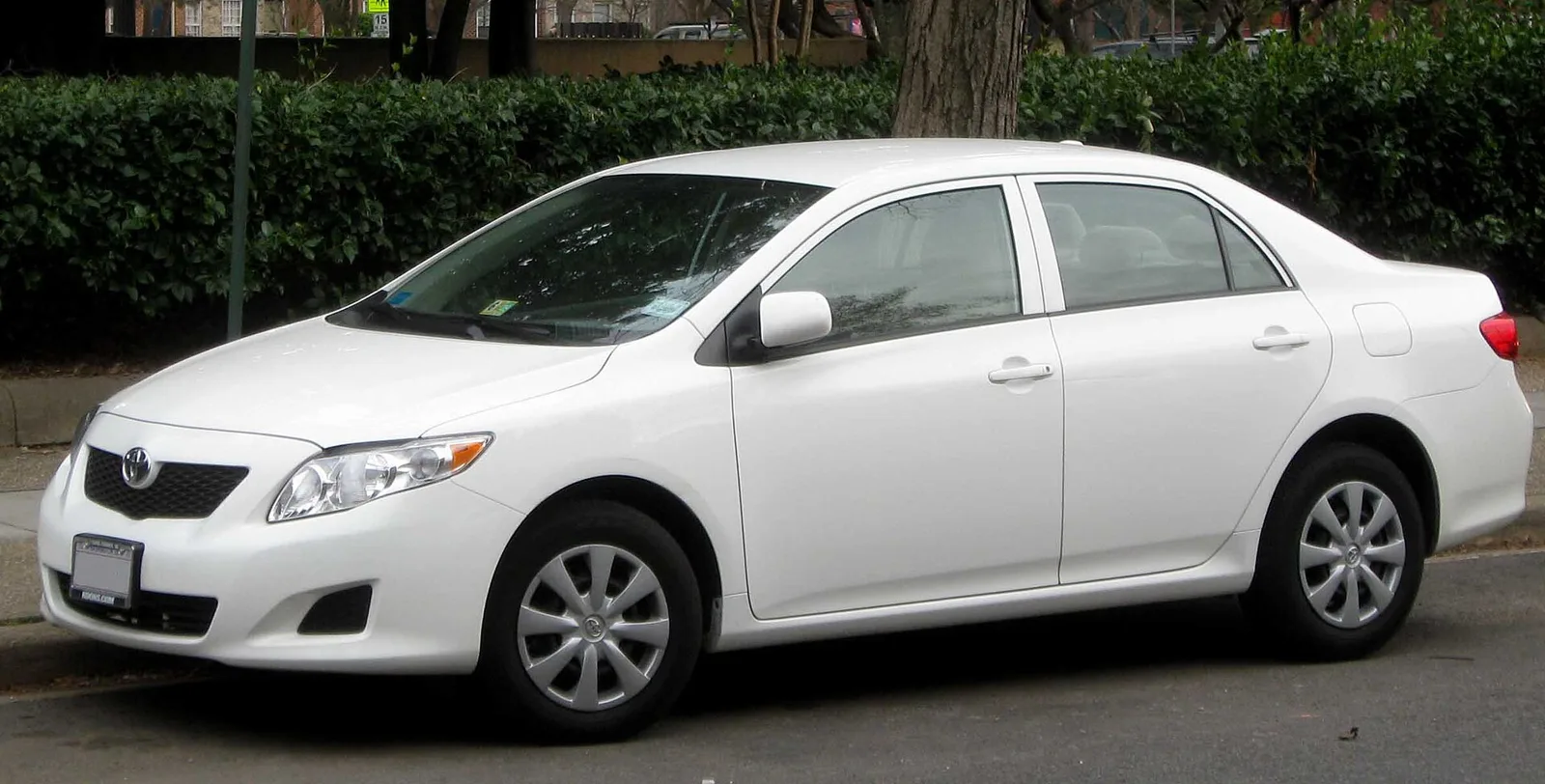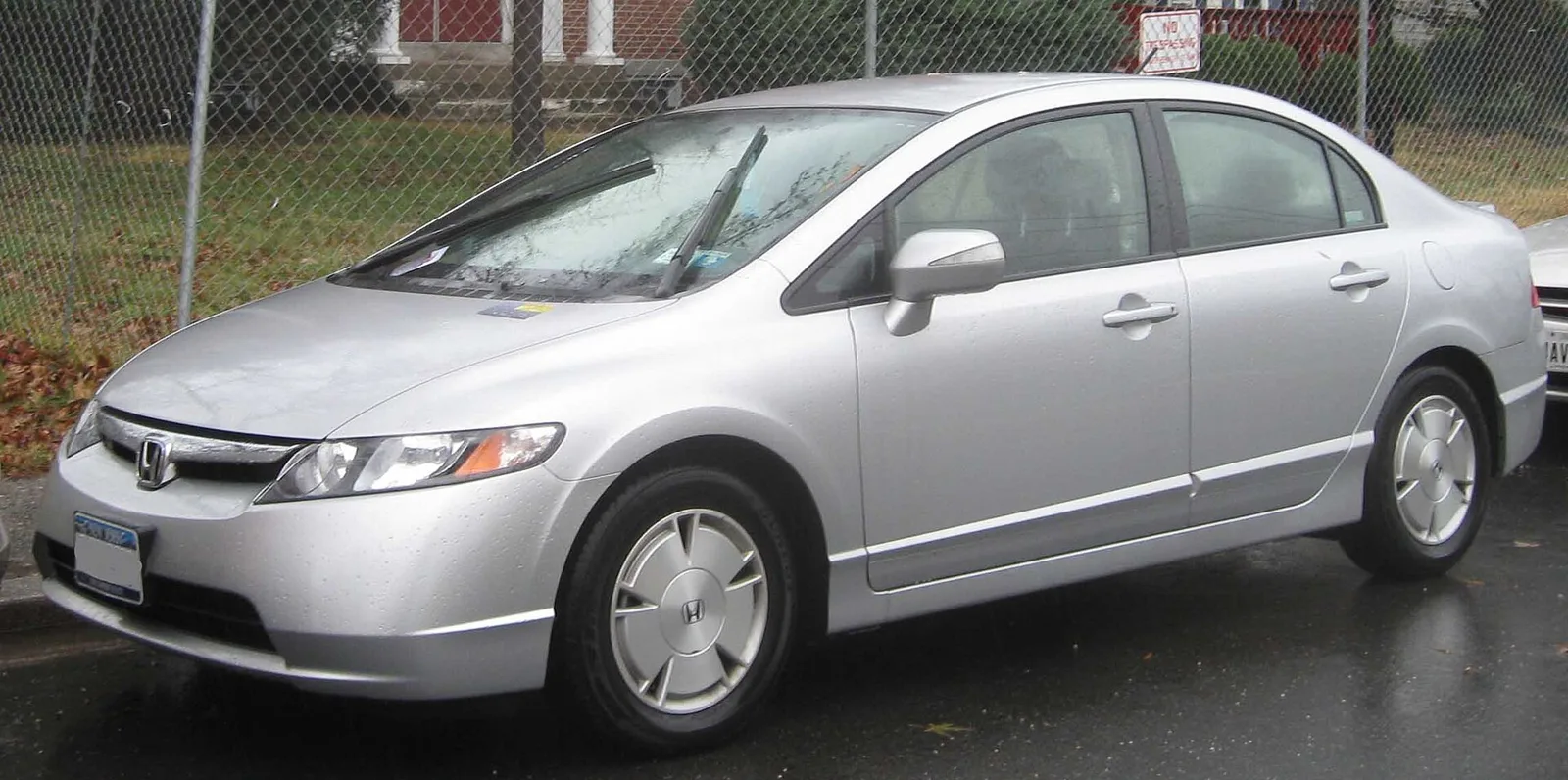
Honda's eighth-generation Civic and Toyota's E140 Corolla were both compact cars sold worldwide, and the markets they were built for explain most of the differences between them.
The Honda Civic eighth generation was sold from 2005 to 2012 in sedan, coupe and hatchback forms, with a hybrid and a natural gas model in the range. The Toyota Corolla E140 went on sale in Japan in October 2006, and its wider version followed for other markets.
The eighth-generation Honda Civic and the Toyota Corolla E140 were both compact cars sold across much of the world in the second half of the 2000s. They were built for markets with very different rules, and those rules explain most of the differences between them. The Civic came in four body styles and a hybrid, while the Corolla split into a Japanese narrow-body car and a wider version for other markets.
Which market did each car start in?
The Civic was built from 2005 to 2012 and replaced the seventh generation. The Corolla E140 was released in Japan on 10 October 2006, and its wide-body version reached the Americas and parts of Asia later in 2007 as a 2008 model.
The Civic sold in more than one form. Its sedan appeared in two styles, one of which was sold as the Acura CSX in Canada. The European-market hatchback had a separate architecture and was built only in Swindon, in the United Kingdom.
Toyota's approach was regional from the start. The Japanese E140 kept a narrow body, while the wider version served the Americas, Southeast Asia and the Middle East. Australia, Europe and South Africa received the E150, which used the newer New MC underpinnings and went on sale in China and Europe in early 2007.
Two compact cars built for different rules, and a clear example of how much a home market shapes what gets built.
How did the chassis and platforms differ?
Honda's engineers targeted three areas on the Civic: suspension geometry with larger wheels and tyres, a longer wheelbase, and a new four-channel anti-lock braking system. The steering gearbox was mounted lower to improve rigidity and reduce friction.
The Corolla E140 was built on the Toyota MC platform, which carried over from the earlier E120 in Japan. The E150 derived from the New MC platform and was the version sold in Australia, Europe and South Africa. The Japanese cars were smaller than export vehicles so that they stayed within Japanese regulations on exterior dimensions and engine displacement.
The Civic's rear suspension was also reworked. A new multi-link double wishbone design gave more rebound stroke and better damper positioning, which Honda said absorbed harsh road surfaces better and improved stability.
How was the North American Civic set up?
The North American Civic came as a sedan and a coupe, designed in Japan and Ohio respectively. The sedan arrived in September 2005 for the 2006 model year, and both body styles were offered in several trim levels, including DX, LX, EX and Si.
The base DX came with power windows, daytime running lights and 15-inch steel wheels with covers. American DX models had no standard audio system, while the Canadian equivalent included a 160-watt four-speaker stereo with CD player. Air conditioning and cruise control were optional on the base car.
Trim walks moved up through the range. The LX added cruise control and an anti-theft system with remote entry in the US, and the EX added a power moonroof and four-wheel disc brakes. For the first time on the Civic, a voice-activated navigation system appeared on the EX with Navigation. Leather arrived with the EX-L in 2008.
Coupes were set up to feel sportier than sedans, with firmer spring rates, thicker anti-roll bars and adjusted damping. A moonroof reduced headroom on either body style, so the cabin was slightly smaller in cars that had one. All coupes came with a rear lip spoiler as standard, and EX models had round chrome exhaust finishers.
What did the Corolla's Japanese range offer?
The Japanese saloon was called the Corolla Axio, and the estate kept the Corolla Fielder name. The top trim, the Luxel, added dynamic radar cruise control and a tiptronic transmission, while the mid-range G gained projector headlamps, push-button start and automatic climate control.
The Axio introduced a pre-crash safety system based on millimetre-wave radar. When the radar detected a high collision risk, the pre-crash seatbelts tightened to improve restraint, and the brake assist decelerated the car to reduce the speed of impact.
Both Japanese models were facelifted on 28 October 2008. The Axio received a redesigned front grille and rear lights, while the Fielder also got a new front bumper. Sales reached 70,758 Corolla Axios in Japan during 2011.
How did the Si and the Axio GT compare on performance?
The Civic Si's 2.0-litre K20Z3 i-VTEC produced 197 hp (147 kW; 200 PS) and 139 lb-ft (188 N-m) of torque, paired with a six-speed manual and a helical limited-slip differential. Honda claimed a 0-60 mph time of 6.7 seconds, the quickest of any Civic Si off the line.
The Si's handling was also tuned. Spring and damping rates were 40% stiffer than the non-Si trims, with stiffer sway bars, and the car reached 0.90g of lateral acceleration on the skidpad.
The Axio GT was built around a turbocharged 1NZ-FE, with 150 PS (110 kW; 148 bhp) and 196 N-m of torque. It came with a five-speed manual, TRD Sportivo suspension and 17-inch wheels, and it went on sale in Japan in February 2009.
Honda's Si sedan arrived in North America in 2007, after only the Japanese market had been offered Si sedans. The production car dropped the concept's larger 18-inch wheels and Brembo brakes, but it was mechanically almost identical to the coupe.
Team apr entered a mid-engined Axio in the GT300 class of Super GT for the 2009 season. Its 3.5-litre 2GR-FSE V6 made over 300 PS (221 kW; 296 bhp), and the car weighed roughly 1,100 kg.
Which car offered a hybrid or a gas version?
The Civic line included a hybrid, with a CVT as the only transmission, and a compressed natural gas model called the Civic GX. The Corolla E140 is not described with either option.
The Civic Hybrid's 1.3-litre L13A i-DSI rose from 83 hp (62 kW) to 93 hp (69 kW), and the electric motor added 15 kW (20 hp) for a total of 110 hp (82 kW). It had a top speed of 186 km/h (116 mph), CO2 emissions of 109 g/km and a weight of 2,875 lb (1,304 kg), light for a car with its motor and batteries.
The Civic Hybrid was rated at 40 mpg-US (5.9 L/100 km; 48 mpg-imp) city and 45 mpg-US (5.2 L/100 km; 54 mpg-imp) highway by the EPA, and it achieved an AT-PZEV emission rating. The Civic GX ran on compressed natural gas, with no folding rear seat and less cargo space.
What changed after launch on each car?
The Civic's biggest revision came with the 2009 model year facelift, which introduced the LX-S Sport trim, with 16-inch alloy wheels, a lip spoiler, steering-wheel cruise controls and a sporty black interior trimmed in silver. The Canadian LX-SR was renamed the Sport.
The sedan's front bumper and grille were restyled, and its taillights moved to transparent lenses with amber turn-signal bulbs. The coupe received a new front bumper and grille that recalled earlier coupe generations, and it kept the LX-SR name.
The Corolla's Japanese models were facelifted in October 2008, with the Axio gaining a new grille and rear lights. The wide-body car was revised in July 2010, when new ZR engines replaced the ZZ units in the 1.6 and 1.8 models, and new bumpers, grille, air dams and rear lamps arrived.
The two cars also differed in body detail. The international E140 had built-in side skirts that fused with the side profile, while the E150 did not, so a close look at the fender lines separates the two.
Specifications side by side
| Specification | Honda Civic (eighth generation) | Toyota Corolla E140 |
|---|---|---|
| Production years | 2005 to 2012 | Japan from 10 October 2006; wide-body from late 2007 |
| Body styles | Sedan, coupe, three-door and five-door hatchback | Saloon (Axio) and estate (Fielder) in Japan; Auris replaced the hatchback in Japan and Europe |
| Platform | Enhanced suspension geometry, longer wheelbase, four-channel ABS | Toyota MC platform; New MC for the E150 |
| Base engine | 1.8-litre in the North American sedan from 2006 | 1.8-litre 1ZZ-FE and 1.6-litre 3ZZ-FE in many markets |
| Sporty engine | 2.0-litre K20Z3 i-VTEC, 197 hp (147 kW; 200 PS) | Turbocharged 1NZ-FE, 150 PS (110 kW; 148 bhp) in the Axio GT |
| Transmission | Six-speed manual on the Si; CVT on the hybrid | Five-speed manual on the Axio GT; CVT on later Asian models |
| Hybrid | Civic Hybrid, 110 hp (82 kW) total | Not given |
| Economy | Hybrid: 40 mpg-US (5.9 L/100 km) city, 45 mpg-US (5.2 L/100 km) highway | Not given |
| Acceleration | Si: 0-60 in 6.7 seconds (Honda claim) | Not given |
| Safety and tech | Four-channel ABS; voice-activated navigation on the EX with Navigation | Pre-crash safety system, radar cruise control, intelligent parking assist (option) |
| Build location | Greensburg, Indiana and Alliston, Ontario for North America | Japan; Bidadi, India for the Altis |
| Sales | More than 1.5 million units since late 2005 | 70,758 Axios in Japan in 2011 |
How did the safety and convenience features compare?
The Corolla Axio brought a pre-crash safety system with millimetre-wave radar, pre-crash seatbelts and a brake assist system. Its radar cruise control detected the vehicle ahead and kept a set distance based on that car's speed within a preset range.
The Civic's chassis changes included the new four-channel ABS, alongside suspension and wheelbase work. Its convenience features were built around the cabin, with a two-tier instrument panel that had a digital speedometer and independently adjustable brightness.
The Japanese Axio's parking help was an option costing 105,000 yen, or US$879 at the exchange rates quoted. It used ultrasonic sensors to measure a parking space and steer the car into it, and a backup camera was standard. A G-BOOK subscription telematics service was offered on Japanese models only.
Which buyer suits each car?
A buyer who wanted a hybrid or a choice of body styles, including a coupe, would look at the Civic. Its North American range also gave a clear route to a sporty car through the Si.
A buyer in Japan or Asia who valued the Axio's radar safety and parking aids, or who wanted the turbocharged Axio GT, would look at the Corolla. Its wider versions were styled close to the Camry.
How did the Corolla spread across Asia?
In Hong Kong the Corolla was made in Japan and fitted with the 1.5-litre 1NZ-FE, in Luxury and Advantage trim. In India the Corolla Altis was assembled at Bidadi, near Bangalore, with a 1.8-litre ZZ engine rated 132 bhp at first and a 1.4-litre 1ND-TV diesel unique to India and Spain at 88 bhp.
India's 2011 facelift replaced the ZZ with an updated 1.8 ZR producing 140 bhp, mated to a six-speed manual or a CVT that replaced the older four-speed automatic. In Indonesia the Altis launched on 28 February 2008, and the V version gained a 2.0-litre 3ZR-FE on 30 April 2009.
In Malaysia the Altis launched in March 2008 with a 1.8 rated 97 kW (132 hp) and a 1.6 rated 80 kW (109 hp), both on four-speed automatics. Pakistan was the only market to fit the 2NZ-FE to the Corolla, a 1.3-litre in the XLi and GLi, and the Philippines launched its Altis on 7 March 2008.
Singapore received the E140 Altis on 6 December 2007, making it the first Asian market to get the tenth-generation Corolla. Each market got its own version, so the Corolla reads as a family of cars rather than a single model.