A decade of Toyota show cars, from fuel-cell Highlanders and a Sony-built AI car to the Toyota-Subaru FT-86 and the Australian Camry TS-01.
Toyota built concept vehicles from 2000 to 2009 that were never sold through its dealerships. The range included the Sony-built Pod, the Celica Ultimate, the FCHV fuel cell Highlanders, the Fine series and the Toyota-Subaru FT-86, and a few, such as the Porte and the FJ Cruiser, reached production.
Toyota designed and built concept vehicles from 2000 to 2009, and none of them went on sale through its dealerships. Many were developed with partners such as Sony and Subaru, and they tested ideas in fuel cells, hybrids, microcars, sports coupes and personal mobility. Several became production models, while others never left the show stand.
What were Toyota's concepts from 2000 to 2009?
The 2000 to 2009 concepts ranged from practical urban cars to fast rally-inspired machines. Toyota used them to explore new technology, such as fuel cells and hybrids, and to test designs that might eventually reach buyers. Some were built with outside partners, and a few reached production in a changed form.
Toyota's show cars of 2000 to 2009 tried everything from a Sony-built AI car to a fuel-cell Highlander, and a few of them reached the road.
Which early concepts came first?
The Yaris Cabrio Concept was a two-door convertible with a fabric roof, shown at the March 2000 Geneva Motor Show. It never reached production. The Celica Ultimate followed in 2000, a project run with Rod Millen Motorsports that used a seventh-generation Celica GT-S body with the powertrain and all-wheel drive from a previous GT-Four.
Other early concepts were more unusual. The ES3 (Eco Spirit cubed) of 2001 used bioplastic parts, and its technology reappeared in the Raum in 2003 as the Toyota Eco-Plastic. The DMT (Dual Mode Traveller) van was a high-mounted, studio-like concept shown in October 2001, and its design cues later passed to the HiAce H200.
The FXS (Future eXperimental Sports) was based on the Soarer and first shown in Tokyo in October 2001. It carried a 4.3-litre 3UZ-FE V8 and a six-speed sequential manual, and it reappeared at the March 2002 Geneva show.
The RSC (Rugged Sport Coupe) was a two-door SUV concept first shown at the February 2001 Chicago Auto Show. Calty designed it on the RAV4 as a pure concept meant to connect emotionally with younger buyers. Its look borrowed from World Rally Championship cars, and it never went into production.
How fast was the Celica Ultimate Concept?
The Celica Ultimate took the turbocharged inline-four from the GT-Four and modified it to make 371 kW (497 hp) at 8,000 rpm and 461 Nm (340 lb ft) of torque at 5,500 rpm. Millen was reportedly able to reach 60 mph (97 km/h) in 4.9 seconds, 60 to 100 mph (97 to 161 km/h) in 6.7 seconds, and the quarter mile in 13.3 seconds at 108 mph (174 km/h).
Millen said those figures were limited by turbo lag and by the five-speed manual gearbox carried over from the donor car. The concept also had redesigned suspension, upgraded brakes and a fuel cell in the boot. Most of the seventh-generation interior remained, with an integrated roll cage, Recaro racing seats, no rear seats and a race-style LED tachometer.
What was the Toyota Pod?
The Toyota Pod was a concept car built with Sony and first shown at the October 2001 Tokyo Motor Show. It was designed around artificial intelligence, so that the car would feel personal. A screen inside ran Sony software that could create shopping lists and play music and radio, and the car could read the driver's mood from their reactions and driving.
On the outside the Pod expressed its feelings through coloured LEDs, with red for anger, yellow for happiness and blue for sadness, and an antenna that wagged like a dog's tail. Its seats were stools that could spin freely. Designed as a car of the future, it never went into production, but it was featured in the game Gran Turismo Concept, where six Pods drove a special race.
What were the fuel-cell concepts?
The FCHV-3 carried a 90 kW fuel cell, over four times the output of the FCHV-1 unit. It reached 150 km/h (94 mph) and had a range of 250 km (155 miles), and it was built on a Toyota Highlander body. The FCHV-4 was the fourth vehicle in Toyota's fuel cell programme, and it became the first to be approved for public road testing in Japan.
Road tests of the FCHV-4 continued until 2004. Through leasing programmes in the United States and Japan, it was also the first of the fuel cell vehicles to be commercialised. The FCHV-5 added a Clean Hydrocarbon Fuel reformer with a new catalyst and heat exchanger to improve acceleration and economy, and it too used the Highlander.
The FCHV-adv was the sixth vehicle in the programme, an updated FCHV-5 with a high-pressure hydrogen tank that stretched its range to 830 km (515 miles). Leasing began in Japan on 11 September 2008.
Which sports concepts did Toyota show?
The Project Go was a concept race car shown at the 2002 Sydney Motor Show. The MR2 Street Affair came from Toyota Germany, with a turbocharger that lifted power from 100 kW to 193 kW. Its fibreglass body had carbon fibre panels and air scoops, and its front took cues from Toyota's Formula 1 car, with a pointed nose and a low front wing. A camera replaced the rear mirror.
The Calty-designed FT-HS of January 2007 was a hybrid sports car concept, and it would later fill the place that the Supra had held. Its name stood for Future Toyota Hybrid Sport, and its design influenced the FT-86 that followed.
What was the FT-86 and why did it matter?
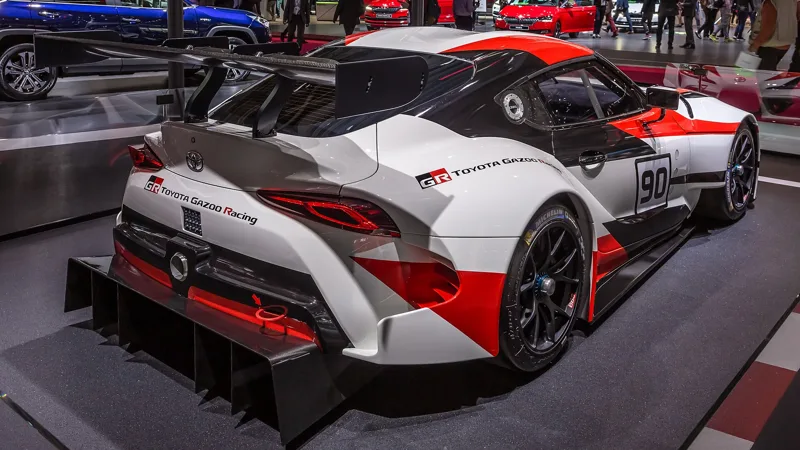
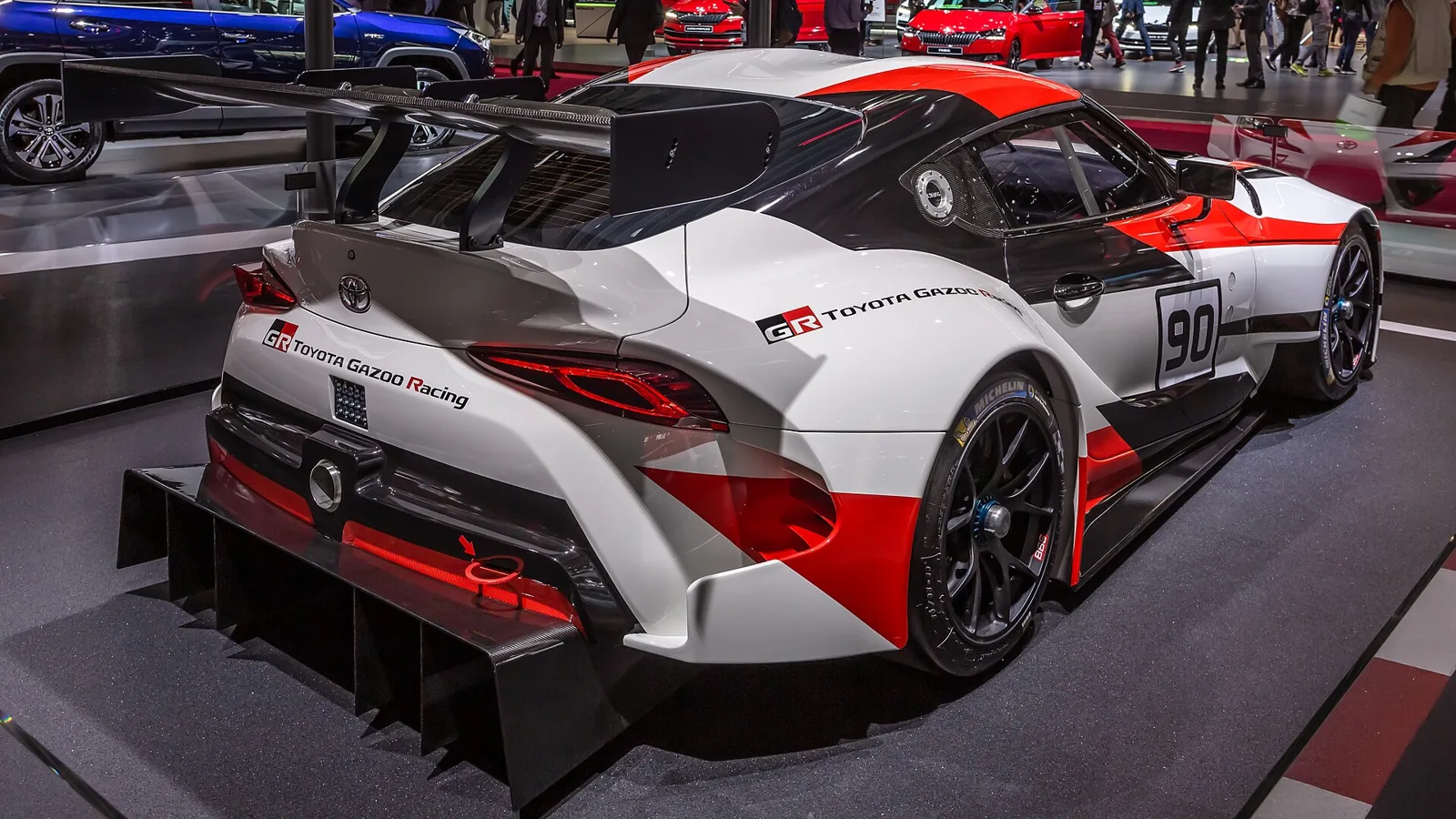
The FT-86 was a concept car developed jointly by Toyota and Subaru and designed by the ED2 studio in France. It used a 2.0-litre boxer engine from the Toyota-Subaru partnership, a Subaru six-speed manual, and a platform based on the Impreza with a 101.2-inch wheelbase. It measured 163.8 inches long, 69.3 inches wide and 49.6 inches high.
Chief engineer Tetsuya Tada said the unique shoujyouhi red paint was based on the colour of a Japanese monkey's backside. The car debuted in Tokyo in October 2009, and Geneva saw it in March 2010. An enhanced FT-86 G Sports appeared at the January 2010 Tokyo Auto Salon, and a revised FT-86 II came to Geneva in March 2011 as the successor.
Jim Lentz, then chief operating officer of Toyota Motor Sales USA, confirmed in Tokyo that a production version would be sold in America. Toyota Europe later said it would release the car in November 2011. In September 2010 AutoExpress reported that the Subaru version would be all-wheel drive, but the production car kept rear-wheel drive like its Toyota counterpart.
Which concepts became production cars?
Several concepts were turned into real vehicles. The SU-HV1 of 2003 became the Lexus RX, and the NLSV, a high-roofed concept with a sliding door, entered production as the Toyota Porte. The Rugged Youth Utility, first seen in Detroit in January 2003, became the FJ Cruiser in early 2006. Its look echoed the FJ40 Land Cruiser on the Prado platform.
The FT-MV of 2007 became the Toyota Alphard (AH20). The FSC, a Camry-based wagon with a flexible seating layout, went into production in Japan only as the Mark X ZiO. The FTX pickup shown in January 2004 was the basis for the redesigned 2007 model year Tundra, and the Aurion Sports Concept previewed the TRD Aurion, which arrived in August 2007.
What did the Australian concepts show?
Toyota Australia designed and built the X Runner in 2003, a four-wheel drive coupe utility. It used the front cabin, front sheet metal and mechanicals of the Avalon, with the Avalon's K-platform chassis stretched by 150 mm behind the front wheels. The 1MZ-FE engine received a TRD supercharger, and the four-wheel drive system came from the Lexus RX300.
The Camry TS-01 was unveiled at the March 2005 Melbourne International Motor Show. It was named after the F1 drivers Jarno Trulli and Ralf Schumacher, and it aimed to showcase Toyota Australia's engineers. Its supercharged 1MZ-FE made 185 kW (248 hp) and 320 Nm (236 lbf ft), 28 percent and 12 percent more than the production Camry. The front brakes grew from 280 mm to 325 mm, and the car launched TRD Australia.
The TS-01's exterior, designed by Toyota Style Australia under Paul Beranger, added 14-spoke alloy wheels, wheel flares, a unique bumper with round fog lights and an F1-inspired rear spoiler. Carbon fibre surfaces filled the cabin, and Optitron gauges replaced the production instruments.
Which fuel-cell city concepts followed the Fine series?
The Fine-S appeared first in Detroit in January 2003 and later at the Geneva show that March. It used a hydrogen fuel cell hybrid driving four independent electric motors. The Fine-N updated it at the October 2003 Tokyo Motor Show and the January 2004 show in Detroit, with four 25 kW motors and a lithium-ion battery under the seats, controlled by drive-by-wire.
The Fine-X, called the Fine-T in Japan and Europe, premiered in Tokyo in October 2005 and went on to Geneva in March 2006. It had independent four-wheel steering that allowed very tight U-turns and easy parking, and it used gull-wing doors that could not open in a rollover accident.
How did the hybrid concepts compare?
The Alessandro Volta, a collaboration with the Italian design house Italdesign Giugiaro, was unveiled at the 2004 Geneva Motor Show. It had scissor doors, a carbon fibre chassis and three seats, with the driver in the middle. Its hybrid system came from the Lexus RX 400h and used a 3.3-litre V6 with two electric motors, one on each axle.
The Volta's maximum output of 300 kW (402 bhp) took it from 0 to 100 km/h in 4.03 seconds and to a top speed of 250 km/h (155 mph). The car never reached production because of high costs. The SU-HV1 had a 3.3-litre V6 with a 120 kW motor, while the CS&S of 2003 was a four-wheel drive mid-engine sports car whose front wheels were driven by electric motors and whose rear was powered by a petrol engine with electric motors.
The Camry CNG Hybrid of 2008 used a 2.4-litre four and two carbon-fibre-wrapped tanks holding 8 gallons of natural gas at 3600 psi, for a 250-mile range. It returned 32 mpg in the city and 34 mpg on the highway, only 1 mpg less than the regular Camry. The tanks sat in its 19-inch wheels, and the car faced a shortage of charging, with about 770 CNG stations in the US.
| Concept | Year | Notable figure |
|---|---|---|
| Celica Ultimate | 2000 | 371 kW (497 hp) at 8,000 rpm |
| FCHV-3 | 2001 | 90 kW fuel cell, 250 km range |
| FXS | 2001 | 4.3-litre 3UZ-FE V8 |
| MR2 Street Affair | 2002 | Turbo lifting power from 100 kW to 193 kW |
| X Runner | 2003 | Avalon-based, stretched 150 mm, supercharged 1MZ-FE |
| Fine-N | 2003 | Four independent 25 kW motors |
| Alessandro Volta | 2004 | 300 kW (402 bhp), 0 to 100 km/h in 4.03 seconds |
| Camry TS-01 | 2005 | 185 kW (248 hp) supercharged |
| FCHV-adv | 2008 | 830 km (515 miles) range |
| FT-EV II | 2009 | Top speed over 100 km/h, 90 km range |
| FT-86 | 2009 | 2.0-litre boxer, 101.2-inch wheelbase |
What were the electric and microcar concepts?
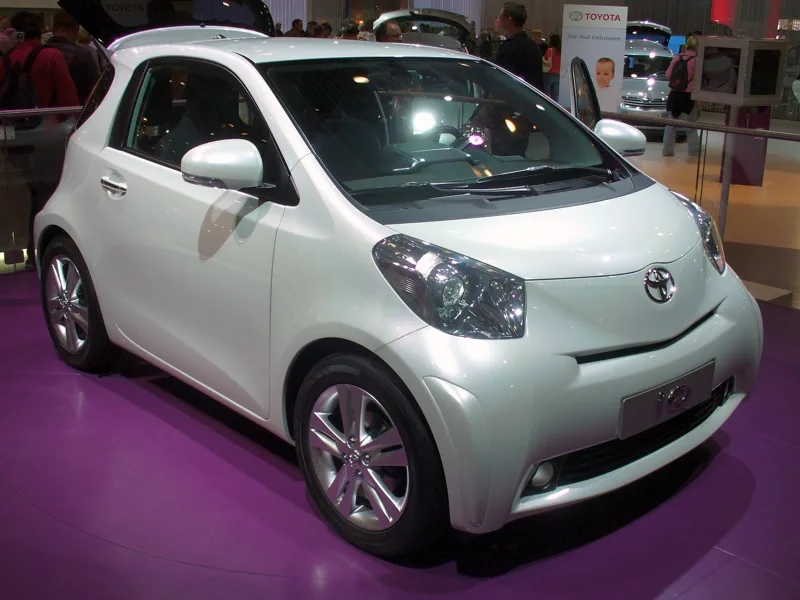
The FT-EV of January 2009 was a modified Toyota iQ with two seats removed to make room for battery packs. Toyota said it would start selling the FT-EV in 2012, with a range of 50 miles (80 km) per charge for urban commuting. The FT-EV II, shown in Tokyo in October 2009, seated four and used electrically operated sliding doors. Its linked joysticks controlled acceleration, braking and steering, with a top speed over 100 km/h (62 mph) and a range of 90 km (56 mi).
The Scion iQ Concept was built by Five Axis in California on a production iQ, and it was displayed at the April 2009 New York Auto Show. It used the 1.3-litre four-cylinder VVT-i engine and a wide body kit. An identical car, rebadged as the Toyota iQ Sport, followed at the September 2009 Frankfurt Motor Show. Motor Trend said North American production of the Scion iQ would start late in 2010, aimed at the 2011 model year.
The i-foot of 2004 was a personal walking robot for disabled people, driven with a joystick at a top speed of just 1.35 km/h. The Winglet of August 2008 was a self-balancing two-wheeled transporter that cruised at 6 km/h (4 mph), although it was never offered for sale.
Which plug-in and urban concepts were shown later?
The Hi-CT of October 2007 was a two-seat city truck with a plug-in hybrid and batteries under the floor. Its boot was a removable module, and a 100-volt AC socket powered accessories. The 1/X of the same show weighed only 420 kg (926 lb), with a carbon-fibre reinforced plastic frame and a 500 cc engine under the rear seats.
The Prius Plug-In Concept of October 2009 preceded the production plug-in Prius. Charging took 180 minutes on 100 volts, or 100 minutes on 200 volts, and the car could run 20 km before the petrol engine started.
What were the family and minivan concepts?
The F3R, a Calty concept from Detroit in January 2006, was a hybrid minivan designed to escape the soccer mom image. It had three rows of seats and three doors on each side, with the rear door opening in the opposite direction. Its styling resembled the Scion xB, with 22-inch wheels.
The RiN of October 2007 was a relaxed, green-glassed concept with four seats and sliding doors. Its steering wheel changed colour with the driver's mood, and it was reportedly inspired by a milkfloat. The Endo of 2005 was a 3-metre city car seating four, designed by the ED2 studio in France.