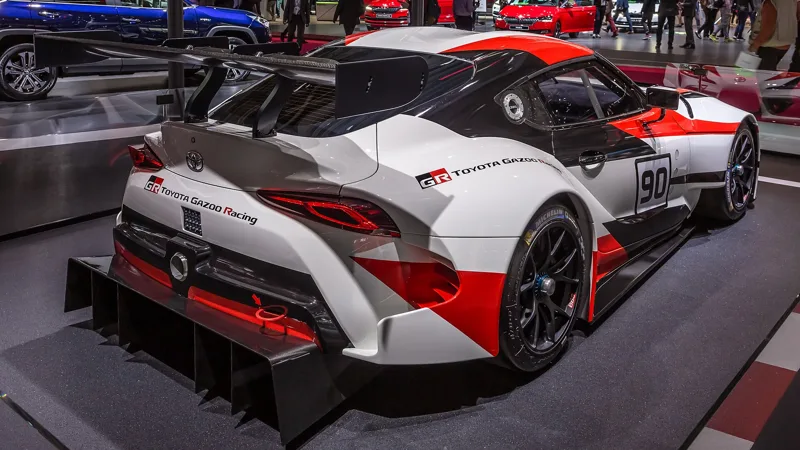
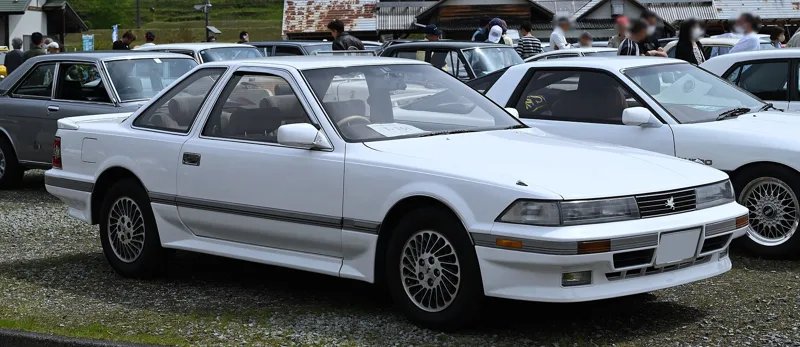
From a windscreen-free convertible to a hydrogen RAV4, Toyota's 1990s concepts tested safety, electrics and hybrids that later reached showrooms.
Toyota's 1990 to 1999 concepts covered electric and hydrogen power, hybrid drivetrains, driver aids and safety. The Solara concept, NC250 and HV-M4 each led to a production car, while the Avalon and Moguls are not recorded as production models in the record.
Toyota's concept vehicles from 1990 to 1999 covered almost every direction the company was exploring at the time, from battery power and fuel cells to driver aids and hybrid drivetrains. Several were first shown at the Tokyo Motor Show, and a number of them fed into production cars that drivers later bought.
Which concepts appeared in the early 1990s?
The decade opened with a battery-electric prototype of the R20 series TownAce, the Avalon convertible of 1991, the AXV-III and AXV-IV and the Fun Runner. Most were shown at the Tokyo shows, with the Avalon unveiled at the 29th Tokyo Auto Show and the Fun Runner at the 29th Tokyo Motor Show.
The concepts covered very different ground. The AXV-III explored automated driver aids, the AXV-IV was a featherweight commuter, and the Fun Runner was a luxury sport utility vehicle based on the 4Runner. Together they show a company testing ideas across the full size range.
From a windscreen-free convertible to a hydrogen RAV4, Toyota's 1990s concepts tested ideas that later reached the road.
What was the Avalon concept?
The Avalon was a four-door convertible concept unveiled in 1991 and designed by Calty. Its windscreen retracted to cover the passenger compartment when the car was parked, and driving was allowed only with the top open, and then the roof acted as the windscreen.
Two additional glass panels retracted rearward and stacked behind the rear seats. The car was roughly the size of the Toyota Corolla Ceres, and its doors had no side windows, which left passengers exposed in bad weather. It had no direct relation to the Avalon sedan that later reached production.
How did the AXV-III drive itself?
The AXV-III appeared at the October 1991 Tokyo Motor Show and later at the February 1993 Chicago Auto Show. Based on the new Carina, it showed automated driver aids: a system that kept a set distance to the car ahead, and a voice synthesiser that announced upcoming intersections.
Its cruise control held the gap to the car in front. Distances over 33 feet were measured by a pulsed laser beam, and shorter distances by a CCD camera using techniques similar to a camera's autofocus. The accelerator linkage was electronic, so the computer could remove power and apply the brakes if the car in front came too close.
A voice-activated GPS system showed the current location on a display, and two airbags were fitted in the doors for extra protection.
How light was the AXV-IV?
The AXV-IV debuted at the October 1991 Tokyo show as a small coupe designed to be an environmentally friendly personal commuter. It weighed only 450 kilograms (992 lb), which made it extremely light.
Power came from a supercharged 804 cc two-stroke, with 64 hp (48 kW) on tap. Its suspension springs were made from fibre-reinforced plastic to save weight.
How aerodynamic was the AXV-V?
The AXV-V premiered at the October 1993 Tokyo Motor Show, where it appeared as a mid-size coupe built for fuel efficiency and a small environmental footprint. Its drag coefficient was Cd=0.20, and the cabin was longer and set further forward than normal so that four people could still fit.
Aerodynamic deflectors sat before and after each wheel, the rear wheels had covers, and the door handles were flush with the body. The car used the D-4 engine, a direct-injection four-valve unit that avoided the pumping losses of a throttle. It used charge stratification at low to medium loads and homogeneous mixture control at high loads, and at low loads one inlet valve was disabled.
Inside, two 8 inch LCD screens sat in the front and two 6 inch screens in the rear. The driver's display carried a 3D speedometer and warnings to avoid collisions, and the passenger displays handled navigation and television.
How did Toyota test electric and hydrogen power?
Toyota explored electric power through several concepts. The TownAce Van EV was a battery-electric prototype of the R20 TownAce, and the Crown Majesta EV of 1993 was a battery-powered version of the S140 Crown Majesta with the same features as the petrol car.
Fuel cells were a second route. The FCHV-1 arrived in 1996 as Toyota's first fuel cell vehicle, built on a RAV4 and storing its hydrogen in an alloy that absorbed it. The FCHV-2 followed in 1997 and was fitted with a reformer that extracted hydrogen from methanol, and it was also built on a RAV4 body.
The FCEV, introduced in 1997, used methanol as its fuel and was based on the FCHV and the Highlander. Together these cars cover both hydrogen storage and onboard fuel conversion.
What was the Advanced Safety Vehicle?
Toyota produced the first Advanced Safety Vehicle, or ASV, in 1995. It was a research car built on a Toyota Sprinter base and seating four people, and it combined 17 safety systems in one vehicle.
Those systems included a drowsy driving warning, a tyre pressure warning, a fire alarm, an automatic headlight arrangement, a corner monitor and a next-generation information display. They also covered lamp-based vehicle-to-vehicle information, a navigation system for road traffic information, automatic collision-reduction braking and an SOS vehicle stop system.
The list continued with a seat belt pretensioner for all seats, side airbags, collision-sensing automatic braking, a hood airbag, a fire extinguishing system, an accident reporting system and a drive recorder.
What was the FLV?
The FLV, or Future Luxury Vehicle, made its first public appearance at the October 1995 Tokyo Motor Show as a Toyota. It was then shown at the January 1996 North American International Auto Show as the Lexus FLV, and its exterior design came from Toyota USA's Calty Design Research.
It was designed to be luxurious and practical for an active lifestyle, with a large cargo area reached through a rear hatch. Its side windows were shaped like sedan windows, but the roofline was closer to that of a wagon. Toyota called the body a monoform oval silhouette.
The seat height was set so that passengers could swing their legs out onto the ground without moving their bodies up as in a sedan or down as in an SUV. An electronic centre console in the dash held accessories such as a navigation display, climate controls, the entertainment system and email over a cell phone network.
What did the MRJ say about sports cars?
The MRJ was a concept convertible made by Toyota in 1995, and Toyota's own description set out the brief. The company said that a sports car should respond to every command, get off the mark quickly and handle a twisty road well.
Toyota argued that the midship engine was the best way to meet those goals while still giving comfort. The MRJ was pitched as a car with the full sports character of a midship layout, plus enough utility to add sporty driving to everyday life, with individual colour and form for enthusiasts.
What was the Hybrid Electric Bus?
The Hybrid Electric Bus was a petrol-electric hybrid concept built by Toyota and unveiled at the October 1995 Tokyo show. The Coaster bus provided its base, and it ran like a normal small bus.
A 1.3 litre engine produced 20 kW (27 hp), feeding a bank of 24 sealed lead-acid batteries of 12V each. The batteries supplied a 70 kW (94 hp) AC induction motor rated at 405 Nm (299 lbf ft) of torque, with a top speed of 80 km/h (50 mph). Regenerative braking was fitted.
The display vehicle had 14 ordinary seats and room for one extra passenger in a wheelchair, and it was fitted with a wheelchair lifter.
How did the Moguls reach remote forests?
The Moguls was a 4WD concept that debuted at the October 1995 Tokyo show. It was a narrow two-seater designed to reach forest areas that conventional 4WD vehicles could not access.
The driver sat in the centre of the front row behind a large, almost horizontal steering wheel, and the single passenger sat behind and to the right. A large front window, small lower door windows, a low instrument panel and powered external mirrors improved visibility.
Each wheel could be raised or lowered independently by as much as half a metre, keeping the car level or lifting it over stumps and large rocks. The wheels kept equal pressure to maintain grip, and for very rough ground they could be replaced by four caterpillar tracks, with steerable front tracks to reduce damage to the ground.
Conventional driveshafts allowed only a limited height range, so the Moguls used two hydraulic pumps, one for each side, driving hydraulic motors in each wheel. Valves allowed 2WD and 4WD selection, a limited-slip function and tighter turning circles, while a low range handled steep slopes without direct control of the accelerator or brakes.
What were the Fun Runner and the Funcars?
The Fun Runner was a 1991 concept built on the Toyota 4Runner and shown at the 29th Tokyo Motor Show. Toyota described it as a luxury sport utility vehicle, and it was followed by a Fun Runner II in 1995 with additional off-road options.
The Funcargo, Funcoupe and Funtime came from Toyota's EPOC studio under the New Basic Car project, which Toyota called NBC Funcars. The Funcargo and the Funtime were presented at the September 1997 Frankfurt show and then at Tokyo in October, and they went into production in late 1998 as the Fun Cargo and the Vitz, Yaris and Echo.
The Funcoupe was shown at the same two shows but was not put into production. All three shared their mechanicals and chassis, so the family shared one underpinning across different body styles.
What was the NEW concept?
The Toyota NEW, officially the Toyota NEW Concept, was a prototype five-door crossover SUV shown at the 1997 Tokyo Motor Show. Its dimensions were 4615 mm long, 1825 mm wide and 1685 mm tall.
The NEW was a prototype shown at the 1997 Tokyo Motor Show, and it is not recorded as a production model.
What was the NC250 luxury sedan?
The NC250 prototype was presented at the 32nd Tokyo Motor Show in 1997, and the production car was sold as the Progres from 1998. It had a long wheelbase, a short overhang and a large cabin, with a rear-wheel drive layout that allowed extra interior space compared with front-drive vehicles.
Its engine was an inline six-cylinder 2.5 litre petrol unit with electronic throttle control and VVT-i. The AI-Shift cooperative shift control read the road ahead from the navigation system and combined braking and downshifting for approaching corners.
Safety features included ABS, traction control, Vehicle Stability Control and Brake Assist. Passive protection came from dual SRS airbags, side airbags and a new curtain-shield airbag that deployed from the front pillars and roof sides. The 7-inch pop-up navigation monitor followed VICS and MONET information services, and radar cruise control held a fixed distance to the car ahead.
How did the Solara concept become production?
The Toyota Solara Concept was made in 1998 and entered production as the Toyota Camry Solara. The convertible was a joint venture between Toyota Motor Manufacturing Canada and ASC, and it was sold only in North America.
The concept had a 149 kW (200 hp) 3.0 litre twincam V6 with 290 Nm (214 lb-ft) of torque at 4,400 rpm. Its front seats had perforated leather surfaces, the driver's seat was power-adjustable, and a six-CD changer was built into the dashboard. The production convertible came only with a four-speed automatic gearbox.
What did the Celica concepts add?
The Celica Cruising Deck was unveiled at the October 1999 Tokyo Motor Show, based on the newly released Celica. Its liftback rear was replaced by a flat deck that could fold upright to form the back cushion of a rear seat.
The rear window, behind the front passengers, lowered into the cabin divider, which folded down to become the lower cushion. The rear headrests folded down from the high-mounted rear wing. The concept was often displayed with a trailer carrying a Jet Ski, a display Toyota had first used behind the RV-1.
The Celica XYR was a concept whose photos were released in early 1999. The Celica that went on sale in late 1999 closely resembled it.
What were the HV-M4 and NCSV?
The HV-M4 was introduced at the October 1999 Tokyo Motor Show and then at the March 2000 Geneva Motor Show. Its front wheels were driven by a petrol-hybrid system based on the first-generation Prius, while a second electric motor drove the rear wheels.
The HV-M4 entered production in 2001 as the Estima Hybrid. The NCSV, shown at the same two shows, blended a three-door hatchback with a three-door wagon and seated five people. Its B-pillar was removed and its C-pillar was steeply slanted toward the front.
What was the Retro Cruiser?
The Retro Cruiser debuted at the February 1999 Chicago Auto Show. Its body was a modified Land Cruiser FJ40, mounted on the chassis and V8 engine of the Land Cruiser UZJ100.
How do the main concepts compare?
| Concept | Year | First shown | Notable feature |
|---|---|---|---|
| Avalon | 1991 | 29th Tokyo Auto Show | Retracting windscreen, four-door convertible |
| AXV-III | 1991 | October 1991 Tokyo | Laser and CCD distance control |
| AXV-IV | 1991 | October 1991 Tokyo | 450 kg, 804 cc supercharged two-stroke |
| AXV-V | 1993 | October 1993 Tokyo | Cd=0.20, D-4 direct injection |
| ASV | 1995 | 1995 | 17 safety systems |
| FLV | 1995 | October 1995 Tokyo | Monoform oval silhouette, later a Lexus |
| Moguls | 1995 | October 1995 Tokyo | Hydraulic drive, wheels with long travel |
| FCHV-1 | 1996 | 1996 | Hydrogen-absorbing alloy storage |
| NEW | 1997 | 1997 Tokyo | Five-door crossover, 4615 mm long |
| NC250 | 1997 | 32nd Tokyo | Inline six, AI-Shift, later the Progres |
| Solara Concept | 1998 | 1998 | 3.0 litre V6, 149 kW (200 hp) |
| HV-M4 | 1999 | October 1999 Tokyo | Hybrid front, electric rear, later Estima Hybrid |
What did the 1990s concepts leave behind?
Many of the decade's ideas reached showrooms in changed form. The Solara concept became the Camry Solara, the Funcargo and Funtime became production cars in late 1998, and the HV-M4 became the Estima Hybrid in 2001.
Others stayed experimental, including the Avalon's retracting windscreen and the Moguls' hydraulic wheels. They still show how wide Toyota's search was in the 1990s, from fuel cells and battery electrics to driver aids and off-road engineering.