A decade of Toyota show cars, from a cedar-wood roadster and an April Fools pickup to the concepts that reached showrooms as the GT 86, Prius c and Supra.
Between 2010 and 2019 Toyota's show cars included roadsters, city EVs, shuttles, off-road trucks, hybrids and joke builds. The Prius c, Yaris Hybrid and GT 86 were among the cars that reached showrooms, while many others never left the show stand.
Toyota's concept vehicles from 2010 to 2019 ranged from a cedar-wood roadster to an autonomous minibus built for the Tokyo Olympics. Many were shown once at a motor show and went no further, but a handful reached showrooms, including the GT 86 and the fifth-generation Supra. Together they show how Toyota used concepts to test designs, powertrains and mobility ideas before committing to them.
What were Toyota's concept vehicles between 2010 and 2019?
Toyota's concept vehicles from 2010 to 2019 covered sports cars, compact hybrids, electric city cars, autonomous mobility vehicles, pickups and novelty builds. Some were one-off show cars, while others previewed production models such as the Prius c, the Yaris Hybrid and the Toyota 86. The list spans dozens of models across the decade.
The concepts came from several sources. Toyota's own design centres, including Toyota European Design and Development, produced many of them, while Calty Design Research in California worked on others. Partners and outside groups contributed too, such as the Toyota Technical College of Tokyo, which built the Sports EV from a Toyota Sports 800 with its original petrol engine replaced by a 28 kW electric motor.
A decade of show cars that tested Toyota's ideas, from a cedar-wood roadster to the concepts that reached showrooms.
Which Toyota concepts became production cars?
Several concepts from the decade reached showrooms with relatively little change, while others shaped later models. The Prius c Concept became the Aqua in Japan in December 2011 and reached the United States and Canada in March 2012. The FT-86 II became the GT 86, and the FT-1 design was later incorporated into the fifth-generation Supra.
| Concept | First shown | Production link |
|---|---|---|
| FT-86 II | 1 March 2011, Geneva | GT 86, shown at the October 2011 Tokyo Motor Show |
| Prius c Concept | January 2011, NAIAS | Aqua in Japan, December 2011 |
| Yaris HSD Concept | March 2011, Geneva | Yaris Hybrid, presented at Geneva in March 2012 |
| C-HR Concept | October 2014, Paris | Production C-HR launched in November 2016 |
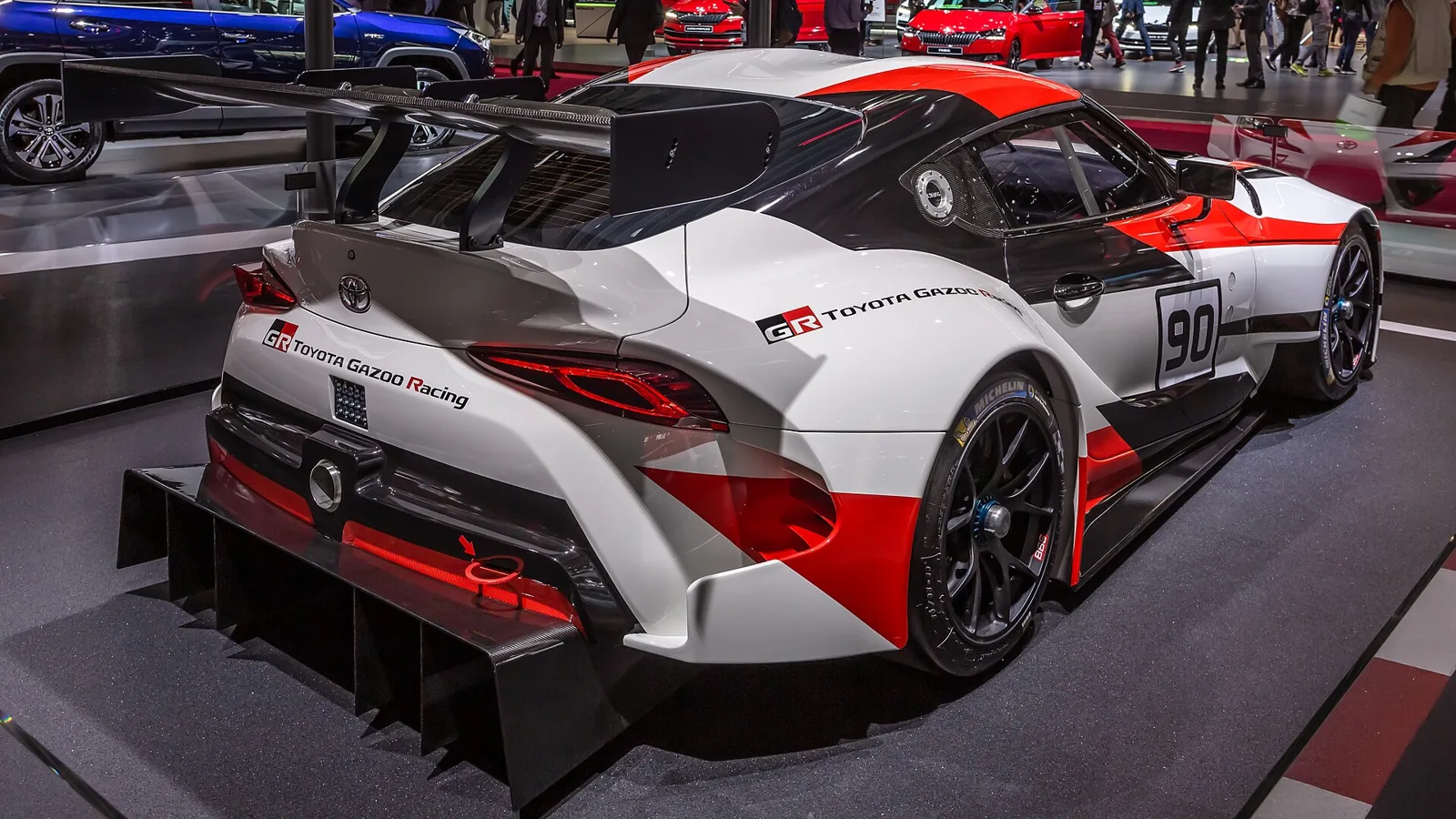
| FT-1 | January 2014, NAIAS | Fifth-generation Supra, launched in 2019 |
| FT-AC | December 2017, Los Angeles | Design adapted to the fifth-generation RAV4 |
| i-Road | March 2013, Geneva | 70 units deployed in Grenoble for a car club |
| Ultra-Compact BEV | 17 October 2019 | C+pod in Japan, 2020 |
How did the FT-86 concepts lead to the GT 86?
The FT-86 concept was a joint project of Toyota and Subaru, and the production version was named GT 86 in most markets and Toyota 86 in Japan. One modified version was the FT-86 G Sports Concept, shown at the January 2010 Tokyo Auto Salon. That car used carbon fibre panels, a vented bonnet, a large rear spoiler, 19 inch wheels and a custom exhaust.
The FT-86 II was presented at Geneva on 1 March 2011 as the successor to the original FT-86 Concept. Toyota's European design centre gave it larger dimensions, redesigned front and rear bumpers and headlights, a rear spoiler and side vents. The production model was shown at the October 2011 Tokyo Motor Show, and European sales were expected in 2012.
Australian sales were expected in mid 2012 at A$30,000. Toyota also showed a 86 Shooting Brake sports hatchback in 2016, and Subaru built a similar-looking BRZ variant.
Which concepts explored electric mobility?
Toyota showed a long line of electric concepts, from the Sports EV built on a Sports 800 to the iQ EV Prototype and the Ultra-Compact BEV that became the C+pod. Most were small city cars or demonstration vehicles, and several were built for limited fleet use rather than mass sale.
The iQ EV Prototype was shown at Geneva in March 2011 and succeeded the FT-EV II as an electric car based on the iQ chassis. The FT-EV III, shown at the 2011 Tokyo Motor Show, was the latest concept in that line, and its exterior became the basis for the production car. In September 2012 Toyota said the Scion iQ EV, known as the eQ in Japan, would be limited to about 100 units for fleet use in Japan and the United States, down from 600 originally planned.
The Camatte line used an electric chassis with removable body panels, so owners could change the look. The Camatte Sora and Camatte Daichi swapped bodies at the June 2012 Tokyo Toy Show, and later versions included the Takumi, a silver body in the style of a Lotus Seven. The Camatte Hajime of 2015 added a body resembling a 1940 style Jeep.
The Ultra-Compact BEV was unveiled on 17 October 2019 as a two-seat urban electric kei car. It had an estimated range of 100 km (62 mi) and a top speed of 60 km/h (37 mph), and a 200 V charger could fully recharge it in 5 hours. It formally debuted at the November 2019 Tokyo Motor Show and went on sale in Japan in 2020 under the C+pod name.
What was the i-Road and how did it work?
The i-Road is a three-wheeled, two-seat personal mobility concept that was first shown at the March 2013 Geneva Motor Show. It has two 2 kW (2.7 hp) electric motors powered by a lithium-ion battery that can be charged from a household outlet. One charge gives 50 km (31 mi) of range, and the top speed is 45 km/h (28 mph).
The car's signature feature is Active Lean, which uses sensors on the front suspension to calculate how far the vehicle should lean in a corner. A front wheel moves up or down as needed to stabilise the car over rough ground. At 850 mm (33.5 in) wide, it is roughly the width of a motorcycle, and four of them can fit in one parking space. Its turning radius is about 2.7 m (9 ft).
The i-Road descends from the Insect, a one-seat concept from 2011 whose small doors open like a bug's wings. Its top speed was 61 km/h (38 mph) and it was shown at CEATEC. In March 2013 Toyota announced that 70 i-Roads would be deployed in Grenoble as part of a car-club mobility project, and the car also featured in the ha:mo project in Toyota City, Japan.
How did hybrid concepts shape Toyota's range?
Toyota used several hybrid concepts to preview compact and family models. The FT-CH, first shown at the January 2010 NAIAS, was 560 mm (22 in) shorter than the Prius and targeted a lower price range. It used NiMH batteries made by Panasonic EV Energy, a joint venture between Toyota and Panasonic.
The Prius+ introduced the first European hybrid with seven seats when it appeared at Geneva in March 2011. The NS4 plug-in hybrid, unveiled at the January 2012 NAIAS, had a solar panel covering the roof and pre-collision radar that could steer the car away from obstacles. Cameras gave a full wrap-around view in place of mirrors.
The Yaris HSD Concept, shown at Geneva in March 2011, had a solar panel in its roof to help power the air conditioning. The production Yaris Hybrid was presented at the same show in March 2012, sharing its powertrain with the Prius c. Sales of the Yaris Hybrid began in Europe in June 2012.
Not every hybrid concept was aimed at showrooms. The Yun Dong Shuang Qing was a China-only hybrid shown at the 2012 Beijing Auto Show, and the Prius G was a race car based on the Prius GT300 that was shown at SEMA in 2016. It was tested at Willow Springs and reached 0.99 g on the skid pad.
What did the FT-1 concept show?
The FT-1 was a front-engined, rear-wheel drive concept shown at the January 2014 North American International Auto Show, intended as a halo sports car for the Toyota brand. Calty Design Research pitched the idea to Toyota's chief executive after arguing that Lexus had the LFA and Scion had the FR-S, but Toyota had nothing comparable. Work began nearly two years before the show.
Toyota did not disclose the cost of the concept, but the car was described with a target price of around US$60,000. The studio chief designer said it was a Toyota and ought to be affordable. A second car, painted grey, was shown in Monterey in August 2014 to change how people perceived the vehicle.
The design eventually fed into the fifth-generation Supra, which launched in 2019 as a 2020 model. Its development was shared with BMW, and the Supra was built on the Z4 G29 platform, which forced changes to the proportions. The production Supra was priced from US$49,990, close to the target Toyota had hinted at for the concept.
Which utility and off-road concepts came from Toyota?
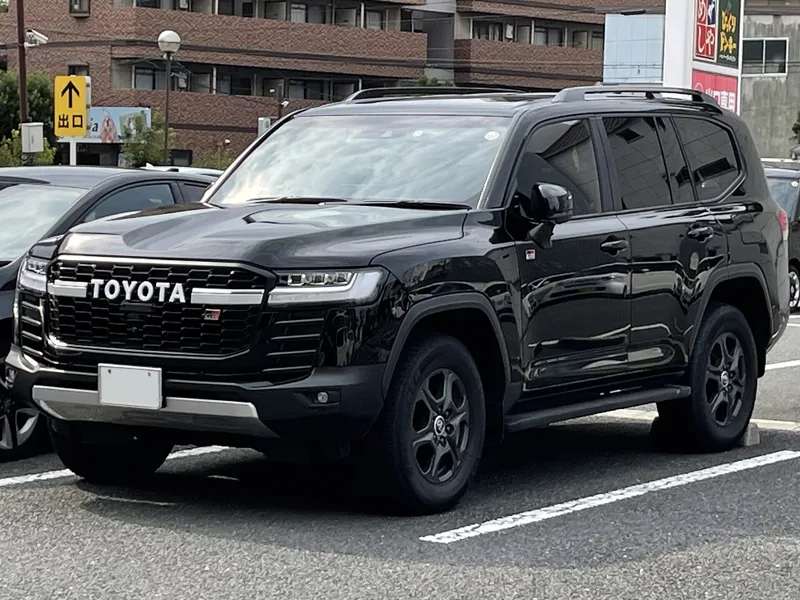
Toyota showed pickups, SUVs and vans built for work, adventure or extreme customisation. The UUV combined a Tacoma platform with a Sienna body and was shown at SEMA in 2015 with Wi-Fi, satellite TV, Skype and a night vision camera. The Land Speed Cruiser, shown at SEMA in November 2016, was a lowered J200 series Land Cruiser with a claimed 1,500 kW (2,000 hp).
The Land Speed Cruiser used a 5.7 litre 3UR-FE V8 with two Garrett turbochargers, one per bank, along with a mild body kit and a flat underbody. Toyota claimed a top speed of 355 km/h (220 mph). Its frame and suspension were modified to lower the car substantially for stability at high speed.
The Tacoma Back to the Future Concept was based on the pickup from Back to the Future Part II. It had tubular bumpers, a roll bar, KC off-road lights and a throwback graphic on the tailgate. With a V6 it could reach 185 km/h (115 mph), producing 207 kW (278 hp) at 6,000 rpm and 359 N m (265 ft lb) of torque at 4,600 rpm. Its towing capacity was 2,948 kg (6,499 lb).
The Extreme Sienna was a heavily modified minivan built by Real Time Automotive in collaboration with Toyota. It had a custom candy blue paint job, a wide-body kit, 21x10 forged wheels and an interior with a 32 inch flat-screen TV and a JBL 5.1 home theatre system. Its rear layout appeared to take cues from the Royal Lounge version of the Alphard.
The HiLux Tonka Concept was built by Toyota Australia to mark Tonka's 70th birthday and Toyota's 80th in March 2017. Its ride height was raised by 150 mm, and it rode on 17-inch wheels with 35-inch tyres. The Hilux Bruiser, built by Arctic Trucks for Toyota Great Britain, resembled a Tamiya radio-controlled model with high-lift suspension and 305/80 R17 tyres.
Which Toyota concepts were April Fools' jokes?
Two concepts from Toyota's regional teams were April Fools' jokes. The PieAce was announced as a convertible HiAce with a built-in pie oven in 2019. Toyota Australia released a press release with photoshopped images, and the joke claimed that 2,019 PieAce vans had been built to match the year.
The PieAce oven had four racks and reached 250 degrees Celsius (480 degrees Fahrenheit). An alarm on the dashboard told the driver when the pie was ready to eat. The Yaris Adventure followed the same pattern in 2020. It was a subcompact pickup with two doors and two seats, a 1.5 litre inline-four producing 77 kW (103 hp), and a payload capacity of 135 kg (297 lb).
How did Toyota's autonomous concepts work?
The Concept-i, the LQ Concept and the e-Palette explored self-driving and AI-led cabins. The Concept-i appeared at the 2017 Tokyo Motor Show with two personal robots that communicated through lights, could drive itself and sensed the driver's feelings. Its Ride variant was a mini-city car that let wheelchair users drive, and its Walk variant was a mini-electric scooter for crowded cities.
The LQ Concept, shown at the 2019 Tokyo Motor Show, included an AI agent called Yui that delivers a personalised driving experience and selects music based on the driving environment. It used Toyota-developed SAE level 4 equivalent automated driving, and test drives in Tokyo began in September 2020. A 230 inch display screen presented driving information over the view through the windscreen.
The Accessible People Mover was unveiled on 18 July 2019 for the Tokyo Olympics and Paralympics. It had three rows of seats for up to 12 people, a top speed of 19 km/h and a range of 100 km, and it had Level 4 autonomous driving capability. Toyota provided 200 of the vehicles to move people at the Olympics. The e-Palette, a battery electric minibus, was shown at the 2019 Tokyo Motor Show, with large doors and electric ramps to help Paralympic athletes board.
What were the Setsuna and Camatte concepts?
The Toyota Setsuna was a concept car shown at the Milan Design Week festival in 2016. It was based on the Camatte and was an open-air car made from 97% cedar wood. It reached 45 km/h (28 mph) and covered 26 km (16 miles) on a charge. The car was designed to last up to the year 3000 before its wood would need replacing, and a 100 year meter counted down that period.
Toyota worked with Sumitomo Forestry on the wood selection and assembly methods, and it consulted carpenters who specialised in temple and shrine construction as well as ship's carpenters. The Camatte Setsuna, shown at the April 2016 Milan Furniture Fair, was a wooden roadster version of the Camatte electric chassis, with the body fitted using traditional Japanese joints that did not need nails.
What did Toyota's concept programme achieve?
Toyota's concepts gave the company a public way to test designs, technologies and new markets without committing to production. The best-known outcomes were the GT 86, the Aqua, the Yaris Hybrid, the C+pod and the fifth-generation Supra and RAV4 design. Other concepts, such as the i-Road and the APM, showed how small electric vehicles and autonomous shuttles might be used in cities and at events.
Many concepts also drew strong public interest. The FT-AC drew strong feedback at the Los Angeles show, and an executive at Toyota USA said there was a strong chance it would be produced in the style of the FJ Cruiser. The design was later adapted to the fifth-generation RAV4, which shows how a show car can change a production model.