The Falcon name began as a 1960 American compact, but in Australia the Falcon FG was the Holden Commodore VF's direct rival, and that is the match this comparison covers.
The Ford Falcon name covers a 1960 American compact and the Australian Falcon FG, which was the Holden Commodore VF's direct rival. The Commodore VF was built from 2013 to 2017, with the LS3 V8 in its Series II.
The name Ford Falcon belongs to two very different cars, and this comparison has to be clear about which one it means. The first was a 1960 American compact that was sold from 1960 to 1970. The second was the Australian Falcon, which Ford Australia built as its own line from 1972 to 2016, and it was the Holden Commodore VF's direct rival in the 2010s. The match that matters most here is the Falcon against the VF Commodore.
Were the Ford Falcon and Holden Commodore VF rivals?
Yes, in Australia. The Ford Falcon FG was the direct competitor to the VF Commodore, and the two cars were both large family sedans sold to the same buyers in the same years.
The original 1960 Falcon was a different car. It was an American compact, developed from the full-size Galaxie, and it was never sold against the VF Commodore, which came more than fifty years later.
The Australian Falcon's history therefore carries the rivalry. Its line ran from 1972 to 2016, while the Commodore VF was the Holden's full-size car from 2013 to 2017.
One name, two cars: the 1960 American compact and the Australian Falcon that stood against the Holden Commodore VF.
When did each car go on sale?
The North American Falcon was produced from the 1960 to 1970 model years. Its Australian successor was a distinct line from 1972, which lasted through 2016.
The Holden Commodore VF was produced from June 2013 to October 2017, when Holden's former Australian subsidiary of General Motors ended local production. It was offered as a sedan and wagon, with the Holden Calais as the luxury nameplate and the Holden Ute as the utility.
It followed the VE as the second version of the fourth Commodore generation, and it was the last Commodore built in Australia.
How were the two cars developed?
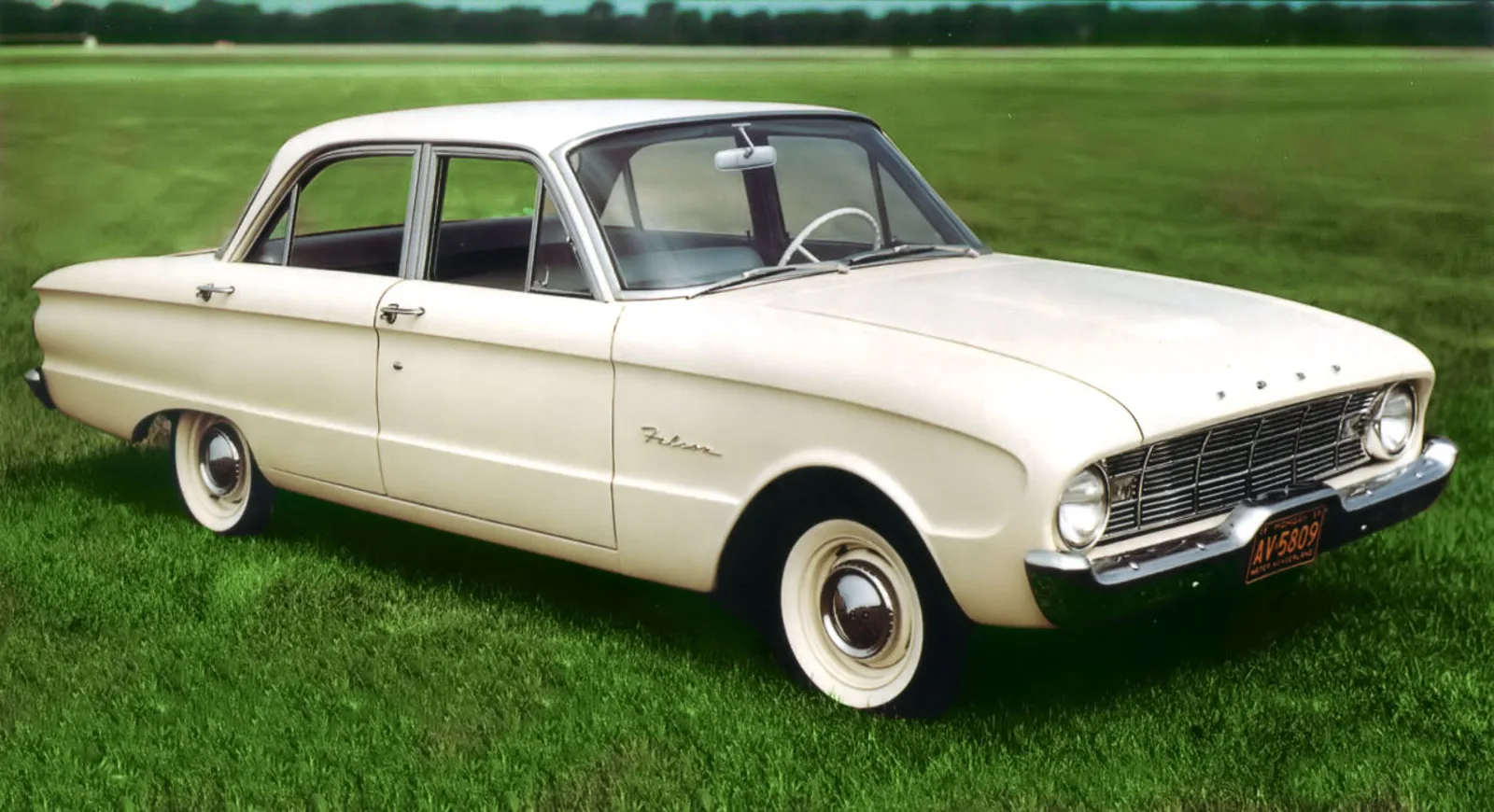
The original Falcon was started and sponsored by Ford general manager Robert S. McNamara, who insisted on low costs and weight. Engineer Harley Copp used a unibody on a standard suspension, which gave room for six passengers.
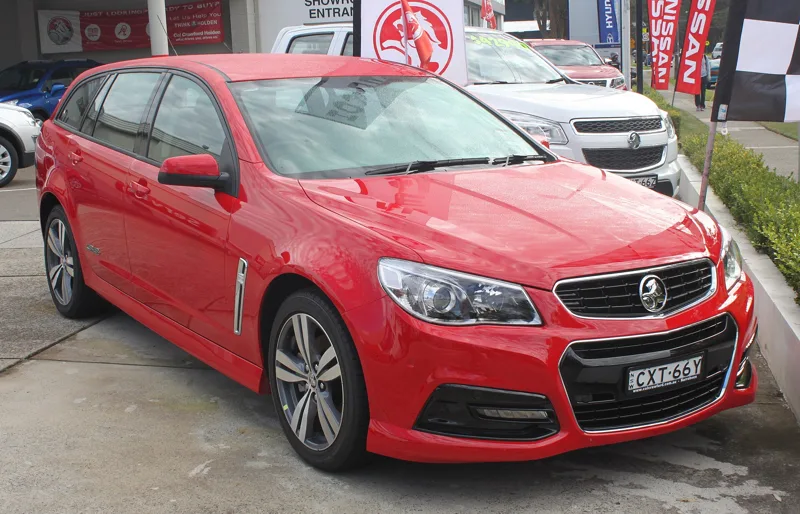
The VF sits on General Motors' Zeta architecture, the same base the VE used. It was an evolution of the VE, with new front and rear styling, altered headlights and tail lamps on the sedans, and a lip spoiler in place of a rear wing on the performance models.
The VE supplied the shell, glass, doors, mirrors and roof, and the wheelbase and track were left alone. The VF's changes were concentrated in styling, the interior and the powertrain.
What are the Ford Falcon and Holden Commodore VF specifications?
| Specification | Ford Falcon (North American, 1960) | Holden Commodore VF |
|---|---|---|
| Years | 1960 to 1970 model years | June 2013 to October 2017 |
| Class | Compact, scaled down from the Galaxie | Full-size car, Holden's flagship |
| Body styles | Sedans, hardtops, convertibles, wagons, Ranchero pickup | Sedan and wagon; Holden Ute utility |
| Platform | Unibody on a standard suspension | GM Zeta platform, first used by the VE |
| Launch engine | 144 CID (2.4 L) Mileage Maker six, 95 hp (71 kW) | 3.0-litre SIDI V6 in the Evoke; 6.0-litre L77 V8 in the SS |
| V8 option | 260 CID V8 in the 1963 1/2 Sprint, at 164 hp | 6.2-litre LS3 V8 at 304 kW (408 hp) and 570 N-m (420 lb-ft) from VF II |
| Drag coefficient | not recorded | 0.30, down from 0.33 on the VE |
| Safety | Federal safety equipment added in 1967 | Five stars from ANCAP; pedestrian protection marginal at 15.41 of 36 points |
| Sales | Over half a million in the first year | Not recorded in this comparison |
| Successor | Maverick, Comet, Granada and Monarch on the same platform | Not recorded in this comparison |
What did the Falcon's 1962 and 1963 updates bring?
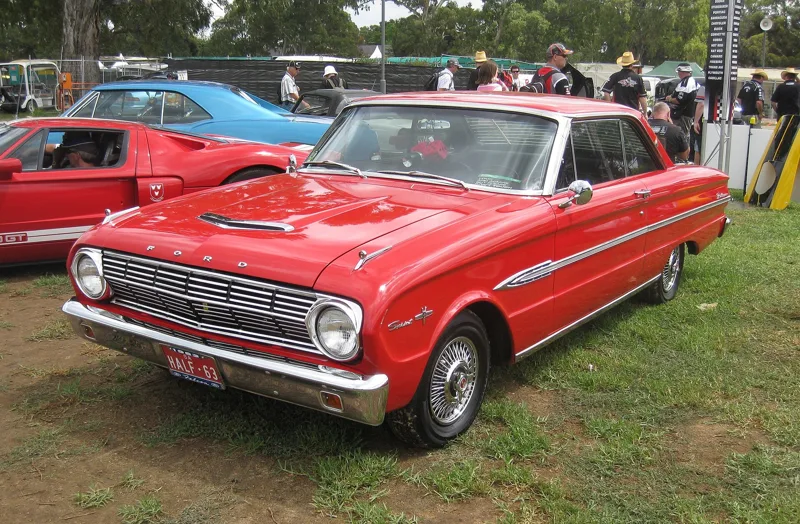
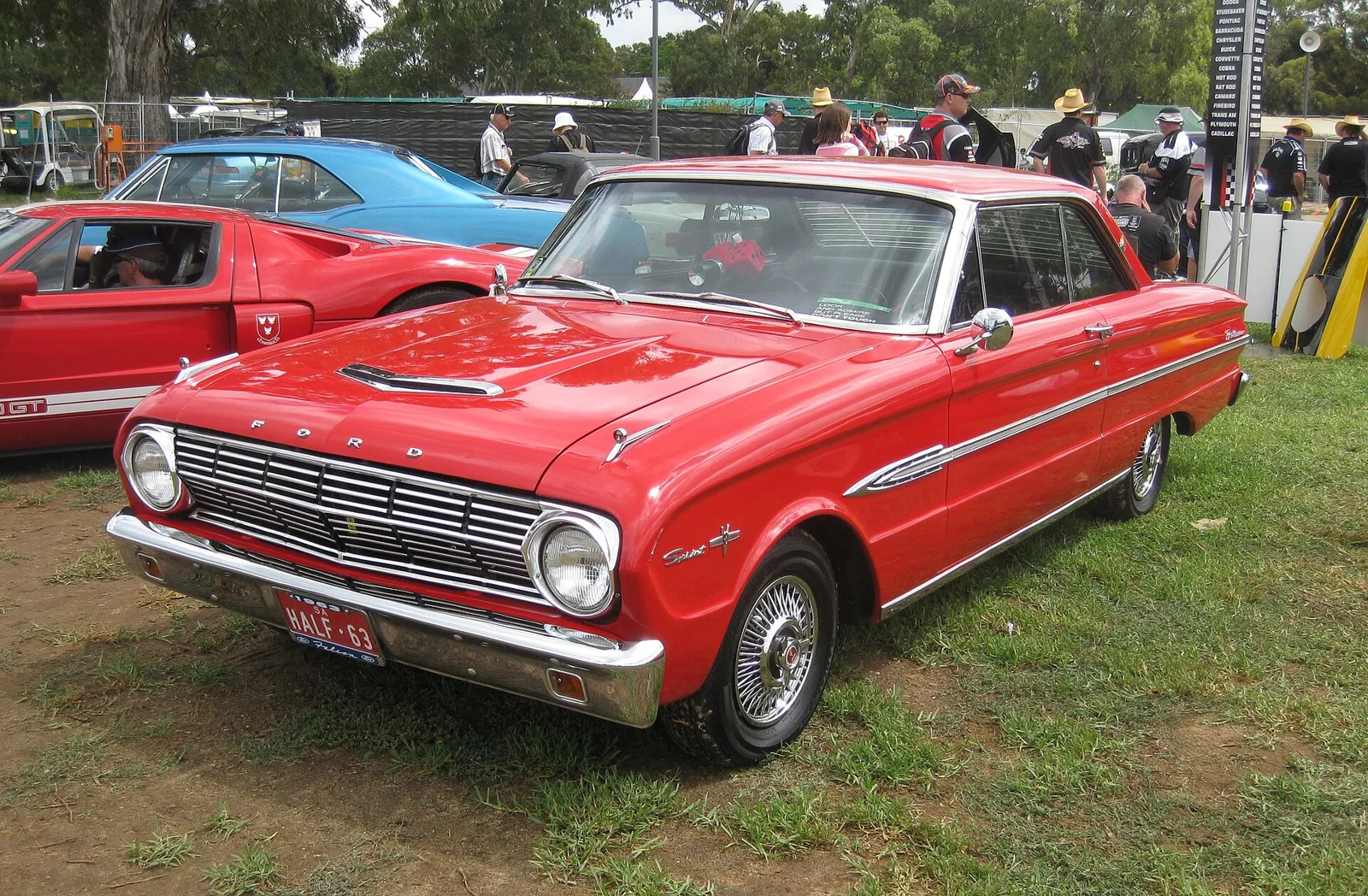
For 1962 the Falcon got a gentle restyle, with a new grille, front bumper and tail lights, and a chrome trim piece on the hood that implied a scoop. A Squire wagon with faux wood trim arrived that year. The bucket-seat Futura received a slightly upgraded interior, factory-fitted safety belts and different side spears.
Halfway through 1962 the roof line at the back window was changed to a more Thunderbird-like design, and a four-speed transmission was offered for the first time. The Futura sedan also gained a flat rear window in line with other Fords of the era.
In 1963 the range grew with a four-door Futura, a Deluxe wagon, Futura convertibles and the new Sprint. The Sprint's Falcon-based design fed directly into the Mustang a year later, which made the 1963 1/2 Sprint nearly mechanically identical to the 1964 1/2 Mustang.
How did the engines compare?
The 1960 Falcon's six produced 95 hp from 144 CID and used a single-barrel carburettor. The 1961 model added a 170 CID six at 101 hp, and in 1963 1/2 a 260 CID V8 at 164 hp arrived in the Sprint.
Show-car versions of the SS V and Calais V were unveiled on 10 February 2013, and the VF was tested in Germany, the Middle East, North America and Sweden as well as Australia.
The VF used the engines carried over from the VE, with minor changes to improve performance and fuel efficiency. Its V8 engines were E85 compatible, and the V6 engine was dropped in the 2015 model year.
The Series II VF II in September 2015 moved the V8 to the 6.2-litre LS3, which made 304 kW (408 hp) and 570 N-m of torque. The LPG versions were discontinued with that update.
What made the VF lighter and more efficient?
The VF was 43 kilograms (95 lb) lighter than the VE, through the use of aluminium body panels and components. Its electric power steering replaced the hydraulic system, which improved fuel economy at the expense of some steering feel.
The new styling improved aerodynamics, and the drag figure fell from 0.33 to 0.30. Fuel use dropped by three to eight percent depending on engine and specification.
The 1960 Falcon was a far simpler car, and its drag and weight figures are not recorded in this comparison. Its appeal was in its size, cost and wide range of bodies rather than in its efficiency.
What was the VF's safety record?
The VF achieved five stars in the ANCAP safety ratings. It was found to have good whiplash protection, though pedestrian protection was rated marginal at 15.41 of a possible 36 points.
The VF had several recalls. In May 2014 nearly 42,000 VF and WN Caprice models were recalled over a seatbelt pretensioner wiring harness, a windscreen wiper drive gear recall followed a month later, and LPG models were recalled in July over a feed hose.
The 1960 Falcon's safety record is not recorded in this comparison. The 1967 federal safety equipment that was added to the later Falcon included dual-circuit brakes and energy-absorbing steering wheels.
What did the HSV versions add?
Holden Special Vehicles sold VF-based models in the Gen-F series from August 2013, including the ClubSport, Grange, GTS, Maloo and Senator Signature. The ClubSport used a 6.2-litre LS3 at 317 kW (425 hp), while the R8 reached 325 kW (436 hp) and the R8 SV enhanced option 340 kW (456 hp).
The GTS was the flagship, with a supercharged LSA engine at 430 kW (577 bhp) and 740 N-m (546 lb-ft). A GTSR followed in 2015 with 435 kW (583 hp) and a Tremec six-speed manual.
The HSV GTS and Maloo were also sold in the United Kingdom under the Vauxhall VXR8 range, which was discontinued in 2017.
Which car sold more?
The VF's sales are not recorded in this comparison, so a complete sales race cannot be called. What is recorded is that large-car sales in 2013 fell by 14.7 per cent, with the Commodore, Ford Falcon and Toyota Aurion all losing volume.
The original 1960 Falcon sold strongly, with over half a million in its first year and over a million by the end of the second. That early success came from a market that was still discovering the American compact.
The two cars therefore cannot be compared on a like-for-like sales basis, since they were sold in different decades and different markets. The falling market for large cars in 2013 is the common thread of the Australian era.
How did the Commodore's model range work?
The Commodore Evoke was the entry-level nameplate, replacing the Berlina and Omega. It used the 3.0-litre SIDI V6, with an optional 3.6-litre LPG V6, and came only with an automatic transmission.
The SV6 was the sports V6 nameplate, with a sports bodykit, FE2 suspension and 18-inch wheels. The SS was the sports sedan, using the 6.0-litre L77 V8 until the Series II brought the LS3.
The Calais and Calais V were the luxury models, with chrome highlights, leather seats and 18-inch wheels. The Calais V added a satellite navigation system, parking assist and a 9-speaker Bose audio system.
How was the Falcon advertised?
Charlie Brown and Lucy Van Pelt appeared in the Falcon's printed material and stayed on the brand until 1965. The TV spots were the first animated outings for those characters, with Paul Frees doing the voice-over.
Ford boasted of the good fuel economy of the six-cylinder cars, claiming 30 mpg-US in advertising. In a Mobilgas economy run the Falcon achieved 32.5 mpg-US.
Which car suits which buyer?
The Falcon suits a buyer of the 1960s who wanted a compact American car with a choice of body styles and a V8 option late in its first generation.
The Commodore VF suits an Australian buyer who wanted a full-size Holden with a range of V6 and V8 options, five-star safety and a choice of sporting trims up to the HSV models.
The figures do not settle which was the better car, because they belong to different decades and markets. The VF had the newer design and the stronger V8 options, while the Falcon had the longer American history and the wider original range of bodies.