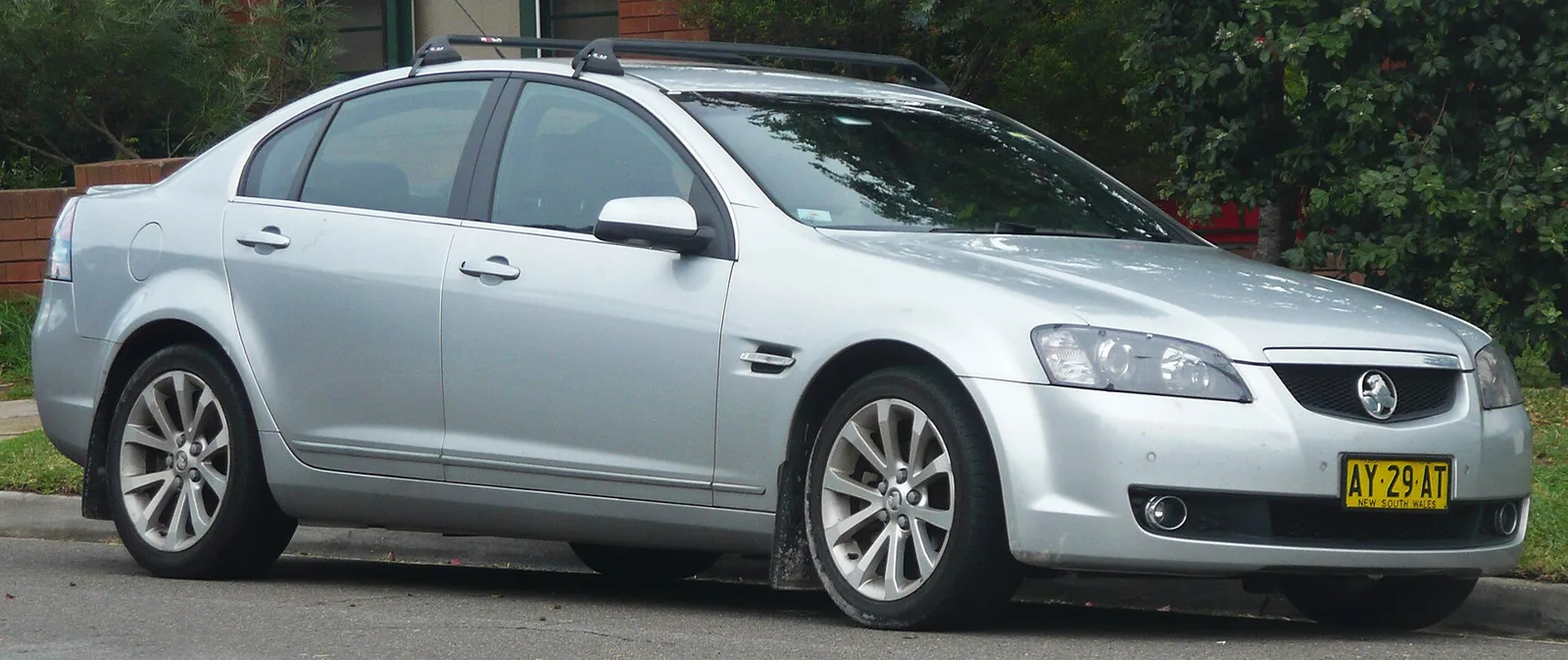
From the 2000 VU to the 2017 VF, the coupe utility that carried Holden's V8 performance, four-door Crewman and One Tonner cab-chassis.
From 2000 to 2017 Holden built the Ute on Commodore platforms, offering V6 and V8 engines through the VU, VY, VZ, VE and VF generations. The four-door Crewman and the cab-chassis One Tonner joined the range in 2003 and later left it.
The Holden Ute was a coupe utility built by Holden, the Australian arm of General Motors, from 2000 to 2017. "Ute" is the everyday Australian term for a coupe utility, and the model became one of the country's best-known vehicles. Holden also built a four-door crew cab, the Crewman, and a cab-chassis version, the One Tonner.
What was the Ute and how did it start?
The Ute range began with the VU, which replaced the Holden VS Utility. It arrived 36 months after the VT Commodore sedan, in time to share the launch of the VX Commodore series. The VU used the wheelbase of the VT Commodore wagon and the WH Statesman and Caprice, which was 116 mm (4.6 in) longer than before.
The Ute shared the Commodore interior, and it picked up the VX's upgraded equipment and restyled exterior. The range was offered in Base, S and SS forms, built up from the matching Commodore specifications, and it received a minor refresh with the VU Series II alongside the VX Series II.
A coupe utility that began as a Commodore-based workhorse and became a lifestyle vehicle with a V8 at the top.
Which engines did the early Utes use?
The launch engine was a 3.8-litre 152 kW (204 hp) Ecotec V6 of Buick design, built locally. A 5.7-litre 225 kW (302 hp) Generation 3 V8 was offered as an option, with six-speed manual and four-speed automatic gearboxes on the V8 models. Holden replaced the V6 with a 3.6-litre Alloytec unit in 2004.
The V8 itself changed in 2006, when the Generation 3 unit gave way to the 6.0-litre Generation 4, later updated to the L98 specification that year. The new V8s added 10 kW (13 hp) over their predecessors. Holden moved to the new engines after the Generation 3 failed to meet the Euro III emission standards that took effect on January 1, 2006.
What was the SS 50 special edition?
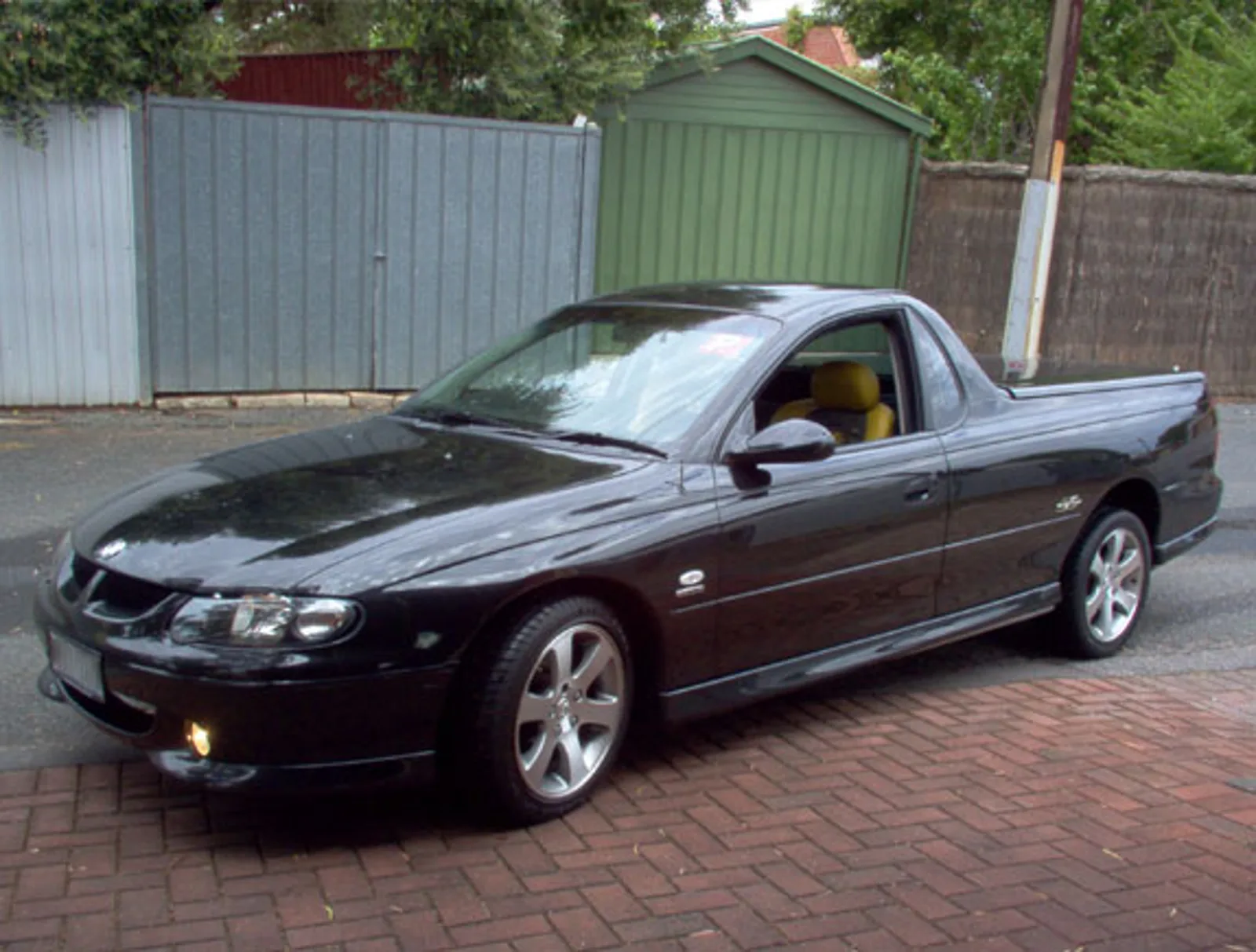
In October 2001 the VU Ute appeared as a special SS 50 to mark Holden's 50th anniversary. Only 500 were built, and they were identical in colour: black exteriors with a partial leather interior and plenty of hyper yellow accents.
The SS 50 also had a chrome sports bar on the back, a black-and-yellow engine cover, a leather-wrapped steering wheel, leather-trimmed handbrake and gear knob, and an instrument cluster colour-matched to the sports seat bolsters. The VU was superseded by the VY range in May 2003.
How did the VY and VZ Utes change?
The Ute received its first major facelift in 2002 with the VY range, taking the sharper nose and more European interior of the sedan and wagon. The VY range then made a major change in 2003 with two new models: the One Tonner cab-chassis returned after an 18-year break, and Holden's first four-door utility, the Crewman, arrived.
The Crewman and One Tonner gave the Ute range a rapid sales lift, its first major growth since the 1990 reintroduction. By December 2003 the Crewman range included Holden's first all-wheel-drive utility, the Crewman Cross 8, with bolstered wheel arches and raised ride height. The VY Series 2 range added 10 kW (13 hp) to the Generation 3 V8. The VY gave way to the VZ range in August 2004.
The VZ was the final series of the VT generation. Its main change was the all-new Alloytec V6, which replaced the Ecotec V6 that had been in use since the 1995 launch of the VS Commodore. The Ute used the lower-capacity Alloytec 175 as its standard engine, with a six-speed manual and an upgraded four-speed automatic as the option.
In August 2006 the S became the SV6, with the five-speed automatic from the sedan and a power increase to 190 kW (255 hp). The SS V8 was lifted to 245 kW (329 hp) in the Generation 3 form, or it could be fitted with the 260 kW (349 hp) 6.0-litre L98. The production of the One Tonner ceased in December 2005 to make room for the VE Commodore.
The Generation 4 V8s also lost two features that their American counterparts kept, Displacement on Demand and variable valve timing, although the Ute had previously gained 15 kW (20 hp) from the earlier engine. The Alloytec 175 lost 3 kW (4 hp) in tuning to meet Euro III.
The VZ Utes stayed on sale well after the VE sedan arrived, as did the VZ wagons. The Crewman and all-wheel-drive Utes disappeared from showrooms once Holden stopped building them, and the One Tonner was dropped again after poor sales. The VZ Ute was succeeded by the eighth-generation VE Ute in September 2007.
What was the Crewman like?
The Crewman was a four-door version of the Ute with a second row of seats. It had a longer wheelbase, 3,206 mm (126.2 in) against the Ute's 2,939 mm (115.7 in), and a shorter tray, 1,463 mm (57.6 in) against 2,193 mm (86.3 in). Holden launched the VY Crewman in September 2003, and the VZ Crewman came with the VZ Commodore and Ute in August 2004.
The Crewman Cross 8 was an all-wheel-drive version powered by a 225 kW V8, with an off-road look. Holden Special Vehicles later modified it into the HSV Avalanche XUV. The longer chassis had a larger turning circle and used more fuel than the Ute, and the car was speed limited to 160 km/h because of its long driveshaft.
The Cross 8 received bolstered wheel arches and a raised ride height, and its only drivetrain was the upgraded Generation 3 V8 with a four-speed automatic. In the VY generation, V6 versions of the One Tonner and Crewman were available only with automatic transmission.
Holden chose not to build a Crewman for the VE series, citing weak sales and poor consumer uptake.
What was the One Tonner?
The One Tonner was a cab-chassis utility built from 1971 to 1985, from the HQ to the WB, and again from 2003 to 2005 on the VY and VZ Commodore. In South Africa it was sold as the Chevrolet El Toro between 1974 and 1978.
The HQ One Tonner, built from 1971 to 1974, offered 3.3-litre and 5.0-litre engines among its choices, and the HJ from 1974 to 1976 came with 4.2-litre and 5.0-litre V8s. The HX from 1976 to 1977 used low-emission engines to meet the ADR27A rules, and the HZ from 1977 to 1980 brought Radial Tuned Suspension, which greatly improved handling. The WB followed from 1980 to 1985 with a 3.3-litre straight six as standard.
The 2003 return came after an 18-year gap. The VY One Tonner was offered in just two trims, Base and S, both with the 3.8-litre V6 and a four-speed automatic. The VZ range added the Cross 6, an all-wheel-drive One Tonner, and the SVZ, which brought leather seats and paddle shifts.
What did the VE and VF Utes bring?
The VE Ute went on sale in August 2007, based on the VE Commodore. It spoke to a growing taste for utes as lifestyle vehicles, moving them away from the traditional workhorse market. The base Omega had a 3.6-litre V6, rated 180 kW (241 hp) and 330 Nm (243 lb ft). It had similar standard features to the Omega sedan, but could carry more than the SS-V, SS and SV6. The SV6 replaced the older S-pack with a High-Output V6 later lifted to 210 kW (282 hp).
The SS and SS-V used a 6-litre V8 with 270 kW (362 hp) and 530 Nm (391 lb ft). The SS-V Redline added Brembo brakes, 19-inch alloy wheels and FE3 suspension. Unlike the VU to VZ generation, the VE range offered no double-cab, cab-chassis or AWD variants.
Until the mid-2009 MY10 update, a manual Omega could be ordered with the High-Output engine, rated 195 kW (261 hp) and 340 Nm (251 lb ft).
The VF Ute kept its VE bodywork from the C-pillar back and added updated features and styling. Production ended in 2017 with the closure of Holden's manufacturing in Australia, and the imported Colorado was sold until 2020, when the Holden brand was retired.
How did the Ute sell overseas?
Holden planned to sell the locally assembled Ute in America as a Pontiac G8 ST from 2009, beside the four-door G8 sedan. The plan was shelved on 6 January 2009 in a company-wide model review after the 2008 financial crisis, although G8 sedan exports were not affected.
Holden's Ute did sell abroad under other names. It was sold in South Africa as the Chevrolet Lumina SS from 2006 or 2007, and in the Middle East from 2009 or 2010. That made it the first full-size Chevrolet coupe utility since the El Camino was discontinued in 1987, although the Lumina never reached the United States.
What was the Maloo?
Holden's performance division, Holden Special Vehicles (HSV), built a high-performance version of the ute called the Maloo, starting in 1990. A VY-based cab-chassis Maloo concept was also built, with a 2003 launch planned if it went ahead.
What are the Holden Ute specifications?
| Specification | Detail |
|---|---|
| Production | 2000 to 2017, two generations |
| Early V6 (VU, VY) | 3.8-litre 152 kW (204 hp) Ecotec V6 |
| Early V8 (VU) | 5.7-litre 225 kW (302 hp) Generation 3 V8 |
| Alloytec V6 (VZ) | 3.6-litre 175 kW (235 hp), standard across the Ute range |
| VZ SS V8 | 6.0-litre 260 kW (349 hp) L98 option |
| VE Omega V6 | 3.6-litre 180 kW (241 hp), 330 Nm (243 lb ft) |
| VE SS V8 | 6-litre 270 kW (362 hp), 530 Nm (391 lb ft) |
| Crewman wheelbase | 3,206 mm (126.2 in), against 2,939 mm (115.7 in) for the Ute |
| One Tonner years | 1971 to 1985 and 2003 to 2005 |