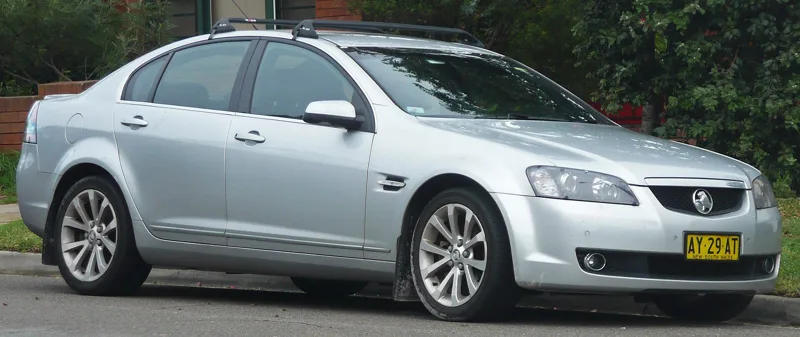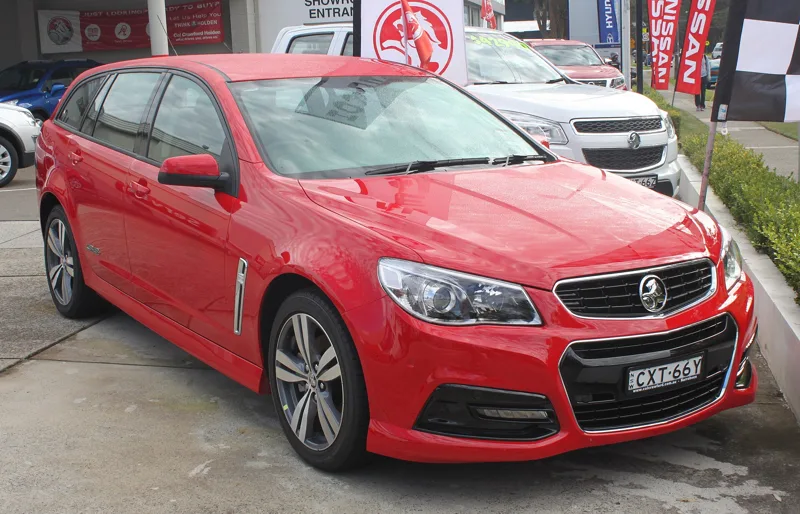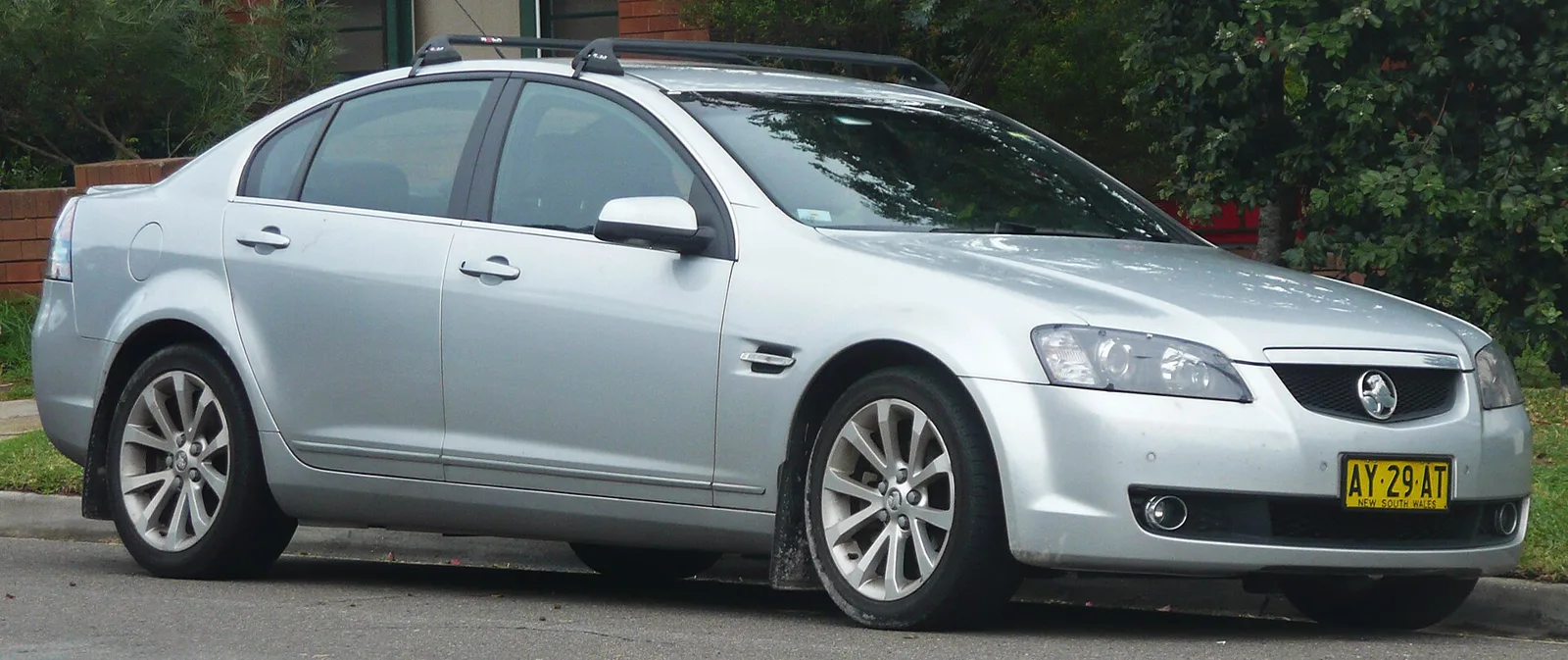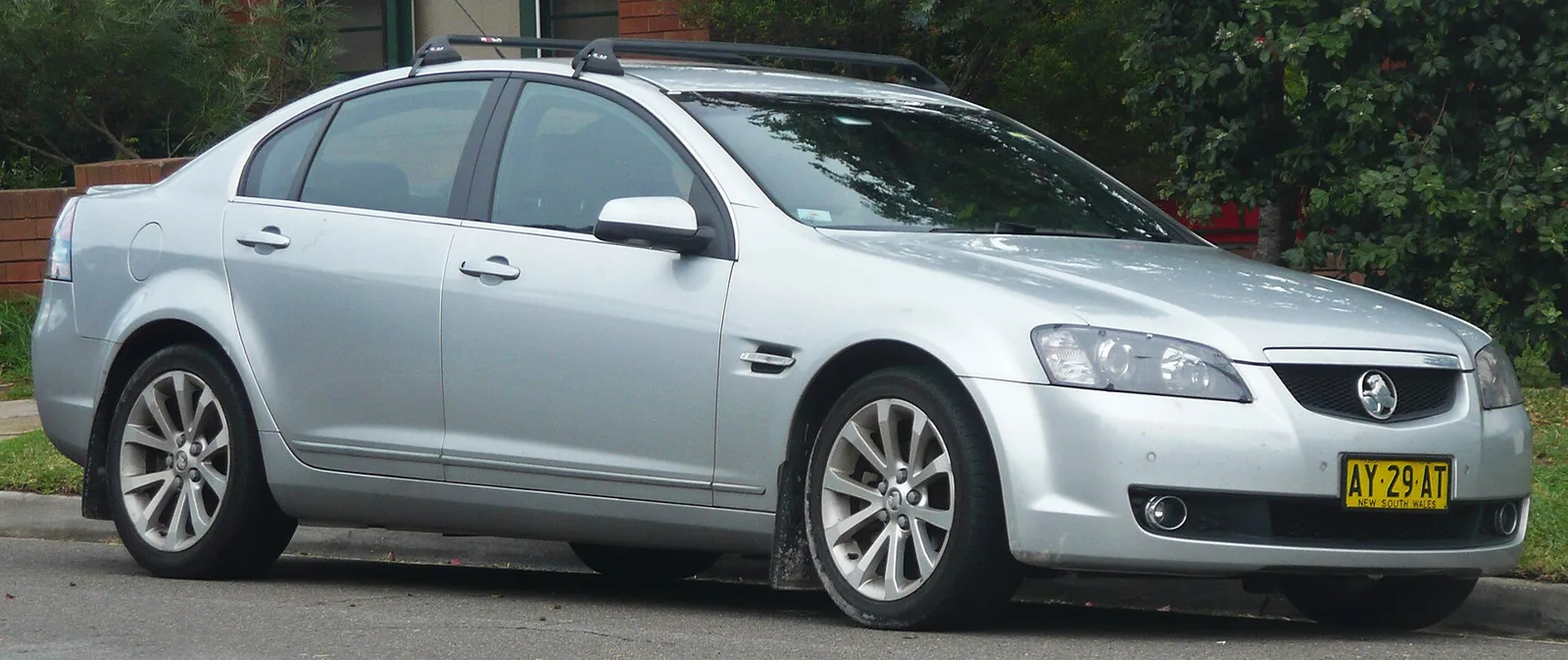
The first Commodore Holden designed in Australia from start to finish, with a new platform, a Sportwagon that broke with wagon tradition and a V8 range led by the SS.
Built between 2006 and 2013, the VE rode on the new GM Zeta architecture and came as the Berlina, Calais and Ute. Holden designed it in Australia rather than adapting an overseas car, and it opened the fourth generation of the Commodore.
The Holden VE Commodore was a full-size Australian car built from 2006 to 2013, and it was the first Commodore that Holden designed and developed entirely in Australia. It came as the Berlina, the Calais and the Ute, and it became one of the country's most popular cars. This profile covers only the VE generation, from the sedan's launch to the final cars built in 2013.
Why was the VE nicknamed a billion dollar baby?
Holden spent approximately A$1.03 billion developing the VE over seven years, making it the company's largest and most expensive project. Testing added up to 3.4 million kilometres of driving, about 2.1 million miles, before the cars reached customers. Critics later attached the billion dollar baby nickname to the car.
The first Commodore Holden designed entirely in Australia, built on a new platform and sold in huge numbers.
How was the VE sedan styled?
Michael Simcoe, Holden's design chief, sketched the first concept in late 1998, a sleek sedan with a long wheelbase and brief overhangs. Eight early sketches were whittled down to four by a team vote, and each of the four went to full-size clay before a single direction was chosen in July 2002.
Peter Hughes, the exterior design manager, turned an earlier Simcoe sketch into a two-dimensional image in early 1999. The four finalists shared the same basics: strong arches over the wheels, a bold stance and short overhangs at each end.
Once one direction was picked, the design moved onto a computer. Holden used Autodesk Alias software to refine a single concept, then sculpted it and placed it on the skidpan at Lang Lang Proving Ground. Designers and directors studied the car from close range and from a distance to judge its presence on the road.
In February 2003 the designers passed key information to the engineers, and Peter Hughes approved the finished design in May 2003. A fully transparent mock-up with a glasshouse structure followed in July 2003.
Holden then used the Torana TT36 concept, shown at the 2004 Australian International Motor Show in Sydney, to gauge public reaction to the exterior two years before the VE reached showrooms. The steering wheel and handbrake lever on the production car were adapted from that concept.
Why did Holden build a new platform for the VE?
Opel had stopped building the rear-wheel-drive Omega in 2003, leaving Holden two paths: borrow another General Motors platform or design a new one. Holden turned down the Sigma platform, a premium design aimed at the Cadillac CTS, and picked the new GM Zeta platform instead.
The Sigma was a premium rear-wheel-drive design, but Holden's engineers judged that its rear shoulder width was too narrow for what the car needed. Holden went its own way, and the Zeta later became the basis for several other GM vehicles.
Under the skin, the Zeta layout used double-pivot struts at the front and a four-link independent setup at the rear. Earlier Commodores had used struts at the front and semi-trailing arms at the rear, so the change was substantial.
Denny Mooney became Holden's chairman in January 2004 and made perceived quality the priority. He asked for panel gaps 0.5 mm (0.020 in) tighter than earlier targets, and the high-strength steel body ended up 50 percent stiffer than the outgoing car's.
Tailor-welded blanks went into the front chassis rails and the floor was reinforced, leaving a bare shell of 70 kilograms (150 lb). The company said the stiffer structure reduced noise, vibration and harshness while improving handling and crash safety.
How did the Elizabeth plant change to build the VE?
Holden redesigned its Elizabeth plant so whole sections of the car, including the engine and transmission, could be built on rigs away from the main line. The front-end module, carrying the headlights, bumpers and airbag sensors, could be lifted off as one piece, which eased repairs.
That method cut repair costs and gave easier access to the engine bay. GM had used the approach first, and the Holden version earned an SAE Australasia award in 2006.
The interior followed a modular Flex strategy. Audio systems and instrument clusters could be swapped between variants without pushing up production costs, which produced three interior styles, one each for the Functional, Performance and Luxury grades.
Smaller details came from the same thinking. A four-strut boot hinge replaced the old gooseneck arrangement, high-spec cars got expandable door pockets, and a blackout mode lit only the speedometer at night. The handbrake sat flush in a symmetrical console, so the car could be turned into a left-hand-drive model with little redesign.
When did each VE body style go on sale?
The sedan started production on 13 July 2006 at Elizabeth, South Australia, and was shown in Melbourne three days later. The Ute arrived after a reveal on 22 August 2007, and the production Sportwagon followed in July 2008, after its concept was shown late in 2007.
Holden held back the station wagon and the utility at first. The VZ versions of those bodies stayed in production while the VE sedan went on sale, so two parallel generations of Commodore were built for a time.
What made the Sportwagon a departure?
The Sportwagon was Holden's attempt to pull retail buyers away from SUVs with a lower, sportier estate. Its programme cost A$110 million and more than 500,000 kilometres of road testing, roughly 310,000 miles, and it was built on the sedan's wheelbase.
Up to 90 percent of VZ wagons had been bought by fleet companies, so Holden wanted a wagon that private buyers would choose. The company treated the Sportwagon as an alternative to SUVs for retail customers.
Breaking with tradition, the Sportwagon used the sedan's 2,915 mm (114.8 in) wheelbase instead of the longer one shared with the Caprice. Cargo space fell from 1,402 litres (370 US gal) in the VZ to 895 litres (236 US gal), while the near 50:50 weight distribution was kept.
The tailgate was hinged high into the roofline so the opening stayed large, and it needed only 268 mm (10.6 in) of clearance to swing open. Holden promoted that feature in television adverts. Stiffer springs, changed anti-roll bars and an extra rear ball joint dealt with the added weight, which was about 91 kg (201 lb) more than the sedan.
What was the VE Ute built to do?
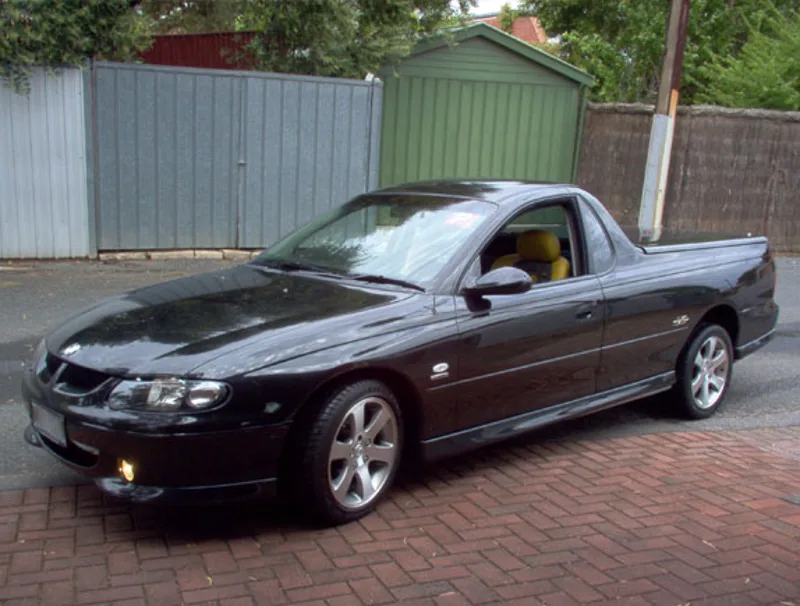
The Ute was designed as a lifestyle vehicle rather than a workhorse, and its programme received about A$105.1 million. It used the same 3,009 mm (118.5 in) wheelbase as the WM Statesman and Caprice, and its design dated back to 2000.
Many of the surfaces and lines along the car's flanks were settled in 2000 with the sedan, so the design had enough flexibility to take a Ute body. The Ute was unveiled on 22 August 2007 over the Internet.
Tony Stolfo, the VE's chief designer, said the horizontal tail light and raised numberplate housing gave the Ute a more car-like character. The full one-piece bumper did the same job at the front.
How safe was the VE in crash testing?
The VE's engine moved back and lower, and the battery went into the boot. That improved balance and allowed short overhangs, but it worried crash engineers at first. Five-star ANCAP ratings followed for the sedan and Sportwagon, and the Ute received its five stars in October 2009.
Engine placement was contested during development. Designers wanted the engine set far behind the front axle for short overhangs and a sportier look, but crash engineers feared it would reduce impact absorption. The compromise moved the battery to the boot, freed front-end space and produced a near-perfect 50:50 balance across every variant.
The fuel tank was also moved so that it sat in front of the rear axle line rather than behind it. In July 2006 Holden said the VE had one of the best body structures in the world, citing 5,000 simulated crash tests and 79 physical barrier tests.
The early ANCAP picture was mixed. The VE rated lower than the VZ in the offset frontal test, but its overall score edged higher thanks to better side-impact protection. That gave a side-impact score of 27.45 out of 37, and the car earned four stars.
Six airbags arrived as standard with MY09, which launched on 15 March 2008 and opened the door to the ANCAP side pole test and extra points. The MY09.5 update brought an energy-absorbing steering column shroud in October 2008.
The Omega sedan went to five stars in December 2008 with a score of 33.45, after a seat belt reminder pushed it over. The Sportwagon followed in February 2009, and the reminder became standard across the range with the MY10 update in August 2009.
Which engines did the VE use?
The VE launched with the Alloytec V6, a development of the VZ's engine, and the L98 V8 replaced the VZ's L76 at launch. Holden chose proven engine designs to reduce the risk of faults while the platform and drivetrain were both new.
The original V6 made more power than the VZ unit, and new timing chains cut engine noise. The four-speed GM 4L60-E automatic, first used in the 1988 VN Commodore, stayed on with subtle changes to its operation.
The manuals were the six-speed Aisin AY6 with the High Output Alloytec V6 and the Tremec TR6060 six-speed for the V8. The automatics were a five-speed, the GM 5L40-E, for the High Output V6, and the V8 took the six-speed GM 6L80-E. Both automatics had Active Select.
How did the bi-fuel V6 work?
The bi-fuel V6 ran on petrol or LPG through a Sequential Vapour Gas Injection system with reinforced valve seats. Offered from October 2006 in the Omega and Berlina, it made 175 kW (235 hp) on LPG, slightly less than the petrol engine.
The gas tank was a large 100 kg (220 lb) cylinder, which reduced boot space and nudged fuel consumption up. On LPG the engine gave up 7 hp (5 kW) and 4 lb ft (5 N m) against the petrol unit.
Which recalls hit the VE?
Holden issued several recalls in the VE's early years. The largest covered 12,830 Commodore and WM models over rear seat belt anchors in November 2006, and more than 86,000 VE and WM V6 cars over a fuel line rub in December 2007.
On 16 October 2006 a faulty fuel hose let fuel smell in the cabin, and that recall took in 1,521 V8 Commodore and WM Statesman and Caprice models.
A recall dated 10 April 2007 covered bi-fuel cars built from November 2006 to April 2007, because the service valve hand tap may have had undersized O-rings.
What changed with MY09.5 and MY10?
The MY09.5 update in October 2008 standardised the Alloytec V6 across the range and gave the Omega and Berlina variable valve timing. MY10, released in September 2009, brought new SIDI V6 engines in 3.0-litre and 3.6-litre sizes with a six-speed automatic.
Holden said output dropped slightly against the engine it replaced, and the premium exhaust and five-speed automatic were left out of the Omega and Berlina package.
The MY10 engines brought Spark Ignition Direct Injection, which Holden claimed could cut fuel use by up to 12 per cent. The 3.0-litre replaced the 3.6-litre in the Omega and Berlina and was the smallest Commodore engine since the 1986 VL straight-six.
Power in the 3.0-litre rose to 190 kW (255 hp) while torque dropped to 290 N m (214 lb ft). The 3.6-litre SIDI delivered 350 N m (258 lb ft) of torque alongside 210 kW (282 hp). Other MY10 changes included a recalibrated suspension, an extra rear ball joint, a rear anti-roll bar 24 mm (0.94 in) thick and the Tremec TR-6060 six-speed manual with an upgraded clutch.
What did the Series II update bring?
The MY11 Series II update came with an announcement on 31 August 2010, and the range went on sale on 10 September. It brought new front fascias, aerodynamic lip detailing on sedan boot lids, a 6.5-inch touchscreen, and E85 could be used in the 3.0-litre V6 and the 6.0-litre V8.
Headlamps were reshaped, the bumpers were revamped and each model received a larger grille with inserts suited to it. SV6, SS and SS V models gained unique circular air vents, and the Berlina got new alloys.
Holden-iQ, a 6.5-inch unit built by Siemens VDO, dropped the old CD changer for a single slot and a flash drive that could hold about 15 CDs of music. The unit was fitted as standard to the Omega, SS and SS V.
The V-Series models could also be ordered with a Redline sports package, which added forged, polished 19-inch alloy wheels from the Pontiac G8 GXP, Brembo four-piston brakes and stiffer FE3 suspension.
The MY12 update, with production starting on 6 September 2011, brought E85 compatibility to the 3.6-litre SIDI V6 and a handful of limited mechanical efficiency changes.
What were the main VE trims?
| Trim | Detail |
|---|---|
| Body styles | Sedan, Sportwagon, Ute |
| Sedan wheelbase | 2,915 mm (114.8 in) |
| Ute wheelbase | 3,009 mm (118.5 in) |
| Omega | Entry level; Bosch version 8.0 stability control as standard |
| SV6 | High Output Alloytec V6; air conditioning standard; FE2 suspension |
| Berlina | Mid-range; seven-spoke 17-inch alloys; Luxury interior |
| Calais | Flagship with five-speed automatic |
| SS | 6.0-litre V8; T-56 six-speed manual; quad exhaust outlets |
| Final production | 17 May 2013, SS V sedan |
The VE line-up ran from the entry-level Omega through the SV6 and the mid-range Berlina to the Calais flagship, with the SS and SS V on top. Trim changes mostly affected the engine, the interior style and the equipment list, so buyers could pick the level of performance without changing the body.
How did the SS and SS V compare?
The SS paired a 6.0-litre V8 with a T-56 six-speed manual and quad exhaust outlets. Motor magazine gave the SS its Bang For Your Bucks prize in both 2006 and 2007. The SS V then became the first series-production Holden to carry the V-Series name.
The SS V offered extra luxuries at close to the SS price, with metallic-style pedals and instruments matched to the exterior colour. Its wheels were five-spoke 19-inch alloys, with 20-inch wheels available as an option.
The SS V 60th Anniversary, released on 1 May 2008, added 20-inch 10-spoke alloys, navigation, parking sensors at the rear, a raised spoiler and chrome door handle accents.
After Pontiac left North America in 2009, Holden fitted about 1,500 SS V cars with a Pontiac G8-style nose. The edition was first shown in public on 2 October 2009 at the Deniliquin Ute Muster, and 500 units of each body style were built.
What were the HSV E Series cars?
The E Series was the performance range that Holden Special Vehicles built on the VE, launched in August 2006 with the Clubsport, Maloo, Senator and GTS. Early cars used a 6.0-litre LS2 V8, which gave way to a 6.2-litre LS3 in 2008.
The E Series 2 of 2010 brought a facelift with new bumpers and a twin-nostril bonnet, plus launch control and a stability system with normal and competition settings. The E Series 3 in 2011 brought LPG compatibility, updated driver interface technology and a standard touchscreen.
The Clubsport family ranged from the R8 Tourer wagon to the CSV CR8 aimed at the Middle East, with a Vauxhall-badged VXR8 sold in Britain.
The limited-run W427 carried a 7.0-litre LS7 V8 rated at 503 hp (375 kW), and its torque reached 472 lb ft (640 N m), which made it the most powerful car in the E Series range.
How did the VE sell at home and abroad?
The VE was Australia's best-selling car for much of its run and earned the 2007 Wheels Car of the Year award, the fifth Commodore to do so. Holden built over 520,000 VE Commodores, of which 350,000 were sold at home.
Competition was real. Toyota's Corolla overtook the VE in some months of 2008 as petrol prices rose, but the Sportwagon helped the Commodore recover its top spot, accounting for over 30 percent of Commodore sales.
Exports began in September 2006 with New Zealand. Sales in the Middle East and South Africa carried the Chevrolet Lumina name, and Brazil took the Berlina as the Chevrolet Omega from 2007.
In North America, Pontiac imported Commodore sedans as the G8 from 2008 to 2009. That ended when GM's Chapter 11 bankruptcy led to the Pontiac brand being dropped. In 2009 the German converter Bitter showed its Vero Sport, based on the SS, at the Geneva Motor Show.
When did production of the VE end?
The last VE was built on 17 May 2013. The car was an SS V sedan in a green finish, sent to a dealer in the Northern Territory, and the VF Commodore followed it. Holden had built more than 520,000 VE Commodores over its life.