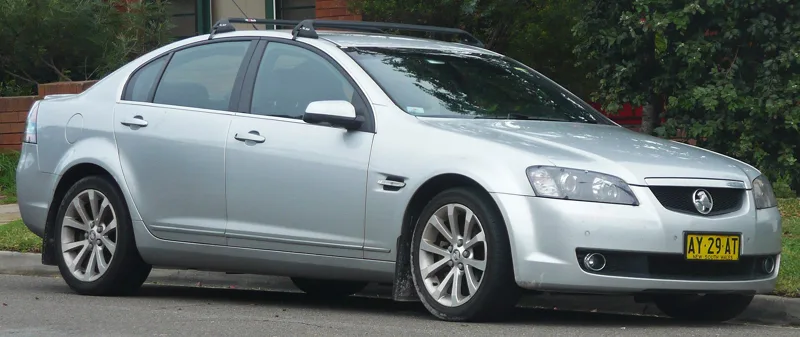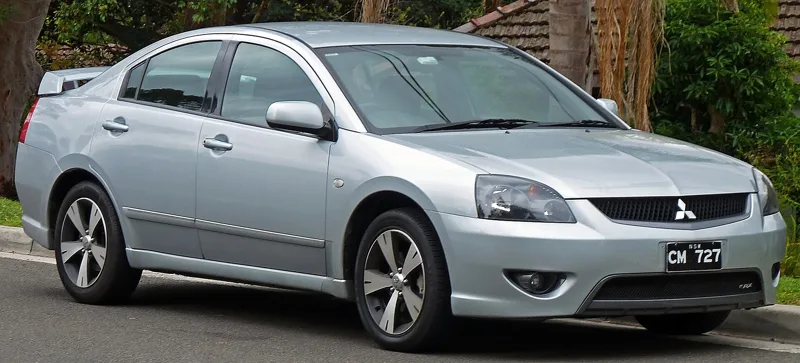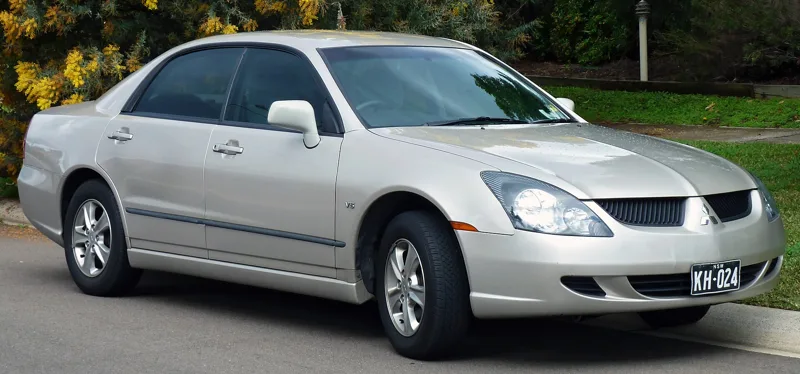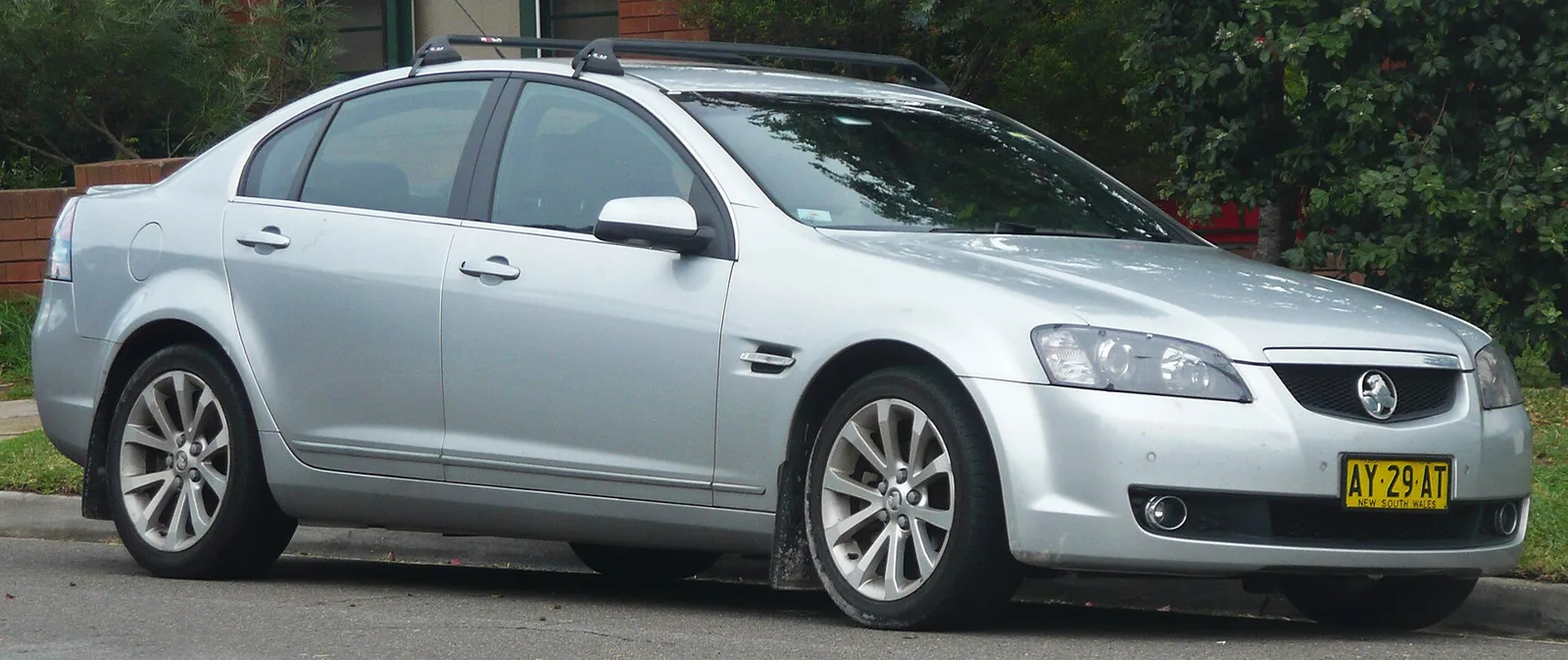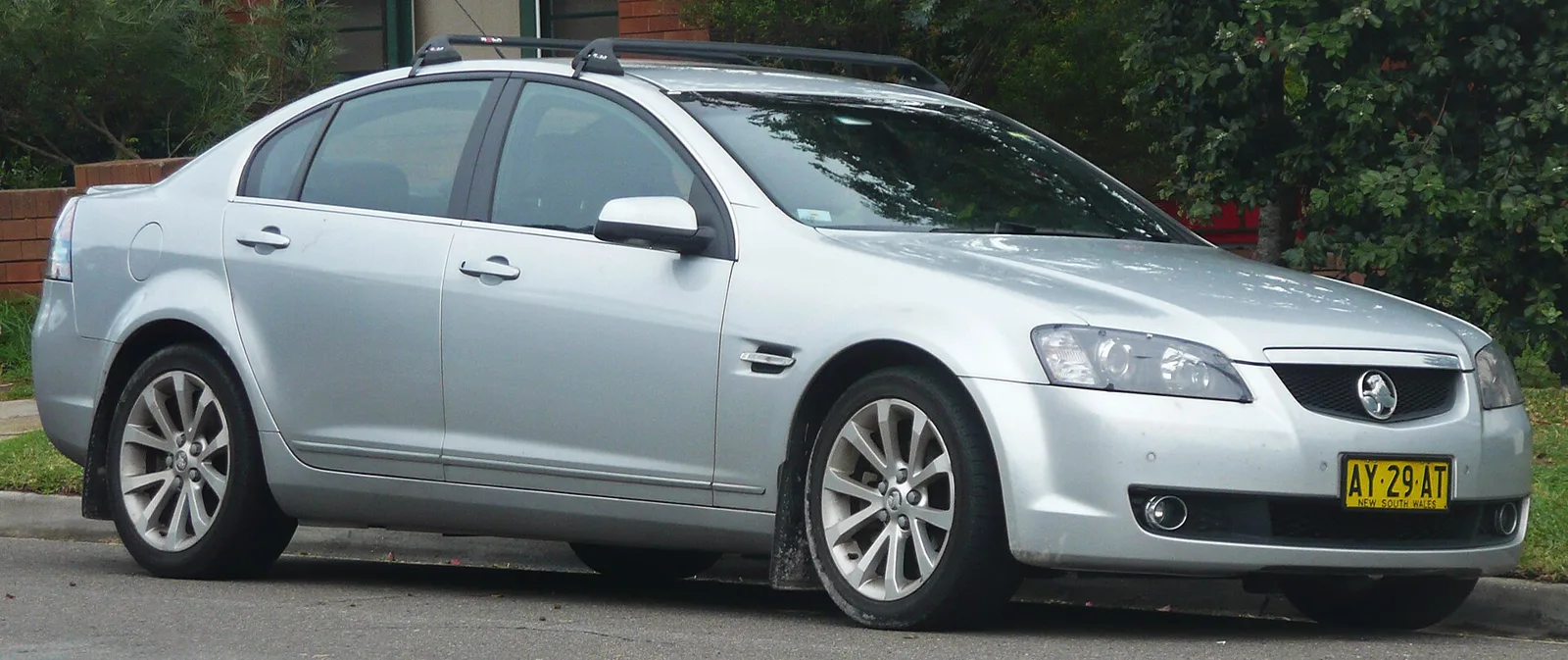
Holden spent more than a billion Australian dollars on a home-grown full-size sedan, while Mitsubishi bet its last Australian-built car on a front-drive family sedan with a famous warranty.
The Holden Commodore VE and the Mitsubishi 380 were Australian-market sedans that competed in the large car segment from 2005 to 2008. The VE was a rear-drive Holden with a development budget of about A$1.03 billion, while the 380 was a front-drive Mitsubishi built on a Galant with a five-year warranty.
The Holden Commodore VE and the Mitsubishi 380 both aimed at the Australian family car buyer, and both were made in South Australia. The VE was the largest and most expensive project Holden had undertaken, while the 380 was the last car Mitsubishi built in Australia.
The two cars were rivals in the local market, where the 380 was set against the Commodore alongside the Toyota Aurion and the Ford Falcon. The difference lay in how each maker went about it, with GM's Holden putting its full weight behind a new platform and Mitsubishi reworking a Galant for the Australian road.
Were the Commodore VE and the 380 rivals?
They were direct rivals in the Australian large car market. The 380 competed against the traditionally established rear-wheel-drive Ford Falcon and Holden Commodore, and it also faced the Toyota Aurion. Mitsubishi had built front-drive sedans for the market for years, and the 380 continued that habit.
Holden designed and developed the VE in Australia itself, a first for the Commodore, instead of building on Opel-sourced platforms. That independence was central to the rivalry, because the 380 was based on a Galant that had been designed in the United States.
A rear-drive Holden built on its own engineering, against a front-drive Mitsubishi that came with the longest warranty in its class.
Specifications side by side
| Specification | Holden Commodore VE | Mitsubishi 380 |
|---|---|---|
| Production | 2006 to 2013 | 2005 to 2008 |
| Body styles | Sedan, Sportwagon and Ute; Berlina and Calais trims | Sedan only |
| Drive layout | Rear-wheel drive, global RWD architecture | Front-wheel drive |
| Engine | Smaller 3.0-litre V6 for entry-level versions; other engines not given | 3.8-litre V6 (6G75), 175 kW (235 hp), also LPG-compatible |
| Torque | No figure given | 343 N m (253 lb ft) |
| 0-100 km/h | No figure given | 7.6 seconds, five-speed manual ES |
| Suspension | Double-pivot MacPherson strut front, four-link independent rear | Sophisticated suspension designs with new shock absorbers and stabiliser bars |
| Body | High-strength steel makes the body 50 percent stiffer; bare shell 70 kg (150 lb) | Changes to 70 percent of the car from the Galant |
| Weight and space | Sportwagon kerb weight up about 91 kg (201 lb) on the sedan | No figure given |
| Development cost | About A$1.03 billion | A$600 million |
| Launch price | No figure given | Series II entry ES at A$27,990 after the 2006 cut |
| Sales | Frequently Australia's best-selling car | 32,044 built, 30,195 sold in Australia |
| Awards | 2006 Car of the Year from Wheels | 2005 Australia's Best Cars Large Car |
| Safety | Side-impact score 27.45 out of 37, four-star overall | Four-star ANCAP result |
Why did Holden spend so much on the VE?
Over seven years the VE turned into Holden's biggest and costliest programme, with roughly A$1.03 billion spent and 3.4 million kilometres (2.1 million miles) of testing behind it. Some critics called it the billion dollar baby, a name that stuck.
The costs reflected a car designed from scratch. Holden used a new GM Zeta platform after rejecting the Sigma platform, because the Sigma's rear seat shoulder width was too narrow for the car's requirements.
How did the VE's design take shape?
Design chief Michael Simcoe sketched the initial VE concept in late 1998, a rakish sedan with a long wheelbase and short overhangs. By late 2000 eight sketches had been chosen, then narrowed to four by a vote in the design team, and full-size clay models of the four were made.
A single direction was chosen in July 2002, and the team used Autodesk Alias to refine it. Peter Hughes approved the final design in May 2003, and Holden showed the Torana TT36 concept at the 2004 Australian International Motor Show to test public response.
How did the 380 begin?
Development of the 380 began in 2002, when Mitsubishi executives in Japan approved work on two closely related vehicles. The first was a right-hand drive version of the ninth generation Galant, codenamed PS41, which was meant to replace the Magna and Verada.
The long-wheelbase PS41L was abandoned in 2004 as Mitsubishi's financial problems worsened and DaimlerChrysler left the alliance. Research in mid-2004 found that 84 percent of Australians believed Mitsubishi would cease production in Australia.
Why was the 380 given a new name?
The name 380 was chosen as a fresh start, because the Magna name had come to mean a slow seller long overdue for replacement. Mitsubishi wanted a name that would signal a new car rather than a refreshed old one. Magna was not one of the seven names shortlisted from 220 candidates.
Tom Phillips, then chief executive, said the name conjured images of high technology, European standards and performance, and the 3.8-litre engine supported that choice.
What warranty did the 380 offer?
Before the 380's launch, a series of television commercials began in December 2004 to reassure buyers, centred on Tom Phillips. They promoted an industry-first five-year or 130,000-kilometre (81,000 mi) warranty, and the commercials ended with a line adapted from Lee Iacocca's old slogan.
The warranty was part of a wider effort to win back confidence. Mitsubishi had spent A$250 million on upgrading the Adelaide plant, including a new body press that cast the body sides from a single piece of steel.
How did the VE handle its body variants?
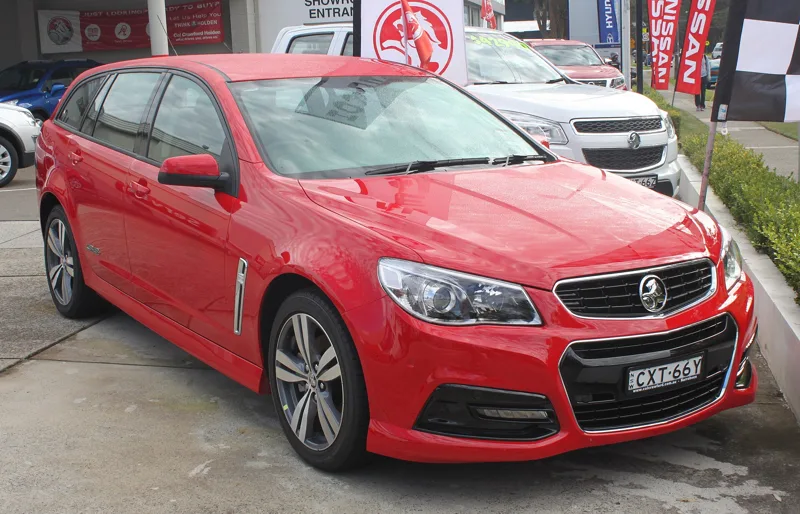
Holden introduced the VE body styles in stages, starting with the sedan in July 2006. The Ute followed with its revelation on 22 August 2007, and the Sportwagon concept appeared later that year, with the production version released in July 2008.
The Sportwagon used the sedan's 2,915 mm (114.8 in) wheelbase rather than the longer one of earlier wagons. Its cargo capacity fell from 1,402 to 895 litres (370 to 236 US gal), and the tailgate opened within 268 mm (10.6 in) of space.
What did the 380's variants offer?
The 380 went on sale on 13 October 2005 in a range of base, LS, LX, VRX and GT guise. Fitted as standard were front and side airbags in pairs, automatic climate control, cruise control and a Bosch 8.0 anti-lock braking system.
The Series II upgrade in April 2006 cut prices, and the entry model became the ES at A$27,990. The SX was added at A$32,990, while the LS was dropped, and the Series III in July 2007 gave the ES alloy wheels, fog lamps and traction control.
What was the TMR380?
In 2008 Team Mitsubishi Ralliart produced the TMR380, a performance version of the Series III VRX. It used a supercharged 3.8-litre V6 making 230 kW (310 hp) and 442 N m (326 lb ft), and it was claimed to take six seconds to reach 100 km/h.
The TMR380 was sold only in TMR Red with a full body kit and 19-inch chrome wheels. It cost A$56,990, which put it below the TRD Aurion it was meant to challenge, and only 20 were made before Mitsubishi ended local production.
How did the Commodore VE's engines and drive compare?
The VE was a rear-wheel-drive car on a global architecture, and its entry-level versions used a smaller 3.0-litre V6. The 380 was front-wheel drive, with a single 3.8-litre V6 that was also LPG compatible, so buyers had one engine choice rather than a range.
The 380's engine was new for the car, and it developed 175 kW (235 hp) and 343 N m (253 lb ft). The five-speed manual ES was the fastest car in the range, reaching 100 km/h in 7.6 seconds.
How did the two cars sell?
The 380 suffered slow sales from the start, and Mitsubishi's first DB series sold in fewer numbers than expected. In January 2006 the company offered voluntary redundancies to 250 production staff, and the plant closed for three weeks in March 2006.
A total of 32,044 380s were built over its three years, with 30,195 sold in Australia. The VE, by contrast, frequently ranked as the best-selling car in Australia across its production run.
How did the VE's interiors and trims differ?
Holden used a modular Flex strategy for the VE's interior. Components such as audio systems and instrument clusters could be swapped between variants without driving up production costs, and the result was a much wider gap between variants than the previous model had offered.
The interior came in three styles, Functional, Performance and Luxury. High-specification cars had expandable door pockets and a blackout mode that lit only the speedometer at night, and the boot used a four-strut hinge system in place of the earlier gooseneck hinges.
How was the VE's front end put together?
The VE's development led Holden to redesign its Elizabeth facility, so that whole sections of the car could be assembled off the main production line, which took work away from the main line. Those rigs simplified production, so each sub-assembly was finished before it met the car.
The front-end module, which carries the headlights, bumpers and airbag sensors, could be removed as a single unit. That cut repair costs and eased access to the engine bay, and the method won the SAE Australasia 2006 Automotive Engineering Excellence Award.
What awards did the 380 win?
The 380 received the 2005 Australia's Best Cars Large Car award, and most of its honours came in 2005 and 2006, the car's first two years on sale. Insurance Australia Group rated it the most secure Australian family car, and it was named the Safest Australian Car Built 2006 for its four-star ANCAP result.
Delivery Australia magazine named it the Best Fleet Car, and the Australian Motoring Clubs Report gave it the lowest running costs. Its 3.8-litre engine also won an engineering excellence award from the Society of Automotive Engineers.
What did the 380 Series III add?
The Series III arrived in mid-July 2007 with price and range changes designed to attract further sales and lift private buyer interest. Four models made up the range, the ES, SX, VRX and GT, and all of them received subtle visual and trim changes.
The ES came with traction control, front and side airbags, power mirrors and windows, a power driver's seat and anti-lock brakes with electronic brakeforce distribution. The SX was auto only, with sports seats, a six-disc CD stereo and 17-inch alloy wheels, while the VRX added a sports styling package and the GT added leather trim and an integrated boot spoiler.
Mitsubishi also offered a no-cost GTL option on the GT, with a more conservative rear lamp treatment, silver alloy wheels, a sunroof and a beige-on-black interior. Two special editions came at the launch, the Sports Edition based on the ES and the orange VRX Fusion Burst.
Which buyer suits each car?
The VE suits a buyer who wants a rear-wheel-drive Australian full-size car with a sedan, a Sportwagon or a Ute, and who values the car's strong sales record. The 380 suits a buyer who wants a front-drive sedan with a 3.8-litre V6, a long warranty and the chance to buy a car from Mitsubishi's last Australian plant.
Practicality is only partly covered. The Sportwagon's cargo figures are given for the VE, but no boot or rear seat figures are set out for the 380, and running costs are not compared for either car.
What safety features did the VE and 380 share?
The VE's engine was moved back behind the front axle, and its battery went to the boot. Crash engineers also moved the fuel tank forward of the rear axle line, and Holden claimed the car had one of the best body structures globally.
The 380 earned a four-star ANCAP result, and its crash performance was part of its family-car appeal. Both cars were judged on their crash performance, and both were treated as family cars.