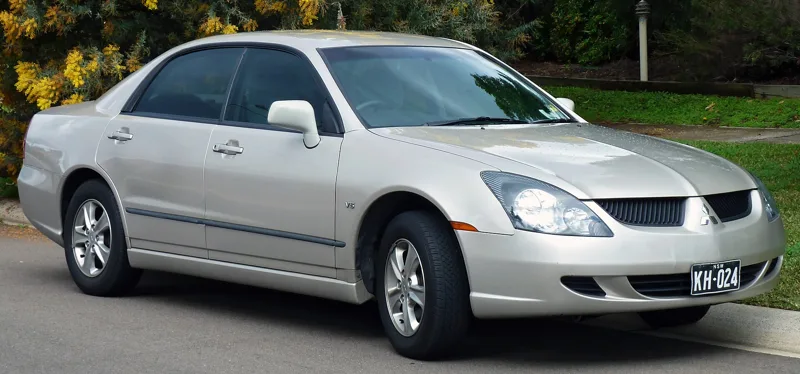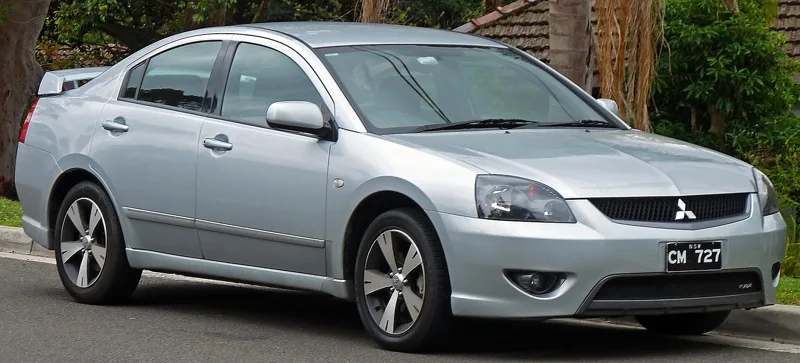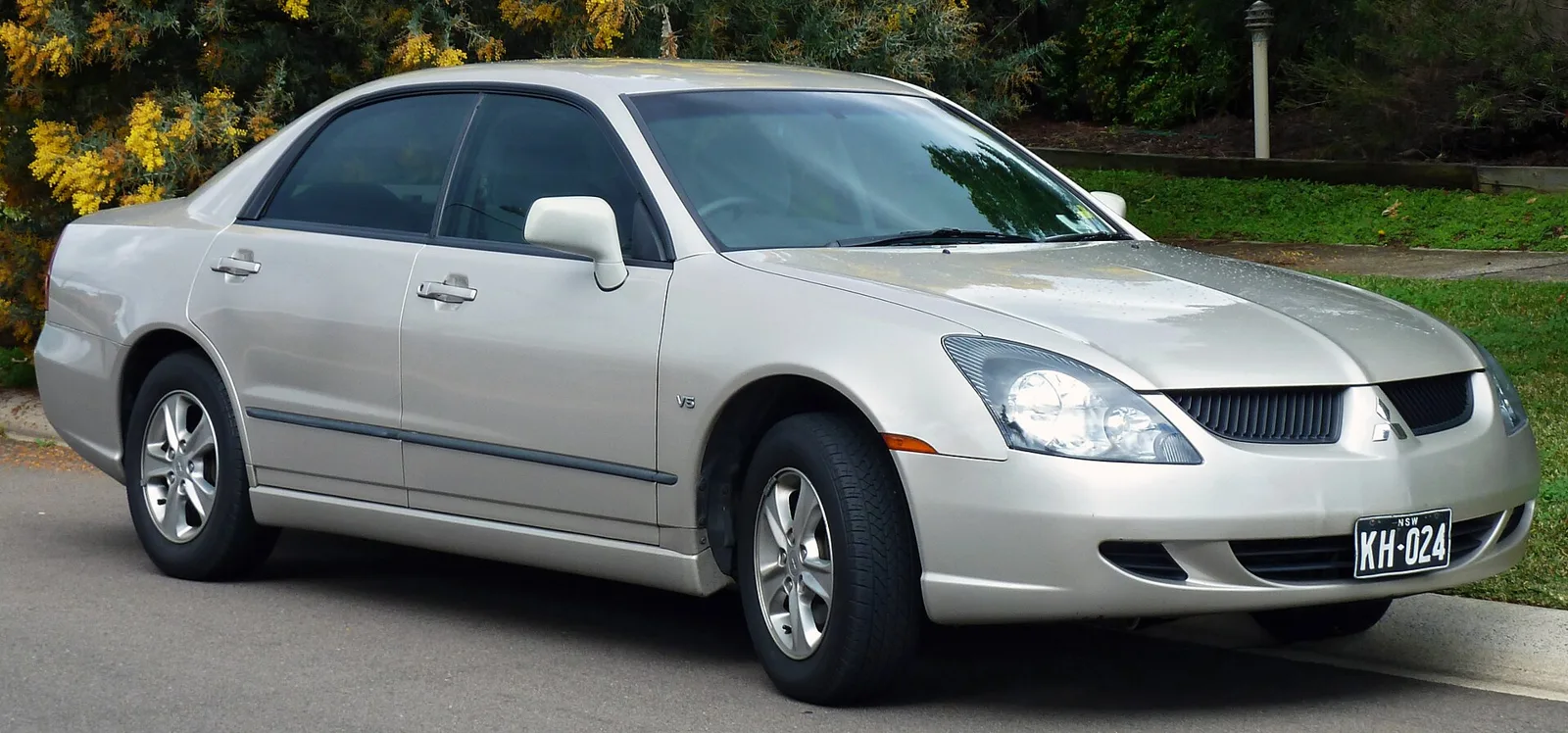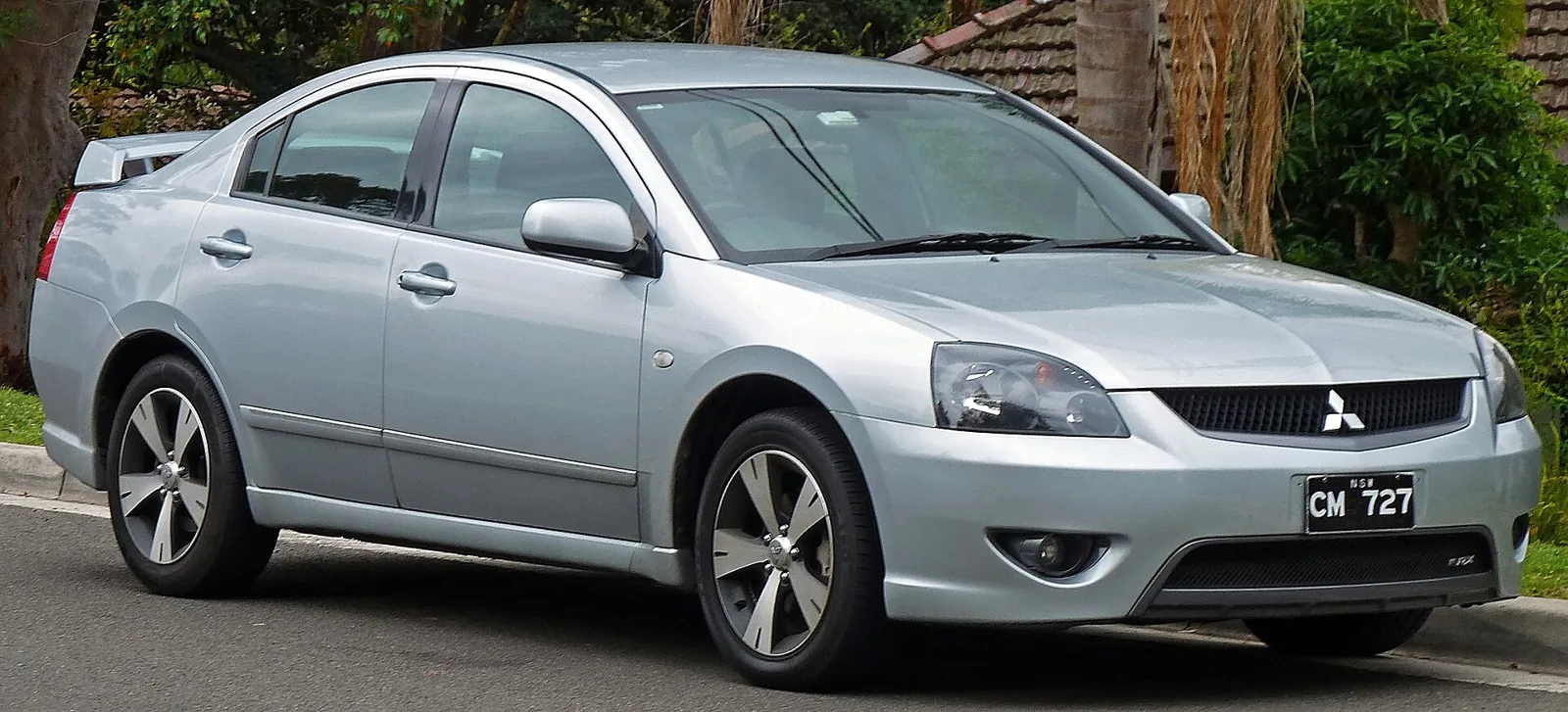
A 3.8-litre V6 mid-size sedan built in Adelaide from 2005 to 2008, backed by a five-year warranty and A$600 million of development money, that could not turn sales around.
The Mitsubishi 380 was a mid-size V6 sedan built in Australia from 2005 to March 2008. It cost A$600 million to develop, sold 30,195 cars at home, and ended Mitsubishi's local production.
The Mitsubishi 380 was a mid-size sedan built in Australia by Mitsubishi Motors Australia from 2005 to 2008. Developed at a cost of A$600 million, it replaced the Magna and Verada and marked the end of Mitsubishi's local manufacturing. Sales never recovered from a weak start, and production stopped in March 2008.
What was the Mitsubishi 380?
The 380 was a front-wheel drive sedan, sold only as a sedan, and it was given the model designation DB. It succeeded the Magna and Verada line, which dated from 1985 and 1991 respectively, and it competed with the Toyota Aurion, the Ford Falcon and the Holden Commodore.
Its underpinnings came from the ninth generation Mitsubishi Galant designed in the United States. The car kept Mitsubishi Australia's habit of building front-drive sedans for local buyers, even though the established rivals were rear-drive.
A Galant-based V6 sedan built in Adelaide with a five-year warranty, but never enough buyers to justify local production.
Why was the 380 described as make or break?
Even before the launch in October 2005, the 380 was described as the make or break model for Mitsubishi Australia.
The early sales did not match those hopes. The first Series II update arrived in April 2006 with a price cut of nearly 20 percent on the entry model. A Series III revision followed in July 2007 with mainly cosmetic changes, but the updates failed to lift sales.
How was the 380 developed?
Development started in 2002, when Mitsubishi's executives in Japan approved work on two closely related cars. The first was a right-hand drive variant of the Galant, codenamed PS41, which was to replace the Magna and Verada. The second was a long-wheelbase version, PS41L, planned for a 2007 launch.
As Mitsubishi's financial problems deepened and DaimlerChrysler left the alliance, PS41L was abandoned in 2004. Research carried out in mid-2004 found that 84% of Australians believed Mitsubishi would stop making cars in Australia, so the company needed to win back trust.
Television commercials began airing in December 2004, centred on the then chief executive, Tom Phillips. They promoted an industry-first warranty of five years or 130,000 km (81,000 mi), and they closed with a tagline reworked from a line once used by former Chrysler chairman Lee Iacocca.
Why was the car called the 380?
The name was chosen to give Mitsubishi's sole Australian-built car a fresh start, because the Magna name had come to mean a slow seller that was overdue for replacement. Magna was not among the seven names shortlisted from a total of 220 suggestions.
Chief executive Tom Phillips said the name polled best because it suggested high technology, European standards and performance. He pointed to the build quality the company was known for, together with a large 3.8-litre engine, as the reasons the name fit the car.
What did the 380 share with the Galant?
The 380 shared its basic foundation and side profile with the Galant, but Mitsubishi intended it to look different from the North American car. Changes were made to about 70 percent of the car to suit Australian roads, laws and buyers.
The rear floorpan was overhauled to fit a full-sized spare wheel, and the rear side members were made stronger to improve towing. Body rigidity was also raised for Australian conditions, which helped the vehicle dynamics.
Styling changes were modest because the basic side profile had to stay. The Clovelly Park plant was revamped to allow more robust bodies, and the new tooling gave Mitsubishi room for larger front guards, a revised bonnet, new headlamps, grilles and bumpers.
How much did the 380 cost to build?
In total A$600 million was spent on the 380, including A$250 million on upgrading the Adelaide production plant. The upgrade included a new body press that cast the body sides from a single piece of steel.
That process gave a body-to-body gap of 0.7 mm (0.03 in), compared with the industry standard of 1-1.5 mm (0.04-0.06 in) in 2005.
What engine and performance did the 380 offer?
The 380 was sold only as a sedan, with a new 3.8-litre V6 engine codenamed 6G75. It was compatible with LPG fuel, and it produced 175 kW (235 hp) and 343 Nm (253 lb ft) of torque.
The 380 reached 100 km/h (62 mph) in 7.6 seconds. Unlike its predecessor, the sports variants did not get a higher output engine, and the five-speed manual ES was the fastest car in the range, with the optional five-speed sequential automatic on the ES giving the same acceleration figures.
Both transmissions gave the same acceleration, because of the choice of gear ratios.
How did the 380 range change over its life?
The first DB cars went on sale on 13 October 2005 in base, LS, LX, VRX and GT forms. Standard equipment included twin front and side airbags, climate control, cruise control, power windows and a trip computer.
The Series II upgrade was announced on 28 April 2006. The ES was reduced from A$34,490 to A$27,990, an SX was added at A$32,990, the LS was dropped, and the VRX, LX and GT prices fell by between A$1,500 and A$3,000.
Series III arrived in July 2007 with the ES priced A$1000 higher but gaining alloy wheels, fog lights and traction control. The range comprised the ES, SX, VRX and GT, and the GT offered a no-cost luxury option called the GTL.
Two special editions came with the Series III. The Sports Edition was based on the ES and added 17-inch wheels and a sunroof, while the limited orange VRX Fusion Burst also had a sunroof and matching seat fabric.
Which awards did the 380 win?
The 380 received the 2005 Australia's Best Cars Large Car award. Insurance Australia Group rated it the most secure Australian family car, and it was named the Safest Australian Car Built 2006 for its four-star ANCAP result.
Other recognition included Best Fleet Car from Delivery Australia magazine and the lowest running costs in the Australian Motoring Clubs Report. The 3.8-litre engine also won an engineering excellence award from the Society of Automotive Engineers.
Why did Mitsubishi end Australian production?
The first DB series sold in fewer numbers than expected. On 20 January 2006, Mitsubishi offered voluntary redundancies to 250 production staff, and the plant closed for three weeks in March 2006.
Mitsubishi also tried to salvage local production through an export deal with Proton of Malaysia, which would have rebadged the 380 to replace the Perdana. That deal never succeeded, and on 5 February 2008 the company announced that Clovelly Park would close on 31 March and that it would import cars instead.
The last 380 sedan left the production line on 27 March 2008. It was auctioned in late April 2008 for A$100,000, with the money donated to charities, and the winning bidder was the John Hughes Group, a dealership in Victoria Park, Western Australia.
Did the 380 have a performance version?
Team Mitsubishi Ralliart produced the TMR 380 in 2008, a performance-enhanced version of the Series III VRX. It used a supercharged 3.8-litre V6 that produced 230 kW (310 hp) and 442 Nm (326 lb ft).
The TMR 380 was claimed to take six seconds to reach 100 km/h and was sold in TMR Red with a full body kit and 19-inch chrome wheels. It was priced at A$56,990, below the TRD Aurion, and only twenty were made, each individually numbered.
What are the Mitsubishi 380 specifications?
| Specification | Detail |
|---|---|
| Body | Mid-size sedan, sold only as a sedan |
| Designation | DB |
| Engine | 3.8-litre V6, codename 6G75, LPG compatible |
| Output | 175 kW (235 hp) and 343 Nm (253 lb ft) |
| 0-100 km/h | 7.6 seconds for standard manual ES |
| Launch | 13 October 2005 |
| Series II price | ES A$27,990 from April 2006, down from A$34,490 |
| Development cost | A$600 million, including A$250 million on the Adelaide plant |
| Warranty | Five years or 130,000 km (81,000 mi) |
| Produced | 32,044, of which 30,195 sold in Australia |
| Production end | March 2008 |
| TMR 380 output | 230 kW (310 hp) and 442 Nm (326 lb ft), supercharged |
| TMR 380 price | A$56,990 |