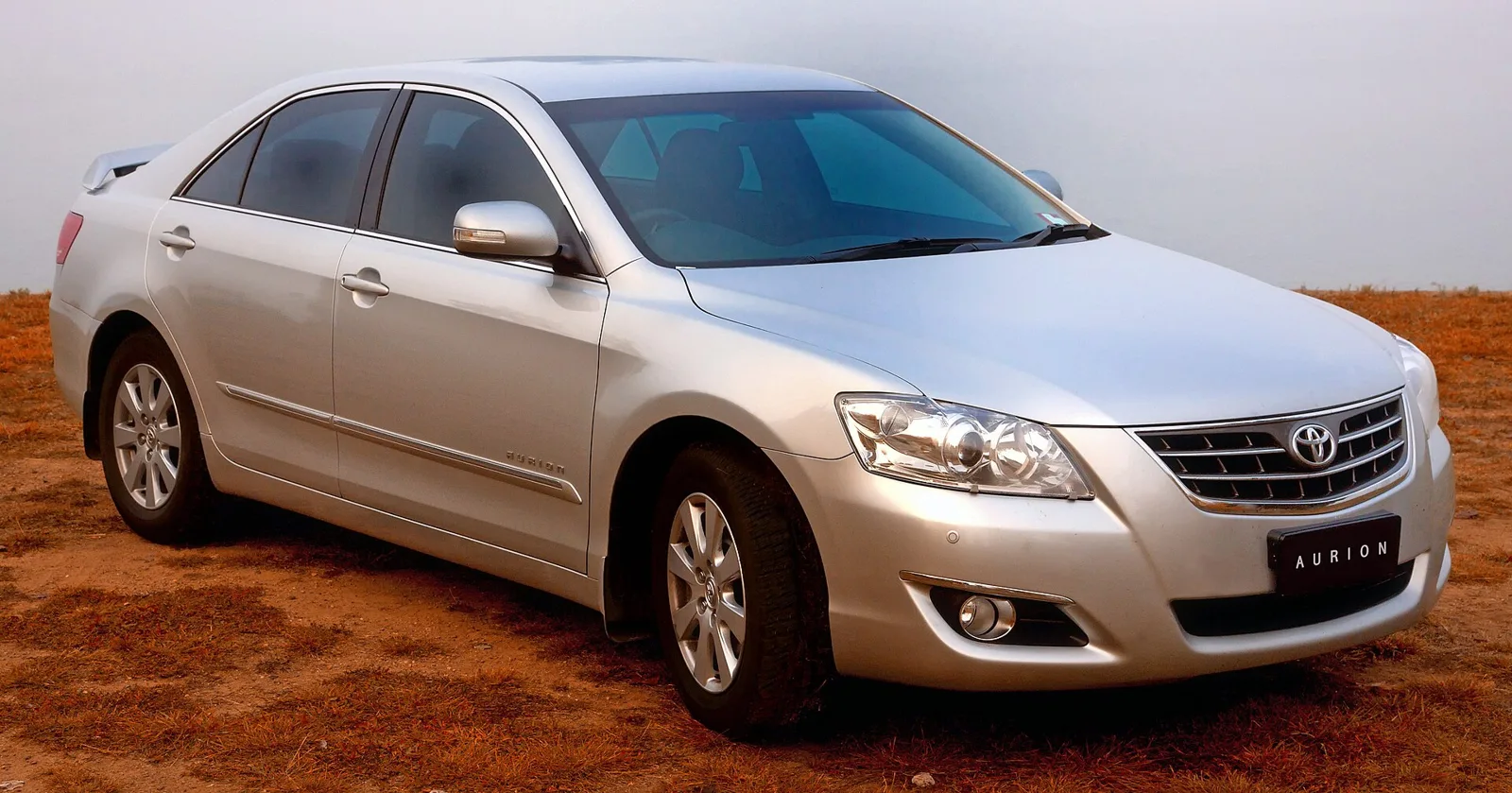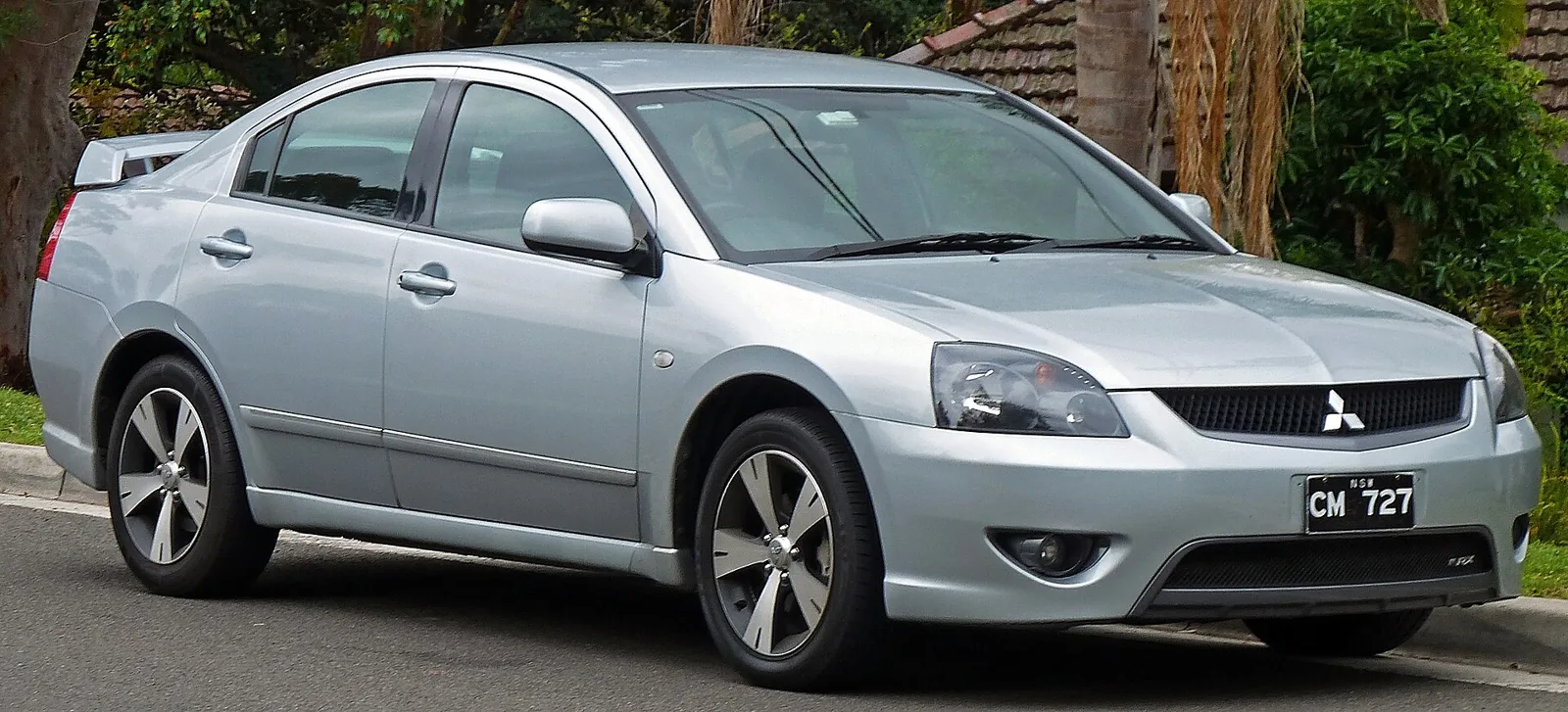
Mitsubishi's last Australian-built car and Toyota's Camry-based large sedan went head to head on price, warranty and V6 power, with a TRD performance special on each side.
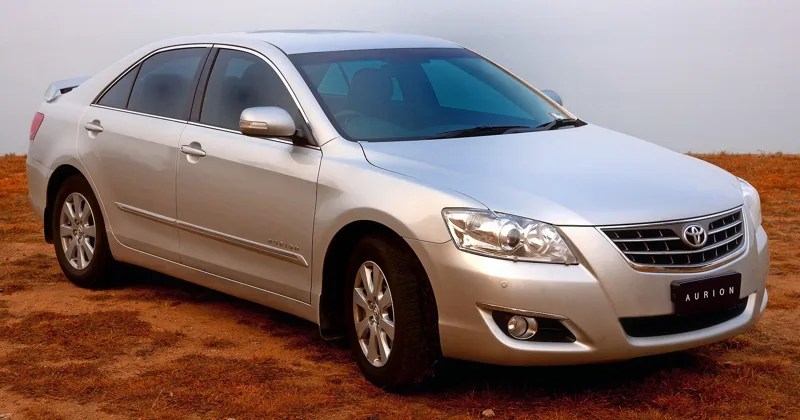
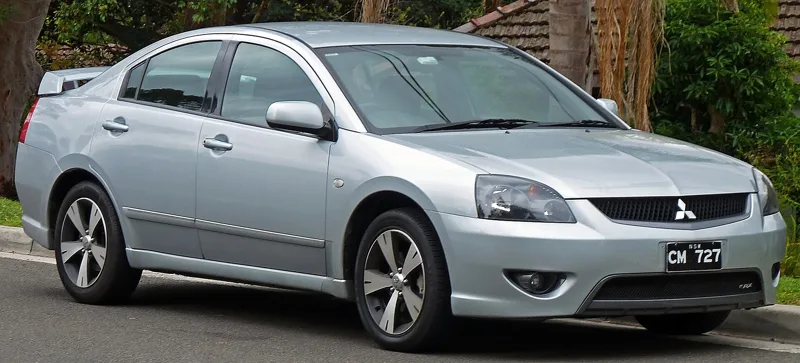
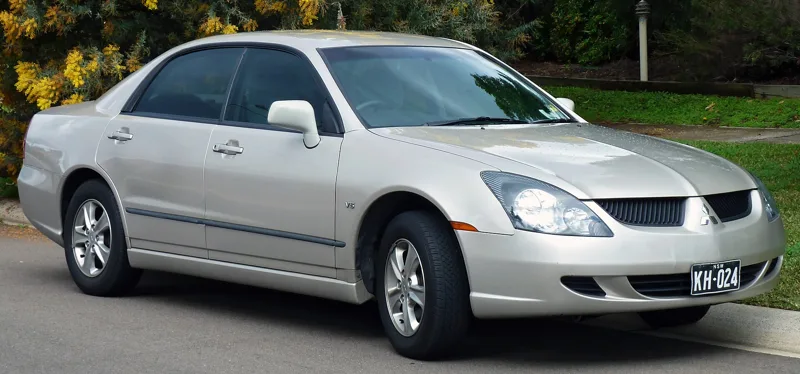
The Mitsubishi 380 and the Toyota Aurion XV40 were Australian mid-size sedans of the mid-2000s, competing for the same buyers. The 380 was a front-drive Galant-based car with a 3.8-litre V6, while the Aurion was a Camry-based car offered with a 3.5-litre V6 in Australasia.
The Mitsubishi 380 and the Toyota Aurion XV40 went after the same Australian buyers in the mid-size sedan market. Both were sold in the mid-2000s, both were front-wheel drive, and both were judged against the Ford Falcon and Holden Commodore that had long dominated local sales.
The two cars took very different paths. Mitsubishi reworked a Galant for the Australian road and built the car at home, while Toyota dressed a Camry for the market and offered it with a single V6 in the local range.
Were the 380 and Aurion direct rivals?
They were. The 380 competed with the Toyota Aurion, the Ford Falcon and the Holden Commodore, and it was called the make-or-break model for Mitsubishi Australia even before its launch. The TMR380 was priced to undercut its direct rival, the TRD Aurion.
The rivalry was sharpest in the performance versions. The TMR380 cost A$56,990, lower than the TRD Aurion, which was the Aurion's own supercharged performance car sold between 2007 and 2009.
A Galant-based Mitsubishi built at home against a Camry-based Toyota with a single V6, each with a supercharged performance special.
Specifications side by side
| Specification | Mitsubishi 380 | Toyota Aurion XV40 |
|---|---|---|
| Production | 2005 to 2008 | 2006 to 2012, replaced by the XV50 |
| Body | Sedan only | Sedan based on the Camry XV40 |
| Drive | Front-wheel drive | Front-wheel drive |
| Base engine | 3.8-litre V6 (6G75), 175 kW (235 hp) | 3.5-litre V6, the only engine in Australasia |
| Torque | 343 N m (253 lb ft) | No figure given |
| Performance version | TMR380: 230 kW (310 hp) supercharged V6, 442 N m (326 lb ft) | TRD Aurion, supercharged, 2007 to 2009 |
| 0-100 km/h | 7.6 seconds, ES five-speed manual | No figure given |
| Price | ES at A$27,990 after the 2006 cut; TMR380 at A$56,990 | No figure given |
| Safety | Four-star ANCAP result | Base model four stars, 30.03 out of 37 points |
| Development cost | A$600 million | No figure given |
| Sales | 32,044 built, 30,195 sold in Australia | No figure given |
| Design basis | Heavily based on the ninth generation Galant | Camry XV40 with revised front and rear ends |
Where did each car come from?
The 380 began in 2002 as a right-hand drive version of the ninth generation Galant, codenamed PS41, which was meant to replace the Magna and Verada. Its design came from a mix of Mitsubishi Australia and the Japanese parent, with the Japanese studio devising the base and mid-luxury designs and the local team the sports models.
The Aurion began with Toyota's Avalon problem. The Avalon had been built at Altona until June 2005, and its sales predictions were never met, reaching only half of Toyota's projected sales target in its best year. Toyota decided it needed a replacement that suited the Australian market.
How did the Aurion's design come about?
Toyota Australia brought in Paul Beranger in August 2002 to start Toyota Style Australia in Dingley Village, Victoria, a unit that had no designers of its own until then. Nick Hogios, who had worked for Ford Australia on the XR performance models, became chief designer in 2003.
The team's first serious project was the 380L, a one-off based on the Camry XV30 with panels and interior parts stripped and replaced. It cost approximately A$1 million, and focus groups that had ranked the Avalon at the bottom of the list later placed the car first, which led Toyota to plan a six-cylinder Camry under another name.
How did the Aurion's codenames divide the range?
The Aurion was developed as the prestige Camry, codenamed 043L, while the regular Camry was 042L. Toyota Australia was allowed to build both and sell them side by side, with the regular Camry limited to a four-cylinder and the prestige version to a six in Australia.
The Australian variant was codenamed 323L, because the car occupied a broader range in that market, from fleet vehicle to sports model. The first Aurion-based Camry rolled off the line in China in May 2006.
How much of the Aurion came from the Camry?
The Aurion took its doors, windows, roof panels and body sides, apart from the front quarters, from the Camry XV40. It shared the same wheelbase, front and rear track and interior dimensions, and it used a foot-operated parking brake like the Camry in Japan and North America.
Toyota claimed the Aurion was designed for Australian tastes, although it was also aimed at markets such as Asia. Its front end used the double-concave architecture of the Toyota design language, with horizontal headlamps balancing vertical sculpted features.
Which Aurion variants were offered?
The base AT-X and the luxury Prodigy and Presara used a comfort-oriented design, while the Sportivo versions were dressed up with 17-inch wheels, a rear spoiler, extra body kit pieces and a three-spoke wheel. The TRD models used a Formula One-inspired front bumper and a unique rear bumper with fixed tailpipes.
The high-performance TRD Aurion was built in Australia between 2007 and 2009 and tuned by Toyota Racing Development. Along with the naturally aspirated version, it gave buyers a choice of two engines.
How did the Aurion's facelift arrive?
Toyota of Thailand unveiled a reworked East and Southeast Asian Camry in June 2009, with a hybrid drivetrain, and it previewed the Australian Aurion's facelift. The updated car got new headlamp and taillamp clusters with integrated foglamps and a redesigned front bumper.
The Australian facelift was revealed on 21 September 2009. It abandoned the double-concave front for an X-Form philosophy, with a lower and wider trapezoidal grille, and it added new wheel designs and a linear satin wood grain finish on the Prodigy and Presara.
How did the Aurion's Asian role differ from its Australian one?
In Asia the Aurion-based Camry was sold under the Camry name, and the car sat just below Mercedes-Benz models as a luxury Camry. Its engines there were two four-cylinders, of 2.0 and 2.4 litres, paired with six-, four- and five-speed automatics respectively.
In Australia the regular Camry was limited to the four-cylinder, while the prestige car took the 3.5-litre V6. Toyota designed the Aurion to suit both roles, with the comfort design used on the base and luxury versions and a sportier look for the Sportivo.
Why was the Aurion given its name?
Toyota dropped the Avalon tag for its new large car, because the Avalon had gained a reputation for being uninspiring both to look at and to drive. The Aurion name was chosen after consumer research on more than 30 potential names, to suggest a completely new car.
The name tied in with Toyota's advertising slogan, "Can't wait for tomorrow", and it gave the car a fresh start in the Australian market.
Which trims did the two cars offer?
The Aurion's range ran from the base AT-X through the Prodigy and Presara luxury versions to the Sportivo, with the TRD models at the top. The range covered fleet buyers at one end and sports drivers at the other, and the Sportivo was the sporting choice of the range.
The 380 came in ES, SX, VRX and GT form, with the SX auto only and the GT the range-topper. The VRX added charcoal bumper accents, a high-profile rear wing and blue seat fabric, while the GT added leather trim, polished 17-inch wheels and side rubbing strips.
What separated the TMR380 from the TRD Aurion?
The TMR380 used a supercharged version of the 3.8-litre V6 that produced 230 kW (310 hp) and 442 N m (326 lb ft). It was claimed to take six seconds to reach 100 km/h, and it was sold only in TMR Red with a full body kit and twin chrome exhaust tips.
The TRD Aurion wore a Formula One-inspired front bumper with integrated foglamps, and its rear end carried fixed tailpipes. Toyota claimed it was the most powerful front-wheel drive car in the world on its release, and it was sold in Australia from 2007 to 2009.
What were the Aurion's sporting concepts?
Toyota Australia's design work began with the X-Runner and Sportivo Coupe concepts developed by Toyota Style Australia. The Sportivo name carried into the production car, and the Sportivo concept was shown alongside the Aurion when it was unveiled on 9 February 2006.
The sporting theme was the Aurion's main design message, so the Sportivo models received the most aggressive styling. That gave Toyota a way to reach buyers who wanted more than the comfort-oriented base car.
How big was the Aurion's engineering job?
Toyota Australia began work on the car's development at the same time as the version for Asia, so the two were engineered side by side. Beranger described the engineering effort as among the most significant that any Toyota subsidiary had carried out anywhere in the world.
The Australian variant was built to cover a broader range than the Asian car, which took a narrower role as a high-end luxury model. That breadth of role is why the local car needed its own codename and a tuned suspension, and the two programmes were kept in step through the design stage.
Which buyer suits each car?
The 380 suits a buyer who wants a front-drive sedan with a 3.8-litre V6, a five-year warranty and a locally built car from a manufacturer making its last Australian sedan. The Aurion suits a buyer who wants the Camry's engineering with a six-cylinder and Australian suspension tuning.
Practicality is only partly covered. Neither car's luggage space, rear seat or running costs are compared here, so the choice rests on engine, price and warranty.
What did the 380's three series offer?
The 380 went on sale on 13 October 2005 in base, LS, LX, VRX and GT guise. The Series II in April 2006 dropped the LS and cut prices, while the Series III in July 2007 brought the ES, SX, VRX and GT under subtle changes.
The Series III included the auto-only SX with sports seats and 17-inch alloy wheels, and the GT with leather trim and an integrated boot spoiler. Mitsubishi also offered a no-cost GTL on the GT, and the VRX Fusion Burst was a limited orange edition.
How did the 380's sales compare?
The 380's first DB series sold in fewer numbers than expected, and in January 2006 Mitsubishi offered voluntary redundancies to 250 production employees. Mitsubishi ceased production in March 2008 after just short of three years, and 32,044 cars were built in that time.
The Aurion's Australian sales figures are not given in this comparison. Toyota's Avalon, the car it replaced, had failed to reach its own sales targets, which made the Aurion's fresh start an important part of its story.
What safety results did each car achieve?
The 380 earned a four-star ANCAP result and was named the Safest Australian Car Built 2006. The Aurion's base model scored four stars with 30.03 out of 37 points, and its standard kit included dual front, side and curtain airbags, traction control, brake assist and Vehicle Stability Control.
Toyota did not supply a third test vehicle for ANCAP's optional side pole test on the Aurion, which caused controversy.