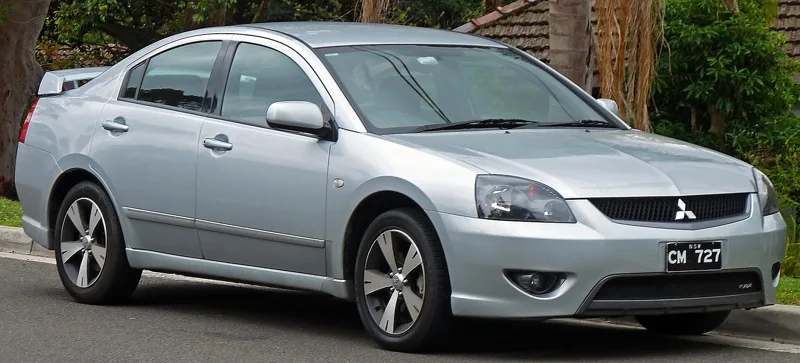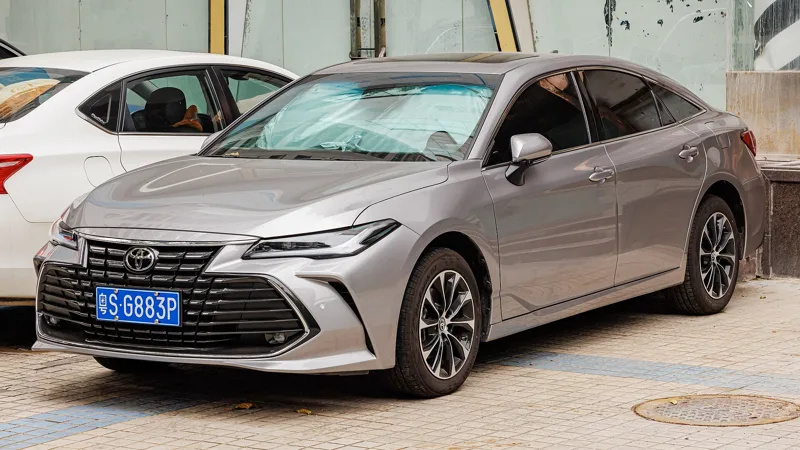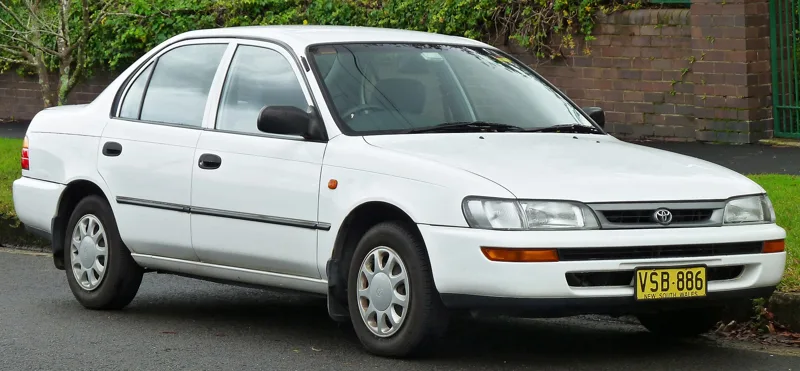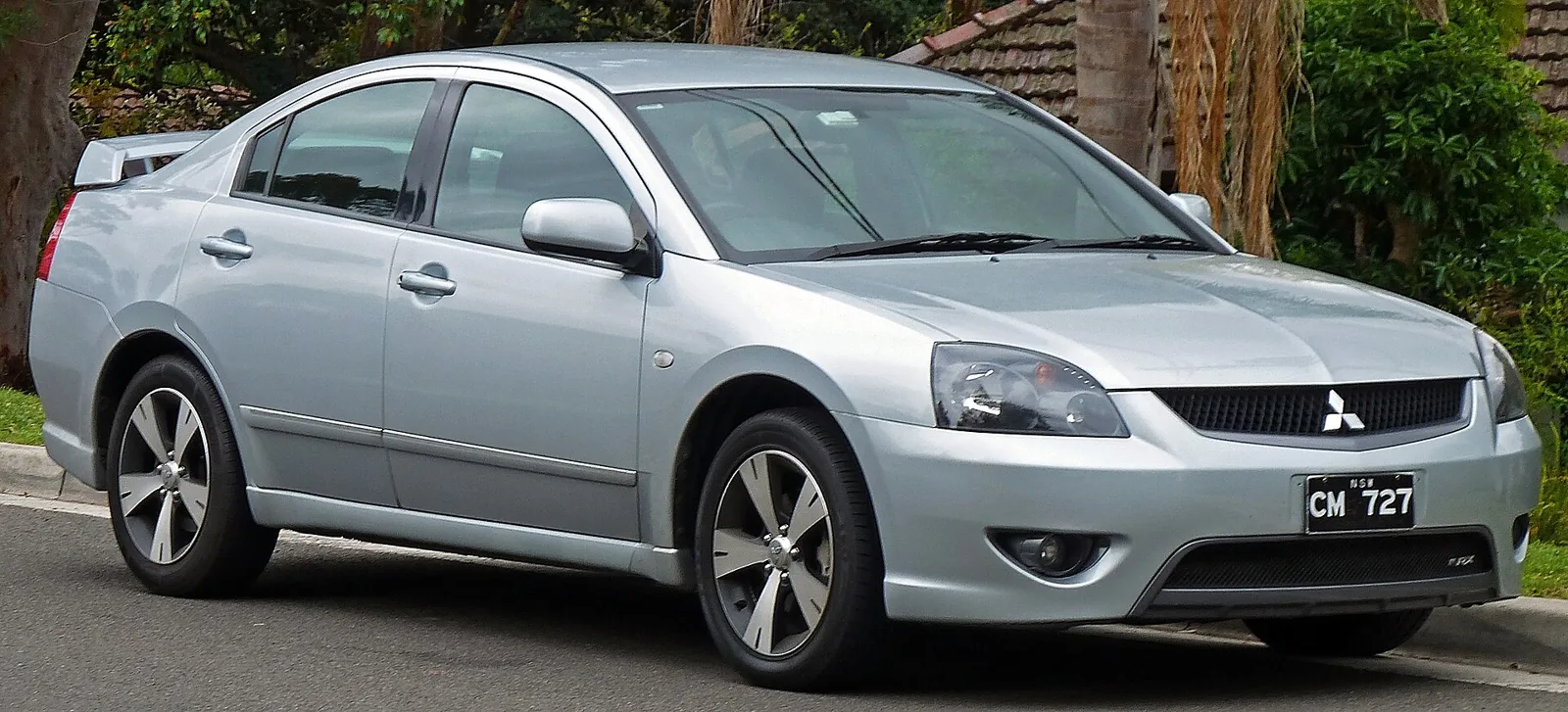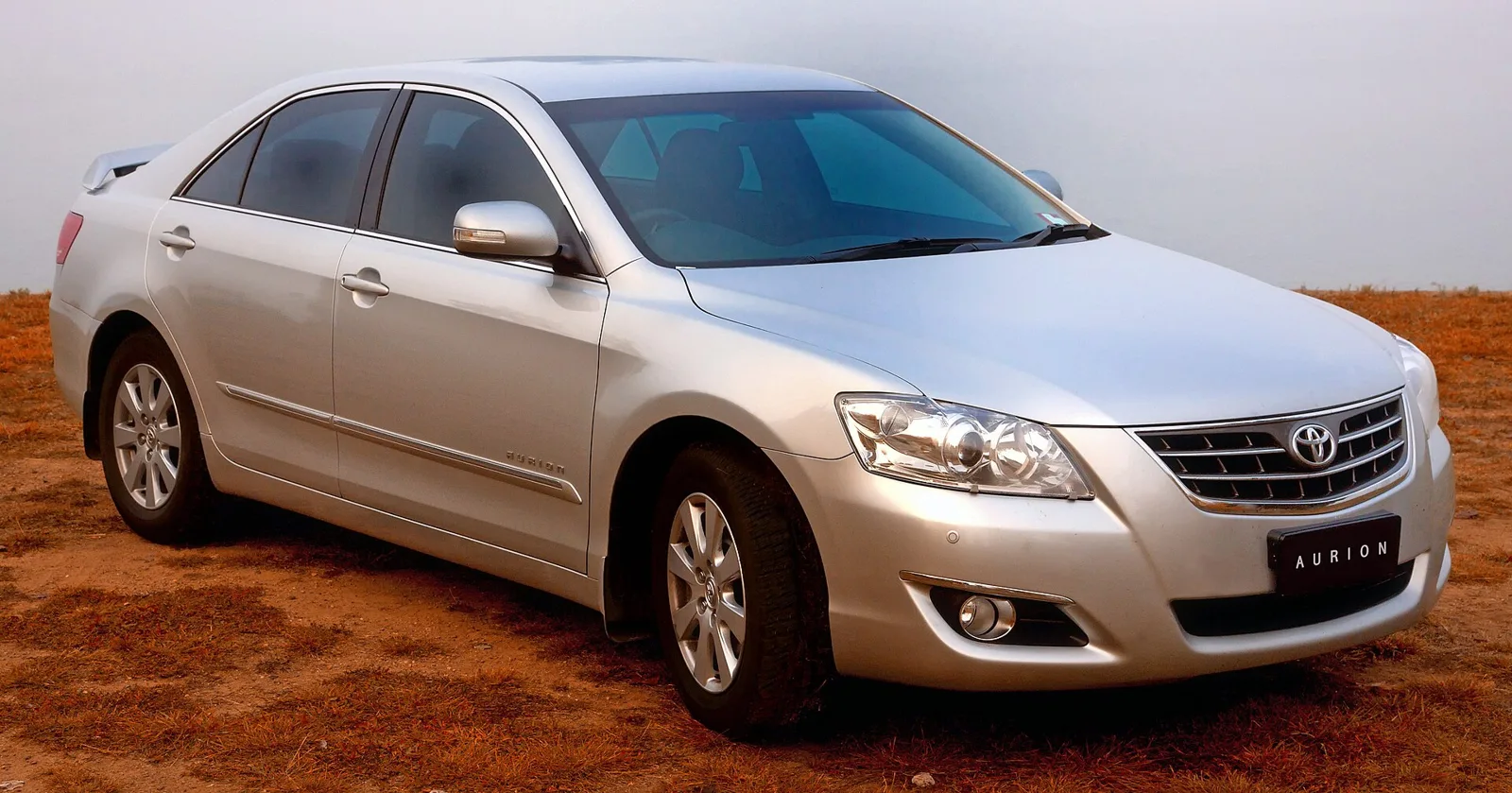
Built on the Camry XV40 but styled and tuned for Australia, the Aurion brought a 3.5-litre V6 and a supercharged TRD version to the large-car market.
The Toyota Aurion XV40 was the first-generation Aurion, a mid-size car built in Australia and parts of Asia from 2006 to 2012. Based on the Camry XV40, it used a 3.5-litre V6 in Australasia and a supercharged TRD variant with 241 kW (323 hp).
The Toyota Aurion XV40 began life as a Camry with its own face, a revised interior and Australian suspension tuning. Toyota Australia gave the car a new name, a 3.5-litre V6 and a local design team, then built it alongside the Camry on the same production line.
An Australian subsidiary with no design studio of its own set out to build a car for its own market, and the result was sold as a large sedan from 2006 until the XV50 replaced it in 2012.
Why did Toyota replace the Avalon?
Toyota Australia built the full-size Avalon at its Altona plant in Melbourne until June 2005, but the car never reached the sales its planners wanted. In its best year it managed only half of the projected target, and critics widely described its design as bland. The Aurion was created to replace it with a fresh model and a fresh name.
The Avalon had been offered as a larger, more upmarket car than the Camry, and it was built beside it. Its basic design and mechanicals came from a North American model that was already six years old when production began in 2000. Front-wheel drive and a smaller engine did not win buyers over, so the Avalon fell short of rivals such as the Holden Commodore and the Ford Falcon.
Focus groups held in early 2003 ranked the Avalon at the bottom of the list. Toyota had already begun full-scale planning for a replacement in 2002, and it concluded that buyers wanted something modern and designed with the Australian market in mind.
A Camry underneath, an Australian shape on top and a supercharged V6 that was meant to sell in large numbers.
Why was the Aurion name chosen?
Toyota dropped the Avalon tag because the car had a reputation for being uninspiring, both in the showroom and on the road. The Aurion name was chosen after consumer research on more than 30 potential names, and it was meant to suggest a completely new car rather than a reworked old one.
Aurion means tomorrow in Ancient Greek, while Aurora translates to the dawn in Latin. The name fitted Toyota's advertising slogan, Can't wait for tomorrow, and gave the car a clean break from its predecessor.
How did the Aurion design team come together?
Toyota Australia had no designers of its own until Paul Beranger was recruited in August 2002 to set up Toyota Style Australia in an industrial complex at Dingley Village, Victoria. The studio first developed the X-Runner and Sportivo Coupe concepts before taking on the car that became the Aurion.
Nick Hogios joined the studio and was appointed chief designer in 2003. He had worked for Ford Australia on the XR performance models of the BA Falcon, and the front-end styling of the prestige car was largely his own work.
The studio's first major project was a privately developed one-off codenamed 380L, based on the Camry XV30. The team stripped panels and interior components from the donor car and replaced them with its own versions, at a cost of approximately A$1 million. Toyota then reasoned that a six-cylinder car could be sold beside the regular Camry under a different name.
How did the Aurion split from the Camry?
Toyota Australia was allowed to build two Camry-based cars for its market. The regular Camry was limited to the four-cylinder engine, while the prestige car that became the Aurion was limited to the six. The prestige car was first referred to as the Asian or prestige Camry, and was codenamed 043L.
Hogios worked in Japan for nine months during 2004 on the prestige Camry, and the final design was a collaboration between Japanese and Taiwanese designers. The front-end styling remained largely his own work. While the design stage ended, Toyota Australia began engineering the car and the Asian version at the same time.
The Australian variant was codenamed 323L. The two cars were essentially identical, but the Australian version covered a wider range of the market, from fleet vehicles up to sports-oriented models. In Asia the car played a narrower role as a high-end luxury model, and the first Aurion-based Camry rolled off a Chinese assembly line in May 2006.
What does the Aurion share with the Camry?
The Aurion shares its doors, windows, roof panels and body sides, except the front quarters, with the Camry XV40. It keeps the same wheelbase, front and rear track widths and interior dimensions, and its cabin follows the Camry closely, with a redesigned upper dashboard and a restyled centre console.
The main interior difference was a foot-operated parking brake in place of the hand lever used in the Australian Camry, which matched the Camry sold in Japan and North America. The sharing strategy was chosen to reduce costs and let the car be built alongside the Camry, which simplified manufacturing.
How was the Aurion styled?
Toyota said the Aurion was designed for Australian tastes, although markets such as Asia were also in mind. Hogios described the car as following current Australian styling, with a tendency to look towards European design for ideas, and the team worked within Toyota's vibrant clarity design language.
Hogios said the car used a principle called perfect imbalance, in which one body feature acts as a counterpoint to another. Intersecting concave and convex surfaces and vertical sculpted features on the front fascia are balanced by horizontal headlamps. The front end also used a double concave architecture, with a protruding bonnet crease line and a deep grille.
The rear repeated the theme with a deep bumper, a clamshell boot lid wrapping the sides, twin exhaust pipes and tail lamps. US design registrations were lodged on 27 December 2005.
Two design philosophies were used across the range. The base AT-X and the luxury Prodigy and Presara used a comfort styling approach, while the Sportivo versions looked sportier, with 17-inch alloys, a rear spoiler, extra body kit pieces and a three-spoked steering wheel. The TRD models carried a Formula One-inspired front bumper with integrated foglamps.
What changed in the Aurion facelift?
The facelift was previewed by a reworked hybrid Camry from Thailand in June 2009. It replaced the double-concave front with an X-Form design philosophy, which gave the car a lower and wider trapezoidal grille, new headlamp and taillamp clusters with integrated foglamps, a redesigned front bumper and a new grille insert.
From the side the update was recognisable by the deletion of bodyside moulding strips and a new range of wheels, with alloy wheels now standard on the base AT-X. Inside there were new colour combinations, upgraded instruments and gauges with clearer turn signal and warning lights, and revised audio, lighting and storage. Prodigy and Presara received a new linear satin wood grain finish.
Australian chief designer Nick Hogios worked on the revised car with Anthony Cheung, an assistant project manager from Thailand, during 2007. The hybrid version was designed separately, and the facelifted Aurion was revealed by Toyota Australia on 21 September.
How safe was the Aurion?
All safety equipment was standard across the Aurion range, and there were no optional safety devices. The base model earned a four-star ANCAP rating with 30.03 out of 37 points, then reached five stars from August 2009 production with 33.03 out of 37 points after Toyota added seat belt reminders.
The standard kit covered airbags for the front, sides and curtains, plus traction control, brake assist, electronic brakeforce distribution and stability control. The controversy came from Toyota's refusal to supply a third test car for the optional side-pole impact test, which can lift a car to five stars.
Toyota cited the additional expense of A$75,000 to A$100,000 including the car, and it disagreed with the nature of the pole test. The scores without that test showed the maximum two points available would still have fallen slightly short of five stars, but Toyota later funded the test and the car was upgraded.
What engines powered the Aurion?
The Australasian Aurion used a 3.5-litre 2GR-FE V6 rated at 200 kW (268 hp) and 336 Nm (248 lb ft). It was paired with a six-speed U660E automatic and reached 100 km/h from rest in 7.4 seconds, with Toyota claiming a top speed of 228 km/h (142 mph).
The engine gained 4 kW (5 hp) on 95 RON premium petrol. Its fuel figure under the Australian ADR 81/01 test was 9.9 L/100 km (23.8 mpg-US), and the car was Euro IV emissions compliant. The dual VVT-i engine was the same unit used by the V6 Camry outside Australasia.
In some Asian markets the Aurion-based Camry offered 2.0-litre and 2.4-litre four-cylinder engines alongside the V6. The 2.0-litre 1AZ-FE made 108 kW (145 hp) and 190 Nm (140 lb ft), and the 2.4-litre 2AZ-FE made 127 kW (170 hp) and 224 Nm (165 lb ft). The 2.4 used a five-speed U250E automatic and the 2.0 a four-speed U241E.
From about 2009 Toyota offered a new 2.0-litre 3ZR-FE petrol engine in some markets, producing 102 kW (137 hp) and 189 Nm (139 lb ft). It came with the four-speed U241E automatic or, in some markets, a six-speed manual.
How did the TRD Aurion perform?
The TRD Aurion was a supercharged version of the V6, built only for Australia, with 241 kW (323 hp) and 400 Nm (295 lb ft). Toyota claimed it was the most powerful front-wheel drive car in the world at its release, and it used the six-speed automatic with a combined fuel figure of 10.9 L/100 km (21.6 mpg-US).
Toyota's Racing Development division tuned the engine, and the car was released in August 2007. TRD's first experiment with a supercharger had been the 2005 TS-01 concept, which was also based on the Camry.
The exterior design manager was Lee Moran, a former Ford Australia designer chosen in 2005. He reduced the size of the grille and emphasised the front bumper line to give the car a Formula One look, and a wind tunnel test in Japan put its drag coefficient at 0.30, which was better than the standard car.
The TRD also had exhaust pipes integrated into the bumper, tinted taillight lenses and a unique body kit, along with an upgraded suspension and tyres. It was pitched against the Subaru Liberty GT and the Mazda 6 MPS.
Which TRD variants and special editions were offered?
The TRD range comprised two variants, the 3500S and the 3500SL. The 3500S had performance mufflers, 19-inch alloy wheels, red Alcantara seats with black Alcantara bolsters and other performance upgrades. The range-topping 3500SL added parking sensors, dual-zone climate control, an eight-way adjustable driver's seat and an aluminium rear bumper reinforcement.
The 3500SL was the first production car in the world to use the Eaton twin-vortices supercharger, which cut engine noise while improving power and torque. Toyota Australia planned to sell 50 to 70 TRD Aurions a month, with most of the sales coming from Australia, but the project failed to reach that pace.
TRD Australia halted production of the Aurion TRD, along with the TRD Hilux, on 31 March 2009 and the division was shut down. The Touring SE was the other notable edition, launched in October 2007 on the AT-X with 16-inch alloy wheels, a rear spoiler, a six-CD stacker, a trip computer and dual-zone climate control.
The Touring SE was reintroduced in April 2008, again in October 2008 and finally in April 2009, when it switched to 17-inch wheels and the Sportivo grille. The price stayed unchanged from the 2007 original. In 2011 a White Limited Edition was released, limited to 250 cars and based on the Prodigy, with a unique white paint and Sportivo body kit.
How did the Aurion sell and win awards?
Toyota predicted 24,000 annualised sales in Australia before launch, double the eventual rate for the Avalon, with another 8,000 vehicles forecast for the Middle East and New Zealand. A contract from 2007 covered 10,000 export Aurions for the Middle East, and the car was judged best large car at Drive Car of the Year in 2006, 2007 and 2009.
The AT-X won Australia's Best Large Car award in 2006 and 2007. Judges described it as a well-rounded package of technology and refinement, and said Toyota had built a big six that kept outstripping traditional rivals in the Australian market.
Praise centred on good performance matched with comparatively low fuel use, and on safety and comfort features that rivals charged extra for.
How did the Aurion differ across Asia and the Middle East?
In East and Southeast Asia the car was sold as the Toyota Camry, with a redesigned grille and different trim levels. The line-up ran from a basic 2.0 model up to a 3.5 Q, passing through grades such as G, Sportivo and V, with the number giving the engine size and the letter the level of luxury.
China became the first market to fully assemble and produce the Camry XV40 locally. The car was unveiled in late April 2006 and production began on 23 May 2006, in 200 and 240 variants. The 200 used the 2.0-litre 1AZ-FE and the 240 the 2.4-litre 2AZ-FE.
In the Middle East the Prodigy was branded the Touring and the Presara was sold as the Grande. Export Aurions were also delivered there under the 2007 contract.
What are the Aurion specifications?
| Specification | Detail |
|---|---|
| Generation | XV40 Aurion, 2006 to 2012, replaced by the XV50 |
| Australasian engine | 3.5-litre 2GR-FE V6, 200 kW (268 hp), 336 Nm (248 lb ft) |
| Transmission | Six-speed U660E automatic |
| 0-100 km/h | 7.4 seconds |
| Top speed | 228 km/h (142 mph), as claimed by Toyota |
| Fuel use | 9.9 L/100 km (23.8 mpg-US) under ADR 81/01 |
| TRD engine | Supercharged V6, 241 kW (323 hp), 400 Nm (295 lb ft) |
| TRD fuel use | 10.9 L/100 km (21.6 mpg-US) combined |
| ANCAP rating | Five stars from August 2009 production, 33.03 out of 37 points |
| Asian 2.0-litre | 1AZ-FE, 108 kW (145 hp), 190 Nm (140 lb ft) |
| Asian 2.4-litre | 2AZ-FE, 127 kW (170 hp), 224 Nm (165 lb ft) |