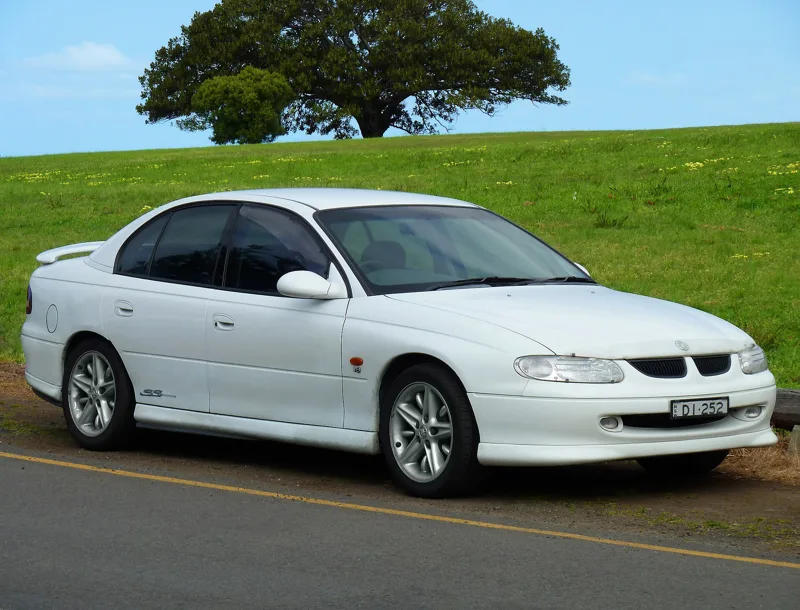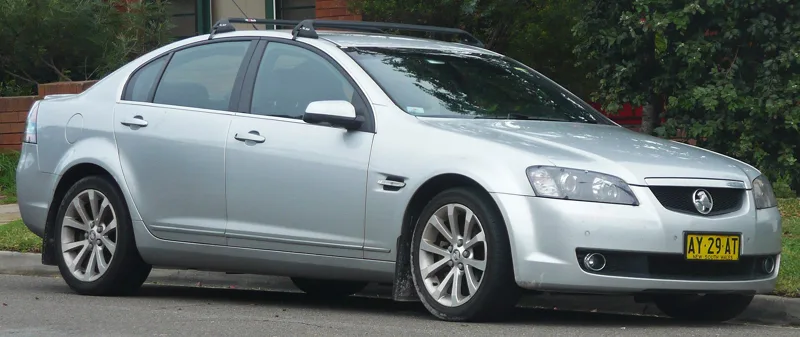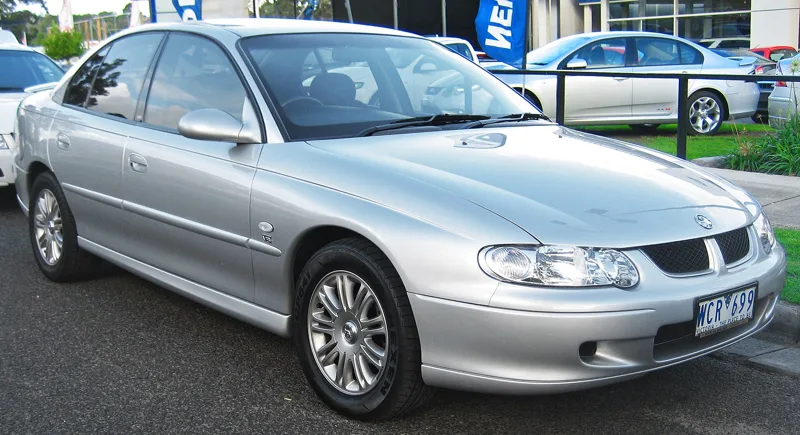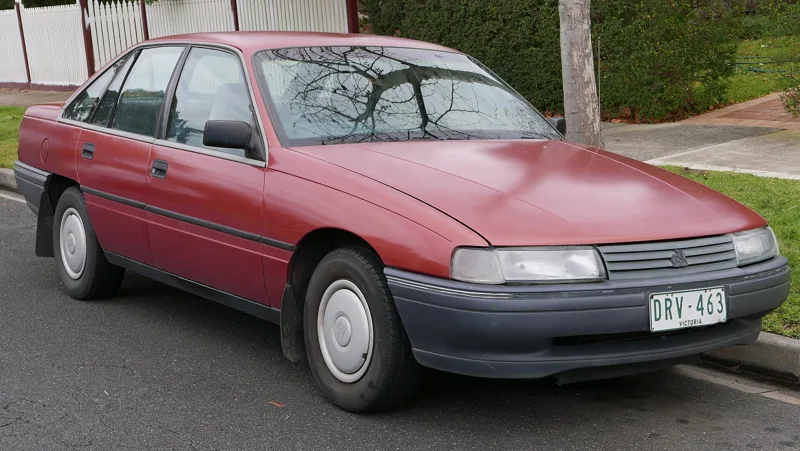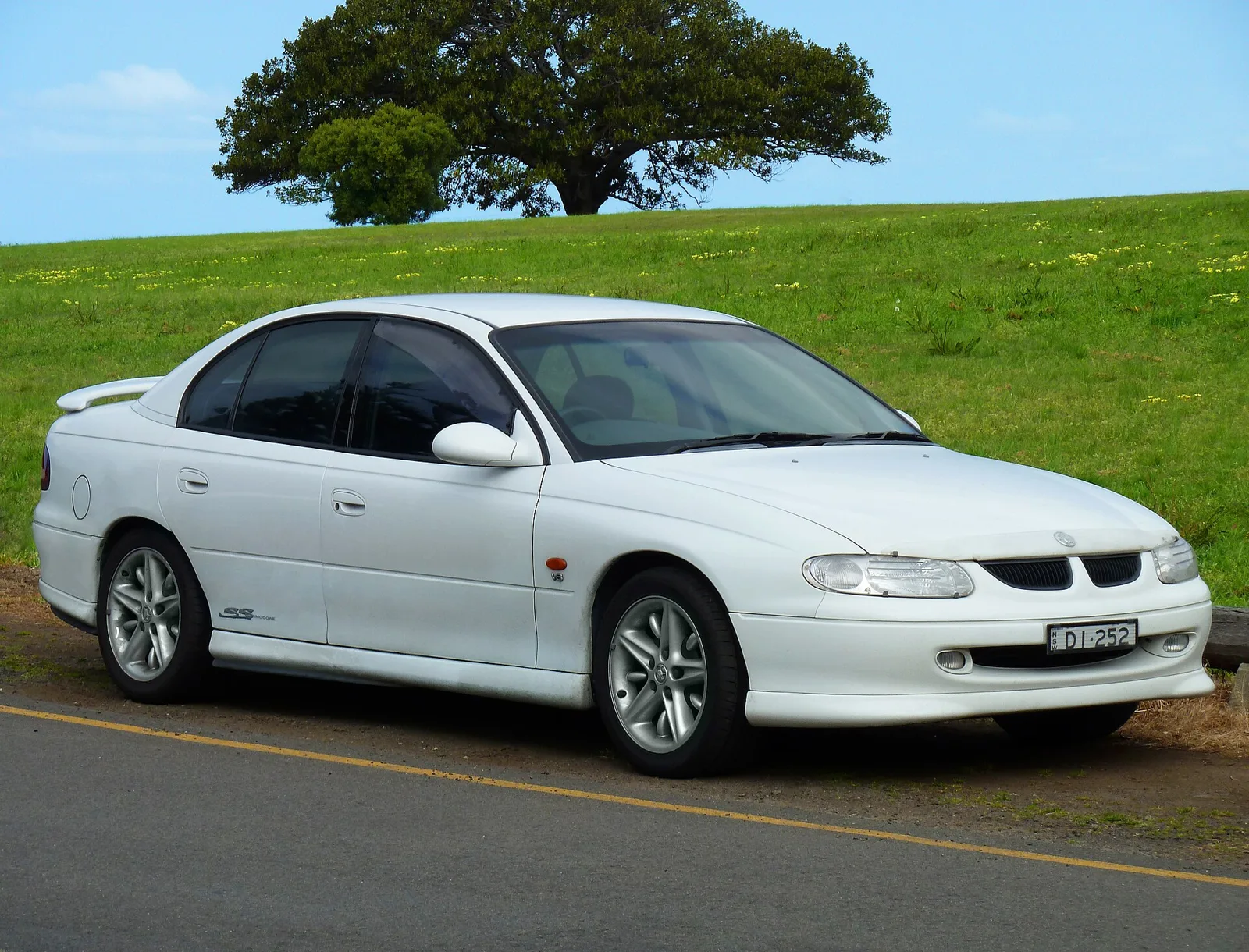
The 1997 VT won Wheels Car of the Year, outsold the Commodores before it and was the last to carry a locally built 5-litre V8.
The Holden Commodore VT was a full-size car built from 1997 to 2000 and the first version of the third-generation Commodore. It was the last Commodore to use a locally built 5-litre V8, and 303,895 were built before the VX arrived in October 2000.
The Holden Commodore VT arrived in August 1997 as the biggest change Holden had made to the Commodore, and buyers rewarded it by making it the best-selling Commodore of its time. It was also the last Commodore to run a locally made 5-litre V8, and its story runs from a A$600 million development program to Chevrolet badges overseas.
The VT won Wheels magazine's Car of the Year prize for 1997 on its debut, the fourth time a Commodore had taken it. Many buyers turned away from the Ford Falcon AU, whose styling was more radical, and chose the Holden instead.
Where did the VT Commodore come from?
The VT was derived from the Opel Omega B, with the body widened and the mechanics adapted for Australian conditions. Holden put A$600 million into the program over more than five years, and the car went on sale on September 5, 1997, in place of the VS Commodore.
Holden had always looked to Opel for a donor platform. For the VT it could have simply adopted the Omega as it stood, or reskinned the second-generation VN to VS architecture. Neither route was taken, and the VT became a wider car on its own footing.
The VT was more than a restyle. Its body was 30 percent stiffer than the VS, and the program brought several firsts for an Australian-built car, including more advanced electronics.
Production was part of the story too. Holden spent A$275 million upgrading the Elizabeth plant, adding robots and cutting the press count, and the final assembly time fell by 2.5 hours.
The Elizabeth work was a large part of the spend. Robots rose by 43 percent to 130, and the pressing process ran on 59 presses instead of 104. The main body was spot-welded in 101 seconds.
The VT was the biggest step Holden had taken with the Commodore, and buyers rewarded it.
What did the VT's shape get right and wrong?
The VT's rounder body, with a windscreen raked at 63 degrees, looked more appealing to buyers than the more aerodynamic Ford Falcon AU. Its drag coefficient was 0.33, and Holden treated the sedan shape as a styling exercise rather than an aerodynamic one.
The trouble showed up in the boot lid. Its rounded trailing edge did not let the airflow separate cleanly from the back of the car. Holden's aerodynamic engineers conceded at the 2002 launch of the VY that the design was not ideal, and the VY series corrected the trailing edge.
How did the VT ride and handle?
Semi-trailing arm independent rear suspension came as standard across the range. Holden removed the toe control link from the Omega's design, and under heavy loads that change could upset the rear camber and toe. HSV re-added the link on its flagship GTS 300 model.
The front end used MacPherson struts with 8 degrees of positive castor, up from 5.5 degrees on the VS. Steering was a variable-ratio rack, giving 46 to 67 mm of rack travel per pinion revolution, against 40 to 58 mm on the VS.
The Calais was the exception on steering. It used a speed-sensitive Variotronic system, which drew criticism for its feel. Elsewhere the VT was regarded as a more neutral handler than the VS it replaced.
Braking came from a three-channel Bosch 5.3 anti-lock system fitted across the range. Tyres ran from 15-inch P205/65 on the Executive, Acclaim and Berlina up to P235/45 rubber on the SS's 17-inch wheels.
How big was the VT compared with the VS?
The VT was bigger than the VS in almost every direction. The sedan was 23 mm longer, 60 mm wider and 47 mm taller, with a wheelbase 57 mm longer, and it weighed 166 to 195 kg (366 to 430 lb) more than its predecessor.
Sedan boot capacity rose to 475 litres (16.8 cu ft), from 443 litres on the VS. The wagon's maximum cargo volume reached 2,683 litres (94.7 cu ft), which made it one of the roomiest wagons on sale.
Front occupants sat 22 mm further apart and had 24 mm more fore-aft seat travel. Holden's planning chief identified rear shoulder room of 1,520 mm (59.8 in) as the critical dimension for keeping the range competitive. Seat facings were bonded to the foam with a technique called Surebond, which removed the need for traditional sewing on the Berlina, Calais and SS.
What engines did the VT offer?
The 3.8-litre Ecotec V6 was carried over from the VS Series II, with new exhaust manifolds and Bosch EV6 injectors, and it remained the entry engine. The 5.0-litre Holden V8 stayed in the range, and the supercharged Ecotec, now rated at 171 kW (229 hp), came with a new engine management system.
Holden spent A$2 million extracting extra power from the V8, which gained 10 kW (13 hp) of power and 10 N m of torque over the previous series. Only the uprated HSV variants went further.
On the V6 buyers chose between a four-speed 4L60-E automatic and a five-speed Getrag 260 manual, which replaced the Borg-Warner T5. The V8 offered a Getrag 290 five-speed or a six-speed Tremec T56 manual, and the fuel tank held 75 litres, 12 litres more than the VS sedan.
What electronics and safety features did the VT bring?
Electronics were the other big change. A multiplex bus circulated 330 parameters every second, which cut the number of hard-wired circuits. The Calais had 73 fewer of them than the VS equivalent, and the immobiliser offered 16 million extra codes.
Holden leaned more heavily on computer simulation than ever before, and only 20 VTs were physically crash tested, against 55 for the VR. A driver airbag was standard across the range. Torso and head airbags for the side were optional on the Acclaim and higher from 1998, which was a Holden first.
Which VT Commodore models were on sale?
The original 1997 range had six models, each built around its own package. Prices ran from A$29,760 for the Executive sedan to A$48,760 for the Calais, which sat at the top of the range for luxury buyers.
- Executive: the fleet and entry model, with manual V6 sedans at A$29,760, wagons at A$31,600, and automatic and V8 options
- Acclaim: the family safety package, with automatic V6 sedans at A$33,980 and wagons at A$34,960
- S: the entry sports variant, with manual V6 sedans from A$34,810 and a supercharged automatic option that reached 0-100 km/h in 6.7 seconds
- SS: the high-end sports variant, with V8 manual sedans from A$44,160 and automatic or supercharged V6 automatic options
- Berlina: the luxury package, with automatic V6 sedans starting at A$39,800, wagons from A$42,600, and a V8 option in place of the V6
- Calais: the sport-luxury top of the range, with automatic V6 sedans from A$48,760
The Berlina and Calais were not badged as Commodores. Their extra features included chrome-look grilles and bumper strips, climate control on both, and a key-based memory setting on the Calais that recalled driver preferences.
Several features were standard across the range, including independent rear suspension, a driver airbag and seatbelt pre-tensioners. Cruise control was standard on the automatics, and air conditioning came as standard on the S and SS.
What did the Series II change in 1999?
The VT Series II arrived on June 1, 1999, with a retuned V6 that was slightly faster and a Gen III V8 of 5.7 litres imported from the United States in place of Holden's own 5.0-litre engine. The new V8 was first rated at 220 kW (295 hp) and later uprated to 250 kW (335 hp).
The supercharged V6 was dropped from the SS, became optional on the Berlina and was standard on the Calais. Cosmetically the range picked up revised wheel covers, new grilles with silver accents on the base cars and thicker chrome bars on the Berlina and Calais, and clear indicator lenses in place of amber.
Wheels magazine later claimed the Series II V8 made the VT the fastest Australian car ever built. The VT Series II stayed on sale until October 2000, when the VX replaced it.
How many VT Commodores were built?
Production from August 1997 to October 2000 totalled 303,895 units. Around 100,000 had sold in the first 22 months of production, before the Series II update arrived in June 1999. Of the total, 33,428 units went overseas, so exports made up a real part of the VT's story.
Sales were strong from the start. The VT was the best-selling Commodore of its time and the number one seller in Australian sales while it lasted.
Where did the VT's Monaro idea come from?
The VT also led to a coupe. In 1998 Holden showed a Holden Coupe concept at the Australian International Motor Show in Sydney, and public interest was so strong that a production coupe followed. It reached showrooms in 2001 as the Monaro, based on the VX rather than the VT.
The Monaro name had been on hiatus since the HZ Monaro GTS finished production in 1979. The VT-era prototype brought it back after more than two decades away.
How did HSV build on the VT?
Holden Special Vehicles built a performance range on the VT, including the Manta, Clubsport, GTS, Senator, Senator Signature and a Senator Estate wagon. The 1997 Clubsport's 5.0-litre engine made 195 kW (265 PS; 261 hp). Critics noted that the same engine was offered on the SS, which took some exclusivity from the Clubsport.
The Series II Clubsport moved to the 5.7-litre LS1 V8, rated at 250 kW (340 PS; 335 hp). Production ended in 2000. The GTS came in three builds: 402 Series 1 cars, of which 126 were automatics and the rest manuals, 100 Series 2 cars with Callaway C4B engines, and 15 Series 2 GTSR cars for the UK.
The Senator Signature brought Monroe Sensatrac dampers, speed-sensitive steering and leather. It also marked the first time a Senator Signature wagon entered the HSV range. The Series II version was rated at 250 kW (335 hp) with 473 N m (349 lb ft) of torque, and buyers could pick a 6-speed manual or a 4-speed automatic.
Where were VT Commodores sold overseas?
Left-hand drive VTs were shipped to Indochina and the Middle East as the Chevrolet Lumina, and to Brazil as the Chevrolet Omega. The VT was the first left-hand drive Holden since the LH Torana of 1976, and the Brazilian Omega ran from October 1998 to 2001.
The export story starts with Holden's parent company, which wanted a left-hand drive Commodore for the Buick line in the United States. Holden received funding for the engineering, and a 1995 prototype, the Buick XP2000 concept, shaped the VT's styling. The Project 127 plan was dropped in early 1994, long before the car reached showrooms.
The Brazilian Chevrolet Omega ran from October 1998 to 2001. The Middle East's Lumina came in LS, LTZ and SS trims, based on the Executive, Berlina and SS.
Did the VT have a utility version?
No VT utility was ever developed. Holden kept selling the VS utility until December 2000, when the Holden Ute (VU) arrived on the long-wheelbase VX platform. The VT wagon platform had, however, given the second-generation Statesman and Caprice their underpinnings in 1999.
What was the VT's racing record?
The VT's best-known result came at Bathurst in 2000. Garth Tander and Jason Bargwanna shared a VT that won the 2000 FAI 1000 that year, the last year of VT production. The result came as the VX was being readied to replace it, and it is the VT's best-known result on the track.
Holden Commodore VT specifications
| Specification | Detail |
|---|---|
| Announced | August 26, 1997; on sale September 5, 1997 |
| Production | 303,895 units, August 1997 to October 2000 |
| Base engine | 3.8-litre Ecotec V6, with 171 kW (229 hp) supercharged option |
| V8 | 5.0-litre Holden V8 at launch; 5.7-litre LS1 from Series II, 220 kW (295 hp) rising to 250 kW (335 hp) |
| Transmissions | Four-speed automatic; five-speed Getrag 260 manual on V6; five-speed Getrag 290 or six-speed Tremec T56 on V8 |
| Fuel tank | 75 litres |
| Sedan boot | 475 litres (16.8 cu ft) |
| Launch price | A$29,760 Executive sedan |