Ford swapped the Taurus's familiar shape for an oval one in 1996, won fleet sales, lost its best-seller crown within a year and then ended the era with a new car.
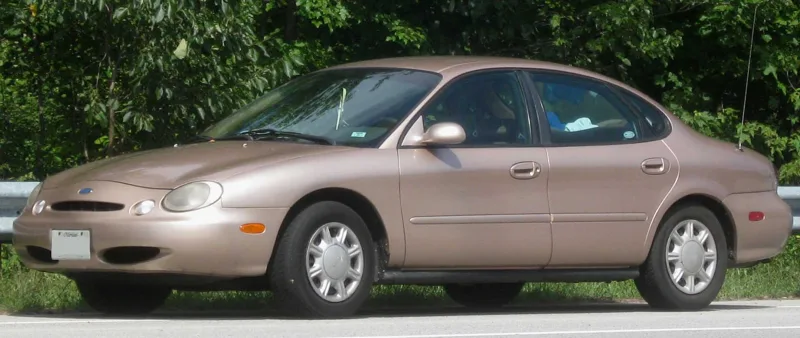
Sold from 1996 to 1999, this model was a mid-size sedan and wagon with an oval design that replaced the 1986 shape. Mercury also sold it as the Sable, and it offered a 3.0 L V6 in most versions and a 3.4 L V8 in the SHO.
The third-generation Ford Taurus was a mid-size sedan and station wagon sold for the 1996 to 1999 model years, with an oval design that replaced the car's familiar shape from 1986. It was built alongside the Mercury Sable, offered a 3.0 L V6 as its core engine and a 3.4 L V8 in the SHO performance model.
The car was a bold move. Ford had built the Taurus into a best-seller on an evolutionary design, and the 1995 redesign tried to reset that success with a shape that many buyers found polarising. Its story runs from a long development process through a sales slump to a successor that ended the car's run.
Why did Ford redesign the Taurus in 1995?
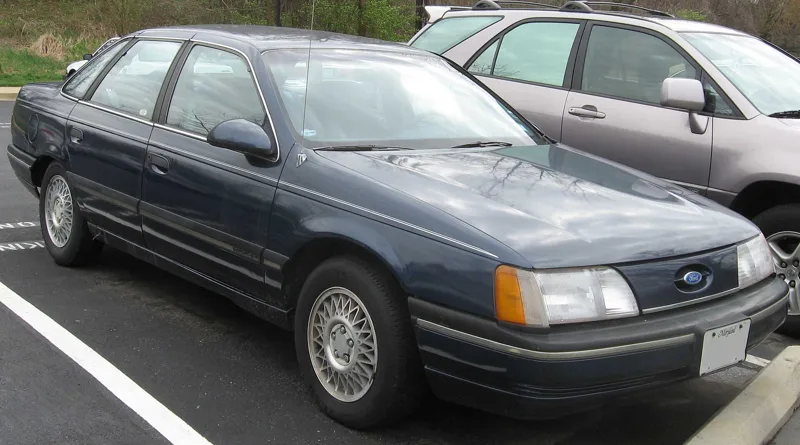
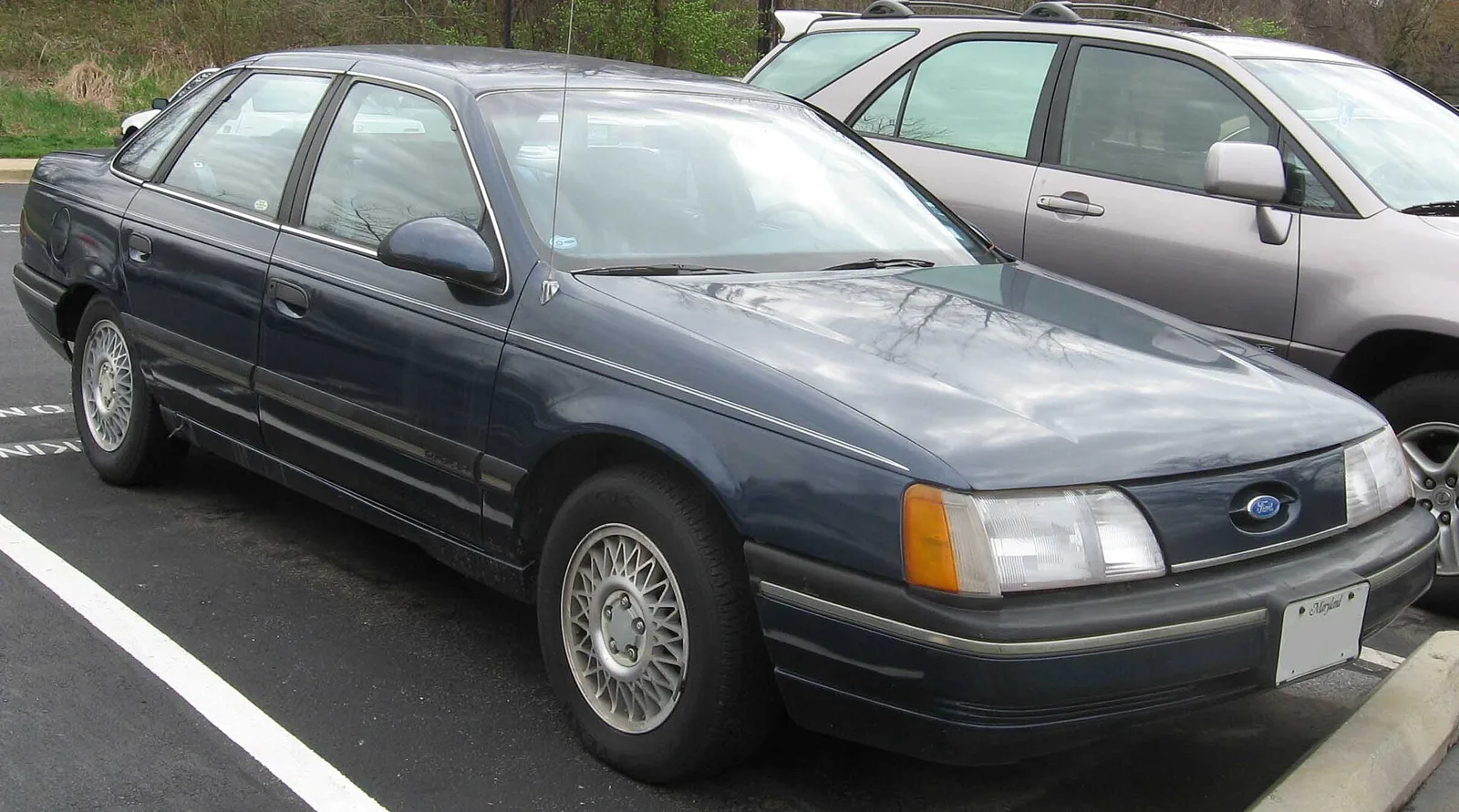
Ford redesigned the Taurus in 1995 to answer the Chrysler LH cars introduced in 1992 and to keep pace with the Toyota Camry and Honda Accord, which had become its main rivals. It was the first complete exterior redesign since the car's 1986 introduction, and the aim was to recreate the class-leading design of that earlier car.
The Taurus had built its success on the 1986 shape. The 1995 car kept the same four-door sedan and five-door wagon formats, but it moved the look in a new direction, and Ford hoped the change would deliver the same success the first car had enjoyed.
A redesign that traded the familiar shape for an oval one, and a car that still led sales for a single year before the slide.
How was the oval design developed?
Development began in 1991, and the team said the job was as daunting as repainting the Mona Lisa. Designers considered everything from cars close to the second generation to far more radical shapes, and in April 1992 they gave final approval to a scheme based on oval design elements.
Chief designer Jack Telnack, who had overseen the first and second generations, said the oval reflected a new global design theme for Ford. The choice later proved a difficult one in the market, but it was made with close attention to rival cars and to customer feedback.
Engineers broke down and tested competitors, especially the Camry and Accord, and tuned the suspension to emulate their ride and handling. Customers also helped shape the interior, and the dashboard was rethought after many complaints about cluttered controls.
What did the third-generation exterior look like?
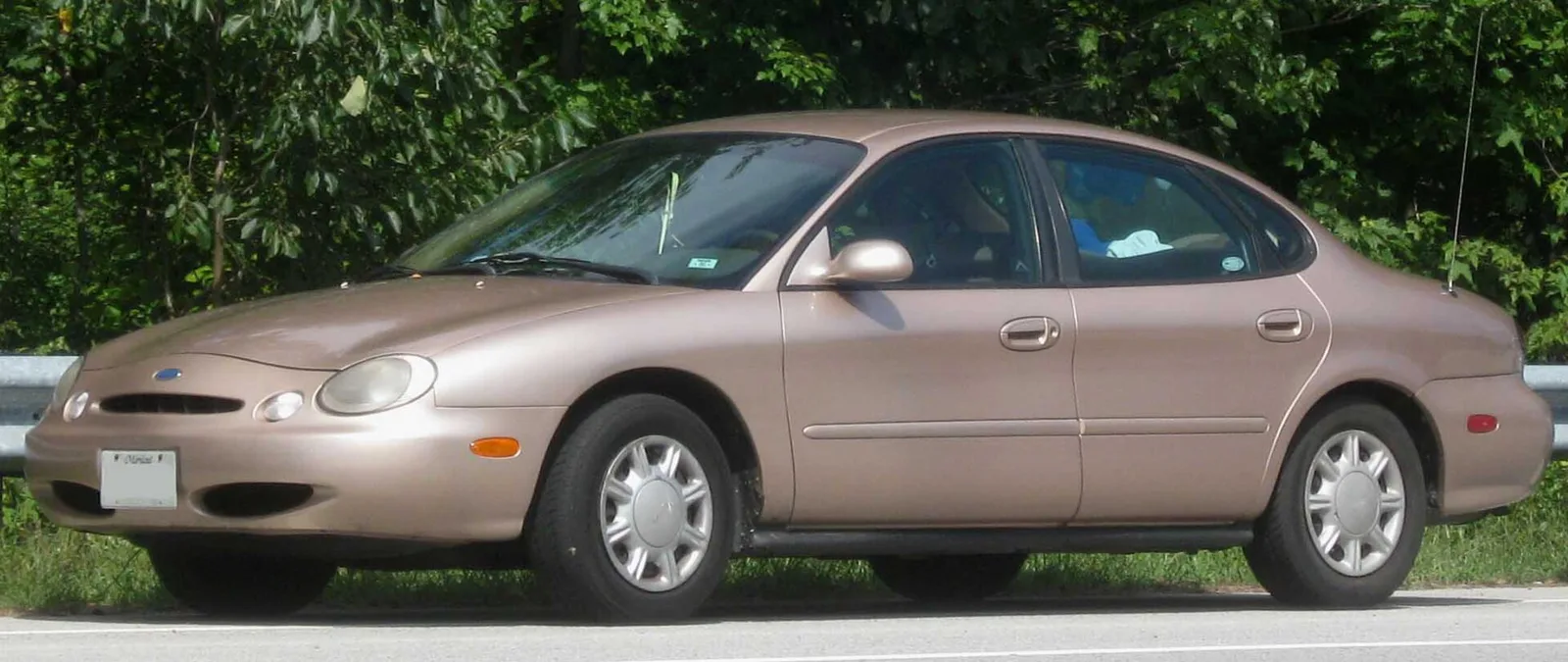
The exterior was completely redesigned for 1996 around a rounded shape based on an oval. Telnack said the design was meant to make the Taurus stand out to sedan buyers, and he compared the look to a pair of slippers. The heavily contoured sides took their cue from the Lincoln Mark VIII.
The car was more upscale than the outgoing model. The LX came with chrome alloy wheels and chrome dual exhaust tips, and the rear badge used a script Taurus lettering instead of block letters. Oval forms appeared on the grille openings, taillamps, rear window and side window openings, and the car became the first Ford to combine round headlamps with composite-style housings.
Station wagons received new sheet metal, but from the firewall back they shared panels with the Mercury Sable wagon. The rounded shape was partly inspired by Ford's own logo.
In 1998 the exterior was reworked to look more mainstream. The front bumper gained a full-length opening, the Ford logo moved onto a chrome bar in the grille, and the front turn signals changed to clear lenses, while the rear lenses switched from amber to red to match the light bar.
What changed inside the third-generation Taurus?
The interior was completely redesigned for 1996 and built around an oval-shaped Integrated Control Panel in the centre of the dash, which grouped the radio and climate controls. The gauges sat in an oval pod, and the dashboard wrapped slightly around the driver. Gone were the wide, couch-like front bench seats of earlier cars.
The panel answered complaints that the old radio and climate modules were cluttered with small, similar buttons. Designers gave each control a distinct shape so drivers could find it by touch without looking away from the road. Automatic and manual climate controls were both offered.
The Flip-Fold centre console was another feature. It turned the seat between the bucket seats into a lockable storage bin with cupholders, and its seat back folded down to act as an armrest. Cars without that layout got a traditional centre console with a floor-mounted shifter.
Seating ran from five to eight people. Wagons with a third-row bench could carry seven, and models with the Flip-Fold seated six or eight depending on whether a wagon had the third row. A sedan could seat six with the Flip-Fold and five with a regular console.
Which engines did the third-generation Taurus use?
The 1996 model year was the first without an optional engine. The base G and GL used the 3.0 L Vulcan V6 carried over from the previous car, while the LX received a new 3.0 L DOHC Duratec 30 V6 producing 200 hp (150 kW). The Duratec was developed specifically for this model.
The 1998 changes made the Vulcan the standard engine and offered the Duratec as an option on every model. For 1999 the Duratec was only available on the SE. Vulcan cars used the four-speed AX4S automatic and Duratec cars the four-speed AX4N, although some Vulcan cars received the AX4N for no clear reason.
For 1999 Ford also deleted some features to lower the price by about one thousand dollars, including the floor courtesy lamps and the glove compartment lamp.
What was the SHO?
The SHO was the performance Taurus, with a 235 hp (175 kW) aluminium V8 built with heads from Yamaha and a block from Cosworth. It came with the same four-speed automatic as the LX, because the manual gearbox was no longer offered, and it had a small fin on the driver's windshield wiper to keep the blade on the glass at high speed.
The SHO had a reputation for trouble. Many engines failed at around 50,000 miles when the camshaft separated from its sprocket, and the fix was to weld the camshafts. Partly because of that and partly because the SHO was designed more for comfort than performance, sales peaked at 9,000 in 1997.
The SHO was discontinued after the 1999 model year.
How did the Mercury Sable compare?
The Mercury Sable was aimed at a more upscale audience and shared the Taurus's mechanical parts, but it used a unique body. Its 1996 design dropped the earlier Sable's distinctive light bar, wrap-around rear glass and skirted rear fenders in favour of a theme close to the Taurus.
The Sable did not get its own interior for the first time. It shared all of its interior components with the Taurus, except for branded parts and woodgrain trim. Trims carried over from the previous generation, with the GS as the base and the LS as the high-end model, plus a brief base G in the second half of 1996.
The Sable had no SHO counterpart. Automobile Magazine chose it as the 1996 design of the year, and its sales held steady with the previous model. Styling revisions for 1998 were limited to a new grille and headlamps, and the two cars were built together through the 1999 model year.
How did the third-generation Taurus sell?
The Taurus remained the best-selling car in the United States for 1996, but only 49% of the model line went to retail customers. Rental fleets took 51% of the Taurus's sales that year. In 1997 the Camry overtook it, and the Taurus slipped to third behind the Camry and the Accord.
Ford had hoped the new car would keep the record of more than 400,000 units a year that the outgoing model had set. Sales were slow at first, so Ford added a low-priced G model mid-year and offered incentives such as a six-month lease for Camry and Accord owners, a $250 cash allowance on lease renewals and a $50 dinner certificate for a test drive.
Reviews were mixed. Road and Track praised the car's handling and refinement, while Motor Trend found the oval styling awkward at first glance but still liked many of its qualities. Motor Trend's Car of the Year went instead to the redesigned 1996 Dodge Caravan.
Why did critics nickname the car?
Detractors called the third generation the Bubble or Submarine Taurus, because its window shapes and broad front curves were seen as a negative.
Ford had expected the redesign to match the success of the 1986 Taurus, and the company even predicted the model would continue selling more than 400,000 units a year.
How did the Taurus sell overseas?
Export models came in left and right-hand drive, and they wore Mercury Sable headlamps with a unique front bumper cover to meet local lighting rules. Right-hand drive cars used a hand-operated parking brake in the centre console rather than the foot-operated unit used in North America.
Australia received only one version, a sedan called the Taurus Ghia, and the price was high for the market. A well-equipped, larger-engined, rear-wheel drive Ford Fairmont cost about the same. New Zealand was more receptive, and buyers there could choose either the sedan or the station wagon.
In Japan the car was sold in limited numbers through Autorama, a joint venture with Mazda, until 1997. Japanese buyers saw it as a luxury vehicle because its exterior dimensions and engine displacement exceeded the compact car limits, and owners paid extra annual road tax as a result.
What replaced the third-generation Taurus?
The fourth-generation Taurus arrived in 1999 with a more conservative design. Its trunk and rear roof panel were more upright, which increased headroom and trunk space considerably, and the interior was redesigned in a calmer style while keeping many features of the third generation.
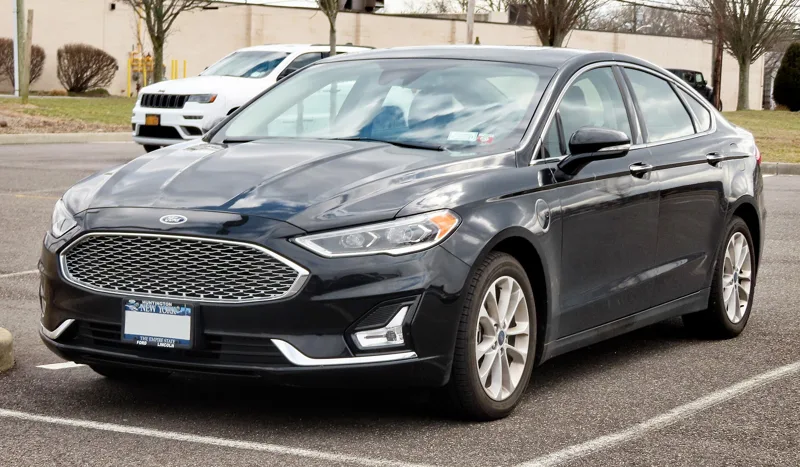
The fourth generation was notable for the Personal Safety System, which used seat sensors to detect a passenger's weight and position and then matched the airbag inflation to suit. It was sold through the beginning of the 2007 model year, when the Taurus name was dropped, although the nameplate returned within months under the new chief executive, Alan Mulally.
What were the third-generation Taurus specifications?
| Specification | Detail |
|---|---|
| Production | Began June 1995; 1996 to 1999 model years |
| Showroom date | 24 September 1995; sales from 1 October |
| 1996 base engine | 3.0 L Vulcan V6 on the G and GL |
| LX engine | 3.0 L DOHC Duratec 30 V6, 200 hp (150 kW) |
| SHO engine | 3.4 L aluminium V8, 235 hp (175 kW) |
| SHO peak sales | 9,000 in 1997 |
| Automatic transmissions | Four-speed AX4S (Vulcan) and AX4N (Duratec) |
| Seating | Five to eight people, depending on body and console |
| Assembly | Atlanta, Hapeville, Georgia, and Chicago, Illinois |
| 1996 retail share | 49% of sales, with rental fleets at 51% |
| Successor | Fourth generation, 1999 to the 2007 model year |