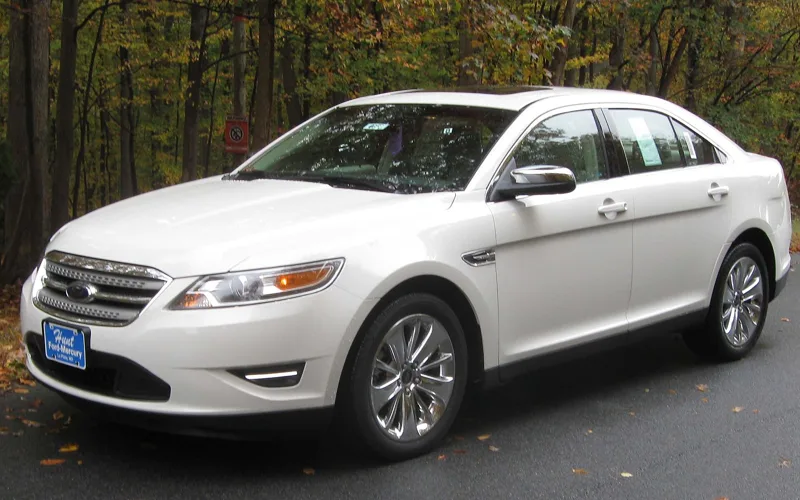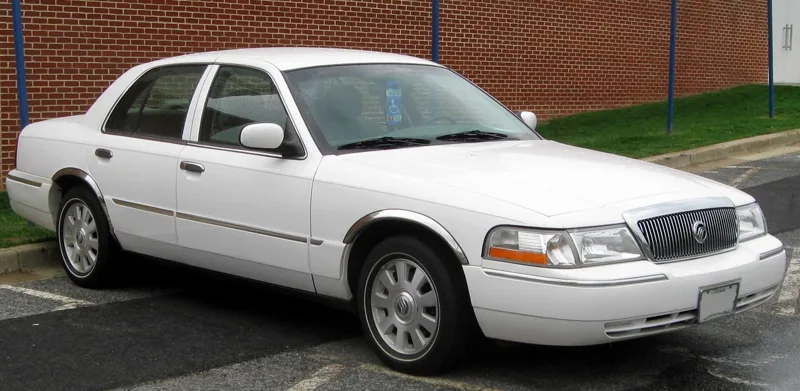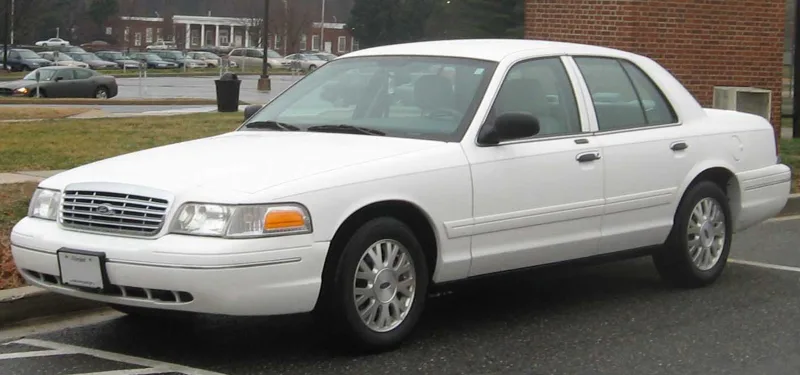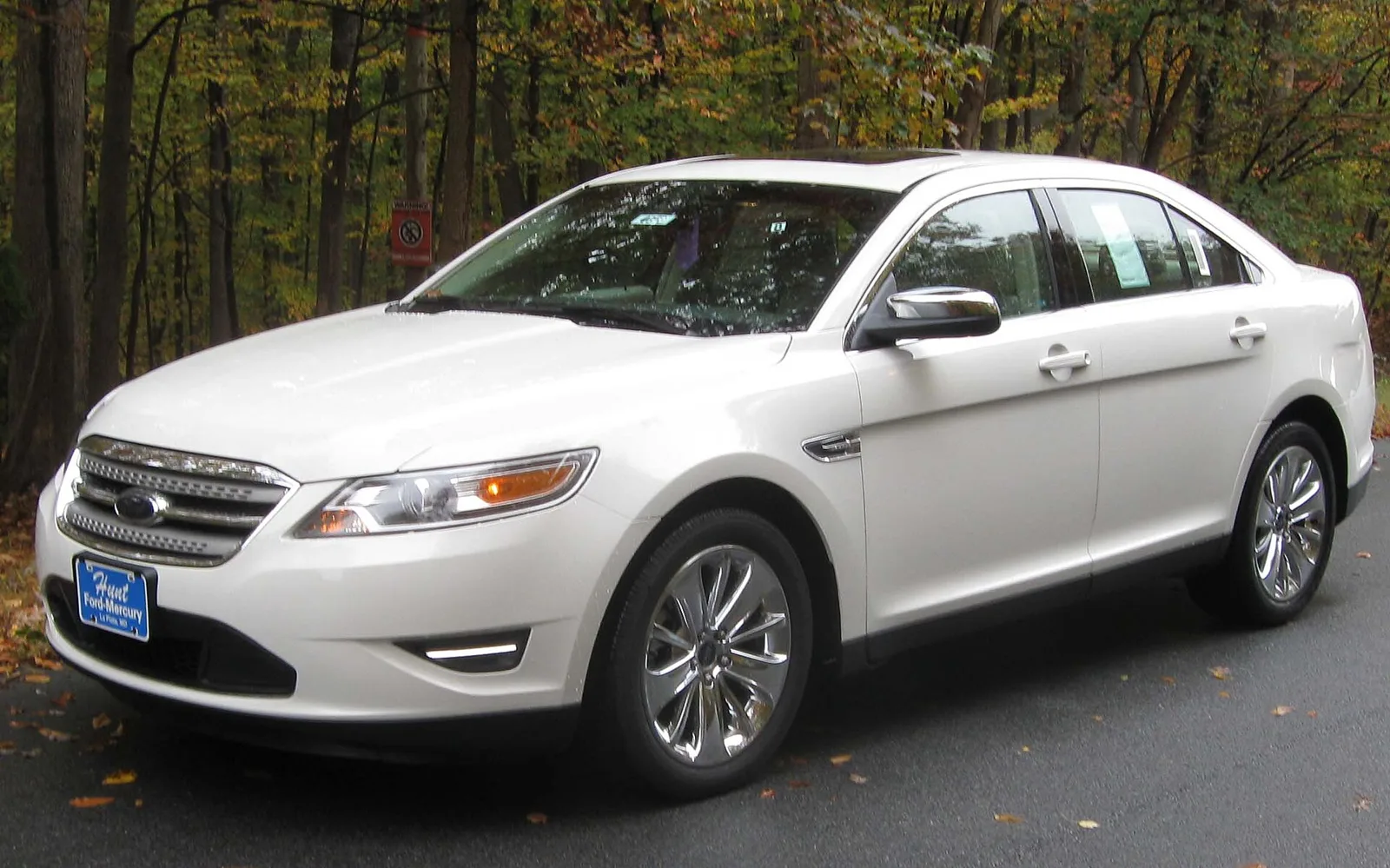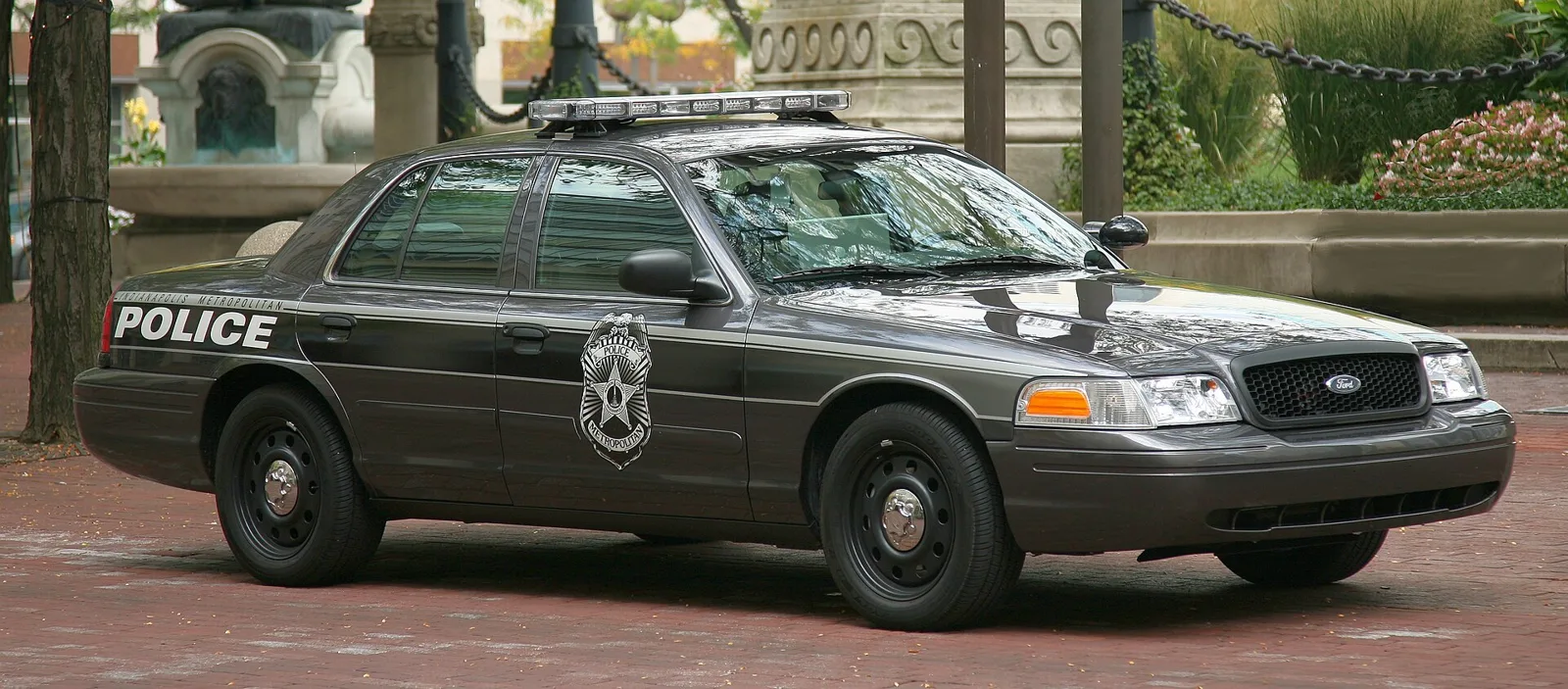
The body-on-frame sedan that became the most widely used law enforcement car in North America, built from 1992 until 2011.
Built from 1992 to 2011, the CVPI was a rear-wheel drive, V8-powered sedan on a body-on-frame chassis. Its durable underpinnings made it a favourite with police fleets and taxi operators, and many cars stayed in service long after production ended.
The Ford Crown Victoria Police Interceptor, known as the CVPI, P71 or Crown Vic, was a four-door, body-on-frame sedan that Ford built from 1992 to 2011. It was the police version of the Crown Victoria and the first car to carry the Ford Police Interceptor name. From 1997 to 2013 it was the most widely used law enforcement car in North America.
Why was the Crown Vic so popular with police?
After Chevrolet discontinued the Caprice, Ford held a near-monopoly on the police vehicle market in the United States and Canada for more than a decade. Rear-wheel drive, V8 power and body-on-frame construction were all seen as advantages for police work, and the body-on-frame design allowed cheap collision repairs without straightening the chassis.
Rear-wheel drive also handled hard manoeuvres and rough urban driving, such as going over kerbs and other obstacles, better than the front-wheel drive competition. Those qualities made the car a reliable tool for patrol officers who put it through a great deal of punishment.
Ford did not sell CVPIs new to the public, but many were sold used after being decommissioned. Taxi companies and others who wanted a safe, durable and inexpensive car bought them, along with buyers who needed a large back seat. Used examples were normally stripped of police decals, equipment, radios and emergency lights before sale.
A body-on-frame patrol sedan with a V8 and a cheap-to-repair chassis, which became the default police car across North America.
What was the first generation of the Crown Victoria P71?
Although the name had been in use since 1992, the 1979 to 1991 full-sized LTD and LTD Crown Victoria models used the P72 production code for both fleet and police versions. Between 1992 and 1997 Ford's police Crown Victorias, in base and LX trim, carried the official P71 label.
London Police Service in Ontario ordered 21 cars for delivery in February 1992, making it the first force to take them. The first car from that order came off the St Thomas production line and was driven by London police chief Julian Fantino.
The 1993 model year brought a chrome front grille and a reflector strip between the taillights. In 1995 the grille and taillights changed again, and the rear licence plate moved from the bumper to the trunk lid to suit the new lights. For 1996 the Crown Victoria badge came off the front fenders, and the cars received a new steering wheel.
What changed in the 1998 and 1999 models?
For 1998 the Crown Victoria was restyled to drop the aero look of the first generation. Ford adopted the more conservative styling of the Mercury Grand Marquis, with restyled front and rear components. Police-spec 1998 cars wore chrome on the grille, the door handles and the bumpers, and their rear fascia was flat black with chrome trim and a Crown Victoria badge.
The Crown Victoria Police Interceptor name arrived in 1999, carried on a trunk lid badge that replaced the 1998 Crown Victoria one. A gloss-black rear fascia, black door handles and a gloss-black slatted grille also appeared. The Street Appearance Package, or SAP, was introduced to make the CVPI look like a standard P73 model, with chrome trim and Crown Victoria badging.
Mid-way through 1999 the taillights changed. Earlier models had a separate amber turn signal along the bottom of each taillight, but later cars returned to a combined stop and turn setup with red lenses. The housings kept their chambers, which were left empty and proved a good place for police strobe tubes. Fleet cars with the SAP kept the amber signal until 2004.
The 1999 model also made a heavy-duty 11.25-inch torque converter standard on all CVPIs. The civilian Crown Victoria used a 12-inch converter.
How did the CVPI's engine develop?
In 2001 the CVPI received the Performance Improved 4.6-litre two-valve V8 as standard. It produced 235 hp at 4,750 rpm, with torque peaking at 276 lb ft at 4,000 rpm. The P71 also gained a stronger 135/82 amp alternator, and its rear axle ratio moved from 3.55:1 to 3.27:1.
The 2003 engine gained a knock sensor and revised tuning, which raised output to 239 hp and 287 lb ft. The fuel system became return-less, and the EGR system was revamped to reduce emissions. A larger 6-quart oil pan, a variable speed electric cooling fan and a 78 amp hour battery were also added.
For 2004 the CVPI received its final horsepower upgrade, using an air intake borrowed from the Mercury Marauder. Its integrated 80 mm mass airflow sensor allowed much more precise flow calibration. The rating for 2004 to 2011 is 186.8 kW (254 PS; 250.5 hp) at 4,900 rpm, and the car also carried a 200 amp heavy-duty alternator from Mitsubishi.
What was the 2003 re-engineering?
At the 2002 New York International Auto Show Ford previewed a 2003 Police Interceptor concept with an all-new exterior, mirror-mounted spotlights, a 300 hp V8, reinforced bumpers and 18-inch alloy wheels. The exterior design was scrapped, but the 2003 model year reworked the Panther platform more thoroughly than anything since 1979.
The 2003 car used all-new underpinnings with a fully boxed, hydro-formed steel frame. Ford said the frame was 20 percent more resistant to vertical bending and helped the car perform better in crashes. The suspension gained coil-over front shocks, revised steering knuckles, control arms and mono tube rear shocks mounted on the outside of the frame rails.
The recirculating ball steering gave way to a rack and pinion unit that was 22.5 pounds lighter, and the brakes gained a quiet EBD booster with mechanical panic assist. By May 2003 the Crown Victoria Police Interceptor accounted for about 85 percent of the police cars in use in the United States.
The 2003 cars also received 7-hole 16x8 inch steel wheels in place of the older concave 20-hole wheels. Their higher offset made them look almost flat, and a 2003 car can be identified by its wheels alone. Ford later de-contented the Panther platform, including the CVPI, and that saved an estimated US$4,000,000 per year in production costs.
What happened to the Crown Vic after 2004?
In 2005 Ford offered an optional fire suppression system, described as an industry first. It was designed to reduce the chance of fire after rear impact collisions, and it was recognisable by a large encased button on the headliner. The 2005 model also moved to drive-by-wire throttle control and a 4R70E transmission, used only in that year.
In 2006 Ford introduced a redesigned instrument cluster with an analogue speedometer and tachometer, and standard 17-inch steel wheels for P71 and P70/P72 models. Flex Fuel became an option, and the 4R75E transmission arrived with better launch performance. By 2008 all Panther vehicles were Flex Fuel, compatible with E85.
For 2008 the Crown Victoria became fleet-only, and the CVPI gained keyless entry. For 2009 it received power pedals, side airbags and recessed window switches as standard, along with upgraded brakes, and the lock confirmation flash could be disabled.
Which model years marked the end of the CVPI?
In 2010 the VIN code changed from P71 to P7B, with no other changes. The 2011 cars received larger front headrests to meet new front crash-rating standards, and that was the last model year for the CVPI. The final CVPI was bought by the Kansas Highway Patrol in 2011.
Ford stopped accepting orders in April 2011. Without electronic stability control the Crown Victoria could no longer be sold in the United States and Canada, so a short 2012 model year was built only for export to the Gulf Cooperation Council states and the Middle East. The last CVPI left the line in August 2011, and the final Crown Victoria was built on 15 September 2011 for export to Saudi Arabia, the last vehicle from the St Thomas Assembly Plant before its closure.
Many CVPIs were bought by civilian owners as agencies decommissioned them. As of 2023 the Los Angeles County Sheriff's Department still had more than 400 in service, having kept most of a last batch of 600 delivered in 2011.
How did the CVPI differ from the standard Crown Victoria?
Both cars used the same 4.6-litre two-valve SOHC V8, Ford's modular engine, and the same four-speed automatic. The CVPI added a larger radiator, external power steering, transmission and engine oil coolers to cope with long periods at high load. Its calibration idled about 40 rpm higher, and the transmission shifted more aggressively.
The 2004 to 2011 car came with an open 3.27:1 rear axle, with an optional traction-lock 3.27:1 and an optional 3.55:1 traction-lock unit. Electronic limiters held the top speed to 129 mph (208 km/h) on the 3.27:1 axle and 119 mph on the 3.55:1. By comparison, the civilian Crown Victoria with a 2.73 axle was limited to 110 mph (177 km/h).
The CVPI also had severe duty shock absorbers, black steel wheels, dual stainless steel exhausts without resonators, higher-rate coil springs and about 0.8 inches (20.3 mm) more ground clearance. Inside, it came with manual cloth bucket seats, a non-leather steering wheel and a 140 mph (225 km/h) speedometer. The trunk release sat in the middle of the dashboard, and a dark mode option turned off the interior lights when a door opened.
What problems did the Crown Vic have?
Rear-end collisions at highway speed caused fires, and the criticism led Ford to offer an optional automatic fire suppression system and special trunk packs on 2005 and later cars. Buyers paid $150 extra per car, roughly $247 in 2025 money, for the trunk packs that kept cargo from puncturing the fuel tank in a crash.
Early 2003 cars had steel wheels that rusted prematurely, and some rack and pinion steering units gave out within 10,000 miles. Some 2004 Mercury Marauders were affected as well. A recall dated March 2007 (07S48) covered the steel wheels on 2003 to 2005 cars, but Ford would only honour it for vehicles still in fleet service. Private owners were angry, and the problem was handled instead through a customer satisfaction programme for air leaks, wheel balance and steering vibration. Ford resolved the wheel issue in 2006 with new 17-inch steel wheels.
The intake manifold was another common failure point. From 1996 Ford used a plastic manifold made by DuPont, with an integral plastic thermostat housing and anti-freeze crossover. Cracks in that housing caused leaks, overheating and misfires, and the problem led to a class action lawsuit against Ford. A revised manifold with an aluminium thermostat housing arrived in 2003, but its plastic rear heater hose fitting often split off, causing rapid anti-freeze loss.
In 2013 Ford recalled 370,000 Crown Victoria, Grand Marquis and Town Car vehicles from the 2005 to 2011 model years over a risk of steering loss. The recall covered a group of northeastern and midwestern states plus the District of Columbia, and 15,000 of the affected vehicles were sold in Canada.