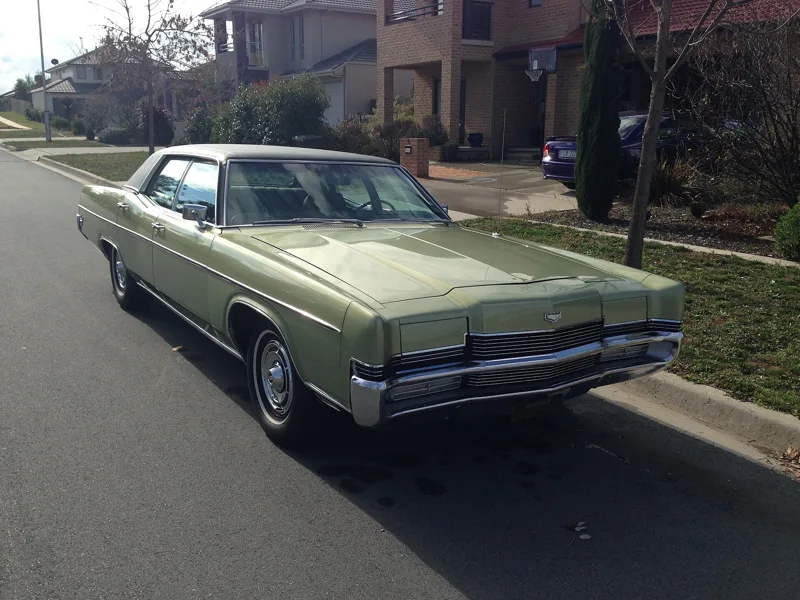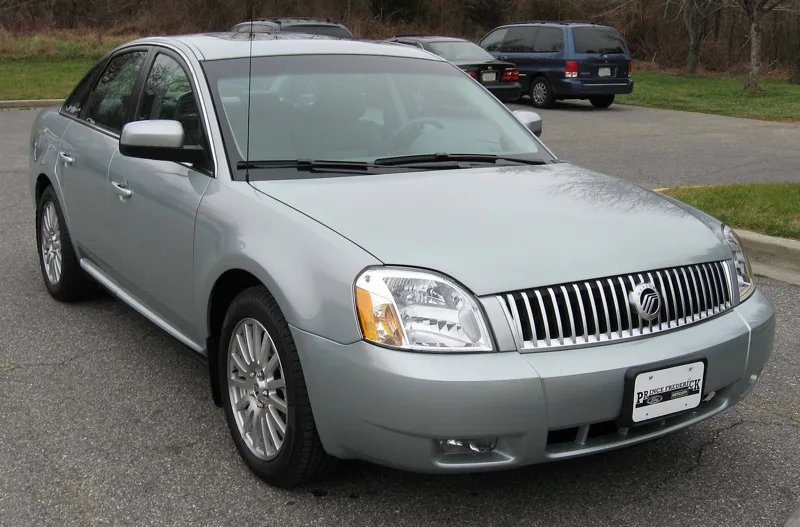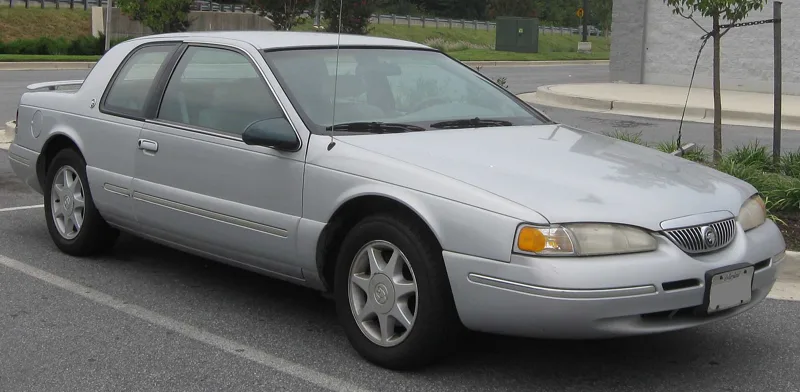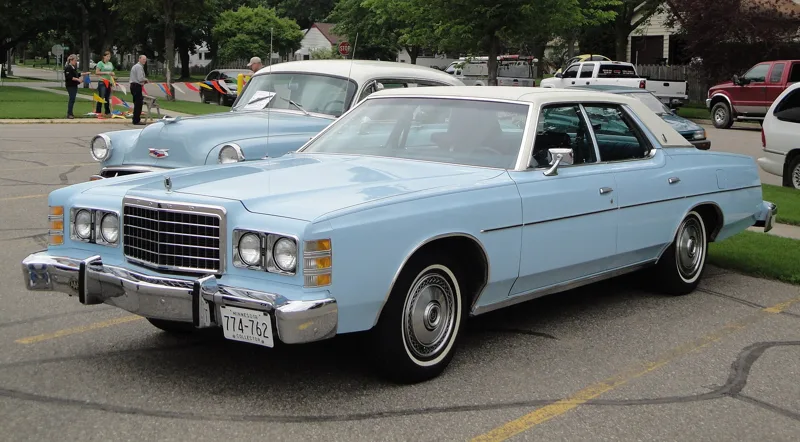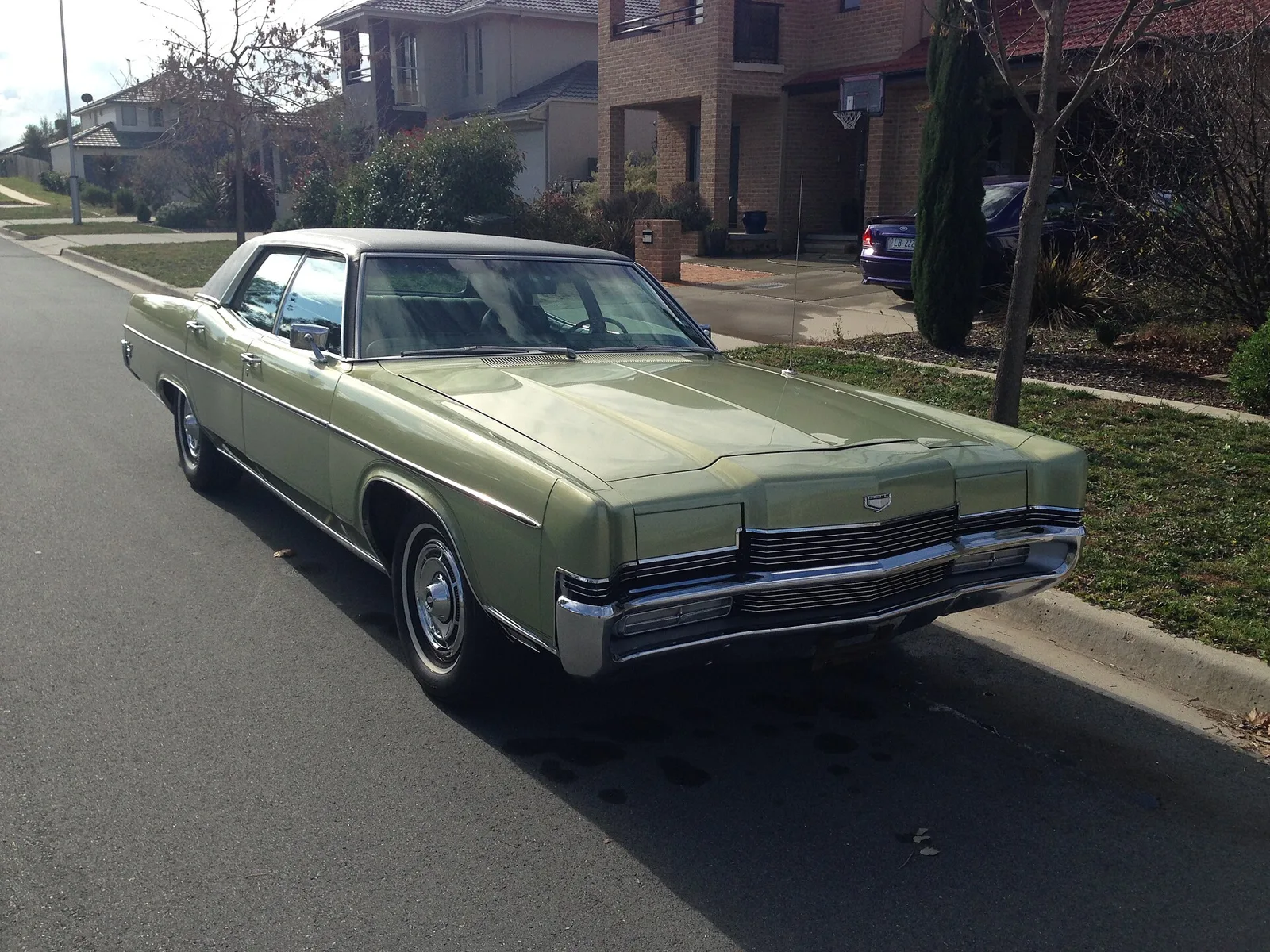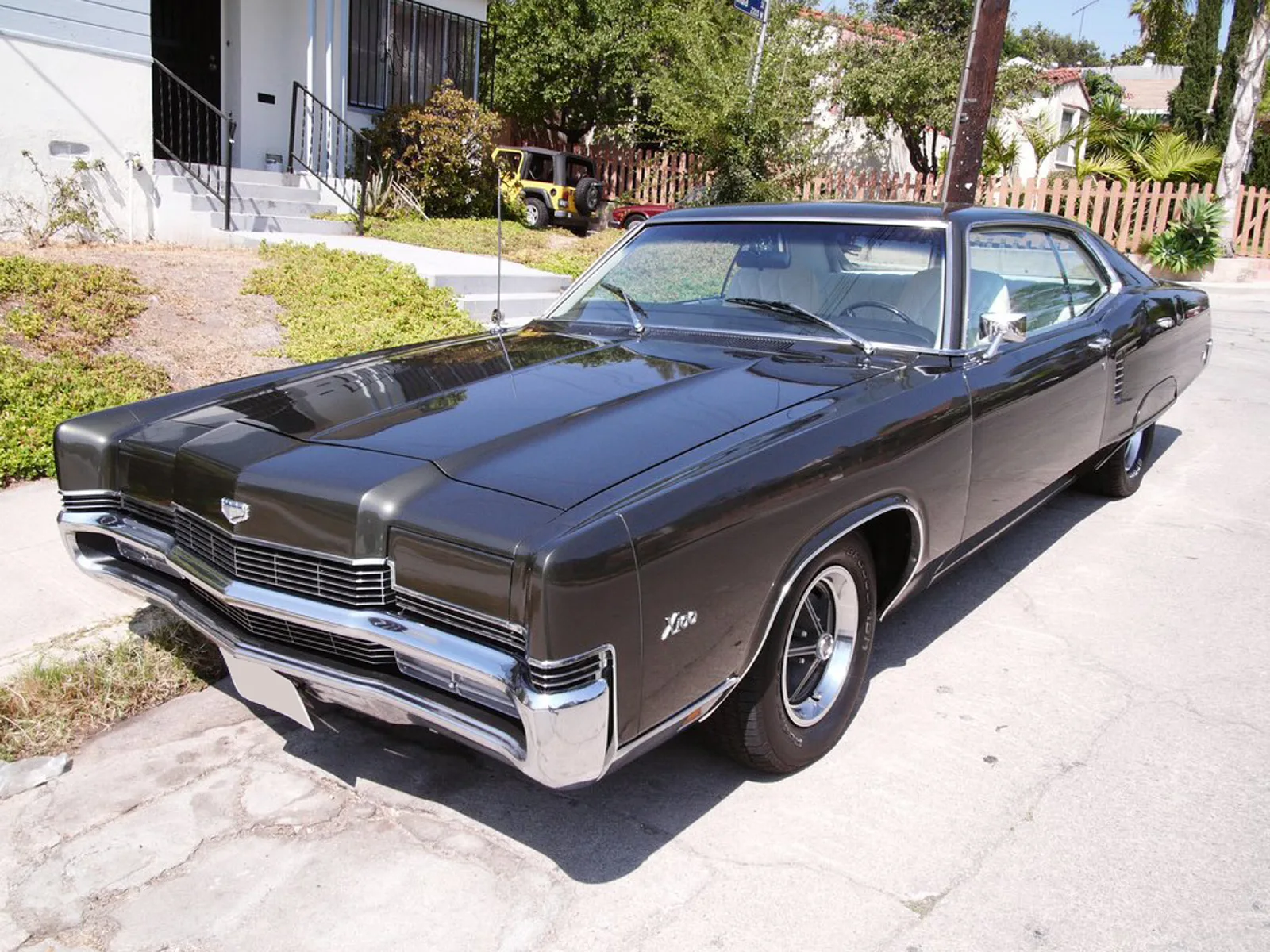
From a 1963 1/2 sloped-roof hardtop to a 2003 Panther-platform sedan, the nameplate marked Mercury's top performance full-size models.
The Mercury Marauder was a nameplate used on three full-size Mercury models between 1963 and 2004. It first marked the performance version of the Monterey range, returned in 1969 as a personal luxury car, and was revived in 2003 as a high-performance Grand Marquis sedan before being discontinued.
Mercury used the Marauder name for three distinct full-size cars, each made by Ford Motor Company's Mercury division. The nameplate marked the most powerful engines in the range, and in its last form it became a rear-drive sedan on the Panther platform.
Where did the Marauder name come from?
The name first appeared in 1958, when Ford introduced a family of V8s called MEL for its Mercury, Edsel and Lincoln brands. Marauder referred to people associated with outlaws or piracy. Two of the V8s were exclusive to Mercury, and one of them was dubbed Marauder.
That engine displaced 383 cu in (6.3 L), and with an optional four-barrel carburettor it produced 330 hp (246 kW; 335 PS). It was also offered in the midline Montclair and the Colony Park station wagon, which gave the name a place across the lineup.
The Super Marauder displaced 430 cu in (7.0 L), and its output of 400 hp (298 kW; 406 PS) made it the first mass-produced American engine advertised at that level. Its block was shared with Lincoln, but it used a unique intake and three two-barrel carburettors in a tri-power layout.
Mercury built the Super Marauder to rival the 392 Hemi offered in the Chrysler 300C. It was dropped for 1959, when the regular 430 V8 remained with reduced output. In 1960 the Marauder engine was offered throughout the Mercury range, and the big-block units disappeared altogether.
A nameplate borrowed from the most powerful Mercury engines, then used for a luxury coupe and a rear-drive sedan.
What was the first Marauder in 1963?
The first Marauder arrived as a 1963 1/2 model, offered as a mid-year addition to the Monterey, Monterey Custom and S-55 series. Every 1963 1/2 car was a two-door pillarless hardtop, and the coupe carried a price of US$3,650, roughly $38,385 at 2025 values.
The hardtop coupe used a conventional sloping notchback roofline, the same as the contemporary Ford Galaxie. That roofline was tuned to make the large sedan more competitive in stock car racing. The S-55 package added bucket seats and a centre console, similar to its Ford counterpart, while base cars kept a front bench seat and column shift.
For 1964 the Marauder was offered in the base Monterey, the Montclair and the top-of-the-line Parklane, and four-door hardtops joined the range. Engines remained Ford FE V8s. A 390 cu in (6.4 L) unit was standard, with a 427 cu in (7.0 L) option, and the Super Marauder version used two four-barrel carburettors. The 427 engines required a four-speed manual.
By 1965 Mercury was selling luxury more than performance, and the Marauder became a trim choice across the Park Lane, Montclair and Monterey ranges. A small flag emblem on the C-pillar was the only obvious clue. Dealer brochures never advertised the trim, and for 1966 a repackaged S-55 took over the role altogether.
Why did the Marauder return in 1969?
Mercury brought the nameplate back for 1969 as a personal luxury car. It replaced the performance-oriented S-55 and targeted shoppers drawn to the 1968 Lincoln Continental Mark III and the Mercury Cougar. Interest in full-size performance cars had mostly faded by then.
The 1969 Marauder sat below the Marquis in size, and its nose, cabin trim and hidden headlights came from that car. Its roofline matched the Ford XL and the Galaxie 500 SportsRoof, and the body had a tunnelled rear window with large flying buttresses at the C-pillars.
A 121-inch wheelbase tied the car to every full-size Ford and to Mercury's full-size estates. Non-functional louvred intakes sat on the rear quarter panels. Its price was US$3,351, roughly $29,420 at 2025 values, and 9,031 found buyers.
What engines did the 1969 Marauder use?
Standard cars used the 390 cu in Ford FE V8 with a three-speed manual transmission. The Marauder X-100 was the only version to carry a 429 cu in unit, rated at 360 hp (268 kW; 365 PS), and a three-speed FMX automatic was available with it.
The X-100 was largely a cosmetic package. Buyers could pick twin comfort lounge seats, a bench, or buckets beside a floor console that housed a U-shaped automatic shift handle. The car also brought Kelsey-Hayes road wheels and rear fender skirts, and it carried a US$4,074 price, about $35,768 at 2025 values.
Demand for big, high-performance cars had collapsed by the end of the decade. Mercury sold about 15,000 cars in 1969 and barely a third of that in 1970, while the Cougar sold nearly 173,000 in the same period. Across 1969 and 1970 the Mark III sold more than twice as many units as the Marauder.
How was the 2003 Marauder built?
The 2003 Marauder used the Panther platform with that year's chassis upgrades, including rack-and-pinion steering. Power came from a 4.6-litre DOHC V8 making 302 hp (225 kW; 306 PS), derived from the Lincoln Mark VIII unit, and the same engine appeared in the Mustang Mach 1 and the Lincoln Aviator.
The car shared its limited-slip differential, 3.55:1 rear axle ratio and aluminium driveshaft with the Crown Victoria Police Interceptor, and it borrowed heavier brake and suspension parts from that model. Gearboxes were a 4R70W automatic for 2003 and a 4R75W for 2004.
Mercury gave the car a monochrome look, with most cars sold in black and chrome limited to window trim, wheels and Mercury emblems. The 18-inch five-spoke wheels carried a silhouette of the Roman god Mercury in their centre caps, a revival of a 1960s Mercury emblem.
The front bumper gained a central air intake and round Cibie fog lamps, and the rear bumper carried the model name embossed in its surface. Inside, the five seats were leather as standard, with satin aluminium trim in place of wood. The car had a 140-mph speedometer and a tachometer, which was unusual on the Panther platform at the time.
Why was the 2003 Marauder discontinued?
Sales fell short of expectations, and the figures show the gap clearly. Mercury had forecast about 18,000 vehicles a year, but the Marauder sold 11,052 units over its two model years, while the Grand Marquis sold nearly 180,000 in the same period, and the Marauder was dropped after 2004.
Ford de-contented the Panther line midway through the 2003 model year. Cars built from December 2002 onward lost remote fuel-door locking, the in-dash clock, foam headliner inserts and the front bottom seat pouches. Ford estimated that the changes would save US$4,000,000 a year across the platform.
The Marauder did attract younger buyers into Lincoln-Mercury showrooms. Its average buyer was 51, which was 18 years younger than the average Grand Marquis buyer at 69. The car was discontinued after the 2004 model year with no direct Mercury or Ford replacement.
Mercury refreshed its range in the same period, adding the Monterey minivan in 2004, the Mariner SUV in 2005, and the Montego and Milan sedans in 2005 and 2006. Chrysler's 2005 300 arrived as a rear-drive luxury sedan with a Hemi V8.
What was the Marauder concept car?
Ford showed a Marauder concept at the 2002 Chicago Auto Show. It was a five-passenger, two-door convertible that started life as a 1999 Crown Victoria LX, and its supercharged V8 produced 335 hp. The concept served as a preview of the production vehicle.
The donor car's body was reworked, and its 215 hp 4.6-litre V8 gave way to a supercharged 4.6-litre SOHC unit rated at 335 hp (250 kW; 340 PS). Ford had not built a full-size convertible since the 1972 LTD, nor a full-size two-door sedan since 1987, so the concept marked a return for both.
Ford treated the convertible as strictly a concept. Production was under consideration, depending on consumer demand, but no production version followed.
What were the Marauder specifications?
| Generation | Years | Engine | Notable detail |
|---|---|---|---|
| First | 1963 1/2 to 1965 | 390 cu in FE V8 standard; 427 cu in optional | Pillarless two-door hardtop at launch |
| Second | 1969 to 1970 | 390 cu in FE V8; X-100 429 cu in with 360 hp | 121-inch wheelbase; personal luxury positioning |
| Third | 2003 to 2004 | 4.6 L DOHC V8 with 302 hp (225 kW; 306 PS) | Panther platform; 18-inch five-spoke wheels |