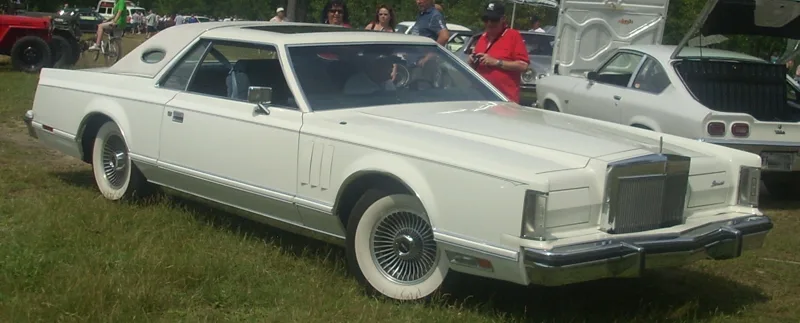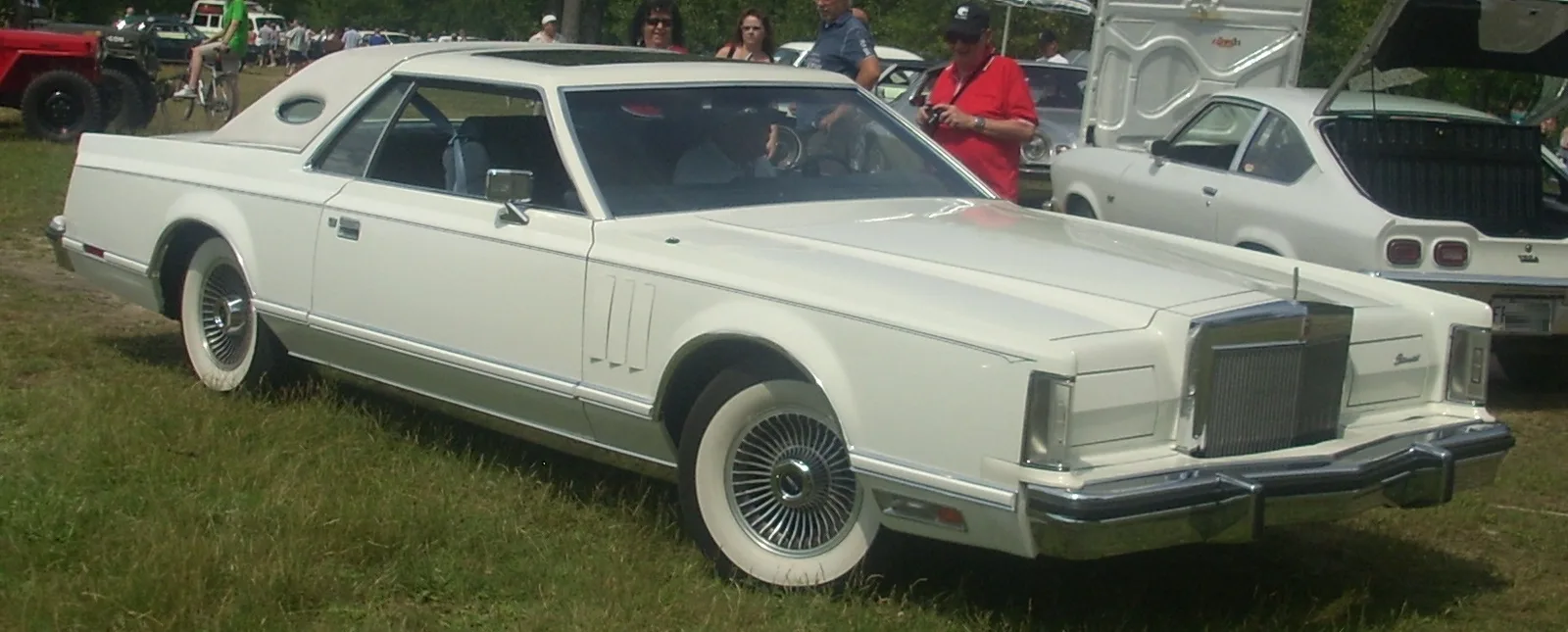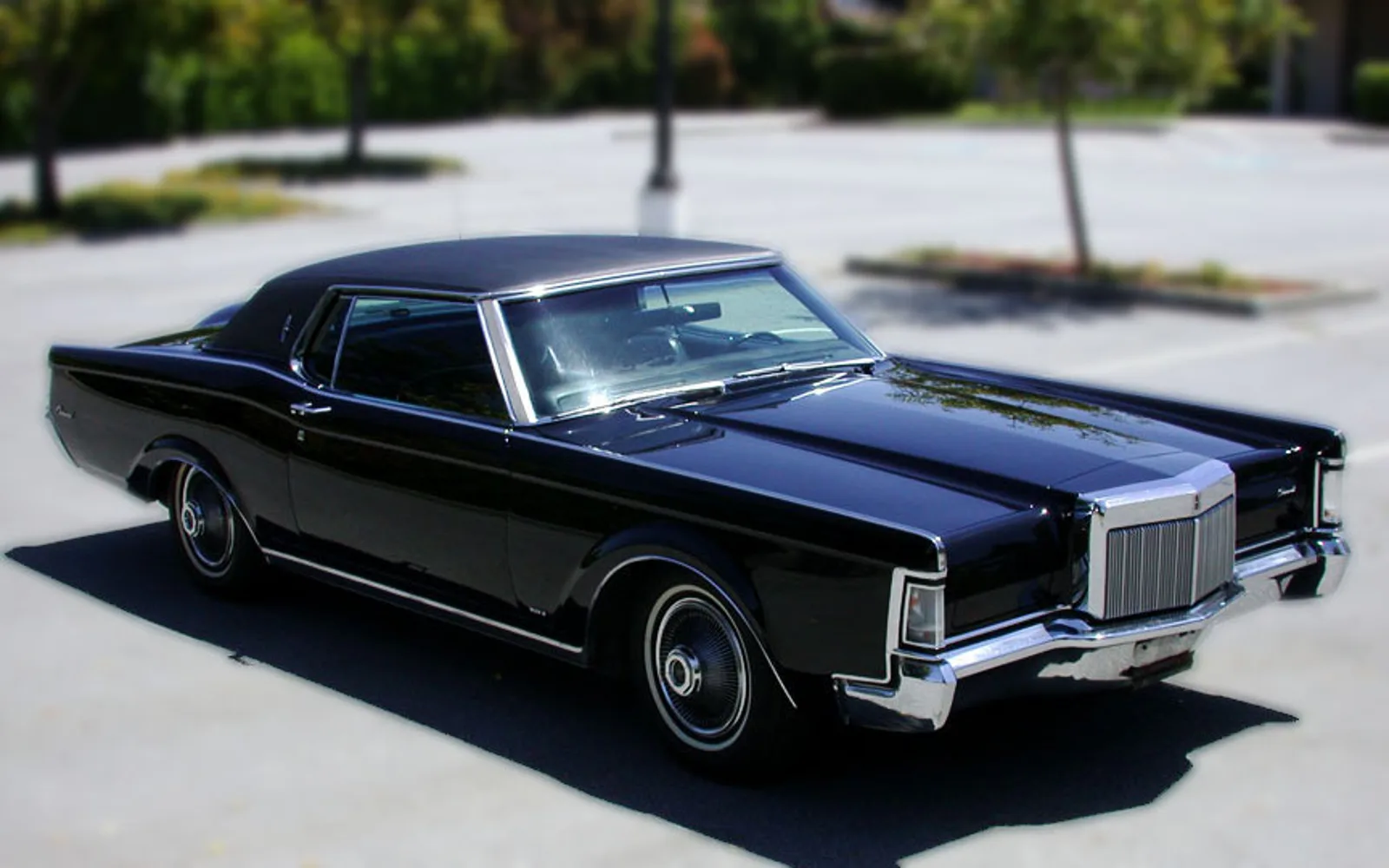
A 1969 to 1971 personal luxury coupe with hidden headlamps, a Rolls-Royce style grille and a flagship price tag, built on the four-door Thunderbird's chassis.
Lincoln's Mark III was a personal coupe built from 1969 to 1971 on the Thunderbird chassis. It carried a 460 cu in V8 rated 365 bhp and was pitched directly at the Cadillac Eldorado, which it outsold in its first year.
The Lincoln Continental Mark III was a two-door personal luxury coupe sold from the 1969 to 1971 model years, built on the chassis of the four-door Ford Thunderbird. It served as the flagship of the Ford Motor Company and was the main rival to Cadillac's Eldorado. Its hidden headlamps and Rolls-Royce styled grille gave it a distinctive face.
What was the Lincoln Continental Mark III?
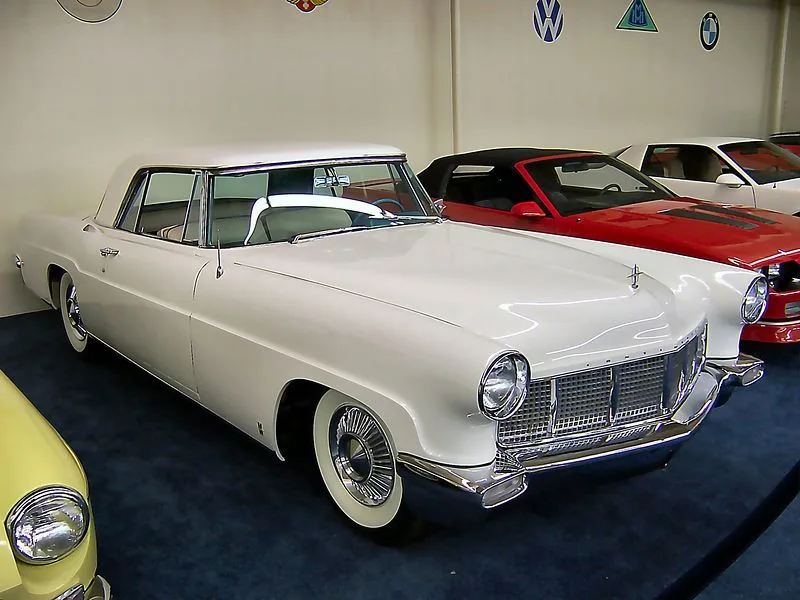
The Mark III was a personal luxury car marketed by Lincoln for the 1969 to 1971 model years. It succeeded the 1956-1957 Continental Mark II, a hand-built and very low-volume flagship, and it carried the Continental name even though Lincoln-Mercury built it.
It was offered only as a two-door hardtop. Its hidden headlamps were vacuum-operated, a Continental spare recalled the Mark II, and the grille was styled after Rolls-Royce.
Ford's engineers gave the car a roof structure and rear windows borrowed from the two-door Thunderbird, while the body itself carried extra weight and styling. The car was meant to compete head-to-head with the Cadillac Eldorado at the top of the market.
A Thunderbird chassis, a Rolls-Royce style grille and a flagship price, all for a coupe that outsold the Eldorado in its first year.
Why was the Mark III built on a Thunderbird chassis?
The Mark II had been largely hand-built and sold in tiny numbers, so Ford could not afford that approach again. The Mark III instead shared its chassis with the four-door Thunderbird, reusing existing parts and designs to keep the programme cheap.
The side-rail frame matched the Thunderbird's, but the Mark III carried almost 300 lb (140 kg) more bodywork. Its engine was a 460 cu in (7.5 L) V8 derived from the Ford 385 family, rated at 365 bhp (272 kW) gross.
Lee Iacocca later said the whole programme cost $30 million, a bargain-basement sum. The strategy turned Lincoln-Mercury's luxury cars from a loss into a profit centre, because one expensive model could share fixed costs with a cheaper car.
How did the Mark III design come together?
In 1965 Lee Iacocca, Ford's vice-president for the car and truck group, asked design chief Gene Bordinat to fit a Rolls-Royce style grille to a Thunderbird. Development went to a special preproduction team, the Strawberry Studio, under Bordinat's direction.
The final design was shown to a Lincoln-Mercury focus group in mid January 1966, and the response was overwhelmingly negative. Iacocca and Henry Ford II liked the car anyway and overruled the objections, and production received its green light on 24 March 1966.
The Mark III was unveiled at the 12 Hours of Sebring on 23 March 1968 as an early 1969 model. Iacocca wanted the car to make use of Ford's development spending, which was already tied to the Thunderbird's fading sales.
Did the Mark III outsell the Cadillac Eldorado?
It did in its first full year. The Mark III sold 23,858 cars for the 1969 model year, while the Eldorado managed 23,333, and Iacocca said the Mark III outsold the Eldorado in that first year.
Sales then dipped to 21,432 in 1970 before climbing to 27,091 in 1971, almost matching the Eldorado in that final year. The 23,858 figure came on top of about 7,000 cars built in the rest of the 1968 model year.
Iacocca described the Mark III and the Mark IV that followed as a source of big profits for the next five years, a period in which the car's cheap development paid off in full.
What did the Mark III cost and what came as standard?
The 1969 car listed at US$6,741, which equals $59,183 in 2025 dollars. Standard equipment covered power steering, brakes, windows, vacuum-operated concealed headlamps and split bench front seats.
Front seats offered two-way power as standard, with six-way power available as an option, and the seat recliner could be ordered with the optional passenger seat. The instrument and door panels carried simulated woodgrain on 1969 models.
Wood trim changed over time. The 1969 cars used simulated English Oak or East-Indian Rosewood, while 1970 and 1971 cars used genuine walnut. A Cartier-branded clock became standard after a few months of production.
Buyers could add a leather interior, air conditioning, tinted glass, power locks, a limited-slip differential, anti-lock brakes branded Sure-Trak, cruise control and an automatic headlamp dimmer. A vinyl roof in cavalry twill was optional on 1969 cars, and an ASC sunroof could be specified from 1969.
How did the Mark III change in 1970 and 1971?
The 1970 changes were small but visible. The vinyl roof became standard, the windscreen wipers were concealed, and Michelin radial tyres came as standard, a first for an American car. Federal rules also brought red reflectors to the rear bumper and yellow reflectors to the front parking lamps.
Engine output stayed at 365 bhp, but the 460 gained Thermactor air injection pumps to meet emissions requirements. Power seat controls moved from the seat edge to the door armrests, and the upholstery stitching pattern was revised.
For 1971 tinted glass, automatic climate-controlled air conditioning and Sure-Trak anti-lock brakes all became standard. The 460 also gained a more sophisticated thermostatic air cleaner, and the Continental Mark IV replaced the Mark III for 1972.
Why is the Continental name so confusing?
The Mark III was branded and marketed only as a Continental, even though Lincoln already sold a model called the Lincoln Continental. The Lincoln name did not appear on the car, its VIN plate, the factory paperwork or the window stickers.
The branding confusion ran for the whole Mark series and only ended in the 1986 model year, when the Continental name was dropped and the Mark VII was rebranded as a Lincoln, with its VINs adjusted to match.
How did the press judge the Mark III?
The press was far from unanimous. Some automotive writers were critical of the car, yet the public took to it in large numbers, and Ford treated the Mark III as a commercial success from its first year onwards.
Motor Trend ran a head-to-head against the Eldorado in 1970 and gave the Mark III the nod, barely. That test started an annual King of the Hill series that ran for years.
In its 1971 King of the Hill contest, Motor Trend gave the Mark III the verdict again, by a wider margin. Its leather interior was judged more luxurious than the Eldorado's nylon cloth, and its real wood dash trim looked more attractive than the Cadillac's simulated wood.
Which famous owners and films featured the Mark III?
Musicians Elvis Presley, James Brown and Glen Campbell owned Mark IIIs, and golfers Arnold Palmer and Byron Nelson served as brand ambassadors. The car also became a screen star, most famously in the 1977 horror film The Car.
The Car used a highly customised 1971 Mark III designed by George Barris. Four cars were built in six weeks, three of them as stunt mules that were destroyed during production, while the fourth, used for close-ups, is now in a private collection.
The bodywork was finished in steel, pearl and charcoal, with laminated windows that were smoked on the inside and amber on the outside. The roof was lowered three inches to give the car a sinister look, and the film's director said the horn spelled out the letter X in Morse code.
The Mark III also featured in the 1971 crime thriller The French Connection, adding to its profile among the wider public in the same year as its Golden Anniversary.
What are the Lincoln Continental Mark III specifications?
| Specification | Detail |
|---|---|
| Body | Two-door hardtop personal luxury coupe |
| Model years | 1969 to 1971 |
| Chassis | Shared with the four-door Ford Thunderbird |
| Engine | 460 cu in (7.5 L) V8 |
| Power | 365 bhp (272 kW) gross, unchanged through 1971 |
| Bodywork weight | Almost 300 lb (140 kg) more than the Thunderbird |
| Tyres | Michelin X Radial standard from 1970 |
| 1969 list price | US$6,741 ($59,183 in 2025 dollars) |
| Output | 23,858 for 1969; 21,432 in 1970; 27,091 in 1971 |
| Successor | Continental Mark IV for 1972 |
| Plant | Wixom, Michigan |