From a Chicago boyhood and the 1951 Hirohata Merc to the 1966 Batmobile and the cars built for film, television and celebrities.
George Barris, born George Salapatas in Chicago in 1925, built custom cars for Hollywood and television. His company made the 1966 Batmobile and cars for The Munsters, and he produced the 1951 Hirohata Merc before his death in 2015.
George Barris was a Chicago-born designer whose Hollywood custom cars ran from the 1951 Hirohata Merc to the Batmobile of 1966. His company built cars for television, film and celebrities.
Who was George Barris?
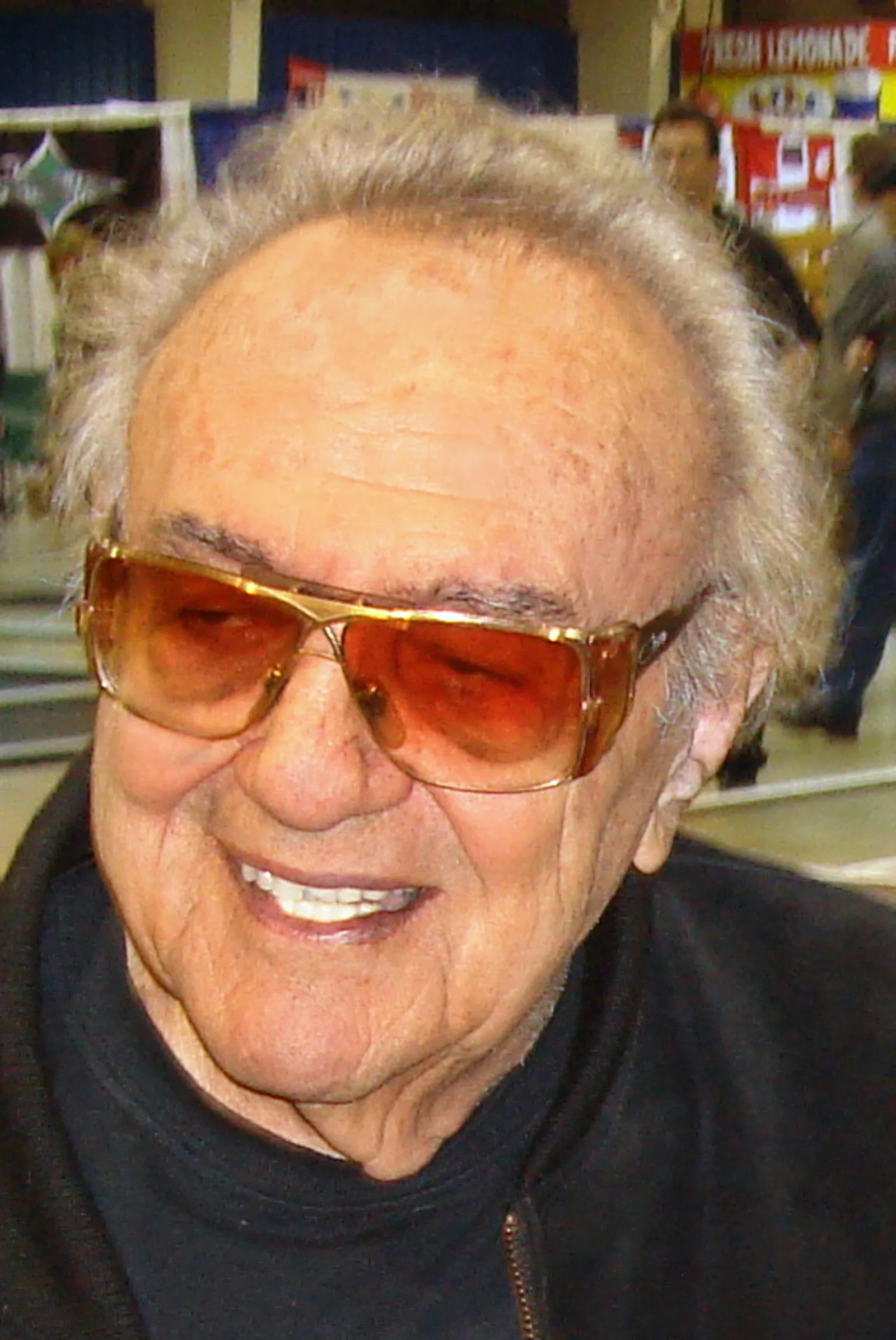
George Barris was born George Salapatas in Chicago on November 20, 1925, and died in Encino, California, in November 2015. He worked as a designer and builder of Hollywood custom cars, and his company became one of the best-known custom shops in the film industry.
His father was a Greek immigrant from Chios, and the boys' mother died a few years after they were born. When George was three, his father sent him and his brother Sam to live with an uncle and aunt in Roseville, California.
From a Chicago boyhood to the 1966 Batmobile, Barris built the custom cars that Hollywood came to rely on.
How did his boyhood shape his skill?
By the age of seven George was building and modifying balsa wood model cars, and his models won hobby shop contests for their attention to detail. The brothers also worked at the family's Greek restaurant, where a dilapidated 1925 Buick became their first project.
They restored the Buick to running condition, experimented with its look and used its sale to fund a second project. That Buick became the first Barris Brothers custom car.
Why is the name Kustom linked to Barris?
Before George finished high school, the brothers had formed the Kustoms Car Club for owners of custom vehicles. The club's name introduced the spelling Kustom, a term later closely tied to Barris.
At 18 he relocated to Los Angeles and set up a business on Imperial Highway in Bell, California, under the name Barris Custom Shop.
What was the Hirohata Merc?
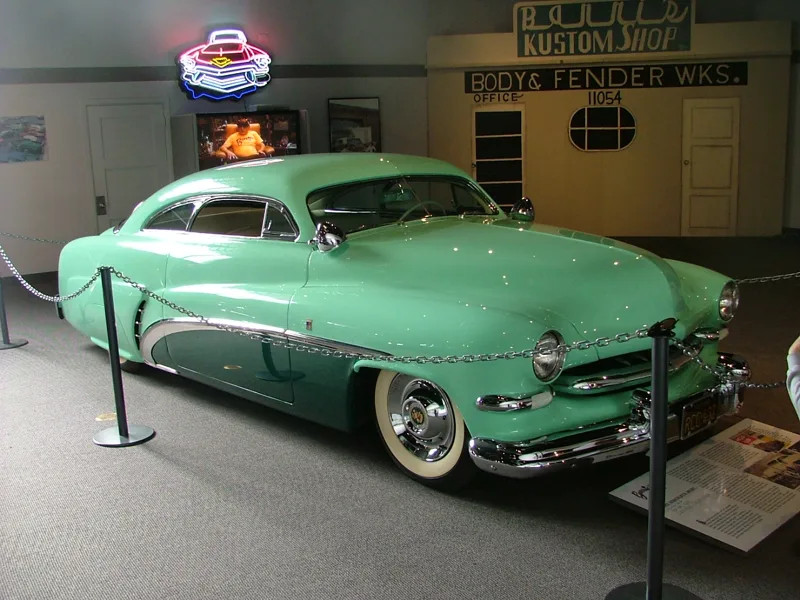
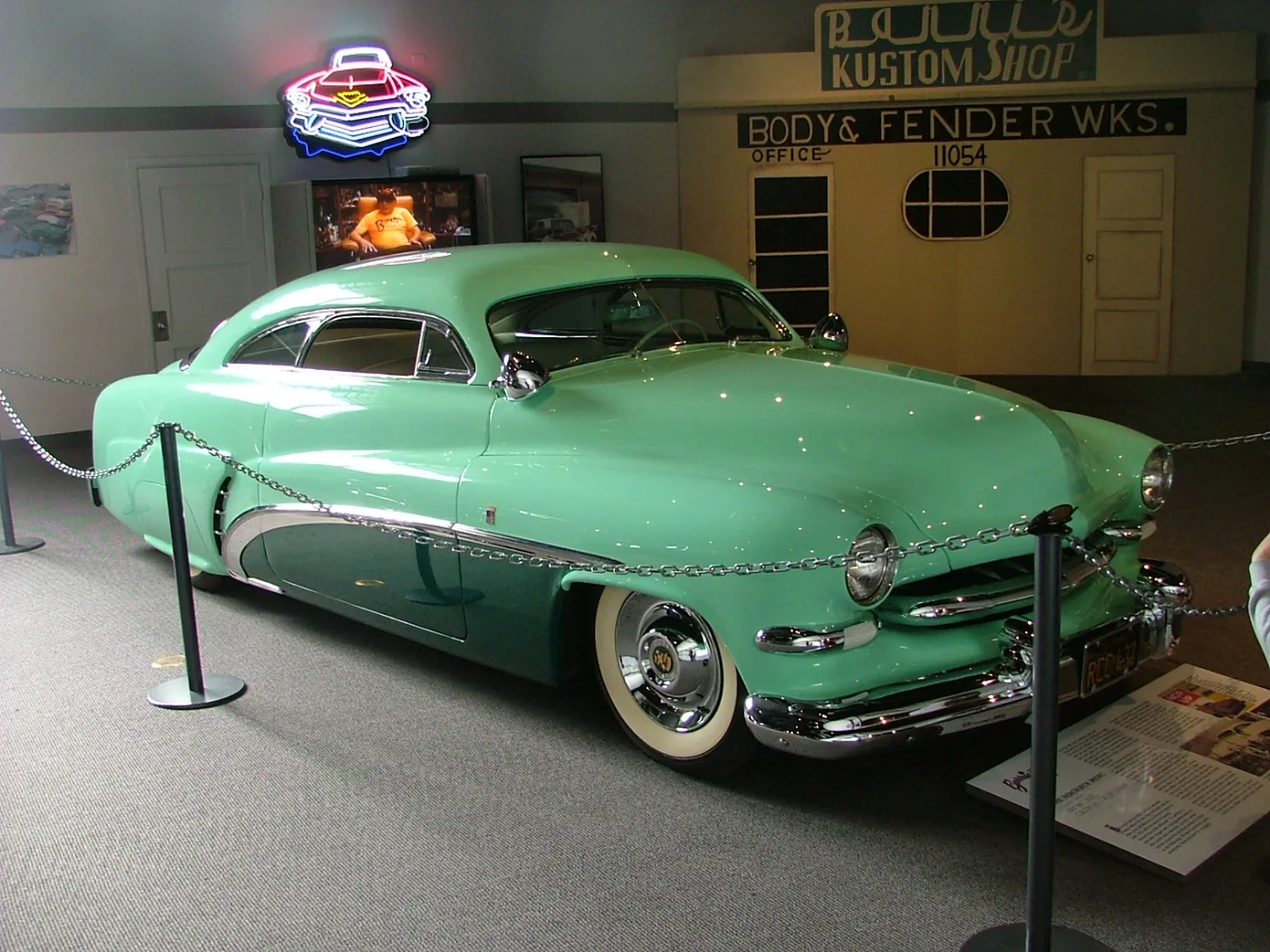
The Hirohata Merc was a 1951 custom built for a customer order and based on Sam Barris's own car. It appeared at the 1952 General Motors Motorama show, where it drew more attention than the work of Detroit's top designers.
The car also made the early 1950s Mercury a popular base for custom work. Sam's second car, Ala Kart, was a pickup version of the 1929 Ford Model A roadster, and it won two AMBR awards in a row.
Robert E. Petersen promoted the cars at car shows and printed George's how-to pieces in Hot Rod and Motor Trend.
How did Barris Kustom Industries grow?
Sam left the business in the 1950s, and George carried on with his wife Shirley. The business became Barris Kustom Industries, and it licensed its designs to model car makers including Aurora, Revell, MPC and AMT.
Those licences took the name into the world of model kits. In the early 1960s Barris worked with other customizers, including Dean Jeffries, Gene Winfield and the Alexander Brothers, to rework production cars for Ford's Custom Car Caravan.
Tom Wolfe's title essay profiled Barris in his collection The Kandy-Kolored Tangerine-Flake Streamline Baby.
What film cars came from the shop?
Film work came early for Barris. He made soft aluminium fenders for a police car in North by Northwest, so that a crash into a Mercedes-Benz convertible would be comic rather than costly.
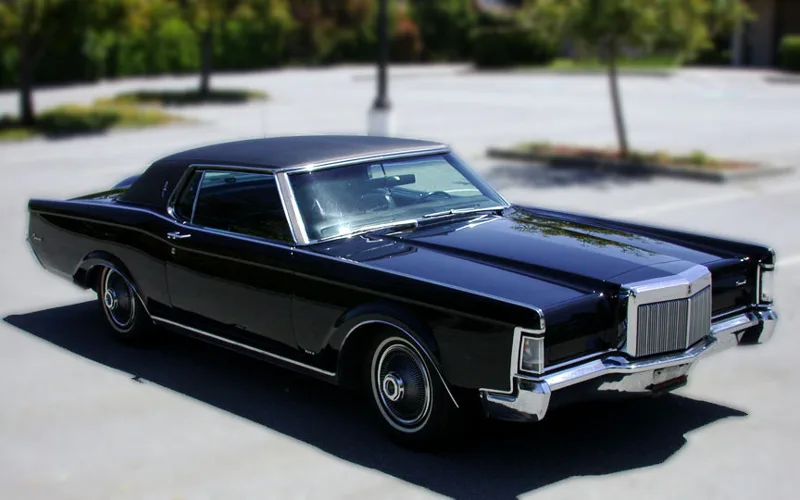
He also built and supplied cars for High School Confidential in 1958, and he lent some customs to the future sequences of the 1960 Time Machine. Other film cars included a Thunder Alley Dodge Charger, a Fireball 500 Plymouth Barracuda, the Supervan, a gadget-filled Mercury wagon for The Silencers and a reworked Lincoln Continental Mark III for The Car.
Which television cars did Barris build?
Barris Kustom Industries built vehicles for several television series in the 1960s. Its television output included Batman, The Munsters and The Beverly Hillbillies. The company's television work also covered Mannix, Knight Rider and Bearcats!, where replicas of 1914 Stutz Bearcats were made.
| Series | Car | What the shop did |
|---|---|---|
| The Munsters | Munster Koach and DRAG-U-LA | Designed and built for the series |
| Batman | The Batmobile | Built from the Lincoln Futura concept car, 1966 |
| Mannix | Oldsmobile Toronado roadster | Turned into a roadster for the first season |
| The Beverly Hillbillies | 1921 Oldsmobile touring car | Made into a truck for the show |
| Knight Rider | KITT | Updated for later seasons |
| Bearcats! | 1914 Stutz Bearcat | Replicas built for the series |
Who ordered cars from the early shop?
The shop built custom designs for private buyers. Film-studio executives and celebrities soon placed orders for cars they wanted for their own use and as props.
What did the Pulsator body go into?
The Pulsator body, a Nye Frank design, went onto Ice Kutter, a snowmobile dragster show car.
How did the Batmobile come about?
ABC Television asked Barris for a signature vehicle for its Batman series, with filming only weeks away. There was no time for a new design, so he used the Lincoln Futura concept car he had bought earlier in the decade as the base.
Bill Cushenbery modified the car, and the work took three weeks. The series' popularity boosted Barris's profile, and he held on to the Batmobile until a 2013 sale.
Which celebrities commissioned Barris cars?
Barris built a customised gold Rolls-Royce for Zsa Zsa Gabor, with hand-etched window glass by Robb Rich. Golf carts went to several stars, among them Bob Hope and Elton John, while Bing Crosby and Glen Campbell also received them.
The fleet of novelty and star cars also included 25 modified Mini Mokes for a Beach Boys contest, a Cadillac limousine for Elvis Presley and custom Pontiac station wagons for John Wayne.
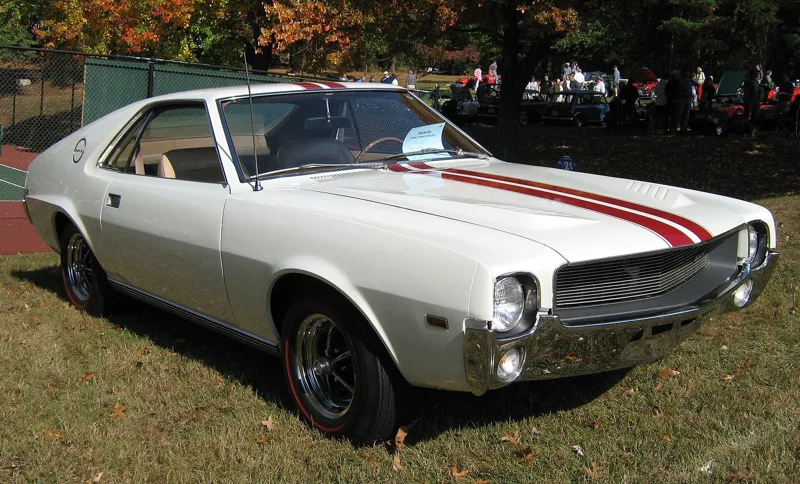
Sonny and Cher received a pair of 1966 Ford Mustang convertibles, and the AMX-400 show car came from an AMX coupe that Barris reworked in 1969. It later appeared in a 1972 episode of Banacek.
What did NASA want from Barris?
In the 1990s NASA asked Barris for the designs of the Moonscope, a 1966 design that had become a popular plastic car model. NASA engineers were interested in its 6-wheel spider suspension and its large tyres.
A spokesperson for Barris, Edward Lozzi, said NASA contacted his office and asked for the original Moonscope designs. The agency wanted to study them for Martian vehicles, and the company agreed, so agency staff went to meet him in person.
Barris created a pair of custom Cadillac hearses for Monster Garage episodes between 2002 and 2006. The company also built replicas of vehicles from other shows, and its Wagon Queen Family Truckster was based on a 1979 Ford Country Squire.
What happened in his later career?
In 2005 The New York Times asked Barris to customise a Toyota Prius, on a budget of $10,000 and with a condition that the body not be chopped. The brief kept the hybrid mechanics untouched.
In April 2010 the 2010 Chevrolet Camaro Spirit was shown in a Barris design edition at a media event. The Batmobile came next: on November 29, 2012, the sale of the Number 1 Batmobile was announced at the Barrett-Jackson auction.
The car went to auction on January 19, 2013, and it sold for $4.6 million to Rick Champagne, a car collector, after an intense bidding war.
What was the Back to the Future dispute?
Barris restored a DeLorean stunt car after Back to the Future III, then bought a standard DeLorean and turned it into a replica that he used to promote his company. In 2007 Universal Studios sent a cease and desist order, which demanded he stop misrepresenting any involvement with the films.
Barris never officially said he had anything to do with the films, but he had described a car he built as a Back to the Future DeLorean without making clear that it was a replica. Gale, a writer and producer on the films, said Barris had no role in the DeLorean's design.
How did his life end?
Barris married Shirley Nahas in 1958, and she died in 2001. The couple had two children. He died on November 5, 2015, at his home in Encino, Los Angeles.