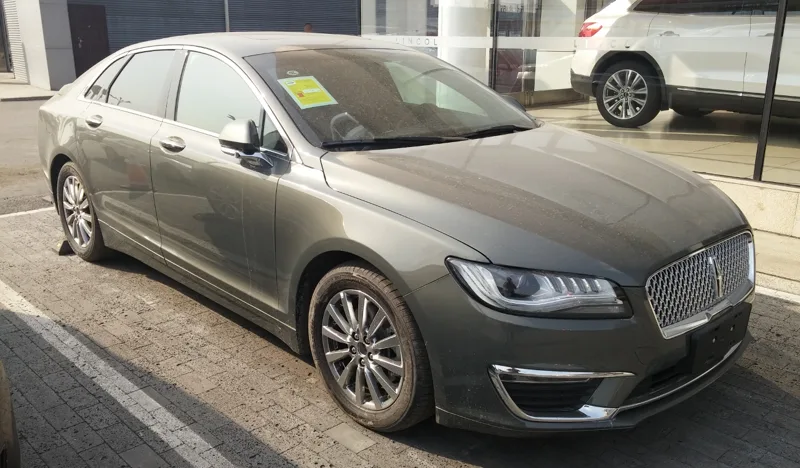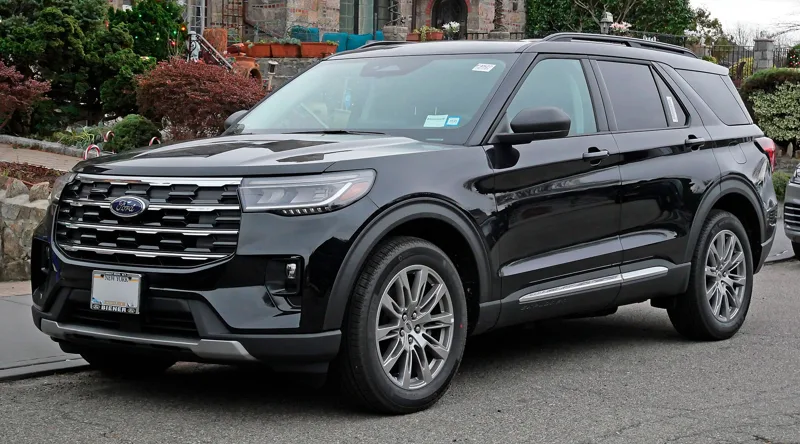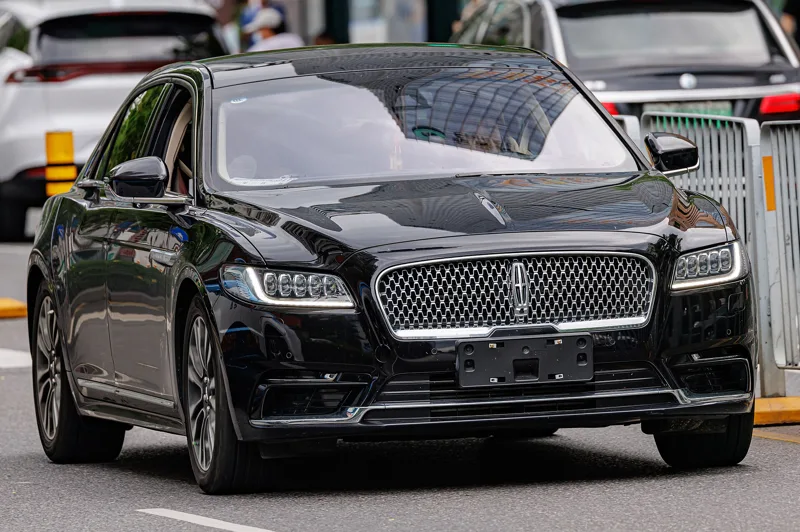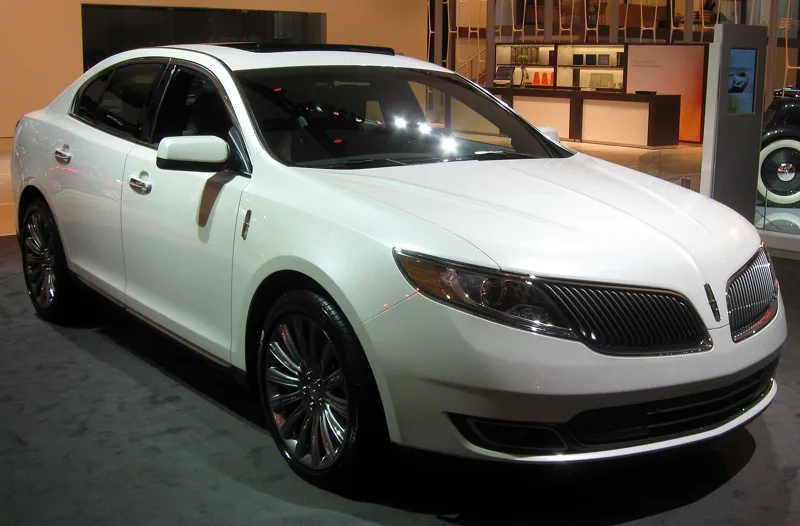
From the Expedition-based original of 1998 to the fifth generation of 2025, the Navigator carried Lincoln's flagship SUV role through V8 and twin-turbo V6 power.
Lincoln's full-size luxury SUV, built on the Ford Expedition since 1998, has passed through five generations. It has run through five generations, moving from a 5.4-litre V8 to a 3.5-litre twin-turbo V6 and a 2025 redesign.
Lincoln has sold this full-size luxury SUV since the 1998 model year. It shares its underpinnings with the Ford Expedition, and it was the heaviest production Lincoln and the one with the greatest cargo capacity.
Across five generations the Navigator moved from a 5.4-litre V8 to a twin-turbo V6, and the fifth generation was revealed in August 2024. Each step kept the same job: a large, comfortable family flagship with the Lincoln badge on the grille.
Where did the Navigator come from?
Lincoln began selling the Navigator on 1 July 1997, as a 1998 model, after the first car rolled out on 14 May 1997. Built straight from the Ford Expedition, it handed Lincoln-Mercury its first full-size SUV, positioned above the Mercury Mountaineer.
The timing was driven by a shift in the market. By the end of the 1980s sport-utility vehicles were moving from pure off-road tools towards family transport. The Jeep Grand Wagoneer ended its almost unchanged 28-year run in 1991, and Oldsmobile's Bravada, introduced in 1990, helped persuade other makers to build mid-size luxury SUVs.
Big Chevrolet and Ford models such as the Suburban and Expedition earned strong margins, which made a luxury sibling attractive to Ford. The Navigator was positioned as the full-size luxury entry in that line.
An Expedition-based luxury SUV that grew from a 5.4-litre V8 into a twin-turbo V6 flagship.
Did the Navigator help Lincoln outsell Cadillac?
The Navigator's first calendar year coincided with Lincoln overtaking its long-standing rival Cadillac in annual sales volume. Early published figures had Cadillac ahead by a scant 222 vehicles, but an audit later reversed that picture, and a retraction and apology followed in May 1999.
The initial tally had reflected a Cadillac Escalade surge in December 1998, from hundreds in earlier months to almost 5,000. The retraction blamed the error on overzealous, low-level staff, which became one of the more memorable footnotes of that sales race.
What was under the first-generation Navigator?
The first Navigator used the Expedition's body-on-frame chassis, with independent front suspension and a live rear axle. Load-leveling air suspension was optional, tuned mainly for comfort, and it lowered the vehicle itself when parked. The main drivetrain was ControlTrac automatic four-wheel drive, although rear-wheel drive was also offered.
Power came from the 5.4L Triton V8 with 230 hp, shared with the Expedition and F-150, paired with the four-speed 4R100 automatic. Towing was rated at 3,493 kg (7,700 lb) for the 1998 car.
For 1999 the engine changed twice. The Triton was lifted to 260 hp at the start of the model year, then a running change brought a 300 hp DOHC 5.4-litre V8 called InTech, a name borrowed from the Mark VIII. Towing rose to over 3,900 kg (8,500 lb) with that engine.
What set the first-generation interior apart?
The Navigator shared the Expedition's bodyshell but not its front end. It had its own fascia, wheels, roof rack and taillights, plus its own seat design, while the dashboard was common to both and carried more wood trim. Extra sound deadening and better carpeting made the cabin quieter than the Expedition's.
Standard kit included power bucket seats, floor consoles and keyless entry, while buyers could add a power moonroof and 17-inch alloy wheels. The premium stereo had seven speakers rated at 290 watts, and a six-disc CD changer sat in the front console.
The Navigator also brought features unusual for the segment. Power-adjustable pedals were a first for a luxury SUV, and the radio lit only the controls needed for the function selected.
What changed in the first generation's final years?
In 1999 both the brake and accelerator pedals gained power adjustment. The 17-inch wheels became standard, and the instrument cluster gained a digital odometer. For 2000 the radio antenna moved into the right-rear window, and the seats were trimmed in Nudo leather.
The 2000 options list grew to include satellite navigation, a reverse-sensing system, side-impact airbags and heated and cooled front seats. Those seats came from Amerigon, and the Navigator's maker was credited as the first manufacturer offering climate-controlled front seats, using a solid-state heat pump and thermo-electric devices.
For 2001 the Lincoln emblem's background turned black instead of red, and a VHS-based entertainment system became optional. For 2002 a moulded badge with the Lincoln name appeared in the centre of the steering wheel, alongside optional heated and cooled seats.
How did the 2003 redesign change the Navigator?
Second-generation cars reached showrooms as 2003 models, with the launch in May 2002 following a thorough redesign. It kept the Expedition platform, but the exterior changed almost everywhere, leaving just the front doors and roof panel from the earlier car. The dashboard was no longer shared with the Expedition.
Outside, a larger chrome waterfall grille and brighter quad-beam headlights with larger housings stood out, along with revised chrome door handles in colour-keyed bezels. Inside, the dash took cues from the 1961 Lincoln Continental's mirrored, dual-cockpit arrangement, with real walnut burl and satin nickel accents plus 120 white LEDs.
Features new for 2003 included Safety Canopy side curtain airbags, a tyre pressure monitoring system, power running boards (a first in the industry), third-row seats that fold under power and HID headlights on top trims.
What did the 2003 chassis and the 2005 update bring?
The 2003 chassis was reworked, with rack-and-pinion steering and a fully new independent rear suspension that improved handling and ride comfort. The 5.4-litre DOHC V8 produced 224 kW (300 hp; 304 PS) at 5500 rpm, with 481 N-m (355 lb-ft) of torque at 3750 rpm.
Curb weight rose to 2,613 kg (5,760 lb) for two-wheel-drive models and nearly 2,700 kg (6,000 lb) for four-wheel drive, which trimmed towing slightly.
The 2005 model year brought a minor facelift with square foglights, AdvanceTrac with Roll Stability Control as standard, and HID headlights across the range. The DOHC V8 gave way to a 3-valve SOHC 5.4-litre borrowed from the F-150, which peaked at 224 kW (300 hp; 304 PS) at 5000 rpm, with torque of 495 N-m (365 lb-ft) arriving at 3750 rpm.
What was the Navigator K concept?
Ford Performance Group unveiled the K concept in 2003, the first Lincoln concept from that group. It was shown at the New York Auto Show after rumours that Cadillac would build a V12 Escalade EXT, and it used a Ford SVT Lightning supercharged 5.4L V8 producing 385 horsepower (287 kW; 390 PS).
The K matched the Ultimate trim's features and added 20-inch chrome wheels, a monochromatic colour scheme, chrome mirrors and a polished stainless exhaust tip. The cabin came only in red leather with black piping, with satin nickel in place of walnut burl. The name honoured the Model K of 1931, which revived the Lincoln brand.
How did the third generation look and drive?
The third generation, code-named U326, arrived with new styling for the 2007 model year, having been shown in Chicago in February 2006. It gained new front and rear fascias, side cladding, a split chrome grille with integrated fog lights and a more prominent power dome hood.
The Navigator L arrived alongside it. Comparable to the Cadillac Escalade ESV, it was 373 mm (14.7 in) longer than the standard Navigator, on a wheelbase 305 mm (12 in) longer, which gave it more cargo room.
The platform was Ford's T1, related to the 2004 F-150 platform, and it was stiffer, improving how the car drove. The independent rear suspension became a five-link IRS design, aimed at handling and ride quality.
Curb weight increased to 2,663 kg (5,872 lb) in two-wheel-drive form, and 2,753 kg (6,070 lb) with four-wheel drive. Navigator L models were heavier still, at 2,705 kg (5,963 lb) and 2,822 kg (6,221 lb). Towing capacity nonetheless grew, approaching 4,100 kg (9,000 lb) in two-wheel-drive form.
Four-wheel-drive Navigators lost the Expedition's two-speed transfer case. They used a light-duty one-speed single-range unit with no low-range gearing.
What changed in the third generation's later years?
For 2008 Lincoln dropped the Luxury and Ultimate trim levels and made many options standard. Heated and cooled front seats, third-row seats that fold under power, a power liftgate and a 600-watt audio system with 14 speakers, certified to THX II standard, all came as standard. A rearview camera became newly available, and it was standard the following year.
For 2009 the 5.4-litre V8 gained 7.5 kW (10 hp) and flex-fuel capability, while rain-sensing wipers and Lincoln SYNC were added as standard. The 2011 model year brought HD Radio, Sirius TravelLink and SYNC as standard on every trim.
The final years were quiet. The 2013 model year added three new colours, and the 2014 model year carried over with no cosmetic changes, ending the front grille fascia design.
What did the 2015 refresh add?
The 2015 Navigator kept the Expedition's exterior design but gained an updated front grille, headlamps were HID units with LED running lights, while the taillights were fully LED. Only the EcoBoost V6 was available as the engine, making 283 kW (380 hp; 385 PS) and 624 N-m (460 lb-ft) of torque.
20-inch wheels became standard in place of the 18-inch set, and a reserve package added 22-inch wheels. The dashboard carried MyLincoln Touch with SYNC, an eight-inch touchscreen and twin 4.2-inch displays flanking a central speedometer.
Push-button start became standard, along with passive entry and a rear-view camera, and blind-spot monitoring was optional. The standard and L versions went into production in mid-2014 and reached dealers late that year as 2015 models.
Ford had said in 2013 that the next Navigator would not simply be a repackaged Expedition. The 2015 car did keep the Expedition's exterior design, however, and its reveal came earlier than planned after photos leaked in January 2014.
How did the fourth generation change the Navigator?
Lincoln unveiled the fourth generation at the 2017 New York show on 12 April 2017. The 2018 Navigator remained the Lincoln counterpart to the Expedition, in standard and long-wheelbase Navigator L form, with two- and four-wheel drive. Its styling borrowed from the 2017 Lincoln Continental, and the body moved to aluminium construction.
Nearly 91 kg (200 pounds) lighter than its predecessor, the new Navigator was physically larger. The standard wheelbase gained three inches and the L gained nearly an inch, while overall length dropped by about half an inch.
Lincoln also replaced the console shifter with dashboard buttons and paddle shifters, a layout shared with the Continental. A head-up display and a 12-inch reconfigurable instrument cluster arrived for the first time on the model line.
What engine and trims did the fourth generation offer?
Every fourth-generation Navigator used a turbocharged 3.5-litre V6 rated at 340 kW (450 hp; 460 PS), with 691 N-m (510 lb-ft) of torque and a 10-speed automatic. The trims were Premiere, Select and Reserve, with Premiere new for 2018 as the standard grade.
Four-wheel-drive models used a BorgWarner 4417 transfer case, a two-speed unit with a 2.64:1 low-range ratio.
The Black Label series arrived on the Navigator for the first time, with five themes: Yacht Club, Central Park, Chalet, Invitation and Destination. At an approximate base price of $95,000, the Black Label was the most expensive vehicle Ford Motor Company had sold, with the Ford GT as the only exception.
What is the fifth-generation Navigator like?
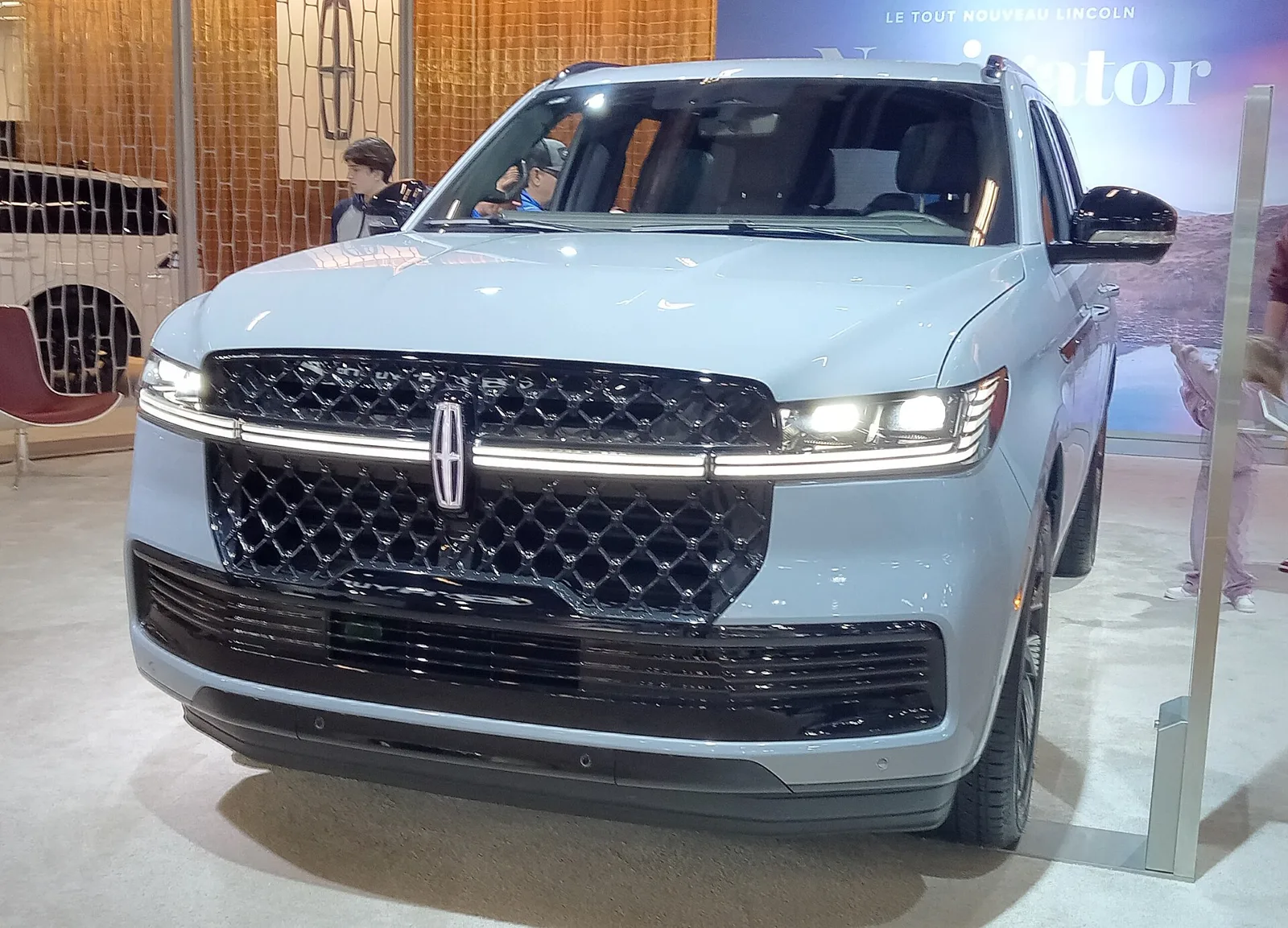
The fifth generation was revealed on 15 August 2024, with sales set for the first half of 2025. Its front and rear fascias share a design with the Aviator and Nautilus, with an illuminated light bar on the grille and full-width LED taillights. For the first time 24-inch alloy wheels are available.
Inside, a 48-inch full-width display runs along the top of the dash, with Google built in, and an 11.1-inch touchscreen serves as the control panel. A Revel Ultima 3D audio system with 28 speakers, Lincoln Digital Scent and second-row power tailored seats with a massage option are also offered.
The rear glass no longer opens independently. A split gate with an open-on-approach feature replaces it, and a cargo tailgate manager can act as a bench seatback or dining table. The power third-row seats fold 40/20/40, a first for the Navigator.
Lincoln BlueCruise hands-free driver assistance is standard, and the twin-turbocharged 3.5-litre EcoBoost V6 carries over with standard four-wheel drive and adaptive suspension.
What awards and recalls has the Navigator had?
The Navigator took the NAIAS truck prize in 2018, announced on 14 January 2018. It was the first Lincoln to win a NAIAS award, and the first American-built luxury SUV in that segment to take the category. That made it a notable milestone for the brand.
In 2024 it earned the Vincentric Best CPO Value in America award in the large luxury SUV segment, while its platform mate, the Ford Expedition, took top honours among large SUVs.
Ford's June 2026 action covered more than 741,000 vehicles in the US, including the Navigator, over a transmission problem that may damage the park system.
What are the main Navigator specifications?
| Specification | Detail |
|---|---|
| Launch | 1 July 1997 for the 1998 model year |
| First-generation engine | 5.4L Triton V8, 230 hp, with a four-speed automatic |
| First-generation towing (1998) | 3,493 kg (7,700 lb) |
| InTech V8 towing (1999) | over 3,900 kg (8,500 lb) |
| Second-generation V8 | 224 kW (300 hp; 304 PS) at 5500 rpm, 481 N-m (355 lb-ft) |
| Second-generation curb weight | 2,613 kg (5,760 lb), two-wheel drive |
| Third-generation curb weight | 2,663 kg (5,872 lb), two-wheel drive |
| Third-generation towing | approaching 4,100 kg (9,000 lb) |
| 2015 engine | EcoBoost V6, 283 kW (380 hp; 385 PS), 624 N-m (460 lb-ft) |
| Fourth-generation engine | 3.5-litre twin-turbo V6, 340 kW (450 hp; 460 PS), 691 N-m (510 lb-ft) |
| Black Label base price | approximately $95,000 |
| Fifth-generation reveal | 15 August 2024 |