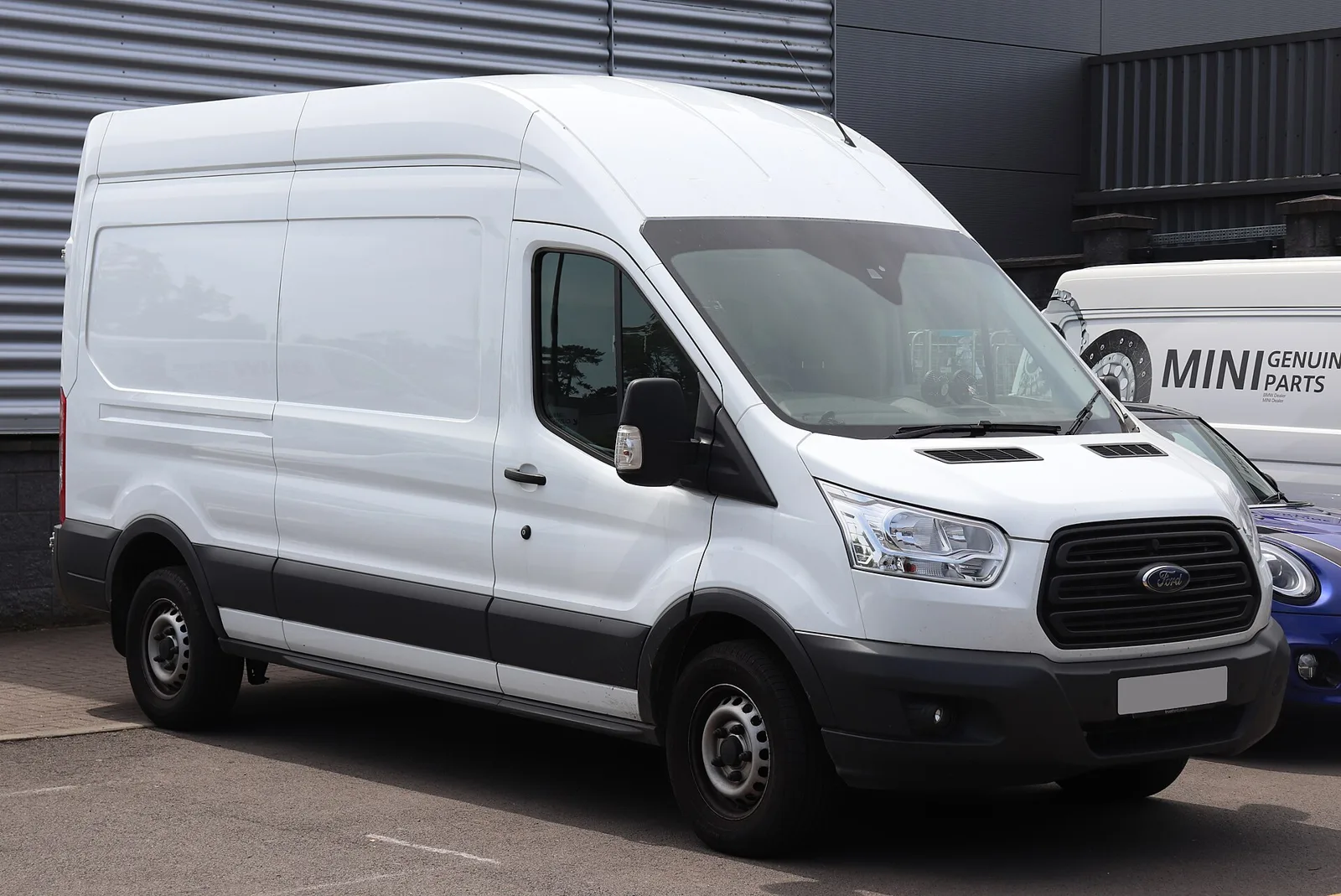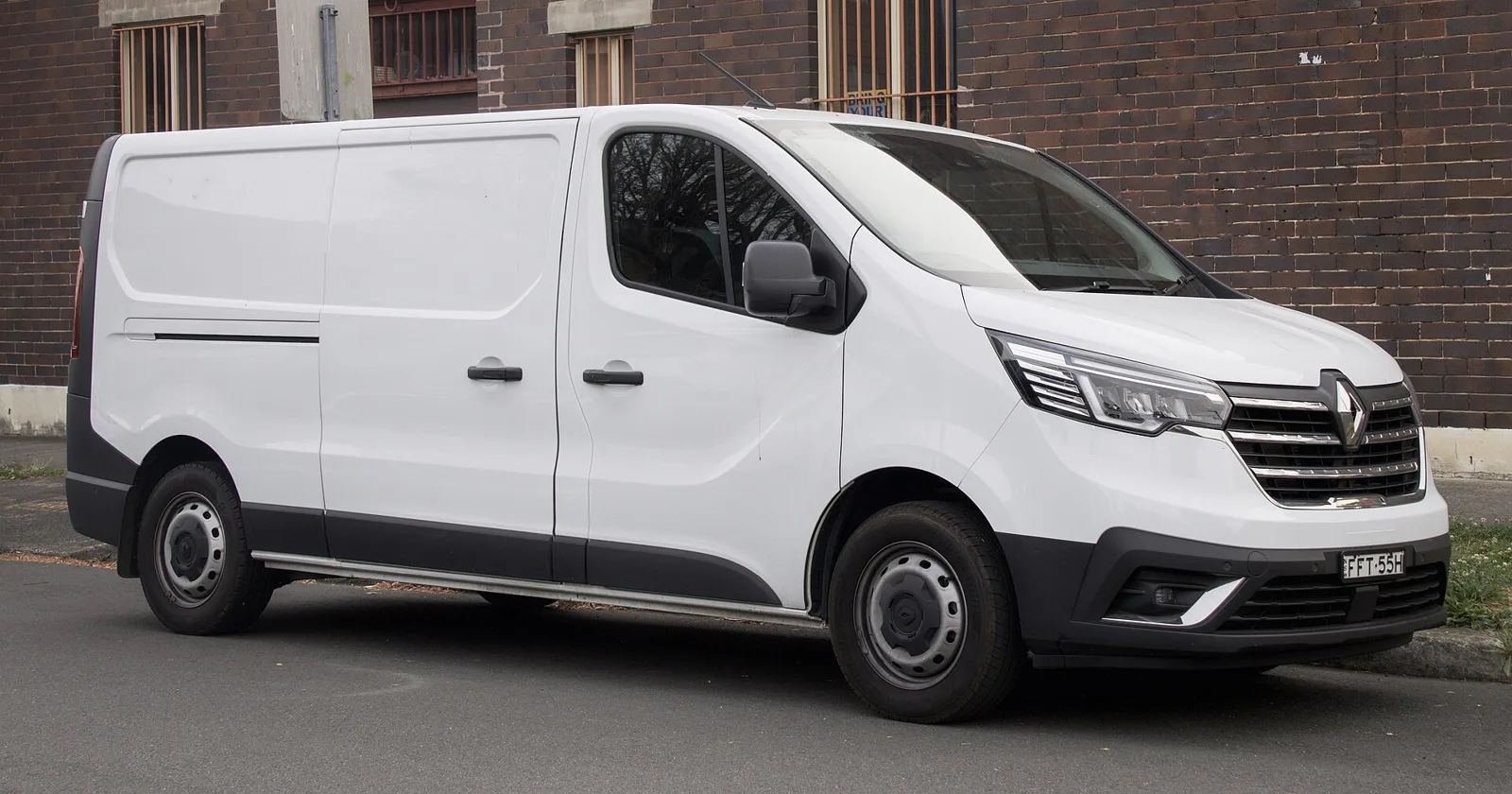
From the 1980 Trafic to the electric E-Tech, a van that carried Nissan, Opel, Vauxhall, Fiat and Mitsubishi names along the way.
Renault has built this van since 1980, and it has been sold as the Nissan Primastar and NV300, the Opel and Vauxhall Vivaro, the Fiat Talento and the Mitsubishi Express. Its first generation ran to 2001, and an electric E-Tech version arrived in 2022.
Since 1980 Renault has built the Trafic, a van whose name is pronounced like traffic. The same van has worn many badges over four decades, from Nissan's Primastar to Opel's Vivaro, and each generation was reshaped for a different set of buyers.
What is the Renault Trafic?
The Trafic has been built by the French maker Renault since 1980. It has also worn the Fiat Talento, Nissan NV300, Nissan Primastar and Mitsubishi Express badges, and until 2019 Opel and Vauxhall sold it as the Vivaro.
From early 2022 Renault Trucks began marketing the van as the Renault Trucks Trafic. Earlier versions of the Trafic were sold under Inokom, Chevrolet and Tata badges, which shows how far the design travelled beyond its home market.
The second-generation Vauxhall and Opel Vivaro was produced at GM's Luton plant and at the Sandouville Renault factory from 2014. After General Motors sold Opel and Vauxhall to Groupe PSA in 2017, the Trafic-based Vivaro ended in 2019 and gave way to a Vivaro on the Citroen Jumpy's EMP2 platform for the 2020 model year.
A light van built by Renault since 1980 that wore Nissan, Opel, Vauxhall, Fiat and Mitsubishi badges along the way.
How did the first-generation Trafic take shape?
The original Trafic was built from 1980 to 2001 and was revised several times across that span. Its front end changed with the engine fitted: a flat grille sat in front of the original 1397 cc motor, while the 2.1-litre diesel and the larger 1647 cc petrol engines needed an extended plastic grille and a deeper bumper.
In the mid-1980s a 1721 cc OHC unit took over from the 1647 cc OHV engine. It sat under the shorter grille but needed a small bonnet bulge, while the diesel and 2.2-litre petrol kept the extended grille.
In late 1984 a four-wheel-drive version arrived. It was a part-time system paired with the diesel and a five-speed manual, and it worked as front-wheel drive until a dog clutch engaged the rear wheels, a setup similar to the one Renault used on its R18 4x4.
In May 1989 the van received a major front-end facelift with a rounder shape and a plastic bumper, along with a longer body that covered every engine variant. The final facelift came in 1995, bringing a new grille, tail lamps, large double mirrors and a modern dashboard with multi-adjustable seats.
How did the Trafic reach American motorhome builders?
Winnebago Industries used the chassis and cab of the 1980s Trafic as the base for its LeSharo from 1983, and for the Itasca Phasar. To meet United States rules the chassis cab was sold with Renault's J7T 2,165 cc (2.2-litre) petrol engine, along with 2.1-litre diesel and turbo diesel engines.
The diesel and turbo diesel engines were coded J8S, and they were shared with the 1985 to 1987 AMC Jeep Cherokee and Comanche. Jeep versions used the Garrett T2 turbocharger, while the Winnebagos received the larger T3 type.
The California Air Resources Board, known as CARB, granted a series of yearly waivers to Winnebago because the vehicles omitted On Board Diagnostics, known as OBD I. Those waivers stayed in effect for the whole production run from 1983 to 1992.
Why was the Mk1 Trafic a favourite for campervans?
The first-generation Trafic became popular with professional converters because its design was flexible and its interior was generous for a relatively small van. Popular converters were Auto Sleepers and Holdsworth, the latter now defunct. That gave converters plenty of room to work with.
Other motorhome builders used the Mk1 as a base as well, including Hymer, Elddis, Eriba and Autostar. The result was a budget family motorhome that made full use of the van's internal space.
Which markets sold the Trafic under other names?
From 1997 to 2001 the Trafic wore Opel Arena badges in Germany and Vauxhall Arena badges in the UK. Vauxhall's chairman, Nick Reilly, said the Arena gave the company its first complete commercial range since the days of the Bedford CF, which ended production in 1986.
Tata Motors announced the Winger in June 2007. It was a panel van and minibus based on the 1995 to 2001 Trafic, fitted with Tata's own two-litre diesel engines, with or without a turbo.
In Malaysia the Inokom Permas was launched in 1998 and was built at Kulim District. In South America the van was made at Renault Argentina's Santa Isabel plant in Cordoba, and in Brazil it was badged as the Chevrolet Trafic before taking the Renault name, while a pickup version became the Renault Trafic Rodeo. Production there ended in 2002.
What changed with the second-generation X83 Trafic?
The second Trafic, codenamed X83, came from a joint venture between German Opel, Japanese Nissan and French Renault. It was launched in 2001 and sold alongside the Opel Vivaro and the Nissan Primastar. Nissan's and Opel's versions were built on the same underlying design.
Renault's corporate design department in Paris styled the van, and the light commercial vehicle unit at Villiers-Saint-Frederic developed it. GM Manufacturing Luton built it, making the Trafic the first Renault built in Britain for more than thirty years.
Under a Renault and Nissan agreement, some versions were also built at Nissan's plant in Barcelona. High-roof vans for Opel, Vauxhall, Renault and Nissan were made there, because the Luton plant's low roof could not accommodate the extra height.
The range ran from a three-seat van, with all the rear space for loads, to a nine-seat passenger van. The name comes from the French word for trade or traffic, depending on the context. In 2012, production totalled 36,982 Vivaros and 16,483 Trafics.
A mild facelift in October 2006 replaced the orange indicators with clear ones that sat more neatly in the headlamp housings. Production of the second generation ended in June 2015.
What was the Nissan Primastar?
The Nissan Primastar was launched in 2001 as Nissan's version of the second-generation Trafic. It came as a panel van, combi, bus and chassis cab, with two wheelbases, two roof heights, three diesel engines and a petrol engine. Its body range ran from goods vans to passenger buses.
The last Primastar came off the line at the end of 2014. Nissan renamed the model the NV300 for 2016, moving it onto the third-generation Trafic, and the light commercial variant reverted to the Primastar name in 2021.
What was the Opel Vivaro in its first form?
The Opel Vivaro was launched in September 2001 by the German automaker Opel. It was sold as a Vauxhall in the United Kingdom, and it was built mainly at GM's Luton plant and at Nissan's Zona Franca facility in Barcelona.
The Vivaro came as a panel van, minibus, combined bus and van, and platform crew cab. Two wheelbases and two roof heights were offered, with three diesel options and one petrol engine.
A 2006 facelift moved the front indicators up into the headlamp housing. Only a 2.0-litre four-cylinder diesel remained, in two states of tune: 90 PS (66 kW; 89 bhp) or 115 PS (85 kW; 113 bhp), with a six-speed manual or an optional automatic.
The Vivaro e Concept debuted in September 2010 at the IAA Commercial Vehicle Show in Hanover. It was a plug-in hybrid with 21 kWh lithium-ion batteries, an extended range of up to 250 mi (402 km), and over 60 mi (97 km) of pure electric driving.
How did the third-generation X82 Trafic arrive?
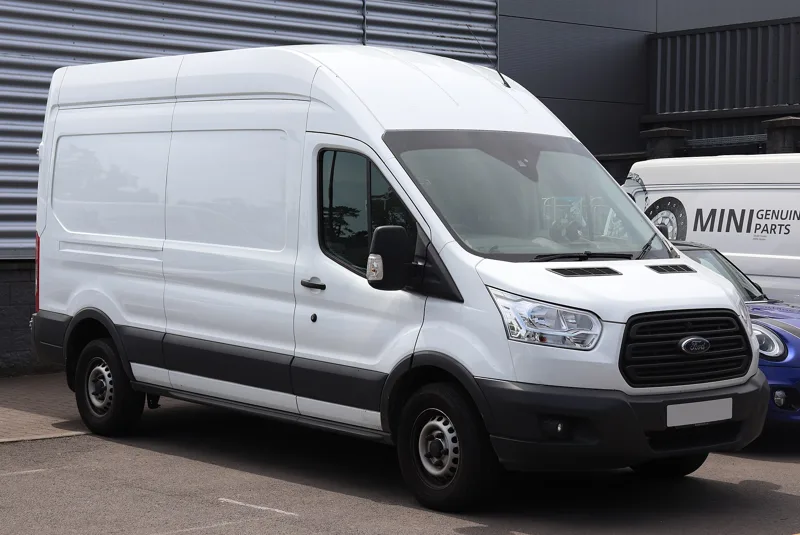
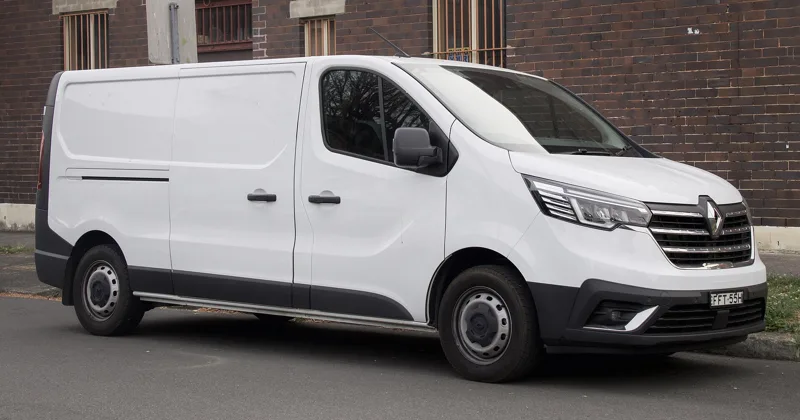
Renault released the third-generation Trafic, codenamed X82, in September 2014. It was again rebadged as the Opel Vivaro in Europe and the Vauxhall Vivaro in the UK, and its styling was updated for the 2019, 2021 and 2024 model years.
Two lower-power variants, at 95 PS and 115 PS, used a variable-geometry turbocharger. The highest outputs, 125 PS and 145 PS, used a twin-turbo arrangement, and the engine also had variable-output water and oil pumps and a maintenance-free timing chain.
The new van dropped the larger diesel engines in favour of a 1.6 Energy dCi unit, which carried the CDTI name at Opel and Vauxhall, the MultiJet name at Fiat and the Di-D name at Mitsubishi.
Which rebadged versions followed the third generation?
Nissan sold a rebadged second-generation Trafic as the Primastar, then used the third generation as the NV300 from 2016. Fiat introduced a rebadged Trafic called the Talento in July 2016, to replace its Scudo, which had been a rebadged Citroen Jumpy.
In October 2019 all the vans were given a facelift with a new 2.0-litre EcoJet diesel, which is 11 percent more fuel efficient than the older 1.6-litre unit. A 7-inch touchscreen with Apple CarPlay and Android Auto was also added to the interior.
Renault stopped supplying Talentos to Fiat in September 2020, after Fiat Chrysler declared plans to merge with the rival Groupe PSA to form Stellantis. The Talento was replaced by a Scudo or Ulysses, which was again a rebadged Jumpy.
In 2020 the Trafic was rebadged as the third-generation Mitsubishi Express for Australia, and it replaced the L300 in New Zealand. The Mitsubishi version was discontinued two years later. From 2022 Renault supplied the Trafic to Renault Trucks, a company owned by Volvo AB, for sale under the Renault Trucks badge.
Did the Trafic get an electric version?
Yes. The 100% electric Trafic Van E-Tech was officially presented at the 2022 IAA. It uses a 90 kW (120 hp) traction motor and a 52 kW-hr battery, the same pack used in the larger electric Master E-Tech. Its WLTP range is 297 km (185 mi).
Charging runs at up to 7 kW single-phase AC or 22 kW three-phase AC, with a 50 kW DC fast-charging option. A passenger version is a possibility, drawing on the Hippie Caviar Hotel concept of 2021.
What special editions did the Trafic receive?
The Trafic X-Track, launched in 2016, was a front-wheel-drive off-road version of the van. The Formula Edition arrived in 2018 alongside the Kangoo and Master, with new paint and wheels and black and yellow trim. Both arrived after the third generation had gone on sale in 2014.
What were the Renault Trafic specifications?
| Specification | Detail |
|---|---|
| Launch | 1980, first-generation Trafic, sold to 2001 |
| First-generation engines | 1397 cc petrol, 1647 cc petrol, 2.1-litre diesel, later 1721 cc OHC |
| Four-wheel drive | Part-time, late 1984, with a five-speed manual |
| Winnebago chassis engine | J7T 2,165 cc (2.2-litre) petrol |
| Second generation (X83) | Launched 2001, production ended June 2015 |
| Vivaro diesel after 2006 | 2.0-litre, 90 PS (66 kW; 89 bhp) or 115 PS (85 kW; 113 bhp) |
| Third generation (X82) | Released September 2014 |
| Third-generation outputs | 95 PS, 115 PS, 125 PS and 145 PS |
| 2019 EcoJet diesel | 2.0-litre, 11 percent more fuel efficient than the 1.6-litre |
| E-Tech electric motor | 90 kW (120 hp), 52 kW-hr battery |
| E-Tech WLTP range | 297 km (185 mi) |
| Production in 2012 | 36,982 Vivaro and 16,483 Trafic |