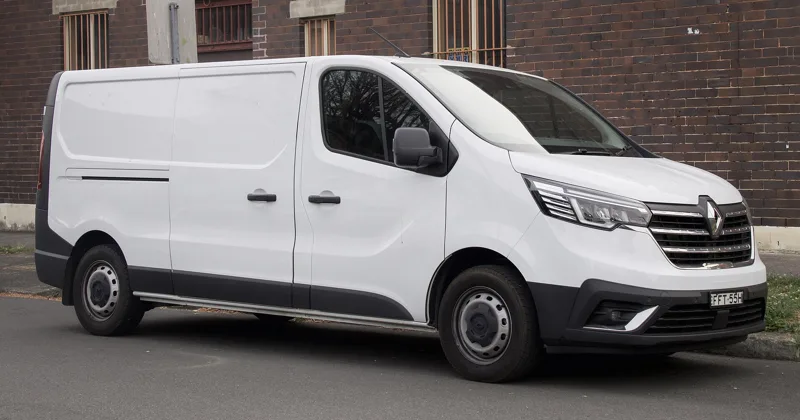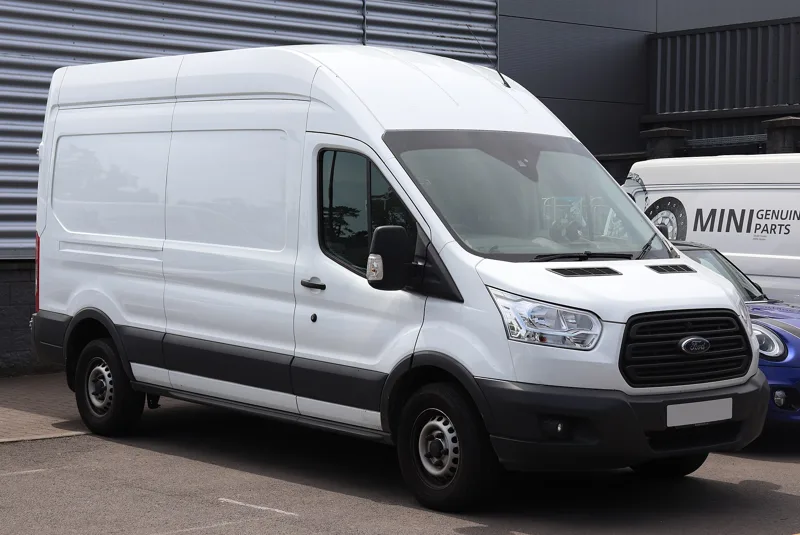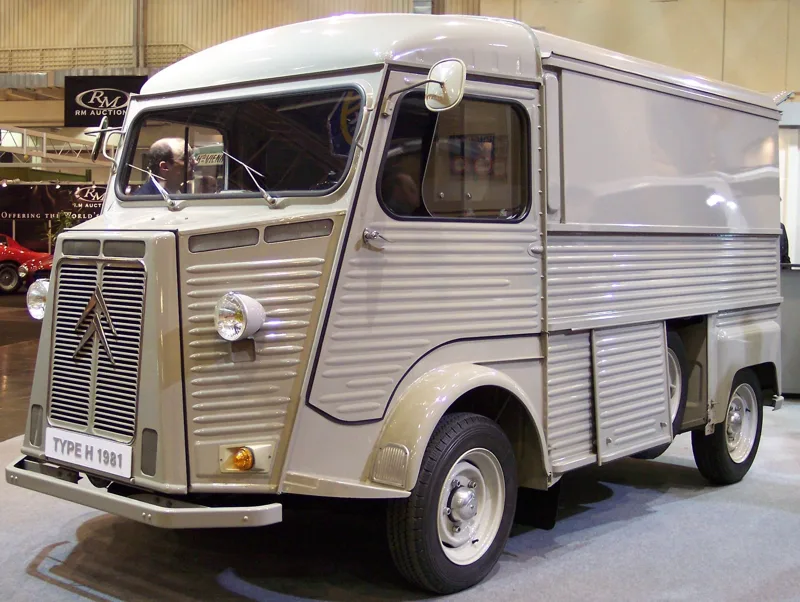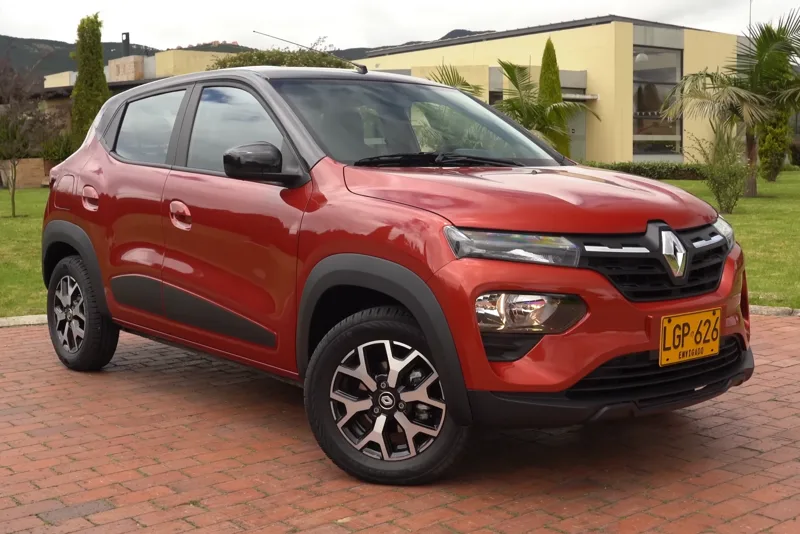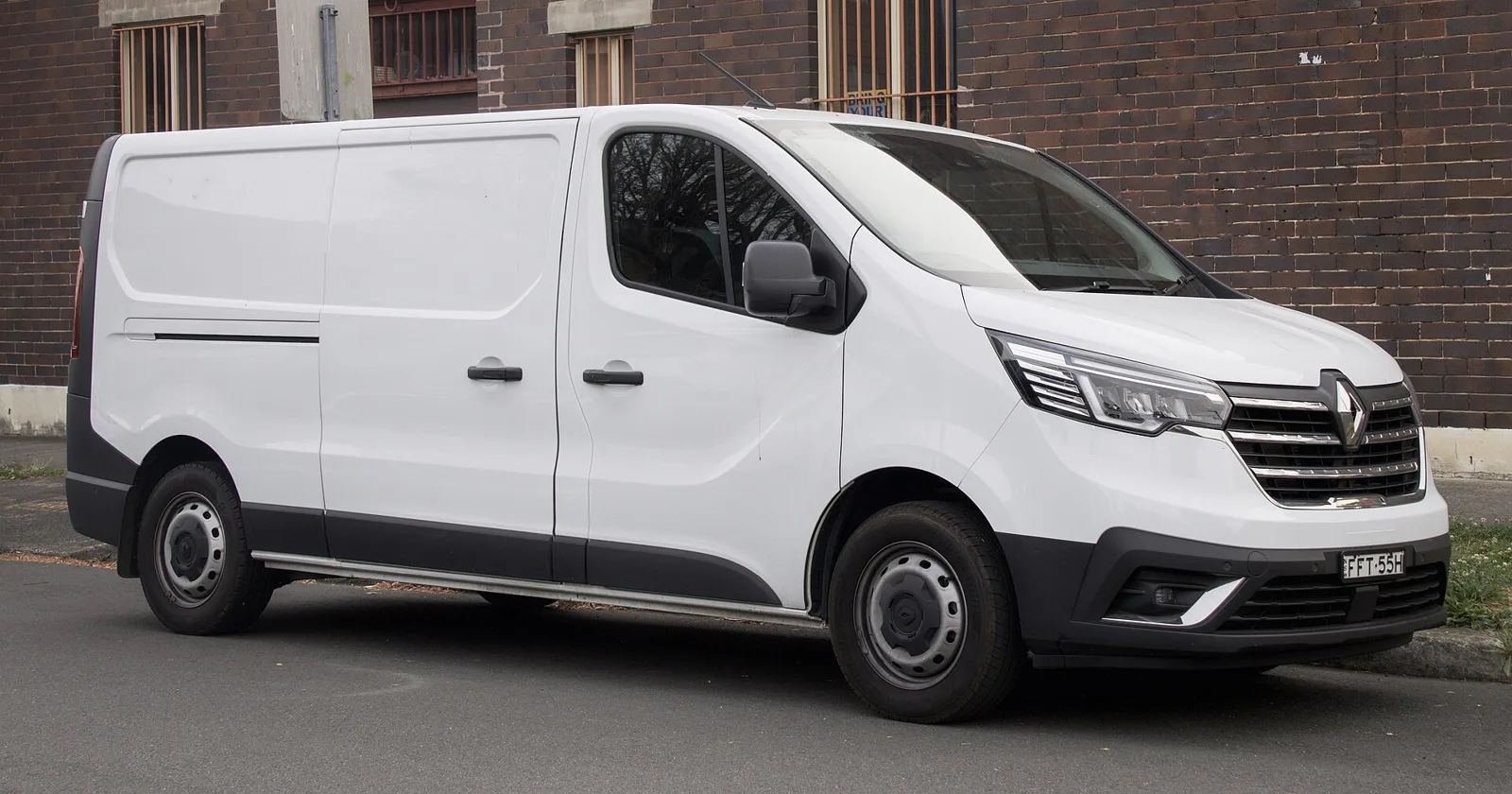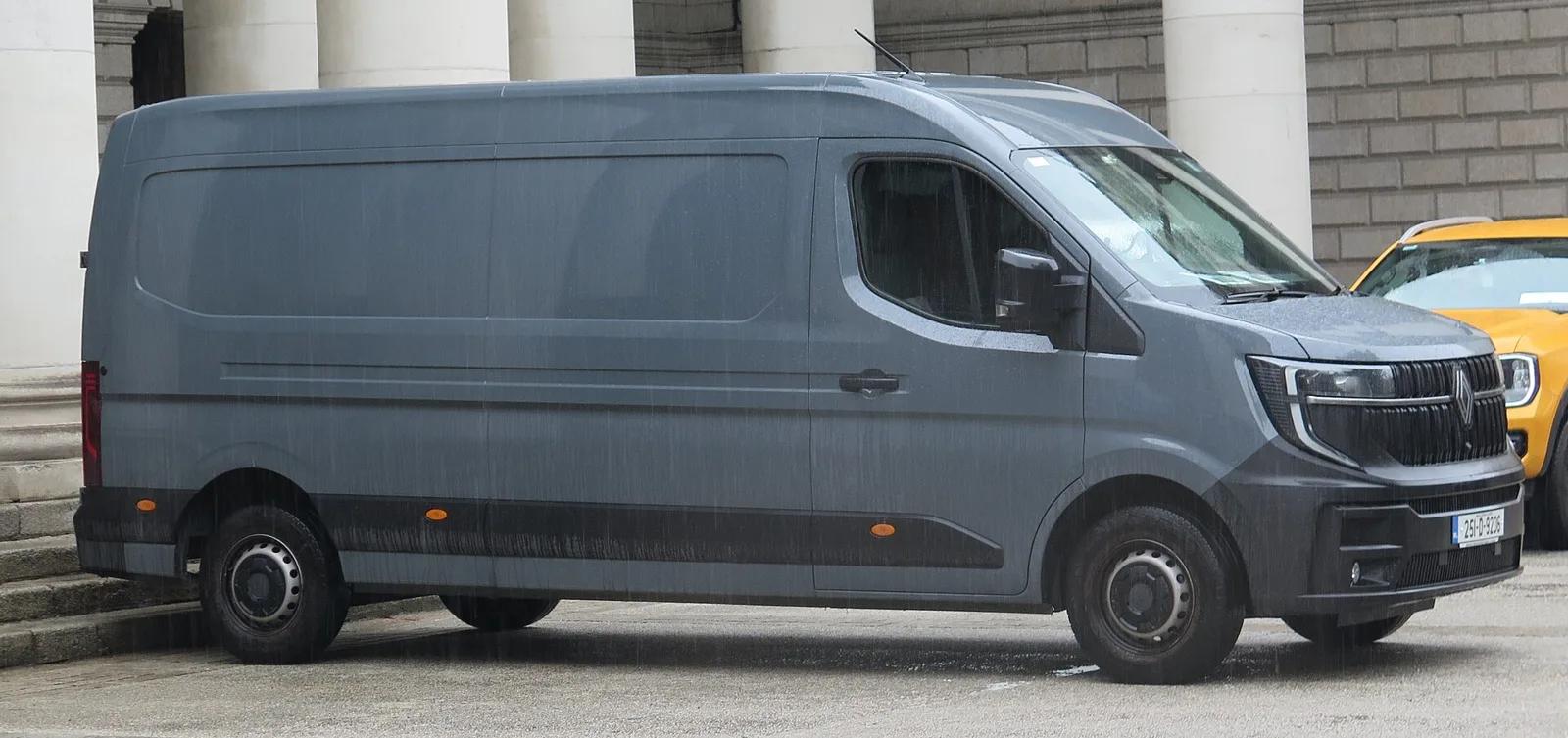
A small Indian-market MPV with three rows of seats and a large van that has worn Renault, Nissan, Opel and Vauxhall badges since 1980.
The Renault Triber is a three-row mini MPV built mainly for India, on the Kwid's CMF-A platform with a 999 cc petrol engine. The Renault Master is a large van made since 1980, now in its fourth generation, also sold as the Nissan Interstar and with combustion, electric or hydrogen power.
The Renault Triber fits three rows of seats into a car less than four metres long, and Renault's design chief called its interior a miracle. The Renault Master could hardly be more different: a large van with a pedigree back to 1980 and a habit of turning up under other badges.
What are the Renault Triber and Master?
The Renault Triber is a mini MPV with three-row seating, made primarily for the Indian market by Renault India and on sale there since August 2019. The Renault Master is a large van produced by Renault since 1980 and now in its fourth generation. It is also sold as the Nissan Interstar.
Three rows of seats in under four metres: Renault's design chief called the Triber's cabin a miracle.
How does the Renault Triber fit three rows into so little car?
By building the front as short as possible. Laurens van den Acker, Renault's corporate design chief, explained that the bonnet and engine bay were squeezed to make room for passengers. A side effect is that the car cannot take a diesel or any larger petrol engine.
Renault developed it under the body code RBC, and it sits on the CMF-A platform, like the Kwid. Even so, over 90 percent of its parts are dedicated to the Triber and shared with no other Renault or Nissan, because it is larger and wider than any other CMF-A car. Van den Acker called the interior "a bit of a Leonardo da Vinci" for what it manages inside a sub-four-metre length.
Width helps. At 1,739 mm (68.5 in), the car is wide enough for three people to sit comfortably across the second row. A stretched wheelbase and reduced overhangs add to the room, and van den Acker claimed the cabin is around three metres long.
The second-row seats recline and fold in a split, the third row has its own air-conditioning vent, armrests and charging sockets, and the third row can be taken out altogether to free up to 625 L of boot space.
The headroom problem
Headroom in the third row was among the hardest parts of development. That space is usually taken up by the hinge mechanism of the rear hatch, so Renault raised the rear part of the roof, which also made room for roof-mounted air-conditioning blowers. The bump is hidden by the roof rail. The car also has a faux-crossover look, which van den Acker said gives it a tougher stance and puts it in SUV territory, and suits Indian buyers who like a high driving position and good ground clearance.
What powers the Renault Triber?
Under the bonnet is a reworked version of the three-cylinder 999 cc BR10 petrol engine from the Kwid, which makes 53 kW (71 hp; 72 PS) at 6,250 rpm and 96 Nm (71 lb ft) at 3,500 rpm. Buyers choose between a five-speed manual and a five-speed automated manual gearbox.
On 28 September 2026, Renault India widened the range with a 1.0-litre turbocharged petrol variant producing 100 hp and 180 Nm, priced from 7.84 lakh rupees ex-showroom.
Where is the Renault Triber sold?
Renault introduced the Triber in India on 19 June 2019. Right-hand-drive emerging markets nearby received it too. Indonesia launched it on 12 July 2019 and showed it at the Gaikindo Indonesia International Auto Show from 18 to 28 July, where Renault took 1,033 bookings. Deliveries began in March 2020, and the RXZ trim has 15-inch dual-tone alloy wheels not seen in other markets.
South Africa followed in February 2020. Brunei received it in late July 2022, in RXZ form, marking the return of the Renault brand to that market after nine years.
In South Africa in 2022, Renault added the Triber Express, a light commercial version without rear seats. A steel cargo cage can be reached through the tailgate or the rear doors, and the claimed load volume is 1,500 L with a payload of 542 kg.
Nissan sells a rebadged Triber in India called the Gravite. It was introduced on 17 February 2026 and went on sale in March 2026.
What changed in the 2025 Renault Triber facelift?
The facelifted Triber was launched on 23 July 2025. The front gets LED headlights with integrated daytime running lamps, a bolder gloss-black grille, a revised bumper with a larger air dam and repositioned fog lamps, and Renault's new diamond logo. The sides gain 15-inch flex wheels and blacked-out handles, and the rear has slimmer smoked LED tail lamps and a reshaped bumper.
Inside, the dashboard is a lighter grey-beige. A higher-mounted 8-inch touchscreen supports wireless Android Auto and Apple CarPlay, and there is a 7-inch digital driver's display, cruise control, rain-sensing wipers and automatic headlamps. Higher variants add a 360-degree camera and a driver armrest. Renault says the 2025 car has 6 airbags as standard on every variant, with 21 safety features on base cars and 24 on the top trim.
How safe is the Renault Triber?
Global NCAP tested the Indian-built Triber in 2021 in its most basic specification for India, with dual front airbags and no ISOFIX anchorages. It scored four stars for adult occupant protection and three for child protection. The passenger compartment became unstable in the frontal crash test, though footwell intrusion was insignificant.
The Q1.5 child dummy, placed rearward-facing, scored full points. The Q3 dummy was installed forward-facing, and its head crossed the excursion limits, which showed poor protection. Both child seats were fitted with a three-point belt because the basic car has no ISOFIX points.
In India the car has double front airbags as standard and optional side torso airbags, but no ESC. Not every seating position has a three-point belt and head restraint, and ISOFIX is limited to higher variants. The South African version scored 2 stars for adults and 2 stars for toddlers from Global NCAP in 2024.
What is the Renault Master?
The Master is a large van that Renault has produced since 1980, and it replaced the earlier Super Goelette light trucks. All four generations were designed and made by Renault whatever the badge. The Nissan Interstar is the same van, and Opel and Vauxhall sold versions of the second and third generations as the Movano. Renault Trucks markets it as the Renault Trucks Master.
Many body styles have been offered, from the standard van to versions with more load volume, a taller roof or a longer wheelbase, marked by an LWB prefix. Panel vans and crew vans are common, and pickups are available too. Renault Trucks sold heavier models as the B series, later the Messenger and the Mascott.
First generation, 1980 to 1997
The original Master launched in September 1980 with a 2.4-litre (2,445 cc) Fiat-Sofim diesel, joined from 1984 by a 2.1-litre (2,068 cc) unit. A few cars received a 2.0 or 2.2-litre Renault petrol engine, and in 1990 a larger 2,499 cc version of the Sofim diesel took over. The smaller Trafic launched the same year.
The styling was distinctive: a sliding door and unusual round door handles like those of the Fiat Ritmo and Strada. Renault built it at its then new SoVAB plant at Batilly in northeastern France. It completed Renault's commercial range after the Dodge 50 Series, which Renault sold as the Renault 50 Series after acquiring Dodge's British production facilities.
The B series was a heavier-duty alternative that looked almost identical, a light truck using the Master I body on a separate chassis with rear-wheel drive and dual rear wheels. The B70 diesel (70 PS) and B80 petrol (80 PS) appeared at the end of 1982. A 4x4 B90 entered the Paris Dakar Rally in 1987, and the civilian B90 4x4 was unveiled in 1990 and sold until 1999. In 1993 the B series gained a new grille and became the Messenger, which the Mascott replaced.
Second generation, 1997 to 2010
The second-generation Master arrived in November 1997 with more conventional looks. It was developed mainly by Renault, but from 1998 it was sold almost unchanged as the Opel and Vauxhall Movano, and from 2003 as the Nissan Interstar. The pattern copied the one Renault used with the Trafic, and similar platform sharing existed between Fiat and Peugeot-Citroen and between Volkswagen and Mercedes.
An agreement of July 1994 made the van a close relative of the second-generation Iveco Daily. They share many panels and cab components, doors included, with 120 thousand common pieces a year produced across Brescia and Suzzara in Italy, Valladolid in Spain and Batilly.
Engines came from Renault's S-Type (S9U, S8W and S9W) and G-Type (G9T) families and from the Nissan YD, with displacements of 2.2, 2.5 and 2.8 litres. Some markets also had the 1.9-litre F9Q, in dti and dci forms with 80 and 82 hp. A major facelift at the end of 2003 restyled the headlights so that the front resembled the smaller Trafic. The 2.8-litre engine was replaced in some markets by a 3.0-litre ZD3 derived from the Nissan ZD30, and the grille was redesigned in 2007. The van was popular as a base for ambulance conversions.
Renault Trucks also sold a heavy-duty 3.0-litre rear-wheel-drive version, the Mascott, between 1999 and 2013, positioned between the Master and the larger Midlum. It came in two states of tune: 120 PS (88 kW) with five speeds, or 160 PS (118 kW) with six.
Third generation, 2010 to 2024
The third generation arrived in the summer of 2010, with a rebadged Movano and the Nissan NV400. It was the first time either of those could be had with single or twin rear wheel drive. All four brands used the M-type 2.3-litre four-cylinder diesel in three states of tune, from 100 PS (74 kW) to 150 PS (110 kW). Renault Trucks dropped the Mascott and sold the third-generation Master only as a chassis cab with payloads of up to 2.5 tonnes. In the UK, the Movano could carry up to 4,500 kg.
An April 2014 grille facelift applied to the Renault Master and Renault Trucks Master Red but not to the Opel, Vauxhall or Nissan versions. On 18 April 2016 Renault announced an off-road, four-wheel-drive Master. In South Korea, front-drive Master panel vans in L1H1 and L2H2 forms went on sale on 15 October 2018, imported from France with a diesel engine and manual gearbox. A further facelift came in September 2019 for the 2020 model year.
Summer 2021 brought the end of the Opel and Vauxhall Movano as it had been, after the partnership with Groupe PSA, now Stellantis, replaced it with a new Movano based on the Fiat Ducato. In 2022 the Nissan version went back to the Interstar name. Short models were discontinued that spring, and the closed-transport low-roof variants followed in the summer.
Electric and hydrogen Masters
The Master Z.E. arrived in 2018 as a battery-electric van with a 33 kWh lithium-ion battery and the 57 kW (76 hp) R75 motor used in the Zoe and Kangoo Z.E. It delivers 225 Nm and a WLTP range of 120 km (75 mi). In spring 2022 a 52 kWh battery lifted the range to 190 km (120 mi).
The 52 kWh version can use DC charging, limited to 22 kW, on top of the 7.4 kW AC charging common to both. In the UK the newer van is sold as the Master E-Tech, and it was due to go on sale in Australia in 2024. No electric versions were made for Opel, Vauxhall or Nissan.
A hydrogen-fuelled version, the Master Van H2-Tech, was shown in production form by HYVIA at the 2022 Paris Motor Show.
Fourth generation, from 2024
The fourth-generation Master, known as the XDD, was unveiled on 21 November 2023 at the Solutrans show in Lyon. It is available with combustion, electric or hydrogen powertrains. It was named International Van of the Year 2025, the fifth van from Renault to win the award. A new Nissan Interstar derived from it was shown in February 2024.
How do the Renault Triber and Master compare?
| Feature | Triber | Master |
|---|---|---|
| Type | Three-row mini MPV | Large van |
| Since | 2019 | 1980 |
| Main market | India | Europe and export markets |
| Platform | CMF-A, shared with the Kwid | Developed by Renault; shares cab parts with the Iveco Daily in the second generation |
| Engines | 999 cc three-cylinder petrol; 1.0-litre turbo from 2026 | Diesel, electric and hydrogen |
| Rebadged as | Nissan Gravite | Nissan Interstar, Opel and Vauxhall Movano |
| Commercial version | Triber Express (South Africa) | Panel vans, crew vans, pickups, chassis cabs |
What are the newest Triber and Master models?
The newest Triber adds a 1.0-litre turbo petrol from September 2026, and Nissan sells its own version as the Gravite. The Master has moved to its fourth generation, offered with combustion, electric or hydrogen power, and Nissan's matching new Interstar followed in February 2024.