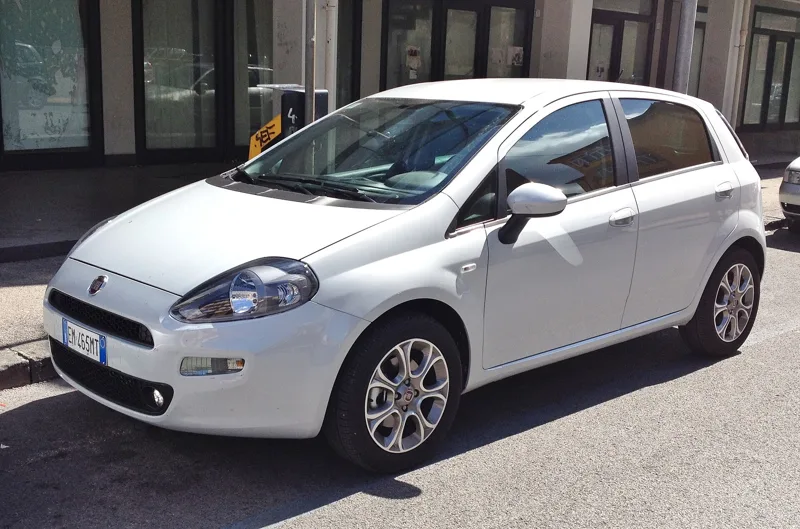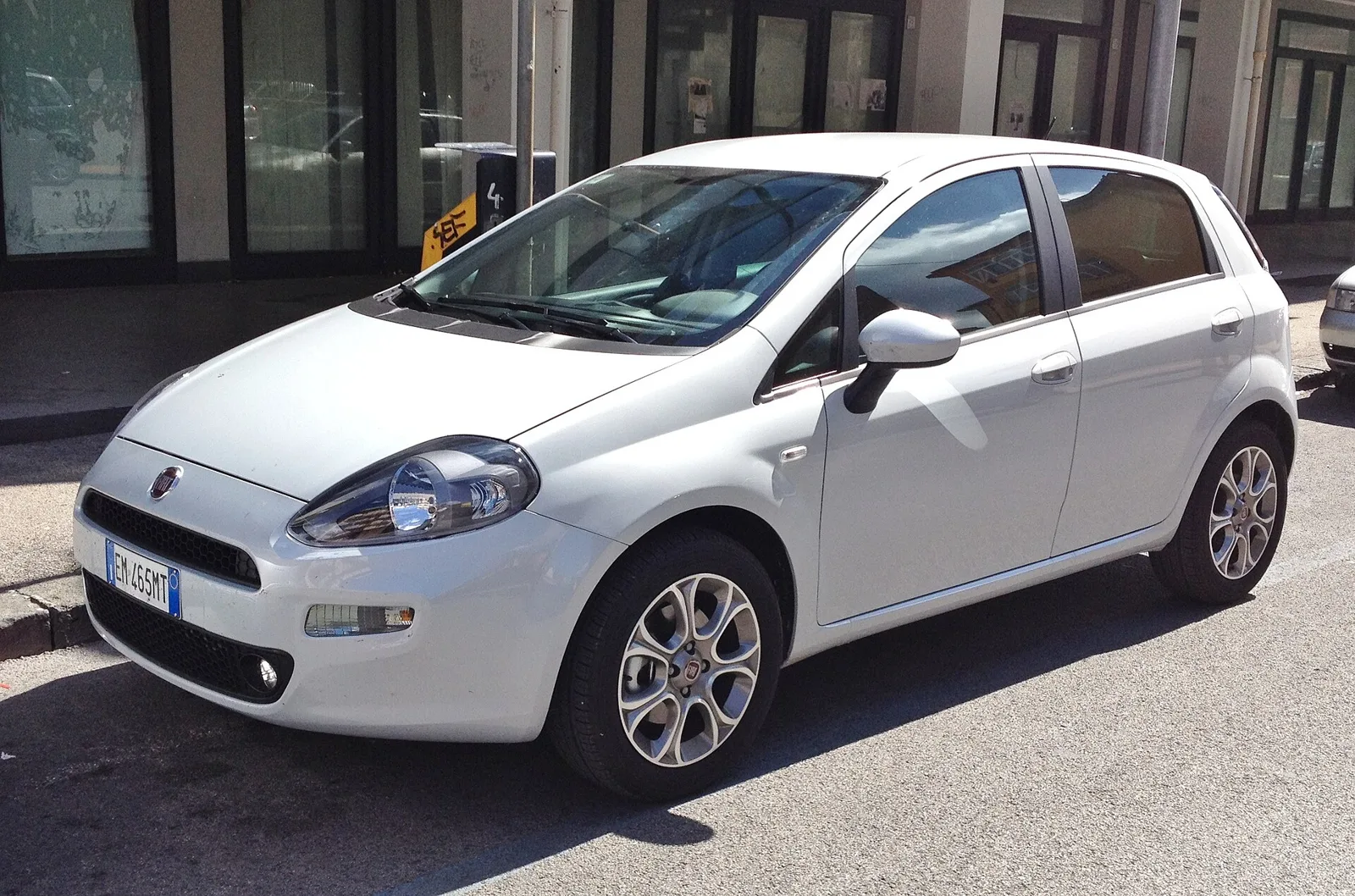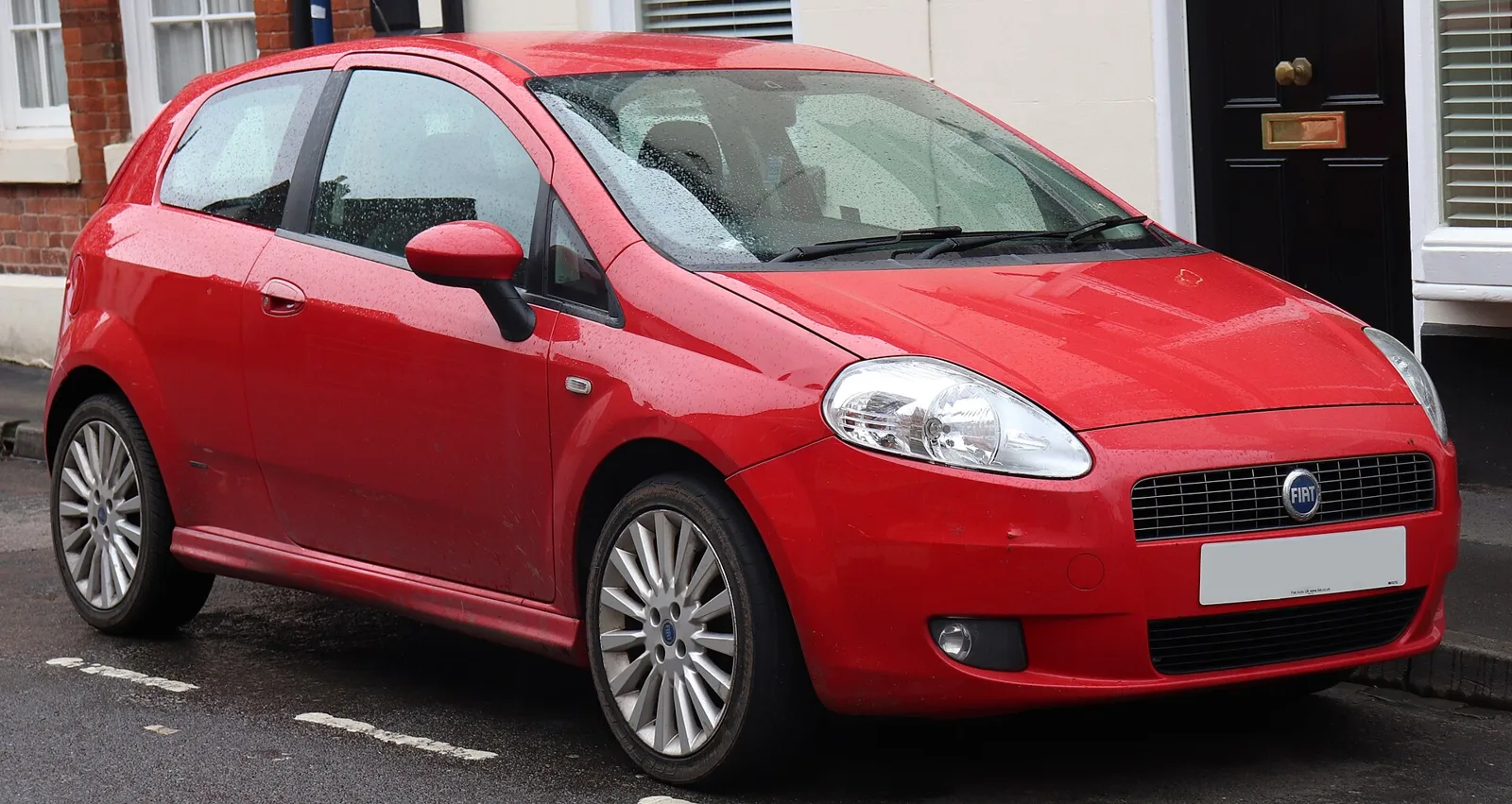
Giugiaro's third-generation supermini from 2005, with Abarth hot versions, a Punto Evo facelift and a Euro NCAP retest that left it with no stars.
Built from 2005 to 2009 on the Fiat Small platform, the Grande Punto brought a Giugiaro redesign to the Punto range. Its petrol engines ran from 65 PS to 120 PS, and an Abarth version later reached 180 hp, enough to make it a serious hot hatch.
The Fiat Grande Punto was the third generation of the Punto supermini, sold from 2005 to 2009 before the Punto Evo facelift took over. Styled by Giorgetto Giugiaro, it was built on the Fiat Small platform and used a largely new chassis and body. Across the family, Fiat had sold nearly nine million Punto units by May 2013.
Where did the Grande Punto come from?
The third-generation car was developed under the codename Project 199 and unveiled at the 2005 Frankfurt Motor Show, with sales beginning later that year. It was a successor to a model that had been on sale since 1993, and it kept the Punto name while changing almost everything beneath the surface.
The car rode on the Fiat Small platform, which had been developed in a joint venture with Opel and General Motors. Although it shared part of its name with the earlier Punto, a large number of its components were new, including the chassis and the body shell.
Giugiaro's styling drew comparisons with the Maserati Coupe, since the nose, headlights and front grille look somewhat alike. Both cars were designed by Giugiaro at ItalDesign, and that family resemblance helped the Grande Punto stand out in its class.
A third-generation supermini that sold on a Giugiaro look, then lost its Euro NCAP stars a decade after launch.
What engines did the Grande Punto offer?
At launch, the petrol range was led by a 1.2 litre 8-valve Fire engine rated 65 PS and a new 1.4 litre 8-valve Fire rated 77 PS. A 1.4 litre 16-valve StarJet produced 95 PS, and that unit became the mainstream choice for many buyers.
The diesel line used MultiJet common-rail engines. There were two 1.3 litre 16-valve units, rated 75 PS (55 kW) and 90 PS (66 kW), with the latter fitted with a variable geometry turbocharger. There were also two 1.9 litre engines producing 120 PS (88 kW) and 130 PS (96 kW), and all of them had a diesel particulate filter.
The 1.9 was replaced by a new 1.6 MultiJet from the end of 2008. In 2007 a 1.4 litre 16-valve T-Jet turbocharged petrol unit with 120 PS (88 kW) joined the range, and every engine met the Euro IV emissions standard.
How did the Grande Punto fare in Euro NCAP testing?
The original Grande Punto earned five stars for adult occupant protection in the Euro NCAP crash test, and three stars for pedestrian safety. The most powerful engines came with electronic stability programme and anti-slip regulation as standard, while some lower-powered versions offered them as options.
A later test in December 2017 produced a very different result, with a zero-star rating. Euro NCAP scored the car 51% for adult occupant protection, 43% for child occupants, 52% for pedestrians and 0% for safety assist features.
The retest criticised the weak chest protection for rear passengers and the poor whiplash protection for front occupants. The organisation also noted that the front-passenger airbag's status was unclear, and that the unplugged-seatbelt warning was standard only for the driver's seat.
The 2017 verdict pointed to the car's age. The third generation had been launched in 2005, which made it a twelve-year-old design whose safety standards had never been updated.
What was the Abarth Grande Punto?
The Abarth Grande Punto was the first car from Abarth & C. S.p.A., the Fiat-owned performance arm created in 2007. It differed significantly from the car it was based on, and it arrived with a 1.4 litre turbocharged engine producing 150 PS.
On fuel graded 97 RON, the same engine delivered 155 PS. From 2008, an Essesse kit could be installed at official Abarth service centres rather than at the factory. Along with uprated brakes and suspension, it lifted the output to 180 hp (134 kW).
The Abarth version was first shown at the 2007 Frankfurt Motor Show at 155 PS (114 kW). It was branded as an Abarth rather than a Fiat, which signalled a more serious performance focus for the line.
How did the Punto Evo change the Grande Punto?
The Punto Evo was a facelift of the Grande Punto, presented at the September 2009 Frankfurt Motor Show. It received a new front end, revised rear lights and a new interior, so the car looked different without being an all-new model.
Two new engines arrived with the Evo. One was a second-generation 1.3 litre MultiJet diesel, and the other was a 1.4 litre petrol with MultiAir technology. The car also gained a new navigation system integrated with Blue&Me, called Blue&Me-TomTom.
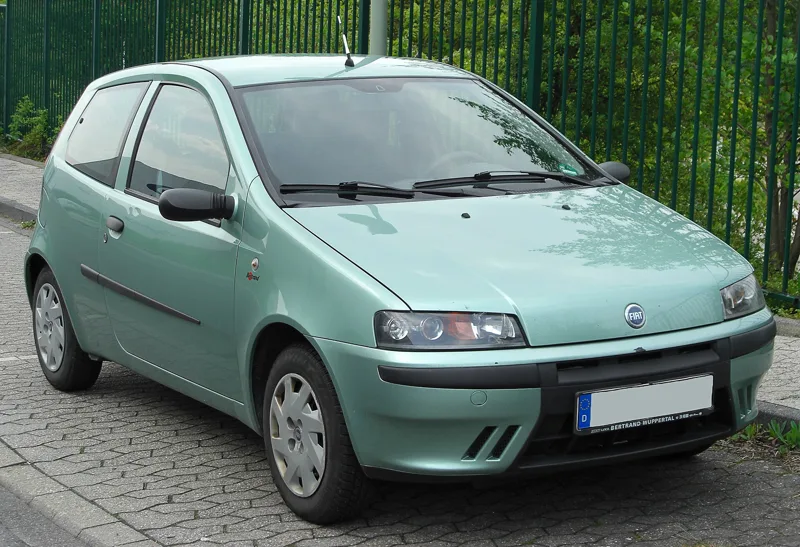
The second-generation Punto did not disappear at once. Marketed as the Punto Classic, it remained in production alongside the newer car, and it was built under licence in Serbia as the Zastava 10 from 2005 onward.
What happened to the Abarth Punto Evo?
The Abarth Punto Evo was shown at the 2010 Geneva Motor Show. It used a 1,368 cc MultiAir Turbo inline-four rated at 165 PS (121 kW; 163 hp), and its top speed was 213 km/h (132 mph). The car reached 100 km/h from a standstill in 7.5 seconds.
A new Esseesse version arrived in 2011 as an optional upgrade, which cut the 0 to 100 km/h time to 7.3 seconds. The upgrade was optional rather than a separate model, so buyers could add it to the existing car. Slow sales brought the Abarth Punto Evo to an end in 2015, leaving the Abarth badge without a small hot hatch in the range.
Where else was the Punto sold?
In Australia the Grande Punto arrived in July 2006, sold only as the Punto. It was the first Fiat sold in the country since 1989, but it was discontinued in 2009 because of slow sales. The car returned in 2013 at a much lower price, before being withdrawn again in September 2015.
The Punto Classic also had a long afterlife. It launched in Chile in 2007 and ended production in Italy in November 2010, while production at Zastava stopped in mid-2011 and restarted briefly in 2013.
Mexico received the car in November 2006 as a model placed above the Fiat Palio. Launch engines were the 1.4 litre 16-valve StarJet with 95 PS, and in December 2007 the T-Jet 120 PS version followed. South Africa gained the car in 2006, replacing the previous generation.
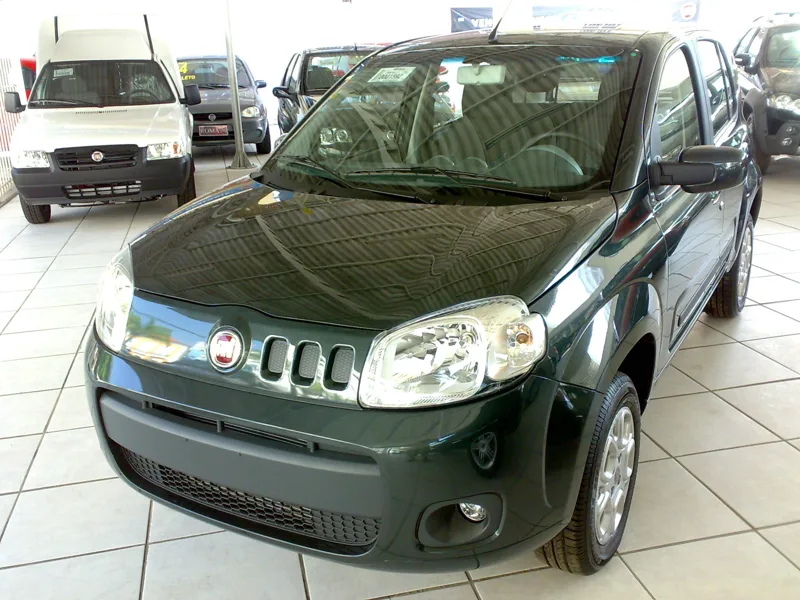
In Latin America, the Italian-built car went on sale in Chile and the Dominican Republic. The Brazilian-built Punto followed in August 2007 under the name Punto, and it was produced at Betim in Minas Gerais as Project 310.
A related sedan, the Fiat Linea, arrived in early 2007 to replace the ageing Fiat Marea. It used an extended version of the Grande Punto's chassis, which gave it a length of 4,560 mm (179.5 in).
How did the Punto do in India?
The Grande Punto was launched in India at the Delhi Auto Expo in January 2008, with sales starting in June 2009. The Indian car was built by Fiat India Automobiles, a joint venture with Tata Motors, at a new plant in Ranjangaon, Maharashtra.
In August 2015 Fiat launched the Abarth brand in India. It imported the Abarth 595 Competizione from Poland and built a locally produced Abarth Punto on the 310-Punto five-door, fitted with a 1.4 Turbojet engine rated 145 PS (107 kW; 143 hp) and a five-speed manual.
A facelift in August 2014 gave the Punto Evo swept-back headlamps, a new grille and LED taillamps from its European twin. It also received a raised, SUV-like ground clearance for Indian roads, with diesel models set higher than petrol ones.
Fiat India also launched a crossover version called Avventura in October 2014, aimed at rivals such as the Toyota Etios Cross and the Ford EcoSport. Production in India ended in November 2018, and Fiat Chrysler then withdrew the Fiat brand from the country.
Did the Punto race?
The Punto has always been popular with amateur drivers because of its low cost and the wide availability of spare parts. Many competition and homologated versions have been built, including the Punto Rally and the Punto Abarth. Its cheap parts also made it a common choice for club and amateur motorsport.
A rally version based on the third-generation car, the Super 2000 Punto Abarth, was unveiled in 2005. It had four-wheel drive and a 2.0 litre 16-valve engine producing 280 hp (210 kW). A turbodiesel front-wheel-drive rally car, the Grande Punto R3D, was also built.
The Punto won the Italian Rally Championship in 2003 and 2006, the European Rally Championship in 2006, and the 2006 International Rally Challenge season.
How did Punto production end?
In September 2011 the Punto Evo was facelifted again, and the car returned to the single-word Punto name. The tweaks were slight, although the base Pop trim reverted to the older Grande Punto interior. The facelift kept the car on sale for several more years.
The three-door version ended in 2015, leaving only the five-door in Europe. In June 2016, a Techno Pack added a 5-inch touchscreen and cruise control. The Punto's production finally ended on 7 August 2018, and no direct successor was announced. The end closed a model family that had been on sale for a quarter of a century.
Fiat Grande Punto specifications
| Specification | Detail |
|---|---|
| Generation | Third generation Punto, Project 199 |
| Launch | 2005 Frankfurt Motor Show |
| Petrol engines | 1.2 8v Fire (65 PS), 1.4 8v Fire (77 PS), 1.4 16v StarJet (95 PS) |
| Diesel engines | 1.3 16v MultiJet (75 PS and 90 PS); 1.9 MultiJet (120 PS and 130 PS) |
| Turbo petrol | 1.4 16v T-Jet, 120 PS (88 kW), from 2007 |
| Abarth Grande Punto | 150 PS; 180 hp (134 kW) with the Essesse kit |
| Abarth Punto Evo | 165 PS (121 kW; 163 hp), top speed 213 km/h (132 mph) |
| Euro NCAP (2005) | Five stars adults, three stars pedestrians |
| Euro NCAP (2017 retest) | Zero stars |
| Family total | Sold by May 2013, close to nine million units |
| End of production | 7 August 2018 |