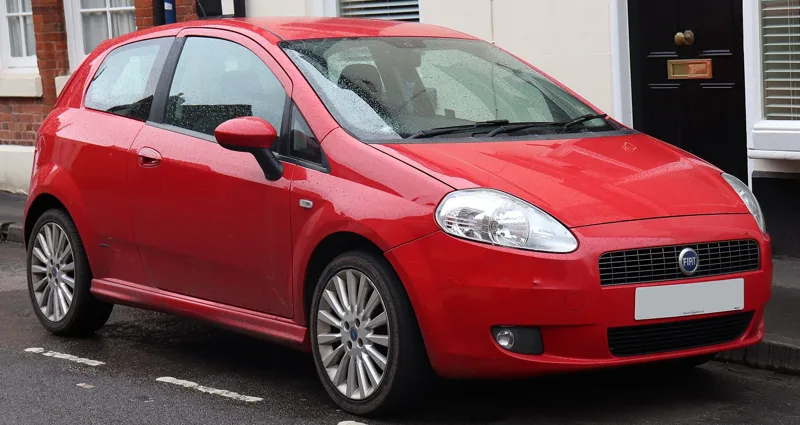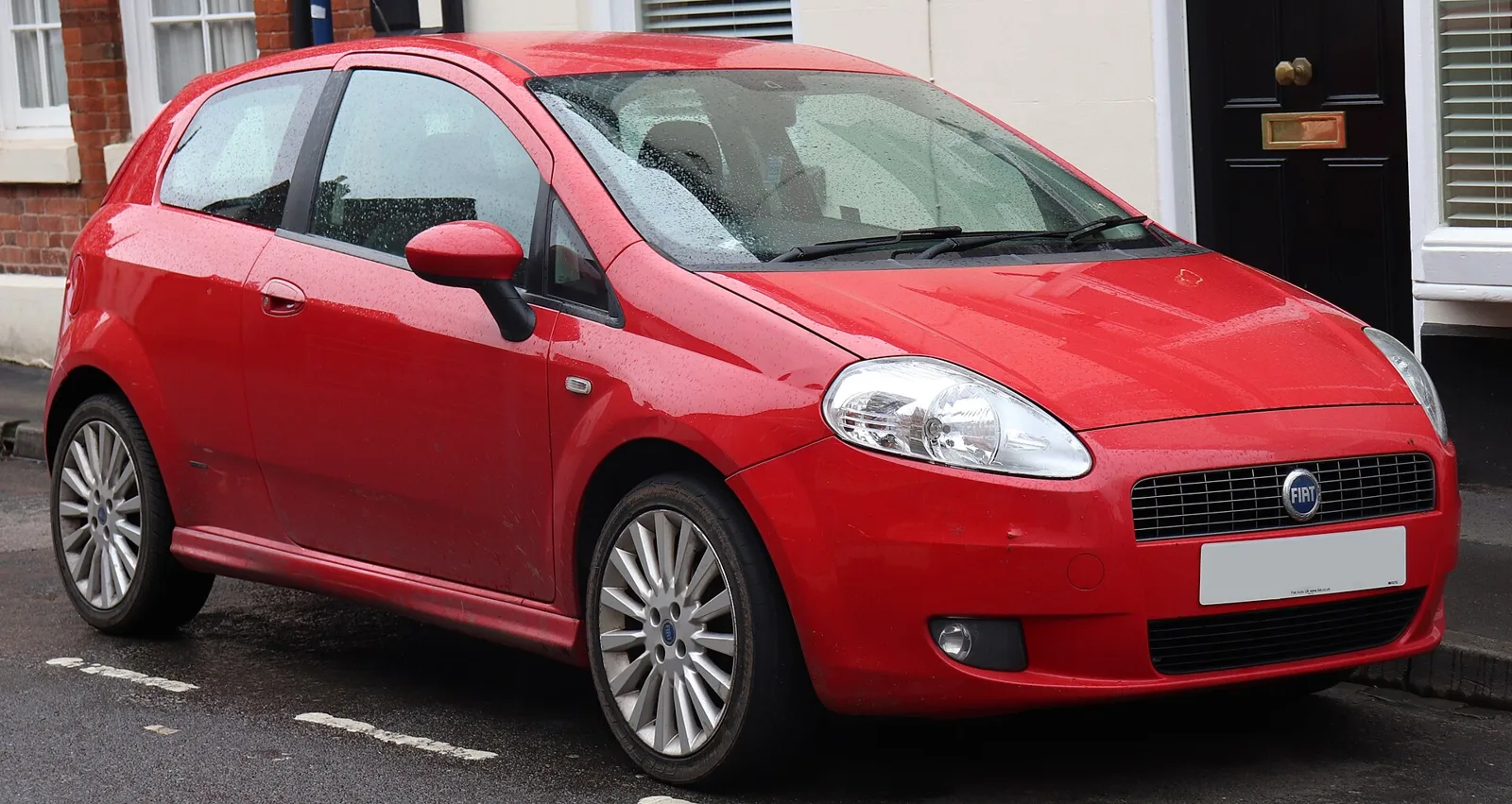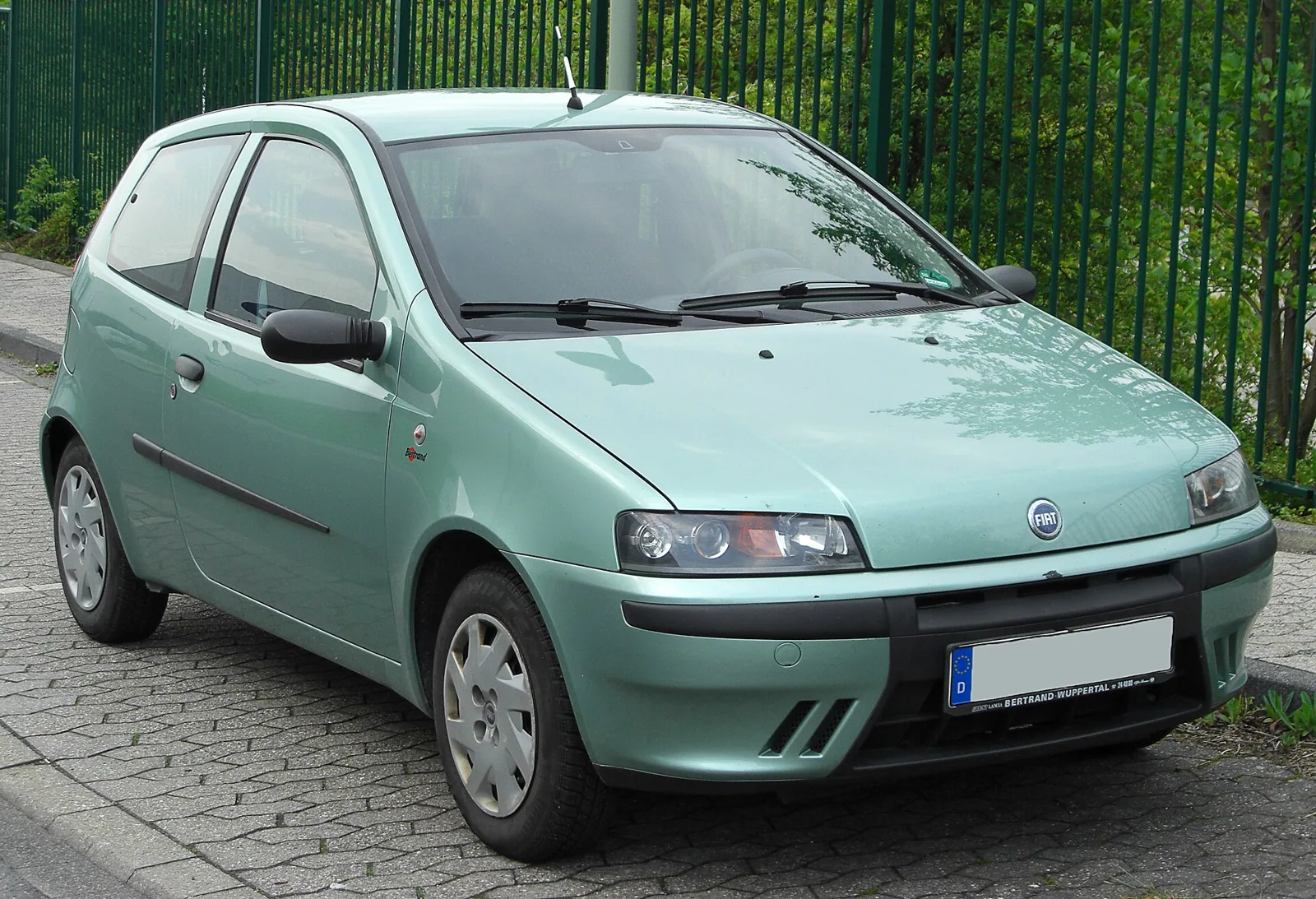
The second-generation Punto, with a common rail diesel, a 4-star Euro NCAP result and 3.1 million cars built.
Presented on 11 July 1999, the Type 188 brought a common rail diesel to the supermini class and earned Fiat 4 stars in Euro NCAP impact testing. Fiat built 3.1 million examples in total, and Italian production ended at the end of 2010.
The Fiat Punto Type 188 was the second generation of the Punto family, and it was the first supermini anywhere with a common rail diesel. It arrived in 1999 as the successor to the 1993 Punto, and it became the first supermini to earn 4 stars in the Euro NCAP impact test. Fiat built 3.1 million examples.
What made the Type 188 different from its predecessor?
The Type 188 was styled in-house and had a more angular, modern body than the 1993 car it replaced. It sat on the new B platform, and it introduced Fiat's round badge with a blue background. It was also the first Fiat to carry that badge.
Fiat presented the car on 11 July 1999, on the occasion of 100 years of FIAT. The line was more angular and modern than that of the older Punto.
The Punto that put a common rail diesel into the supermini class, and earned 4 stars on the way.
Which engines did the Type 188 offer at launch?
At launch the petrol range was built around the 1,242 unit, which now met Euro 3 standards after Euro 2. It came as an 8-valve engine producing 60 PS (59 hp) and as a 16-valve engine producing 80 PS (79 hp). The older 1,108 petrol engine from the previous Punto 55 was no longer offered, although it stayed on sale in the Seicento and the Panda.
The sporty HGT dropped the 1.4 Turbo in favour of the 1,747 cc (106.6 cu in) VFD unit already used on other models in the group, such as the Barchetta. In the HGT it produced 130 PS (128 hp).
Type 188 key specifications
| Specification | Detail |
|---|---|
| Project code | Type 188, second generation of the Punto family |
| Presentation | 11 July 1999 |
| Platform | New B platform |
| Petrol, 8 valves | 1,242, 60 PS (59 hp) |
| Petrol, 16 valves | 1,242, 80 PS (79 hp) |
| HGT engine | 1,747 cc (106.6 cu in) VFD, 130 PS (128 hp) |
| Diesel at launch | 1.9 JTD, 80 PS (79 hp), later 86 PS (85 hp) |
| Diesel after 2003 | 1.9 JTD with Multijet, 101 PS (100 hp) |
| Gearbox | 5-speed manual; 6-speed on Sporting; Speedgear CVT option |
| Natural Power top speed | 150 km/h (93 mph) |
| Euro NCAP | 4 stars |
| Production | 3.1 million examples |
Why did the diesel matter so much?
The second-generation Punto was the first supermini in the world to use a common rail diesel. The engine was the 1.9 JTD, first offered with 8 valves and 80 PS (79 hp) to meet Euro 2, then raised to 86 PS (85 hp) for Euro 3. Its strong pull from very low revs made the car feel smooth, while its performance and consumption were both sound.
The same 1.9 Euro 2 was also offered in an older naturally aspirated form producing 60 PS (59 hp).
How did the gearbox and steering work?
Manual cars used five gears, with six on the Sporting. The alternative was the Speedgear CVT, built by Jatco, a unit closely related to those found in numerous Nissan vehicles. Its variator ran on pulleys linked by a metal belt, and a lock-up torque converter sat in the drive.
The control unit could also run the transmission as a 6-speed sequential gearbox, with the sixth acting as a rest gear. The Sporting ran seven gears instead, shorter and closer together.
Dualdrive, an electric version of conventional power steering, offered Normal and City modes. The City setting lightened the wheel further and suited parking. Early sales were not free of trouble, and the problems ranged from simple noise to dangerous locking while driving.
What changed with the 2003 facelift?
The facelift arrived in late spring 2003, and it ran beside the 1999 car until 2005. The project code 188 FL marked it out, with FL standing for FaceLift. The fog lamps now sat in separate light clusters, and a new grille and various body and interior details set the car apart.
Engines changed as well. A new 1.4 Fire 16-valve producing 95 PS (94 hp) arrived with a matching Sporting version. The 1.3 Multijet diesel made its debut with 69 PS (68 hp), combining good performance with very low consumption.
The 1.9 JTD gained the second-generation Multijet system, with multiple injections, and rose to 101 PS (100 hp). The 86 PS (85 hp) version stayed on sale until the Euro 4 rules arrived.
Equipment also moved on. ABS, previously fitted only to some pre-facelift versions, became standard, and the passenger airbag, which had been an extra across the earlier series, came as standard too. The Emotion, HGT and Sporting gained ESP with Hill Holder, and cruise control, rear parking sensors, dual-zone air conditioning, a rain sensor and the Connect OBN system with a SIM card were added.
What were the HGT Abarth and Cult editions?
The HGT Abarth arrived in 2000 as an updated HGT. It had no mechanical upgrades over the standard HGT, but it gained deeper bumpers, a rear spoiler, side skirts, new alloy wheels and sporty interior finishes. The 2005 Cult edition, based on the Dynamic, added 15-inch alloy wheels and a leather steering wheel.
The Cult also received interior details in matching colours, and it was limited in number as a special edition.
In 2004 the line-up was revised and a Speed version was added. Based on the Active, it borrowed the Sporting's styling, apart from the side skirts and spoiler, and had seats of its own. Engines were the 1.2 with 60 PS (59 hp) or 80 PS (79 hp), the 1.3 Multijet with 69 PS (68 hp), and the 1.9 JTD with 86 PS (85 hp).
How did the Natural Power bi-fuel version work?
The Natural Power was a bi-fuel car that ran on petrol or methane. Its FIRE 1.2 engine was adapted for the job and gave 60 PS (59 hp) on petrol and 52 PS (51 hp) on methane. Methane was fed through a sequential phased system, and the cylinders held 61 litres, roughly 9 to 11 kg of pressurised gas.
Range depended on the route, from a minimum of 150 km to a maximum of 280 km. The cylinders took up part of the boot, which still offered about 165 litres. Top speed was 150 km/h (93 mph), and on methane the car emitted 119 g of CO2 per kilometre.
Was there a van version?
Yes. The Type 188 Van had two seats and body-coloured panels in place of the rear side windows. Buyers could choose a petrol 1.2 8V or a diesel, either the 1.9 D or the 1.3 MultiJet.
How long did the Punto stay in production?
After the Grande Punto was presented in September 2005, the Punto stayed in production as the Punto Classic until 2011. Italian production ended at the end of 2010, because the car did not meet the Euro 5 rules in force from 1 January 2011. It left the price lists only in May 2011, almost 12 years after the second version was presented.
What changed in the Punto Classic range in Italy?
In 2007 the Classic received a silver grille of a different design and details taken from the 2005 Cult. Three new trims, Classic, Classic Dynamic and Classic Natural Power, were offered with the 1.2 Fire petrol at 60 PS (59 hp), a 1.2 petrol and methane unit, and the 1.3 Diesel Multijet 16-valve at 69 PS (68 hp).
In 2008 the red Fiat logo arrived on every version, and the Classic Dynamic received new wheels and exclusive interior finishes. Engines did not change, and only the standard equipment varied slightly.
In 2009 the range was cut back to the Active alone, still available with the Natural Power engine. A few weeks later a petrol and LPG version appeared, the first of the car to run on that fuel, with the 1.2 60 PS (59 hp) unit.
In 2010 the Classic gained only larger wing mirrors, made to meet new European rules.
What happened to the Punto in Serbia?
The Punto was also built abroad under agreements with other companies. The Zastava 10 version was presented in December 2005 and was built until 2008. Fiat took over Zastava in September 2008, and from January 2009 the car carried the original Fiat Punto Classic name and badge.
Assembly continued at the renovated Kragujevac factory in Serbia until 2011, sharing lines with the Fiat 500L. Three engines were on offer there: a 1.2 Fire 8V petrol unit with 60 PS (59 hp), a 1.3 Multijet 16V with 69 PS (68 hp), and a methane-fuelled Natural Power version of the 1.2, which was renamed TNG.
Why did the Type 188 matter?
The Type 188 mattered because it packed several firsts into one small car. It offered the first common rail diesel in a supermini, it earned 4 stars in Euro NCAP impact testing, and it was the first car in Europe to be fitted with the EPS system.
The EPS system was available from the first day of sales in 1999, so the feature was not a later option. The round badge was new too, since this was the first Fiat to use the round logo on a blue background.
The engine line-up was varied, running from the 1,242 petrol units to the Natural Power bi-fuel version, which let buyers run the car on methane.
Did the Punto compete in rallying?
Yes. The Fiat Punto S1600 was a rally car based on the Punto, built by Fiat Sport for motor sport competition. It was built to compete in motor sport between 2000 and 2005.