Fiat's five-door family MPV, built in Kragujevac from 2012 to 2022, with flexible cargo space, Multiair engines and a seven-seat version for Europe.
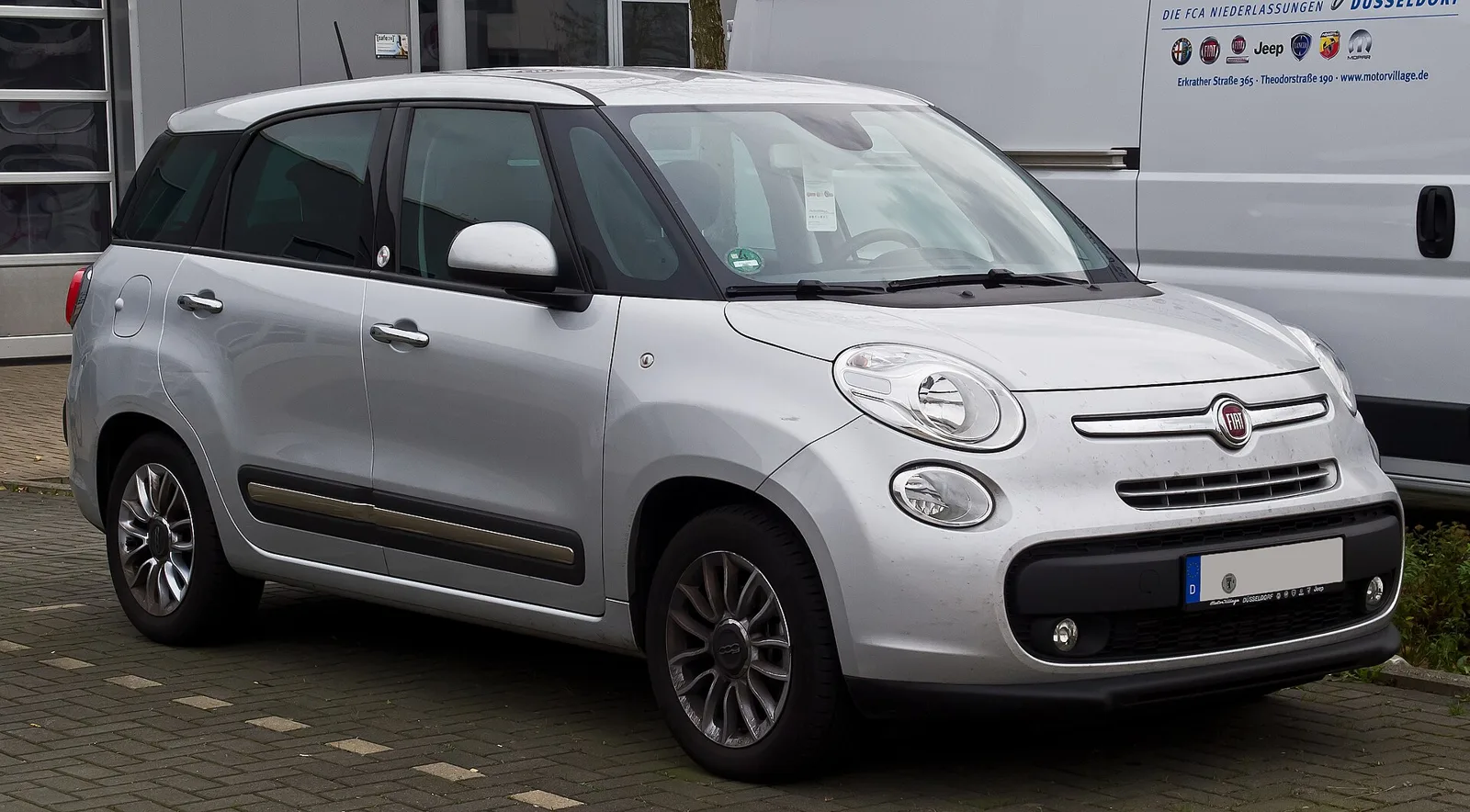
The Fiat 500L was a five-door mini MPV built by Fiat Serbia from 2012 to 2022. It used a high roof, cab-forward layout and flexible cargo system, and it was offered with petrol, diesel and TwinAir engines across most markets.
The Fiat 500L is a five-door mini MPV that Fiat Serbia built in Kragujevac from 2012 to 2022. It rode on a derivative of the FCA Small Wide architecture and started life as a five-seater, with a longer seven-seat version added for Europe. Its name borrows from the 500 family, and the letter L stands for large, light and loft.
Where did the Fiat 500L come from?
The 500L was identified in Fiat's April 2010 product plan as the successor to the Fiat Idea and its rebadged twin, the Lancia Musa. Its internal name was L0, also called Ellezero, and two versions were planned, one with five seats and one with seven.
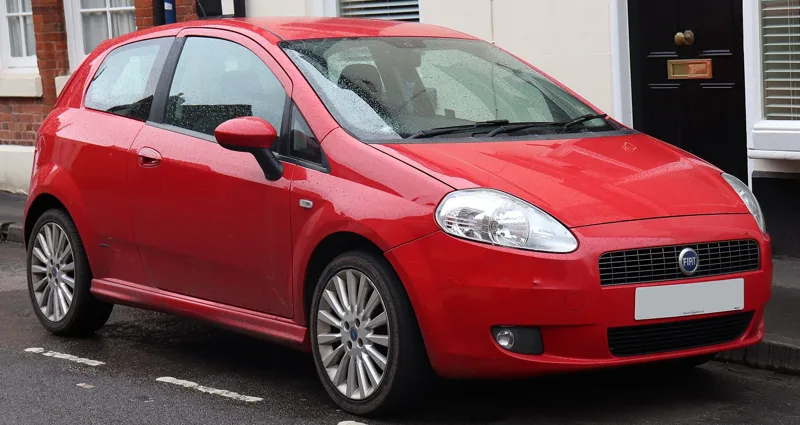
The platform came from Fiat's Small architecture, first used with the Grande Punto in 2005. For the 500L it was made longer and wider to make room for a cab-forward layout, which put more of the car's space into the cabin and less into the mechanical systems.
The packaging followed the Lancia Megagamma concept, which Fiat had commissioned from Italdesign in 1979. Designers also pointed to Le Corbusier's Villa Savoye, a modernist house in Poissy, France, as an inspiration for the overall architecture.
At its debut the car was presented around three themes: Large, meaning an MPV within a 4.1 meter footprint; Light, a light eco-footprint; and Loft, an expansive and lofty interior.
Fabrizio Vacca, a senior interior designer at Fiat's Centro Stile in Turin, described a layered theme. A base sat below a middle section with broad visibility, and a large dual-pane panoramic sunroof could be fitted above.
A high-roofed mini MPV that put passenger and cargo room first, built in Serbia for a decade.
How was the 500L designed?
The 500L was a two-box, high-roof B-segment MPV with a cab-forward layout that gave 3,429 L (121.1 cu ft) for passengers and cargo. A split front pillar and a tall greenhouse opened up the view, and polycarbonate rear windows made it a first for production cars.
The structure used 74 percent high-strength steel, and three front-end load paths were designed to dissipate crash energy. Wide rear door openings and roof pillars that give the driver 90 percent visibility across a 360 degree field of view added to the practical feel of the car.
The interior system marketed as Cargo Magic Space offered a three-level rear cargo floor and a front passenger seat that folds flat. Rear seats could recline for comfort, slide fore and aft to shift room between cargo and people, or fold and tumble forward to clear space.
The car was also tuned for air flow. Its frontal area measured 2.54 m2 (27.3 sq ft) and its drag coefficient was 0.30, helped by a rear spoiler, underbody shields and small lips on the rear side windows that cut dirt build-up on the rear glass.
The optional sunroof measured 1 square metre (10.8 sq ft), the largest in its class. The optional Beats Audio system claimed 520 watts across eight channels, with a subwoofer in the cargo area and digital signal processing to manage the sound.
What engines did the Fiat 500L offer?
Most markets offered 0.9 L TwinAir and 1.4 L petrol engines, plus 1.3 L and 1.6 L MultiJet II diesels. North America had just one engine, a 1.4 L turbo petrol, and the valve timing across the range used Fiat's Multiair technology.
The 1.6 MultiJet II and the 1.4 T-Jet were both rated at 120 PS (88 kW; 118 hp), and both were unveiled at the 2013 Frankfurt Motor Show. A 1.4 turbo LPG version was announced for 2014, although it was due to arrive later.
Transmissions varied by engine. The 1.3 diesel came with a five-speed manual or a five-speed automated manual called MTA Dualogic, while the 1.6 diesel was offered only with a six-speed manual. A methane Natural Power version of the 0.9 TwinAir was sold in selected European markets.
Where was the Fiat 500L built?
The 500L was built at Fiat's Kragujevac plant in Serbia, a joint venture in which FCA holds 67 percent and the Republic of Serbia holds the rest. Production began on 26 May 2012, after the car had originally been earmarked for Mirafiori in Turin.
Between 2010 and 2012, FCA put more than 1B euros and three years into upgrading the site, which had previously been the factory and headquarters of Zastava Automobiles. Fiat Serbia had already inaugurated its renovated facilities in April 2011.
A co-located supplier park housed works for Magneti Marelli, Johnson Controls and Draxlmaier, while further suppliers operated in the nearby Grosnica park. The arrangement kept much of the car's parts supply close to the assembly line.
Most output was exported. Roughly one percent stayed in Serbia, and 90 percent left through the port of Bar in Montenegro. In 2013 a ship carrying the first 3,000 units for North America docked at Baltimore before delivering the rest of its cargo to Halifax.
What changed in the 2017 facelift?
For the 2018 model year, all models received revised exterior styling and interior updates. A TFT colour instrument screen replaced the monochrome LCD, and a new Uconnect 4C 7.0 system took over from the earlier units. The seven-seat car was renamed the Wagon.
The new unit added an AM-FM tuner with Radio Data System and SiriusXM Satellite Radio. Engine and transmission choices differed by market, and the Aisin six-speed automatic became the only transmission for North America.
The Trekking was renamed the Cross Look in the update. The French market used Cross, then City Cross, before the name was shortened to plain 500L.
Which trims and versions were sold?
The 500L started in the US in 2014 with four trims: Pop, Easy, Trekking and Lounge. Those were cut to three from model year 2017, while other markets used names such as Sport in Canada and Pop Star in Europe.
The entry trim, usually sold as Pop, came with electric windows and door locks, a Uconnect 5.0 system with a 5-inch touchscreen, hands-free calling and Magic Cargo Space. Upper trims added satellite navigation, leather, heated front seats, a 6.5-inch Uconnect system and fog lights.
In 2013 Fiat began selling a longer seven-seat version in Europe as the 500L Living, known as MPW in Ireland and the UK. It was developed under project code L1, Elleuno, or design code 351.
How safe was the Fiat 500L?
The 500L had disc brakes on all four wheels and was tested by the Insurance Institute for Highway Safety, which gave the 2014 model a Top Safety Pick award. The body also complies with international safety standards, and its frame carries a large share of high-strength steel.
No European crash rating is cited here, so readers who want that detail should check the Euro NCAP results for the model directly. The IIHS award is the only formal safety recognition covered in this profile.
How well did the Fiat 500L sell?
The 500L was the best-selling car in Serbia in 2013 and again from 2015 to 2017. By early 2018 production had reached 500,000 units, and most of the cars built in Kragujevac were sent abroad, which made the plant a major export hub.
Serbia is not included in the Europe-wide figures, so the national totals sit alongside the regional ones rather than inside them. That distinction matters when comparing the car's sales across markets.
Why did the Fiat 500L leave the market?
The car's withdrawal happened in stages. It ended in North America after model year 2020, the seven-seat version ended in 2021, and the car had already left the United Kingdom in mid-2018 and France in late 2019. No single cause is recorded for the exits, so the pattern reads as a market-by-market retreat.
Production in Serbia had run for almost a decade by the time the seven-seat version was dropped.
Marketing, concepts and special editions
At launch Fiat published a 96-page, multi-language book tracing the car's design. For the US introduction, the Doner agency made a commercial called 'Italian Invasion' in Old Salem, North Carolina, starring Bryce Pinkham, in which Paul Revere spots an Italian invasion rather than a British one.
A 2013 commercial for the Trekking, made by Leo Burnett, promoted the car's suitability for everyday adventuring. Fiat 500L models were also used by the Italian team at the 2014 Sochi Winter Olympics.
FCA donated eight dark grey 500Ls for Pope Francis's 2015 visit to the United States. The Pope rode in two of them, and afterwards the cars went to organisations involved in the visit, including the archdioceses of Washington, Philadelphia and New York.
At the 2013 SEMA Show two concepts followed a surf-and-turf theme. The Adventurer was a white five-seater with Mopar roof rails and a roof basket, while the Thalassa was based on the 2012 Fiat 500 Beach Cruiser, with orange bodywork and 18 inch orange wheels.
The 2014 Beats Edition was produced with Dr. Dre and Jimmy Iovine. It had a two-tone grey and black livery, came in matt or gloss finish and went on sale in Italy in spring 2014 before reaching other markets.
The 500L was also the first production car offered with an optional in-vehicle espresso machine. In 2021 a Google Assistant series arrived for the 500 family, letting owners make voice requests from their phone or a Google Nest Hub.
Fiat 500L specifications
| Specification | Detail |
|---|---|
| Body | Five-door mini MPV, high roof |
| Built | Kragujevac, Serbia, 2012 to 2022 |
| Platform | Derivative of the FCA Small Wide architecture |
| Volume | 3,429 L (121.1 cu ft), passengers and cargo |
| Structure | 74 percent high-strength steel |
| Frontal area and drag | 2.54 m2 (27.3 sq ft); drag coefficient 0.30 |
| Sunroof | 1 square metre (10.8 sq ft), largest in class |
| Petrol engines | 0.9 L TwinAir two-cylinder; 1.4 L four-cylinder |
| Diesel engines | MultiJet II units of 1.3 L and 1.6 L |
| 120 PS engines | 1.6 MultiJet II and 1.4 T-Jet, 120 PS (88 kW; 118 hp) |
| Transmissions | Six-speed manual, DCT or Aisin six-speed automatic |
| Seven-seat version | 500L Living, Europe from 2013 |
| Audio | Optional Beats Audio, 520 watts, eight channels |