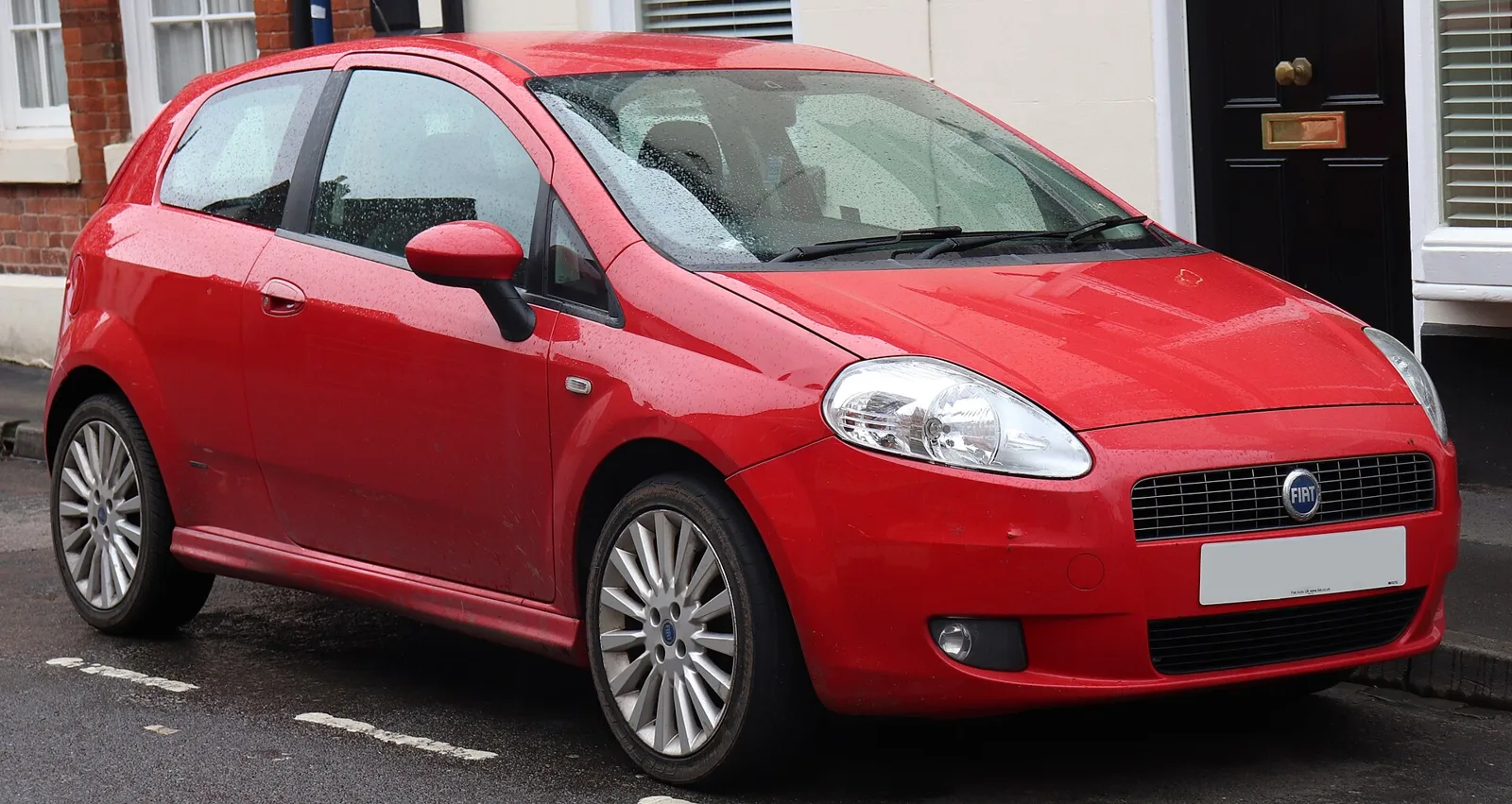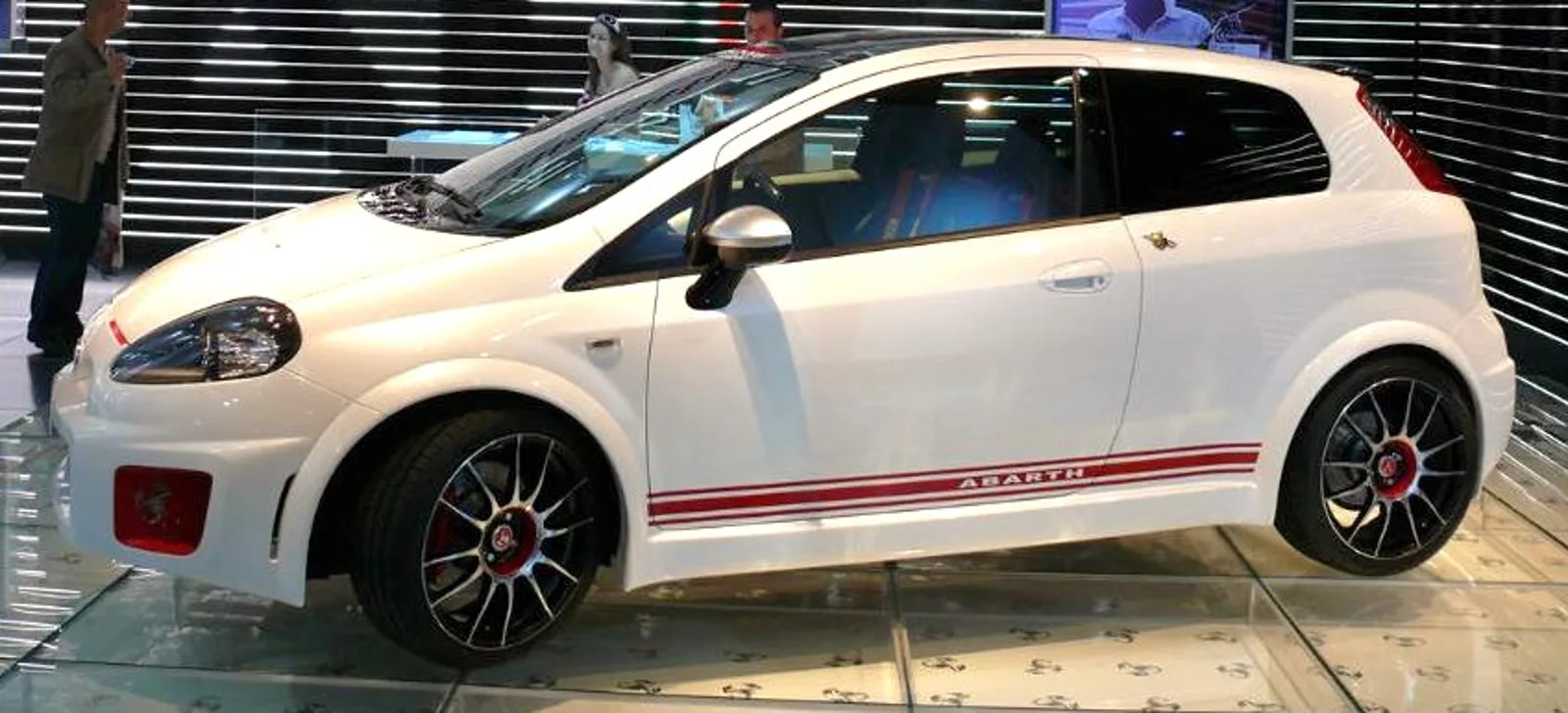
T-Jet engines, the Assetto and Essesse packages and the Scorpione edition, built from 2007 to 2014.
The Abarth Grande Punto was a Fiat-based sports car developed with Abarth and produced from 2007 to 2014. Its T-Jet engine produced 155 PS, rising to 180 PS with a special kit, and the range included the Punto EVO, SuperSport and Scorpione.
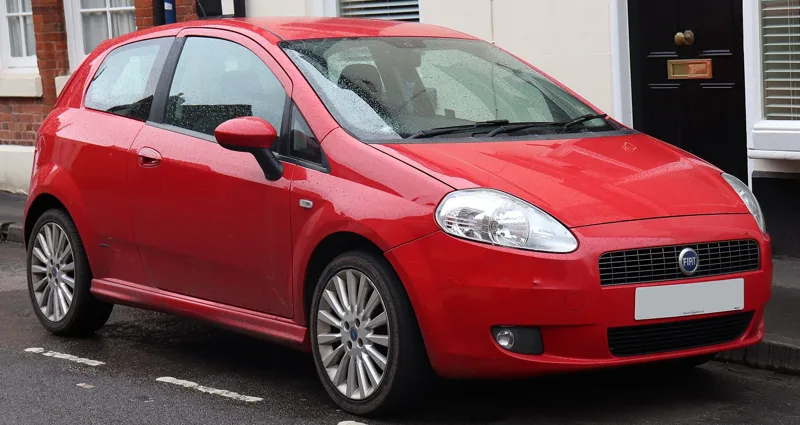
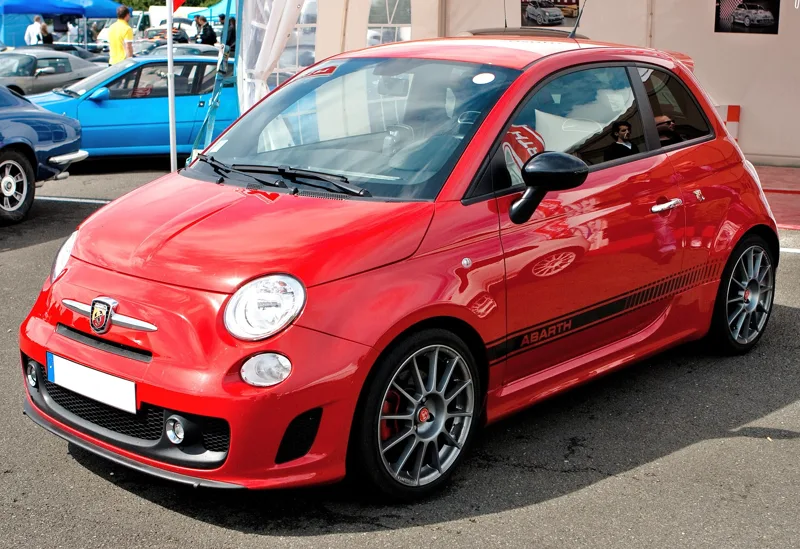
Between 2007 and 2014 Fiat and its performance division Abarth built the Grande Punto Abarth, a subcompact B-segment car numbered Project 199. It was an uprated Fiat Grande Punto, fitted with an engine developed by Abarth and with body parts that added a sporting look and steadier handling on the road.
Where did Abarth come from?
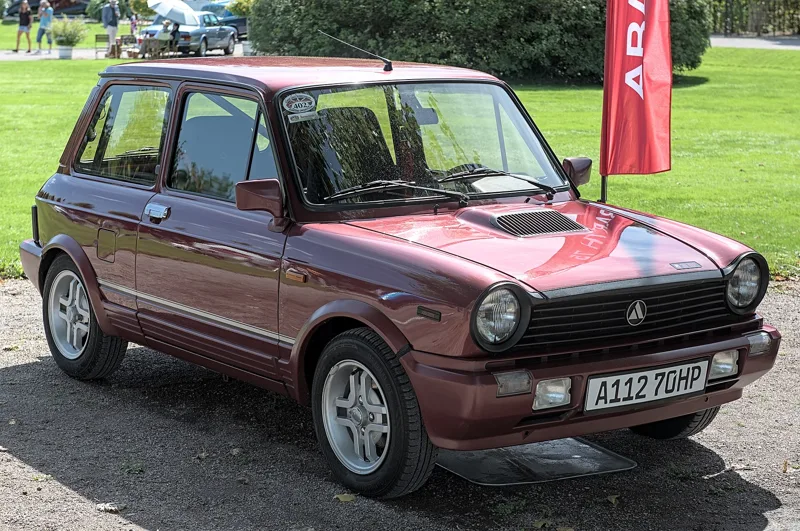
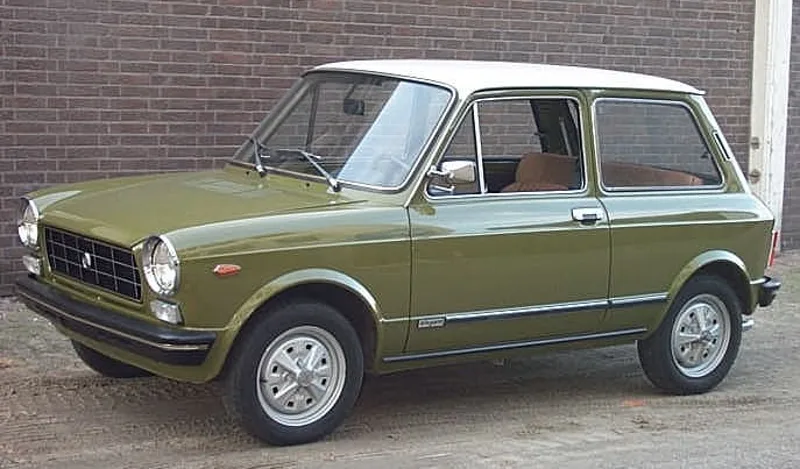
Abarth was an Italian house known for experimenting with and producing high-performance cars, and at first it worked from the production lines of makes such as Ferrari, Simca and Porsche. Fiat acquired it in 1971, after which it became the brand for Fiat's exclusive sports developments.
Its work for Fiat covered the 600, which became the Abarth 1100, the 124 and 131, and in the twenty-first century the 500 and the Grande Punto. Basically, the work meant preparing the engine so that it could make more power than it left the factory with, then adding parts that made the car look and feel sporty.
A Fiat subcompact that Abarth turned into a true street sports car with reworked engines and sporty body parts.
What made the Grande Punto an Abarth?
Abarth gave the Grande Punto its character through engine work and extra body parts. The T-Jet engine was developed by Abarth, and side skirts and a rear spoiler were added to improve stability on the road. Abarth's general method also included air intakes and sports wheels on its cars, which it described as true street sports cars.
How much power did the Abarth Grande Punto make?
The standard car produced 155 PS (153 hp; 114 kW) from a 1,368 cc (1.4 litre; 83.5 cu in) T-Jet engine. A special kit raised the output to 180 PS (178 hp; 132 kW), and the Essesse package reached the same figure through its own equipment.
The T-Jet was of Fiat origin, but Abarth developed it further. The weight figures tell the rest of the story. Power-to-weight improved from 10 kg/PS to 6.3 kg/PS in running order, a large step up on the Fiat Grande Punto.
What did the Assetto and Essesse packages do?
Assetto was built for stability and Essesse for performance. Assetto added lower springs, drilled brake discs, performance pads and 18-inch (45.7 cm) alloy rims shod with 215/40 R18 tyres. Essesse brought a turbocharger, specific injectors, an air filter, a clutch assembly, a dual-outlet exhaust and special software.
With Essesse fitted the car produced a maximum torque of 270 Nm (199 lb ft) at 3,000 rpm and reached a top speed of around 215 km/h (134 mph).
How safe was the Abarth Grande Punto?
The Grande Punto carried six airbags covering the front, sides and head. Its safety equipment also included a brake servo with ABS assistance and HBA, electronic stability control, traction control, electronic brake force distribution, Hill-Holder and three-point ISOFIX anchorages.
Abarth treated the safety of the driver and passengers as one of the most important parts of its work on this car.
What did the Punto EVO change?
Shown at the 2010 Geneva Motor Show, the Punto EVO was the next step for the Grande Punto. Its main change was a new T-Jet with MultiAir technology, an electro-hydraulic system that controls the intake valves, paired with a GT1446 turbocharger that gave 165 PS (163 hp; 121 kW) as standard.
The body was reworked as well. The front had deeper air intakes and a more aggressive look, while the rear kept the previous diffuser and changed almost everything else. A larger rear spoiler was painted in body colour, side air intakes were added, and the reversing lights and fog lamp moved to the centre of the diffuser.
Inside, a glossy black LCD screen sat in the audio area, separate from the air-conditioning controls. The EVO also offered a driving-mode selector. In the sporty setting Torque Transfer Control switched on automatically, and a GSI indicator told the driver when to change gear.
Safety moved on too, with seven airbags including a new set for the knees, and disc brakes on all four wheels. The front suspension was independent and the rear semi-independent.
Why did production end in 2014?
Production of the Punto EVO ended in 2014, owing to low sales and weak demand in its final years. The Grande Punto as a whole was built from 2007 to 2014.
How fast was the Punto SuperSport?
The Punto SuperSport was even sportier and more radical than the EVO. It reached a top speed of 216 km/h (134 mph) and accelerated from 0 to 100 km/h (62 mph) in 7.5 seconds. It sat above the Punto Evo in the range and was the first series-production Abarth to make 180 PS (178 hp; 132 kW) at 5,750 rpm.
Buyers could have the roof and bonnet painted and hand-polished, or choose gloss or matt finishes for them. The car ran 17-inch (43.2 cm) diamond-cut alloy wheels, with ventilated front discs, solid rear discs and brake calipers of its own. Grey Campovolo paint was the colour that distinguished it from the rest of the range.
Power went through a six-speed manual gearbox to the front wheels. The driver chose Sport or Normal, and Sport changed the engine, steering and brakes. Torque Transfer Control acted as a front limited-slip differential, braking the inside wheel in corners. Start and Stop came as standard with a recommended gear indicator.
The cabin offered automatic climate control and Blue and Me audio, with controls on the steering wheel itself. Fabric sports seats came with a leather-rimmed wheel, while stainless steel pedals and sill plates were part of the standard trim. The FSD suspension package was one of the extra choices. Perforated mats with an electro-welded emblem and a chrome-effect plate on the climate control console added to the exclusive detailing.
What was the Punto Scorpione?
The Punto Scorpione was a special edition based on the 2012 Fiat Punto, limited to 199 units. It used the MultiAir engine with a six-speed manual gearbox and 270 Nm (199 lb ft) of torque, and in Italy it was also sold as the Supersport.
Its body came in several shades of black, with a roof and bonnet split by a line that recalls 1960s racing cars. Front discs were 305 x 28 mm (12.0 x 1.1 in) and rear ones 264 x 11 mm (10.4 x 0.4 in), gripped by two-piston calipers in red or yellow. The first 100 cars had red calipers and the remaining 99 had yellow.
The Scorpione ran wheels finished in glossy black, with specially calibrated dampers and shortened springs that lowered the body, and its exhaust was oversized in the central section. Inside it had automatic climate control, Blue and Me audio, sports seats from a specialist maker and watches made by a long-established watchmaker, a maker that had already worked with the brand in racing in the mid-20th century.
How does the Grande Punto fit Abarth's history?
Abarth's development consisted of preparing the engines of Fiat models so they could deliver more power, and the Grande Punto continued that line with engine work and sports parts. The same method appears in the earlier Fiat 600 and 124, and in the Fiat 500 and Grande Punto of the twenty-first century.
The Scorpione applied the approach to a special look. Taking the 2012 Fiat Punto as its base, the edition used a racing-inspired roof line, special colours and a limited run of 199 units. In Italy the car was also sold under the Supersport name.
Specifications at a glance
| Specification | Detail |
|---|---|
| Engine | 1,368 cc (1.4 litre; 83.5 cu in) T-Jet |
| Output, standard | 155 PS (153 hp; 114 kW) |
| Output, special kit | 180 PS (178 hp; 132 kW) |
| Torque, Essesse | 270 Nm (199 lb ft) at 3,000 rpm |
| Top speed, Essesse | Around 215 km/h (134 mph) |
| Top speed, SuperSport | 216 km/h (134 mph) |
| 0-100 km/h, SuperSport | 7.5 seconds |
| Fuel use, Scorpione | 6 L/100 km (16.7 km/L; 39.2 mpg-US) official combined |
| Power-to-weight | 10 kg/PS to 6.3 kg/PS |
| Scorpione | Limited to 199 units |