Carlo Abarth's engine work, seven series of development and a one-make trophy that gave young drivers their start.
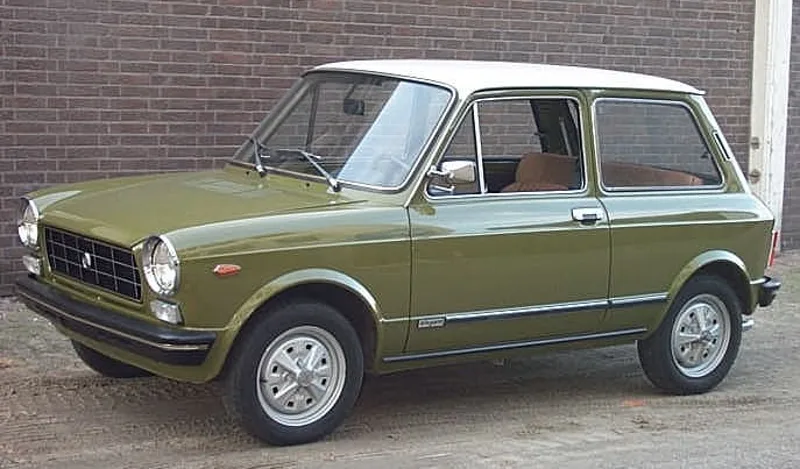
An Abarth-tuned version of the Autobianchi A112, built in seven series from 1971 to 1984. It used a 982 cc engine in its first series and a 1,049 cc unit later, and about 121,600 examples were produced before sales ended in 1985.
The Autobianchi A112 Abarth was a sporty small car built from 1971 to 1984 and sold until the summer of 1985. It was born as a counter to the Mini Cooper, and Carlo Abarth heavily reworked its engine. Across seven series it grew more refined, and it kept a loyal clientele for years.
Why was the A112 Abarth built?
The Autobianchi A112, a Fiat group car, had dealt a hard blow to the supremacy of Innocenti's Mini among small luxury cars. Innocenti answered with the Mini Cooper MK3, aimed at men who would pay more to look sporty. Carlo Abarth's 1970 prototype gave form to the idea of countering it with a sporty A112.
The A112 had proved a hit in a segment aimed at young people and women, who liked its ease of driving, its elegant finish and its rear hatch. Innocenti could not produce a new rival quickly, so it turned to a Mini for buyers who were prepared to spend more for a prestigious sporty image.
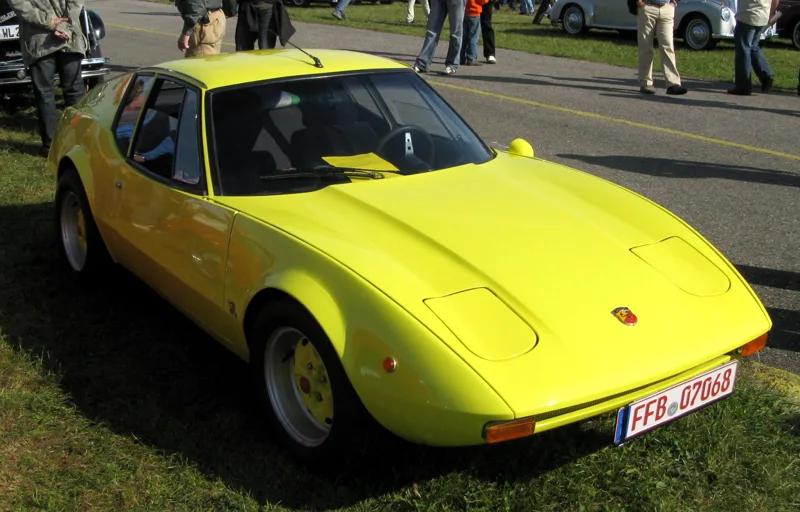
The 1970 prototype was Carlo Abarth's last independent creation. Shown at the Saloncino dell'auto sportiva, it used a radial-head valve layout, produced 108 PS (107 hp; 79 kW) and reached more than 180 km/h (112 mph). The specialist press gave it unanimous approval.
Abarth hoped FIAT would back small runs of cars for private drivers, which would have restored the scorpion brand financially. The Turin company rejected the idea of an expensive racing car, but it accepted Abarth's solutions for a sporty road version of the A112. Two FIAT-built prototypes were first driven on the road in January 1971, while the company was buying Abarth.
A small Fiat built to counter the Mini Cooper, with a 982 cc Abarth engine and seven series of development.
How much did the first series cost?
The first series was shown at Turin in October 1971 and drew a large number of orders. It cost 1,325,000 lire, slightly below the Innocenti Mini Cooper MK3 at 1,365,000 lire. Its price sat above the NSU 1200 TT at 1,215,000 lire and the Ford Escort Sport at 1,185,000 lire.
It was also priced above the Fiat 128 Coupe at 1,300,000 lire and the 128 Rally at 1,220,000 lire. Those two were contemporary and very modern cars.
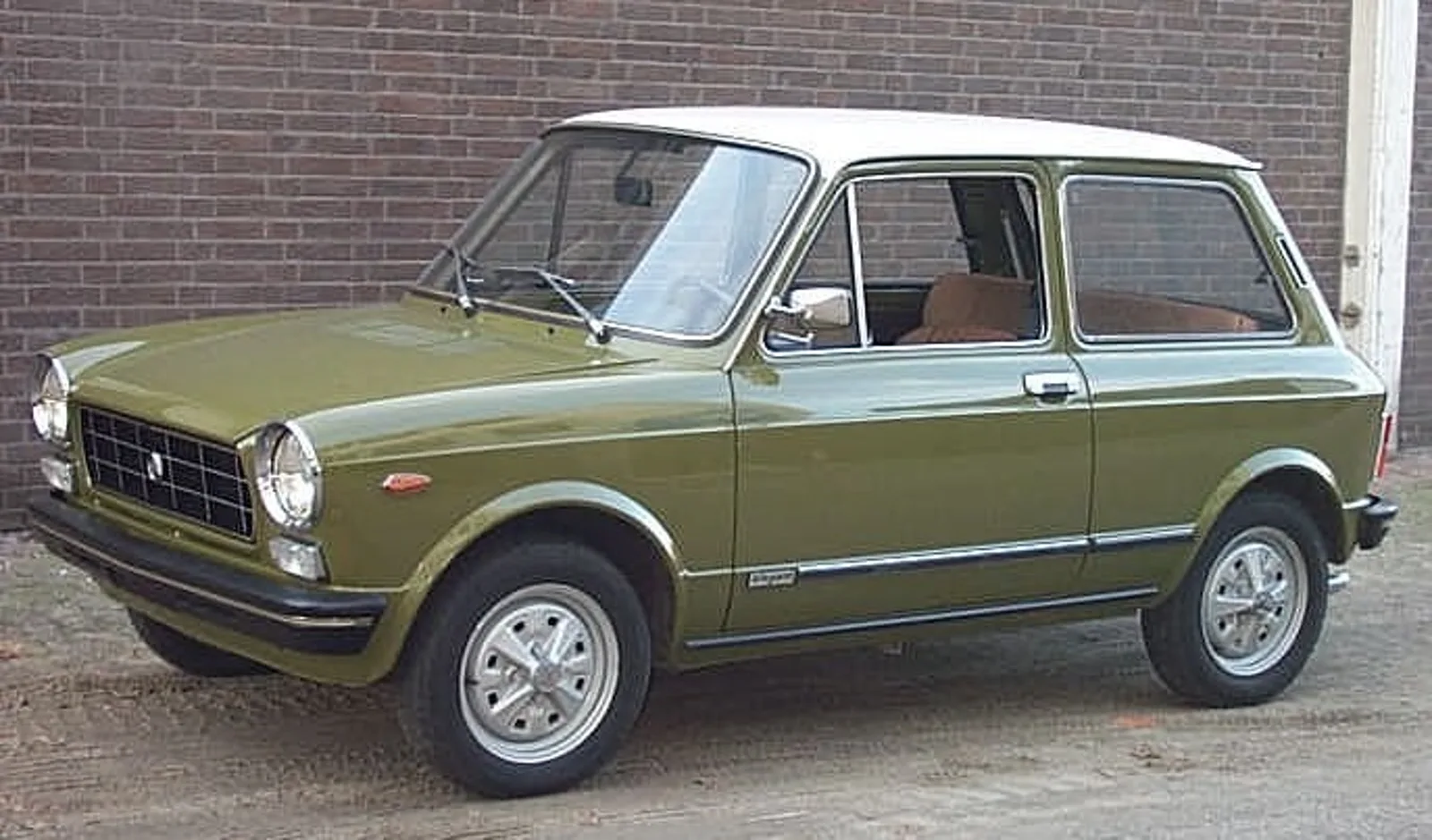
The outside was finished in racing red, with a matt black bonnet and sill bands. The cabin was hand-finished, with a complete set of dials, contoured seats with headrests and a leather-rimmed three-spoke wheel. The bodyshell itself stayed the same as the standard A112.
What did Abarth do to the engine?
Abarth enlarged the 903 cc engine to 982 cc (59.9 cu in), raised compression to 10:1 and fitted a twin-body carburettor. Power was held to 58 PS (57 hp; 43 kW) so that the unit stayed flexible and durable, and a later 1,049 cc engine made 70 PS (69 hp; 51 kW).
The work was thorough. Abarth lengthened the stroke, fitted a nitrided steel crankshaft and moulded pistons with chrome rings, and redesigned the camshaft and the valve seats. The exhaust was modified too, and the braking system gained larger calipers on the front discs.
The results went beyond the figures. Acceleration and top speed rose sharply, while fuel consumption fell by 15%, a result that almost looked like a miracle at the time. The first examples had occasional overheating of the engine oil, despite an aluminium sump, and a small oil radiator arrived in April 1972 to solve the problem.
What changed in the second and third series?
The second series, shown at Geneva in 1973, kept the mechanics and changed the trim. It gained reclining seats with adjustable headrests, lost the black sill bands and chrome frames, and swapped chrome bumpers for larger black rubber ones. Its base price was 1,506,400 lire.
Headlights were fitted with iodine lamps, and buyers could add light-alloy wheels, a mechanical alarm or a rear-window heater. Besides the two-tone red and black finish, solid beige, orange-salmon, mink grey and president blue were on offer. The second series sold 13,759 examples.
The third series arrived in early 1975. New rear light clusters and larger air outlets on the rear pillars marked it out, and the 1,049 cc engine with 70 PS sat beside the earlier 58 PS unit. The 70 PS version reached 160 km/h (99 mph), and the revised rear compartment allowed five-seat approval.
Why is the fourth series called the square roof?
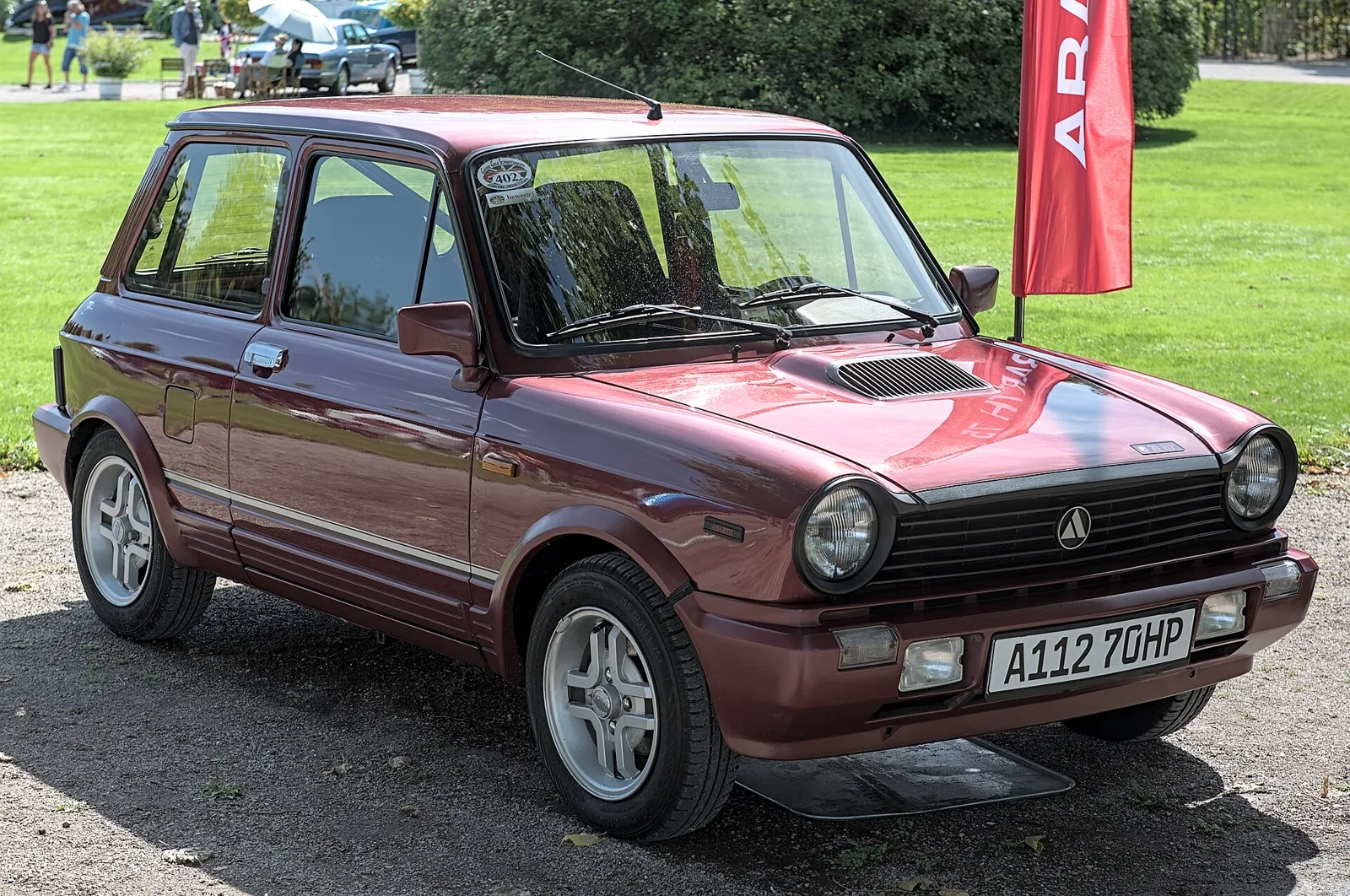
The fourth series, presented in November 1977, was the big technical turn. It used a new monocoque called B2, built specially for the A112 Abarth, and its roof was raised by 2 cm. Owners and the public came to call the cars from that point the square roof, and the earlier models the round roof.
The taller roof reflected the greater height of the newer generations of Italians. The bodywork gained a bold air intake on the bonnet, side bumper strips and a front bumper with a spoiler. The Autobianchi Abarth lettering with its two grille roundels was dropped.
Mechanically the gearbox received stiffer springs to handle the extra power. The brakes were strengthened and gained a pump with differential action, in place of the earlier brake servo on the front discs. The 58 PS model left production with this series, and the 70 PS version was sold from January 1978 at 3,894,000 lire.
What happened in the fifth to seventh series?
The fifth series, presented in July 1979, focused on comfort rather than sport. It adopted a five-speed gearbox and electronic ignition, and its standard equipment grew richer. The sixth series brought minor cosmetic changes in 1982, and the seventh, in 1984, was the last update.
The move towards civilised motoring was symbolised through the removal of the Abarth scorpions from the flanks in the fifth series. Standard kit grew to include rear fog lamps, a mirror adjustable from the cabin, a heated back window, heat-absorbing glazing, a rear wiper and a split back seat.
The sixth series was shown at the Paris Motor Show in October 1982. It kept the mechanics unchanged, offered metallic dark green 382 among its colours and went on sale at 8,190,000 lire, six times the initial price. The seventh series had a large rear reflective strip with the word Abarth screen-printed on it.
How many A112 Abarths were built?
About 121,600 Abarth versions were built between 1971 and 1984, close to 10% of all A112 production. The first series is the rarest at 4,641 cars, while the fifth series, at about 33,000, is the largest single run. Those totals were recorded across seven series.
| Series | Years | Base price (lire) | Units built |
|---|---|---|---|
| First | 1971-1973 | 1,325,000 at launch | 4,641 |
| Second | 1973-1975 | 1,506,400 | 13,759 |
| Third | 1975-1977 | 2,172,000 (58 PS); 2,228,000 (70 PS) | About 29,000 |
| Fourth | 1977-1979 | 3,894,000 from January 1978 | About 26,000 |
| Fifth | 1979-1982 | 5,469,000 | About 33,000 |
| Sixth | 1982-1984 | 8,190,000 | About 10,000 |
| Seventh | 1984-1985 | 9,906,000 in spring 1984 | About 5,200 |
Sales were falling by the early 1980s. A FIAT study found that 72% of those who bought an A112 Abarth in the eighties had owned an earlier version. That loyalty, combined with delays on a successor, pushed the company towards yet another restyle. Production ended in December 1984.
Did the brakes and handling keep pace?
Braking improved in hardware but not in distance. Larger front calipers and a brake servo came with the car, yet stopping distances rose slightly. Fourth-series cars added a stronger brake setup with a differential-action pump and stiffer gearbox springs. The change was modest, but it was real.
How did the A112 Abarth perform in competition?
The A112 Abarth raced almost as soon as it went on sale. The first sporting homologation dates from March 1972, and the final one ran out in December 1990. It appeared in every closed-wheel category, driven by professionals and amateurs, and it is still used in hill climbs and in rallies for historic cars.
The competition life of the car lasted almost twenty years without interruption. Drivers at every level used it, which built a record that remains impressive for a model derived from a mass-market small car.
What was the A112 Trophy?
The A112 Trophy was a one-make championship that FIAT decided in the mid-1970s to organise, officially named the Autobianchi A112 Abarth 70 HP Championship. It ran from 1977 to 1984 and aimed to let young drivers race at modest cost. Its events often served as introductions to Italian Rally Championship races.
Each car was prepared with a safety kit that included a roll bar, a fire system, safety belts, extra headlights and an oil sump guard. The Trophy became a real breeding ground for young drivers, and several of them went on to national and international fame.
Attilio Bettega, Michele Cinotto and Gianfranco Cunico were among the names that came out of the championship. Paola de Martini was the standout entrant in the women's series.