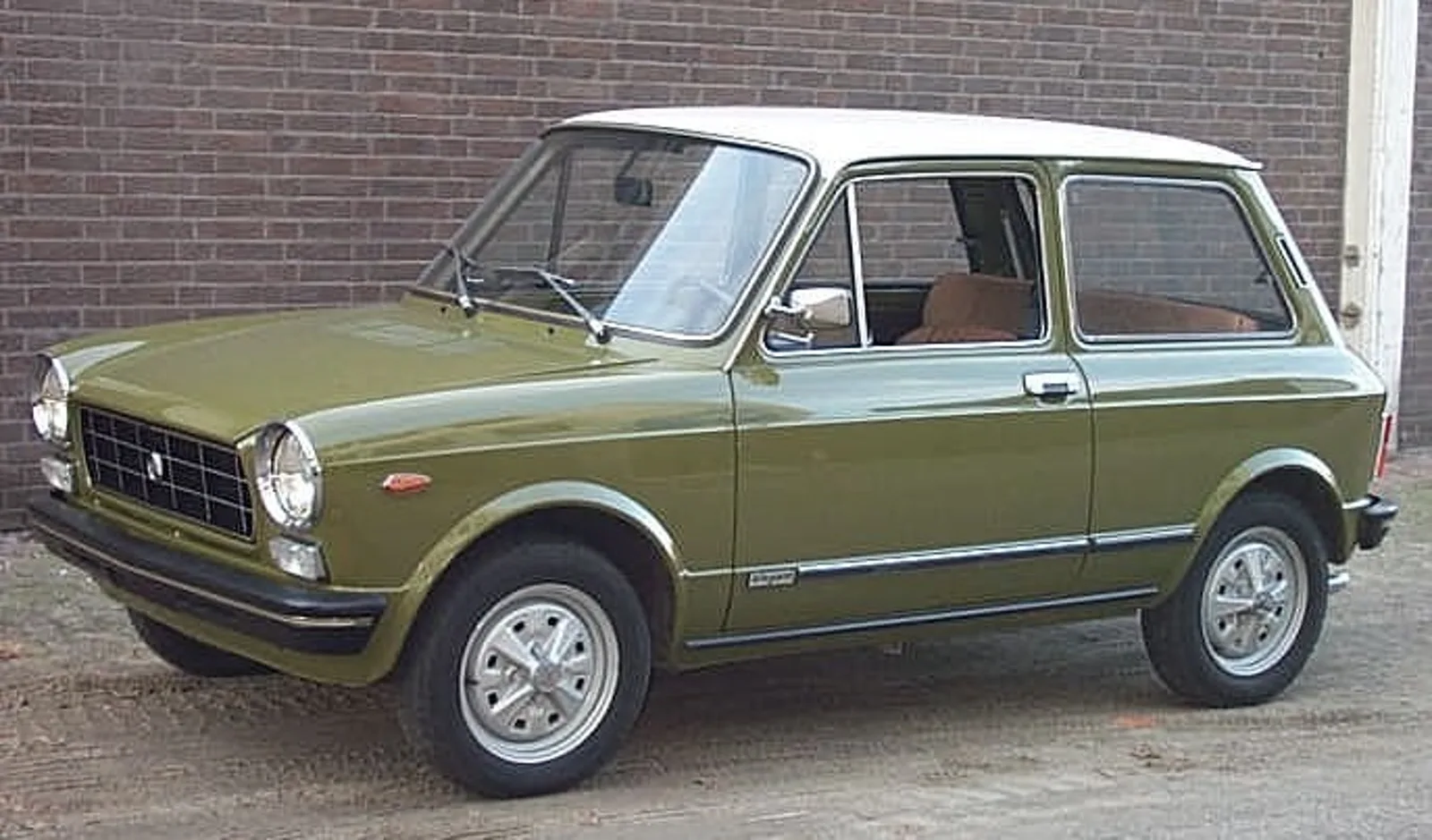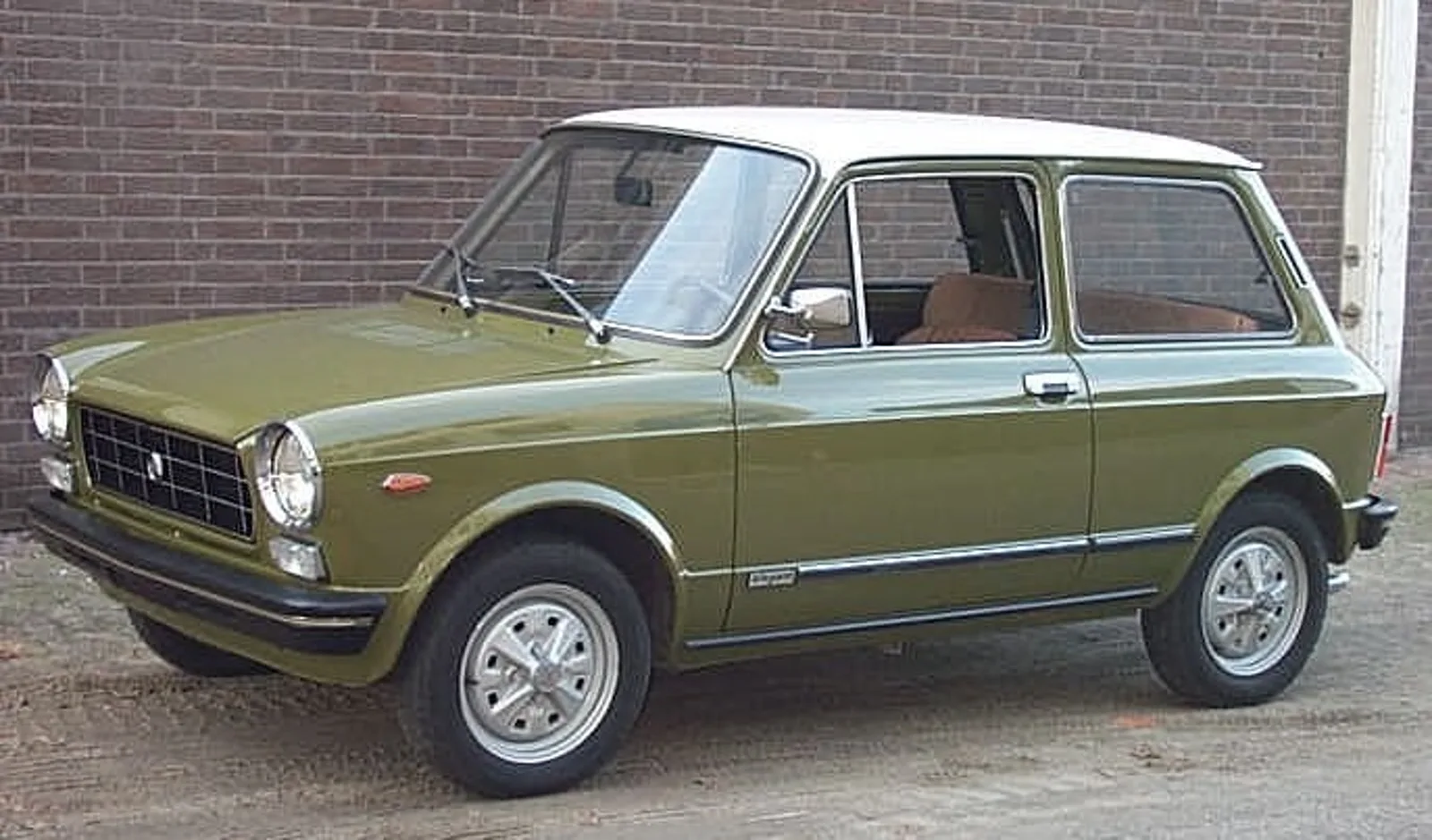
A Fiat-derived three-door hatchback from 1969 that sold over a million units, spawned an Abarth legend and outlived its maker's own plans.
Launched in November 1969 to replace the Bianchina and Primula, the A112 was a three-door supermini derived from the Fiat 128. Its 903 cc base engine and 1,050 cc Abarth variant made it a performance favourite, with over 1.2 million built.
The Autobianchi A112 was a three-door supermini built by the Italian marque Autobianchi from late 1969 until 1986. It borrowed its underpinnings from a shrunken Fiat 128, and its mechanicals later formed the basis of the Fiat 127. More than 1.2 million were built at the company's Milan factory, and the Abarth versions made it a legend among performance enthusiasts.
Where did the A112 come from?
The A112 was developed using a shrunken version of the Fiat 128 platform. It was introduced in November 1969 as the replacement for the Bianchina and the Primula, two smaller models that Autobianchi had built in earlier years. It was built at the Milan factory, which later produced more than 1.2 million examples.
The car was among the first modern three-door hatchbacks produced in Europe. It arrived 18 months before the Fiat 127, which went on to be the more successful car, and it set the template for the supermini segment that followed.
At launch the A112 competed with booted small cars such as the Mini, the Citroen 2CV, the Renault 4 and the Hillman Imp. The shift toward hatchbacks in the 1970s brought a wave of rivals, and the A112 later faced the Ford Fiesta, the Peugeot 104, the Vauxhall Chevette, the Volkswagen Polo and the Datsun Cherry.
The A112 found a particular audience. By 1984 female buyers made up 35% of owners, and about a third of owners were aged between 18 and 24, which marked it out from more traditional small-car buyers of the era.
A Fiat-derived three-door with a small engine, a big following and an Abarth that became a rally legend.
What engine did the A112 use?
The A112 was offered with an OHV engine of 903 cc from the Fiat 850, rated at 42 PS (31 kW). It was the first front-engine, front-wheel drive use of that engine family, a layout that later became familiar to many drivers through the Fiat 127 and its derivatives.
Claimed power rose to 47 PS (35 kW) in 1971, but the mechanics had not changed, and performance stayed the same. The figure was most likely a correction to the original claim rather than a genuine gain in output.
Every engine in the range was a pushrod unit derived from the old Fiat 100 series, which had first appeared in the Fiat 600. That lineage tied the range to a long-running engine design.
The 1976 emissions changes cost the Elegant two horsepower, leaving it at 45 PS (33 kW). The Nuova A112 of 1977 then gave the Elegant a 965 cc engine rated at 48 PS (35 kW) with improved torque, which marked the first real step up for the upmarket version.
How did the A112 change through its generations?
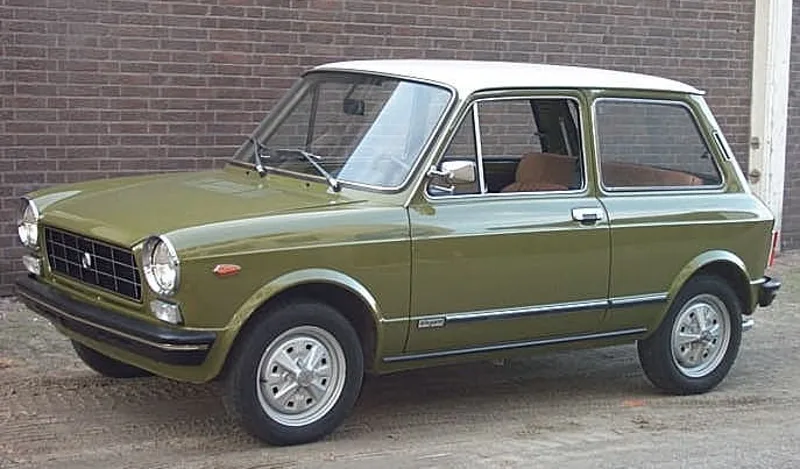
The first series ran from October 1969 to March 1973, and the second from March 1973 to early 1975. The second series brought a new grille with a larger mesh, rubber bumpers with chrome inserts and new alloy wheels. The Scorpion badges on the flanks disappeared, and the upholstery moved to a chess-pattern design.
The third series arrived in 1975 with the rear seating recontoured, so the car became a five-seater rather than a four-seater. The easiest way to spot one is the much larger vents on the C-pillars, along with redesigned taillights that included reversing lights on the Elegant and Abarth.
The fourth series, introduced in November 1977, brought a slightly taller roof with a marked edge along its sides. That change improved interior habitability considerably, and the car was also sold as a Lancia A112 in some markets from the end of 1977 onward.
The fifth series of July 1979 added large black plastic cladding on the rear, a new grille and larger extractor vents behind the rear side windows. The front turn signals moved from the fenders to a spot just ahead of the doors, and the Normale became the Junior while the Elite was added above the Elegant.
The sixth series appeared in the autumn of 1982. Many of the plastic excesses of the fifth series were removed, and the interior was completely renovated. The LX brought tinted windows, velvet seat trim, power windows, metallic paint and a digital clock, and it was the first A112 sold with Lancia badging, initially in Sweden and Switzerland.
The seventh series of 1984 changed little, and by then a total of 1,115,000 A112s had been built. The taillights were redesigned again, a reflective strip was added, and most models received full-face hubcaps. By that point only France, Italy and Israel still used the Autobianchi badge, and the rest of the market had moved to Lancia.
When the Autobianchi Y10 arrived in 1985, the A112 range shrank to a single low-priced model, the Junior, now marketed simply as the A112. Production continued into 1986, by which time 1,254,178 cars had been built.
What was the A112 Abarth?
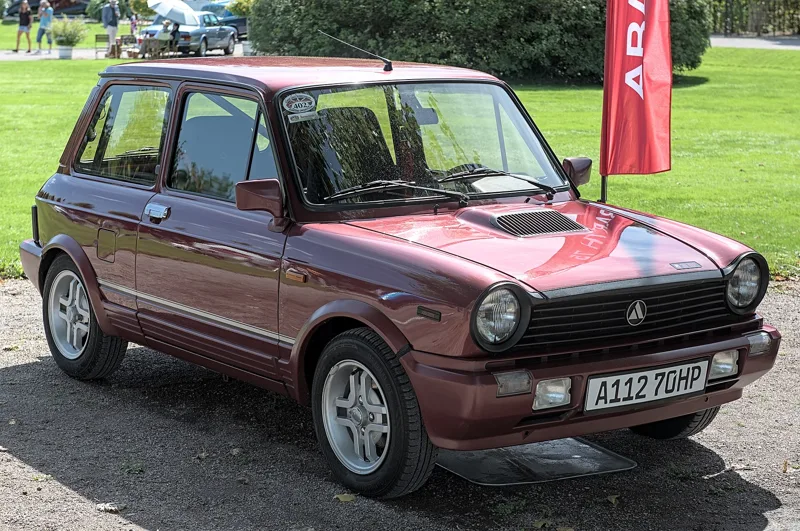
The sportiest version was the A112 Abarth, introduced in September 1971 alongside the Elegant and prepared by the motorsport division of the Fiat Group. It began with a 982 cc engine, a sporting exhaust, a twin-choke carburettor and a different camshaft.
In 1975 the Abarth gained a 1,050 cc engine, and power went up from 58 PS (43 kW) to 70 PS (51 kW), peaking at 6600 rpm. The Abarth weighed only 700 kg (1,543 lb). It was also the first A112 to offer a five-speed manual, which made it a nervous machine that young performance enthusiasts admired.
Both Abarth engines were sold together, and the smaller unit was dropped in late 1976. From March 1979 the French and Swiss Abarths came with a standard five-speed transmission, which helped reduce noise and fuel consumption at higher speeds.
Many Abarths led hard lives, because young owners who drove aggressively tended to prefer them. Formula One driver Olivier Panis is one of many people who have crashed one, a fact that says as much about the car's character as it does about its drivers.
Did the A112 race in rallying?
The Abarth was entered in rallying events throughout Europe, and it spawned a one-make championship. The Campionato A112 Abarth ran for eight editions from 1977 to 1984 under Group 1 rules, which meant cars that were close to standard. Keeping cars near stock kept the series accessible to privately run entries.
Several well-known Italian rally drivers took titles in the series, including Attilio Bettega, Fabrizio Tabaton and Gianfranco Cunico. Interest in the car on historic rallies and hillclimbs brought a new one-make series back in 2010, under the Trofeo A112 Abarth name.
What was the A112 Giovani?
The A112 Giovani was a one-off concept based on the A112 and designed by Diego Ottina at Pininfarina. It debuted at the 1973 Geneva Motor Show, and its engine was the 982 cc Abarth unit producing 58 bhp (43 kW) and 54 lb ft (73 N m) of torque.
The name means youth in Italian, and the car was meant as an entry-level sporty model for younger buyers. It had a targa roof with a removable plastic hardtop and an integrated roll bar, and its body was made mainly from composite plastics, with a radiator grille shaped like the Autobianchi logo.
The trunk lid had no external latch, so it could only be opened from inside the passenger compartment. The seats used semi-soft plastics of the kind often seen in boats. The Giovani is now held by the Italian collector Corrado Lopresto.
Why did the A112 end?
The A112 was run down as Autobianchi introduced the Y10 in 1985. The Y10 was sold in Britain as a Lancia, and it was offered in right-hand drive for the British market from 1985, though it was not a strong seller there.
The A112 was never offered in Britain, despite its popularity across the continent. Fiat did enjoy considerable success there with the 127 and later with its Uno successor from 1983, which made the A112's absence notable.
By 1986, 1,254,178 A112s had been built, and output of more than 1.2 million units defines the model's scale.
Were there special-bodied A112s?
Yes. Rayton Fissore presented a special-bodied A112 called the Gold Shadow in 1978, and the company later sold it. Its aerodynamic bodywork brought to mind the Porsche 928, and the car stood apart from the standard range. It was more a styling statement than a catalogue model.
Because it was shown before it was sold, the Gold Shadow is best read as a styling exercise rather than a mainstream model. It sat alongside a catalogue in which the Elite and LX trims offered more comfortable equipment, but no change of body.
Autobianchi A112 specifications
| Specification | Detail |
|---|---|
| Body | Three-door supermini hatchback |
| Introduced | November 1969 |
| Base engine | 903 cc OHV, 42 PS (31 kW) |
| Engine after 1971 claim | 47 PS (35 kW), same mechanics |
| Nuova Elegant engine | 965 cc, 48 PS (35 kW) |
| Abarth engine | 982 cc, then 1,050 cc rated 70 PS (51 kW) at 6600 rpm |
| Abarth weight | 700 kg (1,543 lb) |
| Gearbox | Four-speed with overgear fifth, optional five-speed |
| Total built | 1,254,178 by 1986 |
| Successor | Autobianchi Y10 from 1985 |