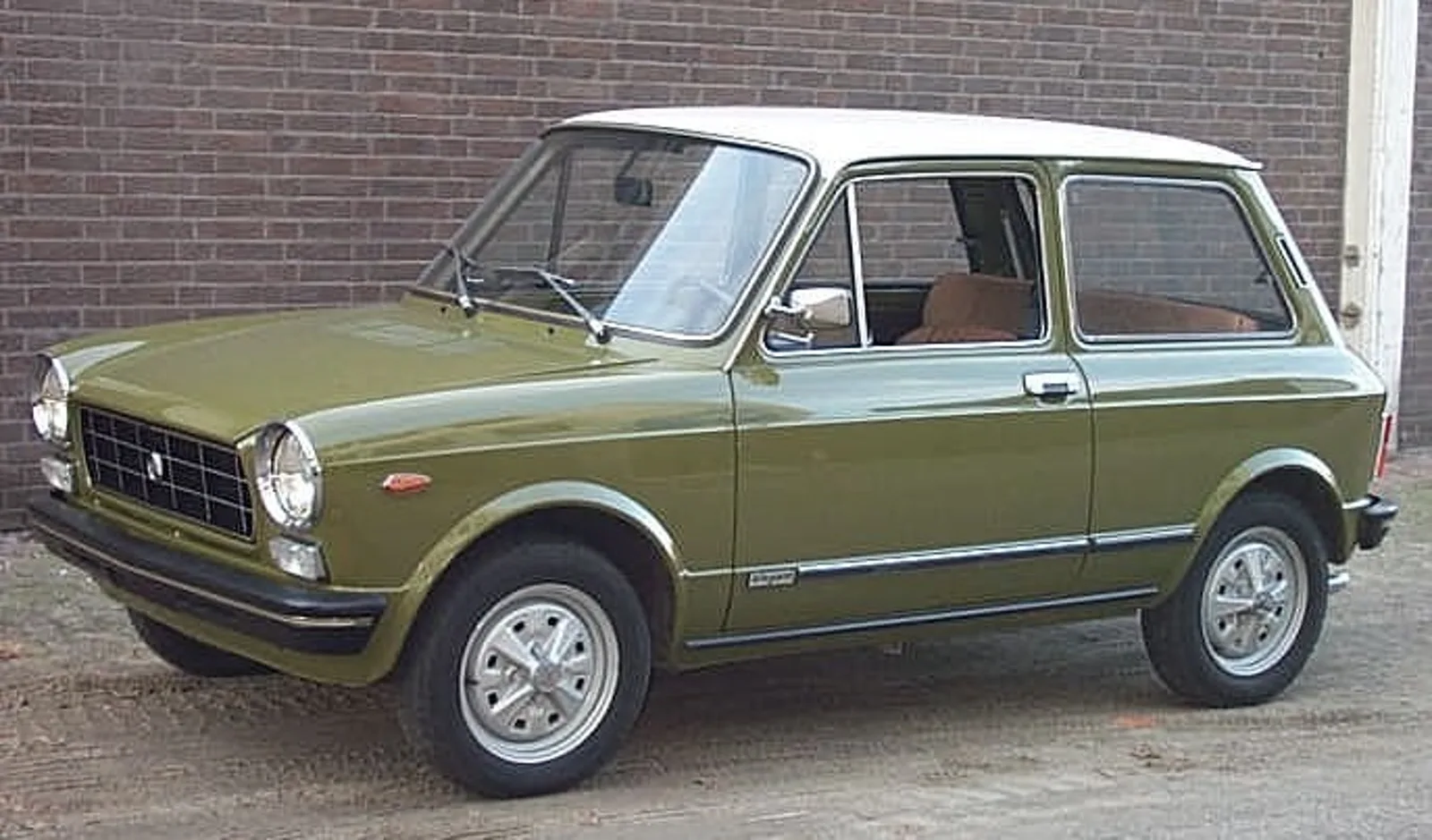
A Fiat-derived Italian three-door against a French supermini that stayed on sale two years longer: design, engines, sales and the buyers each car suited.
The Autobianchi A112 and Peugeot 104 were European superminis that competed directly. The A112 arrived in 1969 as a three-door with an Abarth option and was built until 1986. The 104 launched in 1972, sold 1,624,992 units, and was produced until 1988.
The Autobianchi A112 and the Peugeot 104 were two of the most important small cars of the early 1970s, and they competed for the same supermini buyers across Europe. The A112 came first, in 1969, as a three-door car with Fiat 128 roots. The 104 followed in 1972 from Peugeot, and it stayed on sale until 1988, two years after the A112 ended production.
This comparison looks at why the two were rivals, how each was designed, which engines they used, how many each one built, which sporting versions they offered, and which kind of buyer each car suited on the facts available.
Why were the Autobianchi A112 and Peugeot 104 rivals?
They were rivals because both were compact, affordable cars aimed at buyers who wanted modern practicality in a small package. The Peugeot 104 appeared in the list of competitors that gathered around the A112, alongside the Ford Fiesta, Vauxhall Chevette and Volkswagen Polo. Early on, the A112 was measured against the Mini, the Citroen 2CV, the Renault 4 and the Hillman Imp.
The 104 arrived in September 1972, after the A112 had already been on sale for some time. It was the first new Peugeot since 1955 to be offered without a diesel version, and its launch placed it firmly in the supermini battle that the A112 had helped start.
Both cars sold in very large numbers in Europe. The A112 was the first modern three-door supermini hatchback built on the continent, and the 104 went on to become one of the most successful small cars of its decade. Their overlap in showrooms made them natural rivals for the same families and first-time buyers.
Two supermini rivals with different strengths: one with the rally pedigree, the other with the bigger sales and the longer run.
How did the two cars differ in design?
The A112 was a three-door car built on a shrunken Fiat 128 platform, while the Peugeot 104 was designed by Paolo Martin and launched as a compact four-door fastback. The Peugeot's rear end sloped in a way that hinted at a hatchback, yet it kept a separate boot at first. Over time the 104 gained a coupe and a five-door hatchback, giving buyers more ways into the same chassis.
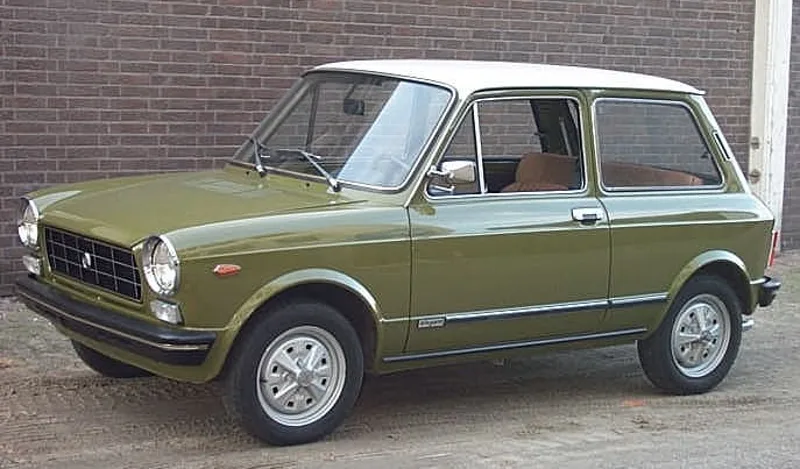
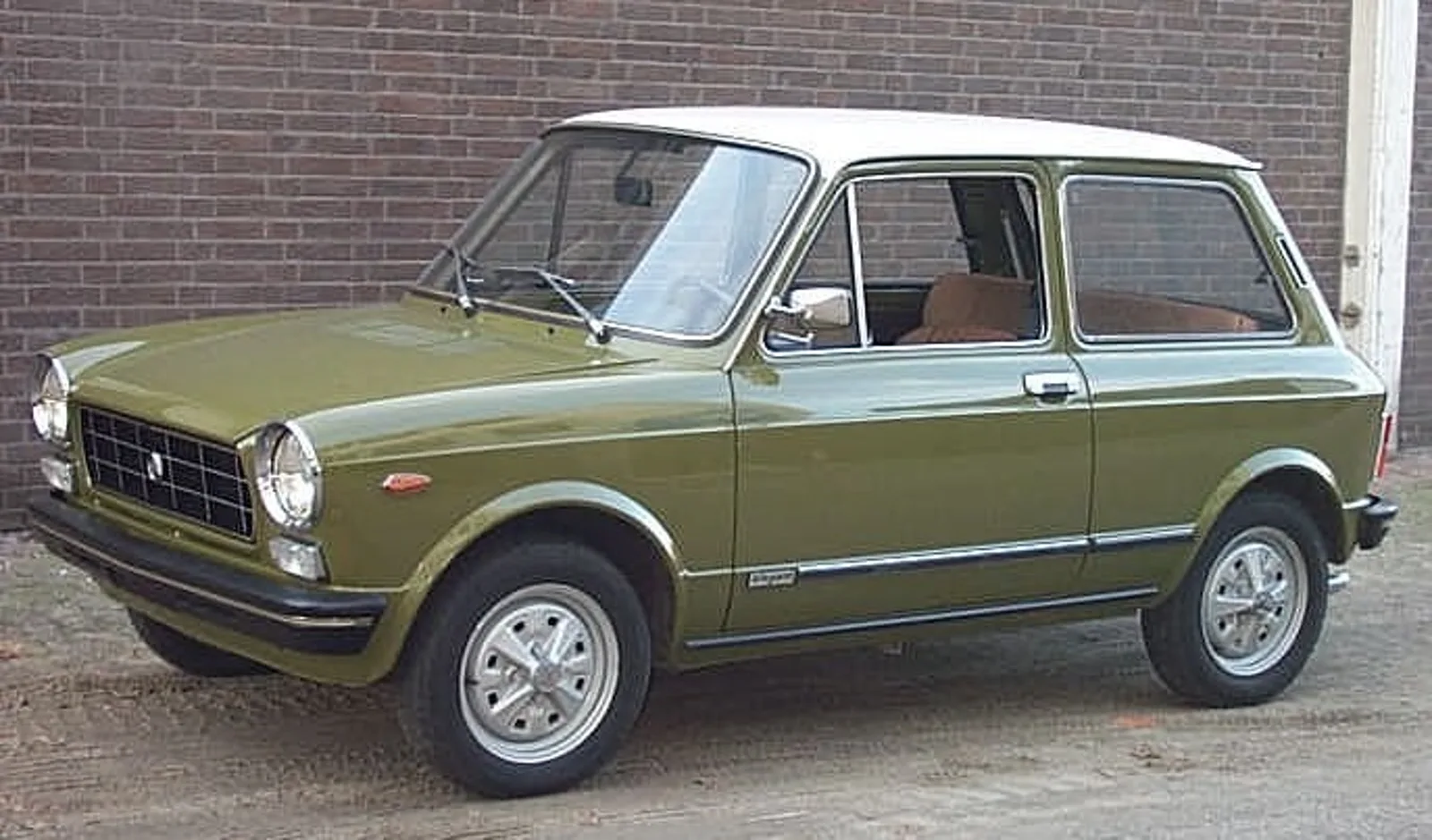
The A112 was offered only with a three-door body at first, and its trims grew steadily. The Elegant added a contrasting roof and better seats in 1971, and the 1973 makeover brought a new grille and rubber bumpers. The third series from 1975 became a five-seater instead of a four-seater, and its larger C-pillar vents make it easy to identify.
The Peugeot grew in a different way. A three-door coupe on a shortened chassis appeared at the 1973 Paris Motor Show, and a five-door hatchback replaced the saloon in the July 1976 facelift. Those body changes gave the 104 a wider reach, while the A112 kept most of its character through the 1970s and into the 1980s.
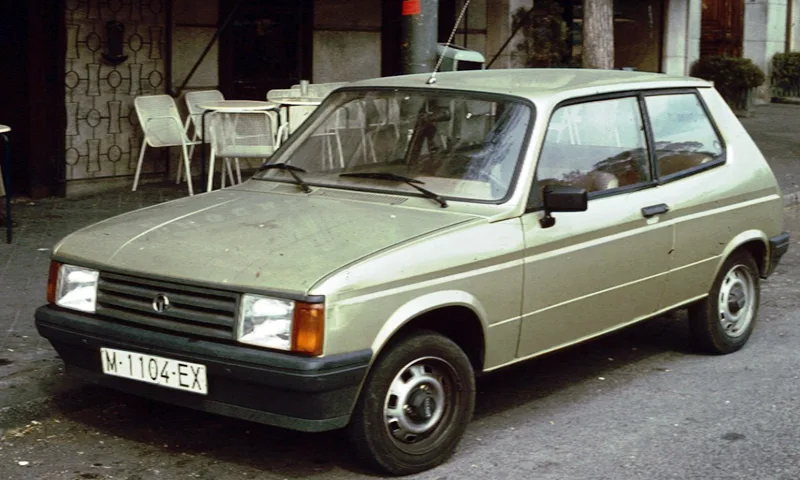
The 104 also spawned relatives. The Citroen Visa used the same mechanical configuration with longer travel suspension, while the Talbot Samba arrived in 1981 as a coupe derivative with a slightly longer rear section. A cabriolet version of the Samba was developed, and that model's production lasted until 1986.
Peugeot also explored electric power early. In 1975 it partnered with Alstom and EDF to build seven electric prototypes, four coupes and three vans, a step that marked the start of its modern electric programme.
Styling changes also set the cars apart in their later years. The A112's Nuova version of November 1977 added a slightly taller roof, while its fifth series of July 1979 wore large black plastic cladding. The 104's 1982 facelift brought smaller headlights and a plainer look with more black plastic in place of chrome.
What engines did the two cars use?
The A112 launched with a 903 cc overhead-valve engine taken from the Fiat 850, rated at 42 PS (31 kW). The Peugeot 104 used a 954 cc unit called the Douvrin PSA X, built from aluminium and driven by a chain-operated overhead camshaft. Both were small engines, but their layouts differed in a number of ways.
The 104's engine was developed jointly with Renault and had its gearbox in the sump, sharing the engine oil. That arrangement was similar to one the British Motor Corporation had pioneered in the Mini, and it helped give good economy and refinement. The unit was mounted leaning back at 72 degrees, and the car's chassis was praised for its ride and handling.
The A112's engine path was simpler. Claimed power rose to 47 PS (35 kW) in 1971 without any mechanical change, which looks more like a correction of the published figure than a real gain. By 1977 the Elegant had a 965 cc engine producing 48 PS (35 kW), and the Abarth had moved to 1050 cc in 1975.
The 104 kept growing its engines through the decade. A 1.1-litre unit arrived with the 1976 facelift, and the 1979 ZL Coupe received a 57 PS (42 kW) version of the 1,124 cc engine. The ZS coupe of 1982 was given an 80 PS (59 kW; 79 hp) 1,360 cc engine, using two carburettors in place of a single double-barrel unit.
Which car offered the sportier variant?
The A112 Abarth was the best-known sporting version of the A112. In 1975 it moved to a 1050 cc engine with 70 PS (51 kW) at 6600 rpm, in a car weighing 700 kg (1,543 lb). Its owners were often young drivers who used the car hard, and it became a fixture of historic rallies and one-make trophies.
The Peugeot's most sporting models were the ZS range and a limited run of ZS 2 cars. The ZS of 1976 used 66 PS, while the ZS 2 of 1979 used a 1,360 cc engine rated at 93 PS (68 kW). Only 1,000 ZS 2 cars were built, so it was always a small-volume model.
On the figures given, the ZS 2 produced more power than the A112 Abarth's 70 PS (51 kW). The two sporting models came from different years and different engine families, though, so the comparison shows contrasting approaches rather than a clear winner. The Abarth had the greater reputation for rally success, and the ZS 2 had the stronger output.
How did sales compare?
The Peugeot 104 was built in greater numbers and over a longer run. It was made from 1972 to 1988, and 1,624,992 units were produced, of which 345,849 were the short wheelbase Coupe versions. The A112 was built from 1969 to 1986, and 1,254,178 were made by the time production finished.
The 104's best year was 1977, when 190,000 were built. The model's wide appeal across Europe, combined with the hatchback and coupe choices, helped keep it selling in strong numbers for most of its life. Its end came gradually. When the 205 arrived in 1983, the 104 was withdrawn from most European markets, but it stayed on sale in France as a budget choice until production ceased in May 1988, after 16 years.
The A112 also had a loyal following, although its numbers were smaller. By 1984, female buyers made up 35% of A112 owners, and about a third of owners were in the 18 to 24 age range. That gave the A112 a broad base in its later years, even as the 104 remained the bigger seller overall. Those totals also reflect how long each model was on sale, which is why the 104's longer run matters so much to its tally.
Which buyer suits each car?
On the facts given, the A112 suits a buyer who wants a small three-door with a characterful engine and a sporting Abarth option. The 104 suits a buyer who wants a larger range of body styles, a longer production life and an engine that was developed with economy and refinement in mind.
For a buyer who wants a sporty badge with a rally story, the Abarth is the obvious starting point, whereas a buyer after a rare, limited model would look for a ZS 2. A buyer looking for the A112 would find a car that matured through five series, each with its own trim and styling changes. Its three-door layout and the Abarth's rally pedigree give it a clear identity.
A buyer looking for the 104 would be choosing a car with more ways to suit different needs. The three-door coupe, the five-door hatchback and the later commercial variants all widened the choice. A buyer who cared about engine layout would also find the PSA X design of interest, with its gearbox in the sump.
Neither car is shown to be better across the board. The 104 won on volume and on the breadth of its body styles, while the A112 had the three-door layout, the Abarth reputation and the more distinctive later styling. The right choice depends on which of those qualities matters most.
Specifications at a glance
| Feature | Autobianchi A112 | Peugeot 104 |
|---|---|---|
| Introduced | November 1969 | September 1972, Paris Motor Show |
| Production ended | 1986 | May 1988 |
| Designer | Giovani concept only: Diego Ottina at Pininfarina | Paolo Martin |
| Body styles at launch | Three-door only | Four-door fastback |
| Launch engine | 903 cc OHV, 42 PS (31 kW) | 954 cc Douvrin PSA X, all-aluminium |
| Engine size later | 1050 cc Abarth; 965 cc standard from 1977 | 1,360 cc ZS 2; 1,124 cc in 1986 |
| Sporting version | Abarth, 70 PS (51 kW) at 6600 rpm | ZS 2, 93 PS (68 kW), 1,000 built |
| Five-door or five-seat | Five-seater from the third series, 1975 | Five-door hatchback from the 1976 facelift |
| Peak year | No figure given | 1977, 190,000 built |
| Total built | 1,254,178 by 1986 | 1,624,992 |
| Main rivals | Mini, Citroen 2CV, Renault 4, Hillman Imp | Ford Fiesta, Vauxhall Chevette, Volkswagen Polo |
| Spin-off models | Campionato A112 Abarth, 1977 to 1984 | Talbot Samba, from 1981 |