Why most modern small cars put the engine and driven wheels at the front, how the layout evolved from 1925 onwards, and where it falls short.
A front-engine, front-wheel-drive layout puts the engine and driven wheels at the front, giving traction and interior space at the cost of weight balance. It appeared in the 1920s, spread widely from the 1980s, and dominates small and mid-sized cars.
A front-engine, front-wheel-drive layout places the engine and the driven wheels at the front of the car. It is the most common arrangement for small and mid-sized cars today, because it packs the drivetrain into one compact area and frees up space for passengers and luggage. Its strengths and weaknesses are well understood, and they explain why it dominates the market.
What is a front-engine, front-wheel-drive layout?
In automotive design, a front-engine, front-wheel-drive layout, also called FF layout, places both the internal combustion engine and the driven roadwheels at the front of the vehicle. The steered wheels are also the driven wheels, which is the defining feature of the design.
The term has been used loosely over time. Historically it was applied whether or not the entire engine sat behind the front axle line. Some makers therefore use the term front-mid for a car whose engine sits in front of the passenger compartment but behind the front axle. Most pre-World War II cars were front-mid or had the engine on the front axle.
Put the engine and the driven wheels at the front, and the car gains traction and space at the cost of balance.
Why do so many cars use front-wheel drive?
Front-wheel drive suits small and mid-sized cars because it is easy to manufacture, has a simple drivetrain and offers good traction on slippery surfaces. It also leaves room for a roomy passenger compartment and boot, since the engine occupies space that passengers and luggage would not otherwise use.
The layout is the most traditional form of this design and remains a popular, practical choice. Because the front wheels carry both steering and drive, they can pull the car through snow, ice and mud with good grip. That practical advantage is why the design spread across so many markets.
The main weakness is weight distribution, because the heaviest component sits at one end of the vehicle. Handling is not ideal, but it is usually predictable. Front-wheel-drive cars tend to understeer on slippery curves, which drivers often describe as the car pushing wide.
- Good handling on slippery surfaces such as snow, ice and mud.
- Ease of manufacturing and a simple drivetrain.
- A roomy passenger compartment and boot.
- Understeer on slippery curves because of front weight.
- Poor suitability for hauling cargo or towing trailers, as weight sits on the front.
How does front-wheel drive compare with rear-wheel drive?
Front-wheel drive is generally superior to rear-wheel drive in conditions with low traction, such as snow, mud, gravel or wet tarmac. Because the front wheels both steer and drive, the car has more grip where it matters most in poor weather. Cornering is also generally better, because the engine sits over the steered wheels.
The layout removes the need for a central tunnel or a raised chassis to carry a driveshaft to the rear wheels. In contrast, rear-wheel drive is the better two-wheel layout for climbing hills in low traction, because weight shifts to the rear wheels when climbing. That is the main advantage the rear-drive design keeps.
Under hard acceleration, though, a front-wheel-drive car loses grip at the front. The driven wheels have to handle both steering and power, so less grip is left for cornering, and the car can understeer. Electronic systems help, but the balance between steering and power remains the core limit of the design.
Why are high-performance cars rarely front-wheel drive?
High-performance vehicles rarely use the layout, because weight transfers to the rear wheels under acceleration. That unloads the front wheels and sharply reduces their grip, which effectively caps the power that can be used on the road. The high power of such cars also tends to cause torque steer.
Electronic traction control can avoid wheel-spin, but it largely negates the benefit of the extra power. Makers that wanted more performance from front-drive cars therefore turned to all-wheel drive, which is why the Jensen FF and Audi Quattro road cars adopted that system.
When did front-wheel drive first appear?
Front-wheel-drive cars were already on sale by 1925, with the Alvis among the early examples. Other early cars include the 1929 Cord L-29, the 1931 DKW F1, the 1948 Citroen 2CV, the 1949 Saab 92, the 1957 Trabant P50 and the 1959 Mini. Each used the layout in a different way, reflecting the engineering choices of its maker.
In the 1980s the traction and packaging advantages caused many compact and mid-sized vehicle makers in the US to adopt the layout. Most European and Japanese manufacturers had switched to front-wheel drive for the majority of their cars during the 1960s and 1970s, and Toyota followed in the early 1980s.
The last to change were Volkswagen, Ford of Europe and General Motors, through Vauxhall in the UK and Opel in Germany. BMW retained rear-wheel drive in even its smaller cars, although its MINI marque is front-wheel drive. The company's focus on luxury vehicles explains much of that choice.
What are the four engine arrangements?
There are four different arrangements for the basic layout, depending on where the engine sits. The engine is the heaviest component of the drivetrain, so its position has a large effect on weight distribution, handling and traction. Each arrangement tried to solve that problem in a different way.
| Arrangement | Engine position | Notable examples |
|---|---|---|
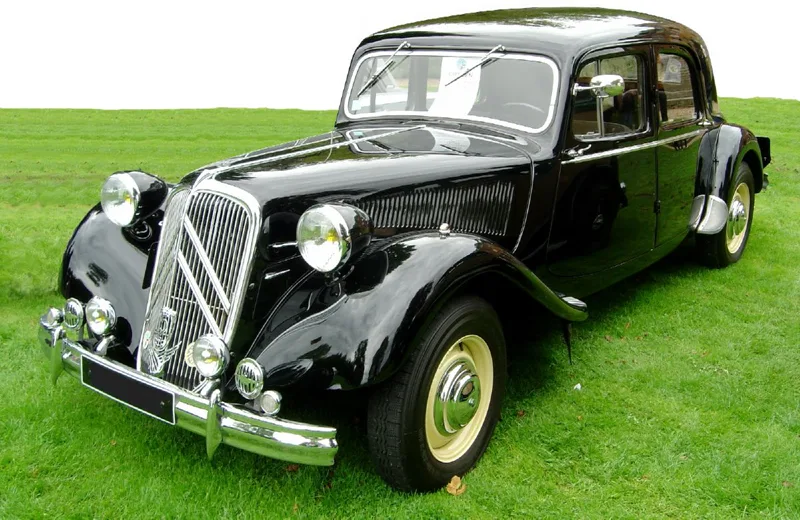
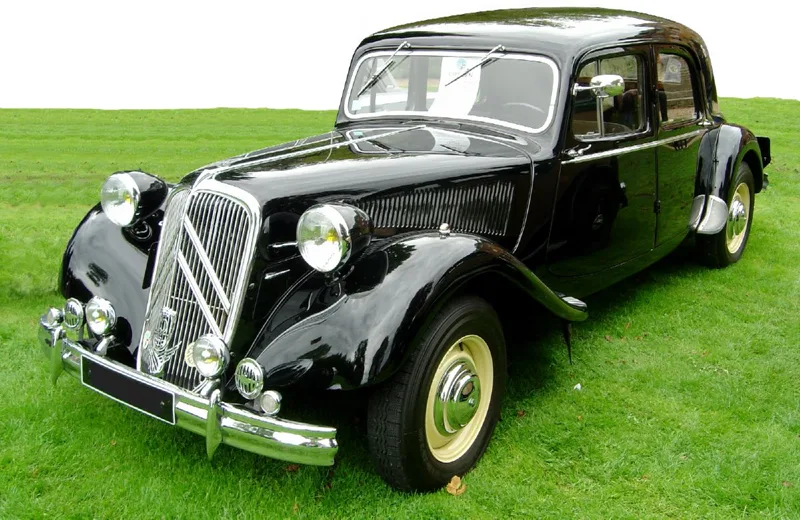
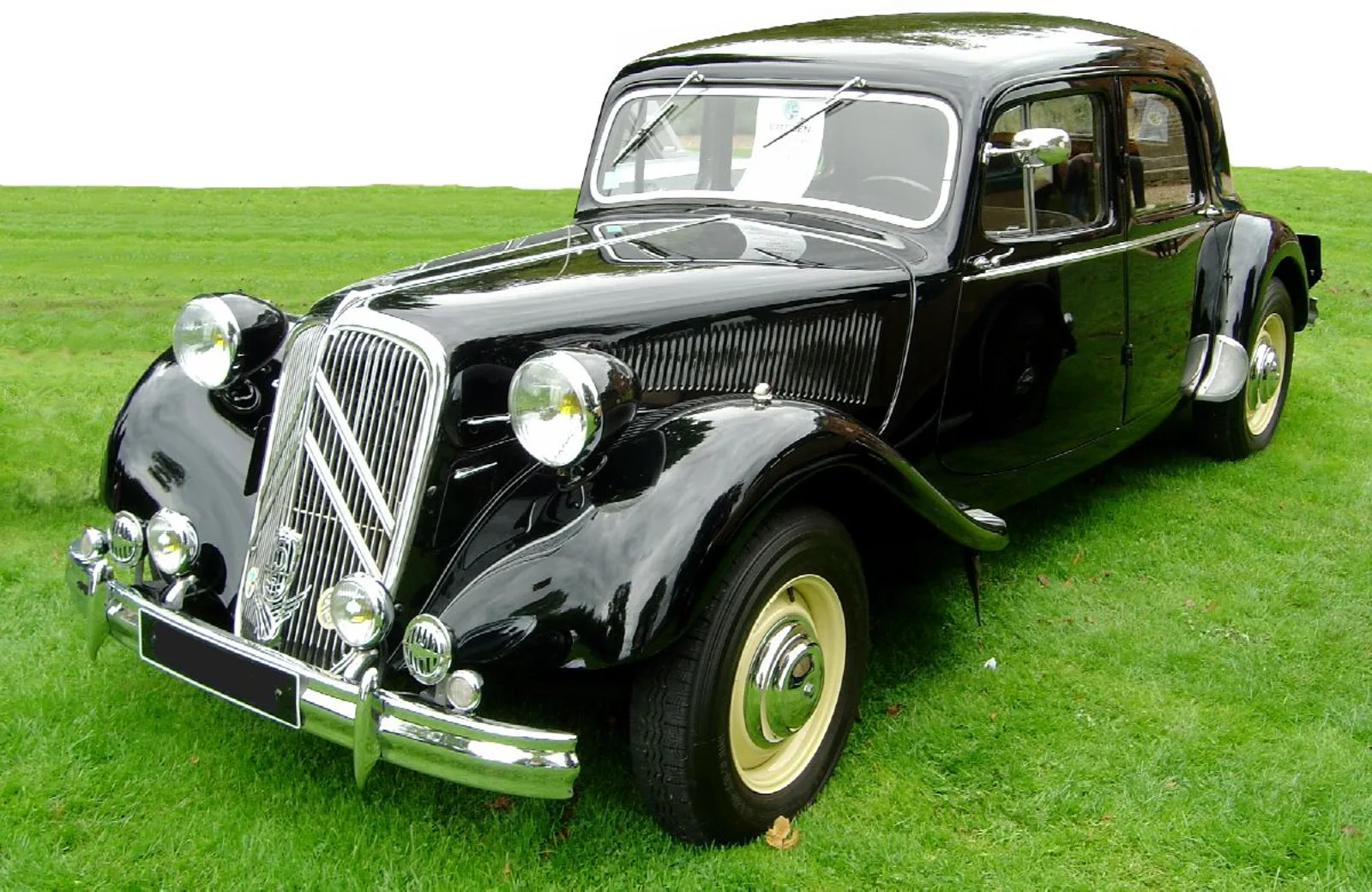
| Mid-engine front-wheel drive (MF) | Longitudinal, behind the wheels, with transmission ahead | Cord L-29; Citroen Traction Avant, which moved the transmission to the front |
| Longitudinal front-engine | Longitudinal, in front of the front wheels | Panhard Dyna X, Citroen 2CV, Audi and Subaru models |
| Side-by-side | Engine and transmission side by side, linked by chain | Oldsmobile Toronado and Cadillac Eldorado |
| Transverse front-engine | Transverse, across the car | Mini, Fiat 128 and Fiat 127, and Toyota Camry and Corolla |
The earliest front-wheel-drive cars were mid-engine designs. The engine sat longitudinally behind the wheels, with the transmission ahead of it and the differential at the very front. That placed too much of the car's weight at the back, so the driven wheels lacked traction and handling was poor.
The 1934 Citroen Traction Avant solved the weight issue by placing the transmission at the front, with the differential between it and the engine. Combined with its low-slung unibody, this gave handling that was remarkable for the era. Renault later used the mid-engine format on the Renault 4 and the first generation Renault 5, before it fell out of favour because it encroached on interior space.
How did the longitudinal layout work?
The 1946 Panhard Dyna X, designed by Jean-Albert Gregoire, had its engine longitudinally in front of the front wheels. The transmission sat behind the engine and the differential at the rear of the assembly. Panhard used this arrangement until 1967, and its air-cooled flat twin was light and mounted low.
The Citroen 2CV took a similar approach, with its air-cooled flat twin set low ahead of the front wheels and the gearbox placed behind the axle. The layout proved popular, and cars using it included the German Ford Taunus 12M and the Lancia Flavia and Fulvia. Today it is the standard configuration of Audi and Subaru front-wheel-drive vehicles.
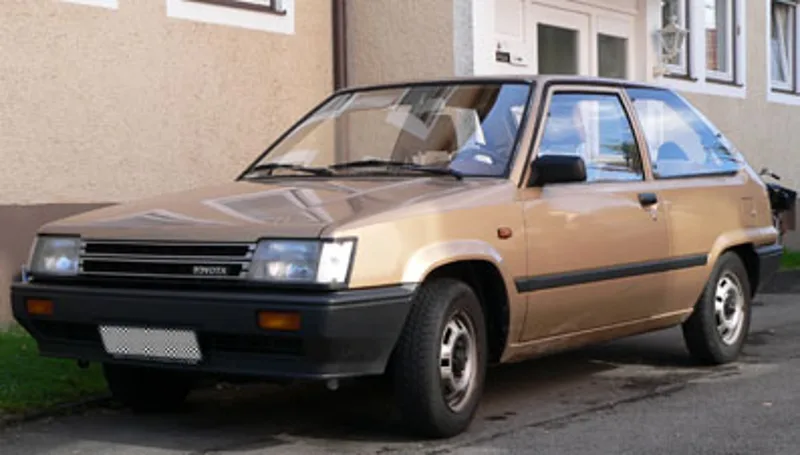
Toyota's first front-wheel-drive car, the 1979 Tercel, also had a longitudinal engine, which set it apart from most rivals at the time. The second generation Tercel kept that layout until 1987, when the third generation received a transversely mounted engine. Camry and Corolla had transverse engines from the beginning.
What was the side-by-side Toronado layout?
The 1966 Oldsmobile Toronado, and its sister model the Cadillac Eldorado, used a novel arrangement with the engine and transmission side by side. Power passed between them through a heavy-duty chain and a specially designed intermediate driveshaft that ran under the engine sump.
The Toronado family holds the record for the largest engine capacity in a front-wheel-drive vehicle, at 8.2 L. The Saab 99 and classic Saab 900 used a similar arrangement, and the Eagle Premier used a powertrain like that of the Renault 21 and 25. That powertrain later became the basis for Chrysler LH sedans, built until the 2004 model year.
Which makers still use the longitudinal layout?
Audi is the most prominent user of the longitudinal layout today. It has used the arrangement since the 1950s through its predecessor companies DKW and Auto Union, and it appears in larger models from the A4 upward. Audi's newest platform, the MLB, tries to address the long-standing problem of uneven weight distribution.
The MLB platform does this by packaging the differential in front of the clutch. That allows the axle line to sit further forward in relation to the rear face of the engine block, which shifts the balance of the car.
How does the transverse layout work?
The transverse layout places the engine across the car rather than along it, and the transmission can sit in the sump below the crankshaft. The first popular transverse FWD cars were the DKW Front from 1931, which had a twin-cylinder two-stroke engine. Saab copied the design on its first car, the 1949 Saab 92.
Issigonis's 1959 Mini had a transversely mounted four-cylinder water-cooled engine. Its transmission sat in the sump, with power carried by transfer gears. Other cars using the transmission-in-sump layout included the Datsun 100A (Cherry), Peugeot 104 and Renault 14.
Dante Giacosa's Autobianchi Primula of 1964, along with the Fiat 128 and Fiat 127, took a different route. The transmission sat on one side of the transversely mounted engine, and the differential was placed just behind it but offset to one side. The driveshafts are therefore longer on one side than the other, and the weight sits a little ahead of the wheels. This system dominates worldwide today.
How do front-wheel drive shafts transfer power?
Each front wheel receives power from the differential through a drive shaft. The inner end is a short stub that locks onto the differential's side gear, while the outer stub locks into the wheel hub. Each stub carries a yoke that takes a universal joint at either end of an intermediate shaft.
Constant-velocity joints transfer power smoothly, and the inner joint can be a plunge or tripod type. The outer joint is normally a ball and cage design, which allows greater angular change but not change in length. Rubber boots keep grease in and dirt out of both joints.
Where the differential is not on the centre line of the vehicle, an intermediate shaft keeps the driveshafts equal in length on each side. That keeps the angles equal and helps prevent steering irregularities and vibration. A rubber dynamic damper may also be fitted to absorb vibration.
What causes torque steer in front-wheel-drive cars?
Torque steer is a pull on the steering wheel that appears under heavy acceleration. It is caused by drive shafts of different lengths, which produce different incident angles at the joints. The more the joints are articulated, the less effectively they deliver torque to the wheels.
Engineers reduce the effect by keeping the driveshafts as equal as possible, and the intermediate shaft is one way to do that. The problem becomes most noticeable in powerful front-drive cars, which is one reason high-performance designs have moved towards all-wheel drive.