Toyota's first front-wheel-drive car, sold from 1978 to 1999 across five generations, with a four-wheel-drive wagon and a long export reach.
The Toyota Tercel was a subcompact built from 1978 to 1999 over five generations, and it was Toyota's first front-wheel-drive car. It sat between the Corolla and the Starlet in size and was sold under several names in Japan, the United States and Asia.
The Toyota Tercel was a subcompact that Toyota built from 1978 until 1999 across five generations, sized between the Corolla and the Starlet. It was the first front-wheel-drive car the company produced, and it was sold under several badges in Japan, the United States and beyond. Its name comes from an old word for a male falcon.
The car changed identity several times over its life, from front-drive pioneer to four-wheel-drive wagon, then to a transverse-engined third generation and a decontented fifth. Japanese production ran until the end of 1999, by which point 4,968,935 cars had been built.
Where was the Tercel built and what was it called?
Toyota built the Tercel at its Takaoka plant in Toyota City, Japan, and Hino Motors in Hamura, Tokyo, assembled some third-generation cars. Japanese production ended in 1999 with 4,968,935 examples built. The Tercel was also sold as the Corolla II and the Corsa in Japan.
The word is an older term for a male falcon, a bird smaller than the female. The Tercel was a touch smaller than the Corolla beside it, with the Starlet sitting lower still.
The Tercel shared its platform with the Cynos, sold as the Paseo, and with the Starlet. In Japan it was sold as the Corolla II through Corolla Stores and as the Corsa through Toyopet Stores, until the Platz replaced it in 1999.
Toyota's first front-wheel-drive car, named for a smaller male falcon and offered with a four-wheel-drive wagon.
Why was the first Tercel important to Toyota?
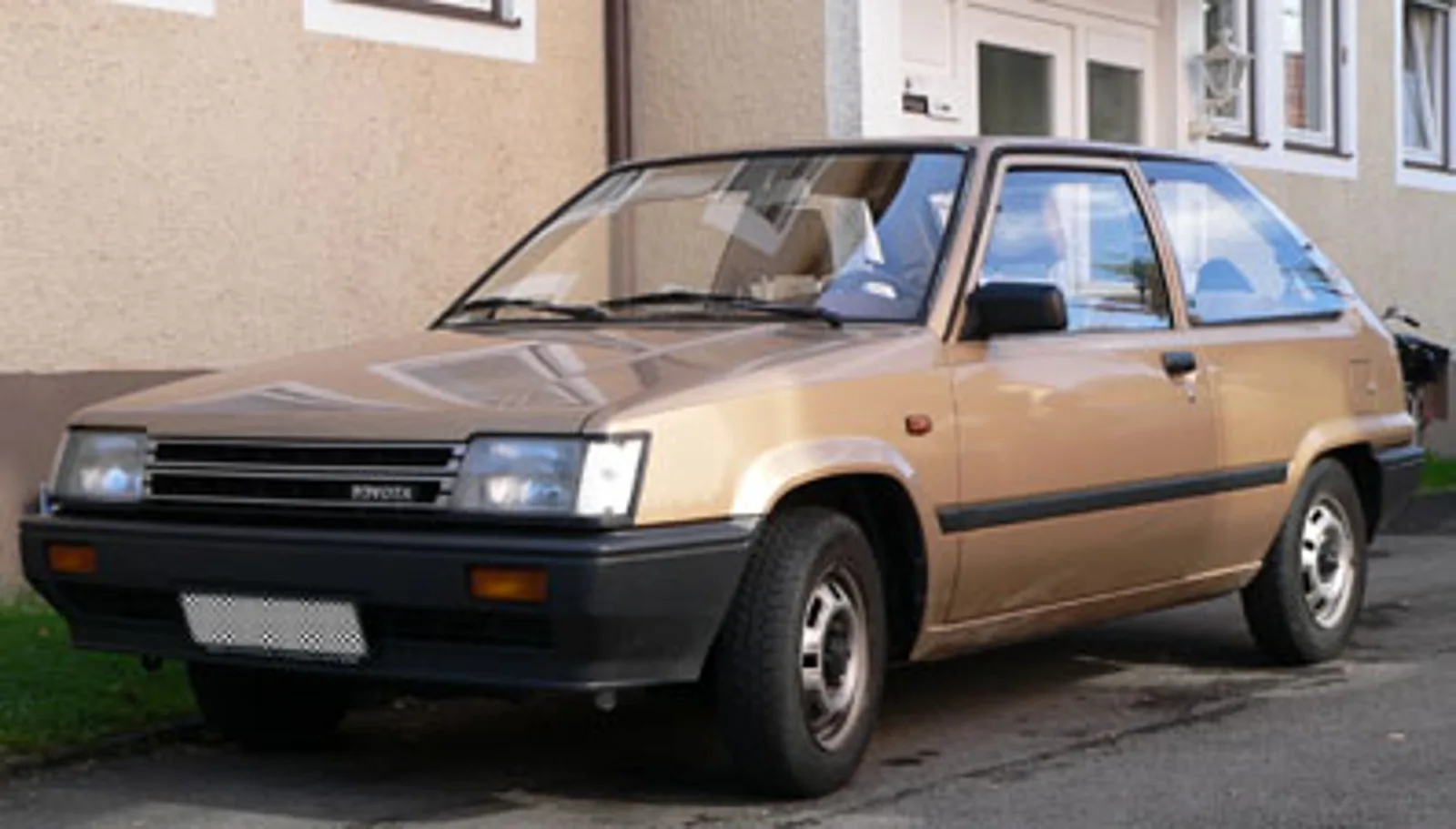
The first-generation car opened Toyota's front-drive chapter, arriving in Japan in August 1978. Its engine sat longitudinally, which made it the only front-drive Toyota with that layout, and that arrangement later gave four-wheel drive a path to follow. It was a bold step for a maker whose cars had mostly been rear-drive.
The transmission sat under the floorpan like a rear-drive car, with a ring and pinion gear at the front of the gearbox beneath the engine. Halfshafts ran from the transmission to the front wheels, and the whole unit sat a little off the centre line.
The package was taller than usual, which raised the beltline. Toyota thought traditionalists might resist a transverse layout, so it accepted that trade-off. The car also used rack and pinion steering, the first time Toyota had used that layout since the 2000GT.
Toyota hinted in early 1980 that the layout would simplify a four-wheel-drive version, which arrived only with the next generation.
What engines did the first generation use?
American cars ran a 1,452 cc 1A-C, a single overhead camshaft four rated at 45 kW (60 hp) at 4,800 rpm. The 1.5-litre engine was also offered with a three-speed automatic from August 1979. In Japan a 1,500 cc unit produced 59 kW (80 PS) at 5,600 rpm, and a 1.3-litre 2A joined in June 1979.
Europe received the 1.3-litre version, rated at 48 kW (65 PS). An August 1980 facelift swapped the 1A for the 3A, with the same 1,452 cc displacement but now rated at 61 kW (83 PS). The 3A relied on a catalytic converter rather than the lean-burn approach of its predecessor.
How did the second generation change the Tercel?
Toyota redesigned the Tercel in May 1982, giving every market the same name and the internal L20 code. Body styles included three- or five-door hatchbacks and a four-door station wagon, with a four-door sedan added for Japan. The wagon arrived in Japan as the Sprinter Carib in August 1982.
Japanese body styles varied by dealer network. The Corolla II came only as a hatchback, while the Tercel and Corsa offered the five-door and four-door sedan. The Tercel moved from the Corolla network to the Vista network, and the Toyota Diesel network that had sold some Tercels closed in the 1980s.
The later generations never reached Europe through official channels, so the second generation was the last Tercel offered there, in hatchback or wagon form. Japanese outputs ran from 55 kW (75 PS) at 6,000 rpm for the 1295 cc 2A-U up to 66 kW (90 PS) at 6,000 rpm for the 1452 cc 3A-SU with twin carburettors.
Every North American second-generation Tercel relied on the 1.5-litre unit, which made 47 kW (63 hp) at 4,800 rpm. Across Europe the 1.3 and 1.5 both appeared, with importers choosing by market.
How did the Tercel four-wheel drive work?
Four-wheel-drive versions (chassis code AL25) used only the 1.5-litre engine and could be fitted with a six-speed manual, which let the driver move from two- to four-wheel drive without stopping. The sixth gear was an extra-low first gear with a 4.71:1 ratio, which produced a 17.6:1 final drive ratio.
Toyota built the four-wheel-drive system from parts it already had. The engine, transaxle and front-drive system came from the front-drive Tercel, while the coil-sprung live rear axle and driveshaft came from the rear-drive Corolla. The transfer case was the one major new part, built into the transmission.
There was no centre differential, so the front and rear shafts turned at the same speed through a direct mechanical link. The system was meant only for loose or slippery surfaces such as snow, gravel or sand, because otherwise the drivetrain wears and handling suffers. A low range was available only with the six-speed manual.
Higher-spec four-wheel-drive cars also had an inclinometer mounted near the radio, showing the car's tilt.
Which versions were sold in Europe?
European buyers could choose from the 1.3-litre DX and GL hatchbacks, a 1.5-litre GL hatchback, and a 1.5-litre 4WD estate. The engines were a 1,295 cc 2A rated at 48 kW (65 PS) at 6,000 rpm and a 1,452 cc 3A rated at 52 kW (71 PS) at 5,600 rpm.
Apart from the four-wheel-drive estate, the European range was made up of hatchbacks. The estate was the only wagon-style body offered there.
What did the third generation bring?
Toyota introduced the third-generation Tercel in 1986 as a slightly larger car. It used a new 12-valve engine with a variable venturi carburettor, with fuel injection on later models, and the engine was now mounted transversely. Independent suspension was fitted all round, and the Tercel stayed Toyota's least expensive car in North America.
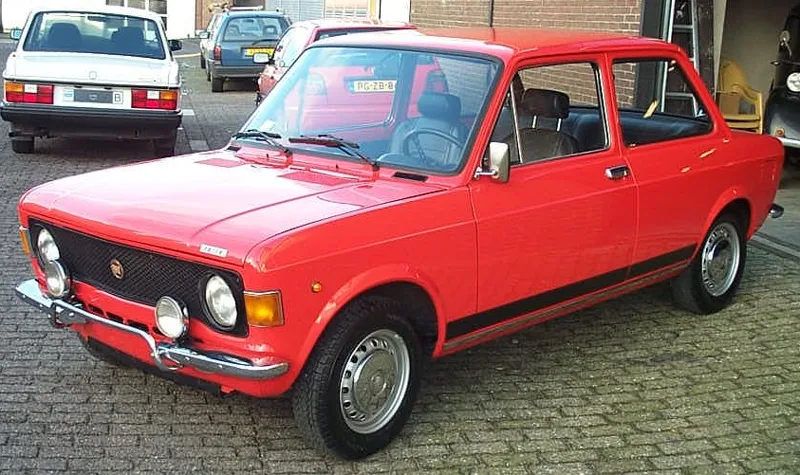
The transverse layout put the transmission on the engine's right side, in a design developed by Dante Giacosa and popularised by the Fiat 128 and Volkswagen Golf. Steering was revised, and the suspension was fully independent.
Europe lost the Tercel at this point, though the smaller Starlet was offered in some other markets. In Japan the Retra GP-Turbo, with its hidden headlamps, used an 85 kW (115 PS) 3E-TEU engine and Pegasus suspension. A 1.5-litre 1N-T turbodiesel with a five-speed manual was also offered in Japan from 1986.
In North America the third generation arrived in late 1986 with only a 1.5-litre engine, making 58 kW (78 hp) in federalised form. The Tercel EZ added a stripped specification with vinyl seats and a four-speed manual, and a two-door sedan joined the range the following year. That body style was never sold anywhere outside North America.
The Tercel wagon was discontinued for the 1990 model year, after its move onto the Corolla platform.
What were the fourth-generation models?
Toyota introduced the fourth generation in September 1990, with three-door hatchback, two-door sedan and four-door sedan bodies. North American cars came with either a 3E-E, a 1.5-litre rated at 61 kW (82 hp) at 5,200 rpm, or a 16-valve DOHC 5E-FE of the same capacity, rated at 82 kW (110 hp).
No hatchback was offered in North America, and the two-door sedan never left the US and Canada. The hatchback's tail was rounded in an unusual way, with a broad windscreen wrapping around in three dimensions.
In Japan the hatchback came in VC, VS, VZ, Joinus and Avenue trims, while sedan grades ran from Joinus through to VZ, with the top VZ using a 5E-FHE engine. This generation also brought Japan's first Tercel with anti-lock brakes.
North American trims were the two-door base, two- and four-door DX and four-door LE. A 1993 facelift restyled the grille and added a standard driver's airbag.
Where else was the Tercel sold?
Taiwan also sold the Tercel, built and assembled locally by Kuozui Motors. Chile had its own story, starting in 1991 with a four-door sedan named Corolla Tercel, powered by a 1.3-litre SOHC 12-valve engine rated at 57 kW (78 hp).
A Canadian-spec car replaced it in Chile in September 1992, fitted with a fresh 1.5-litre SOHC unit and carrying the simpler Tercel name. The fifth generation reached Chile in September 1995, in XLI, GLI and LEI trims.
How did the fifth generation perform?
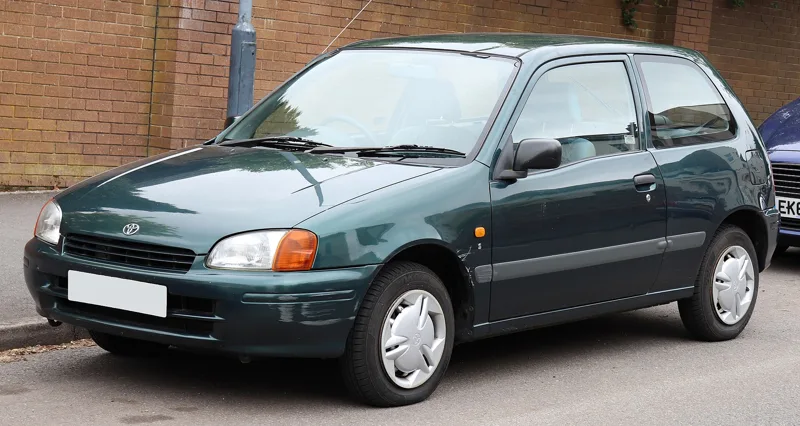
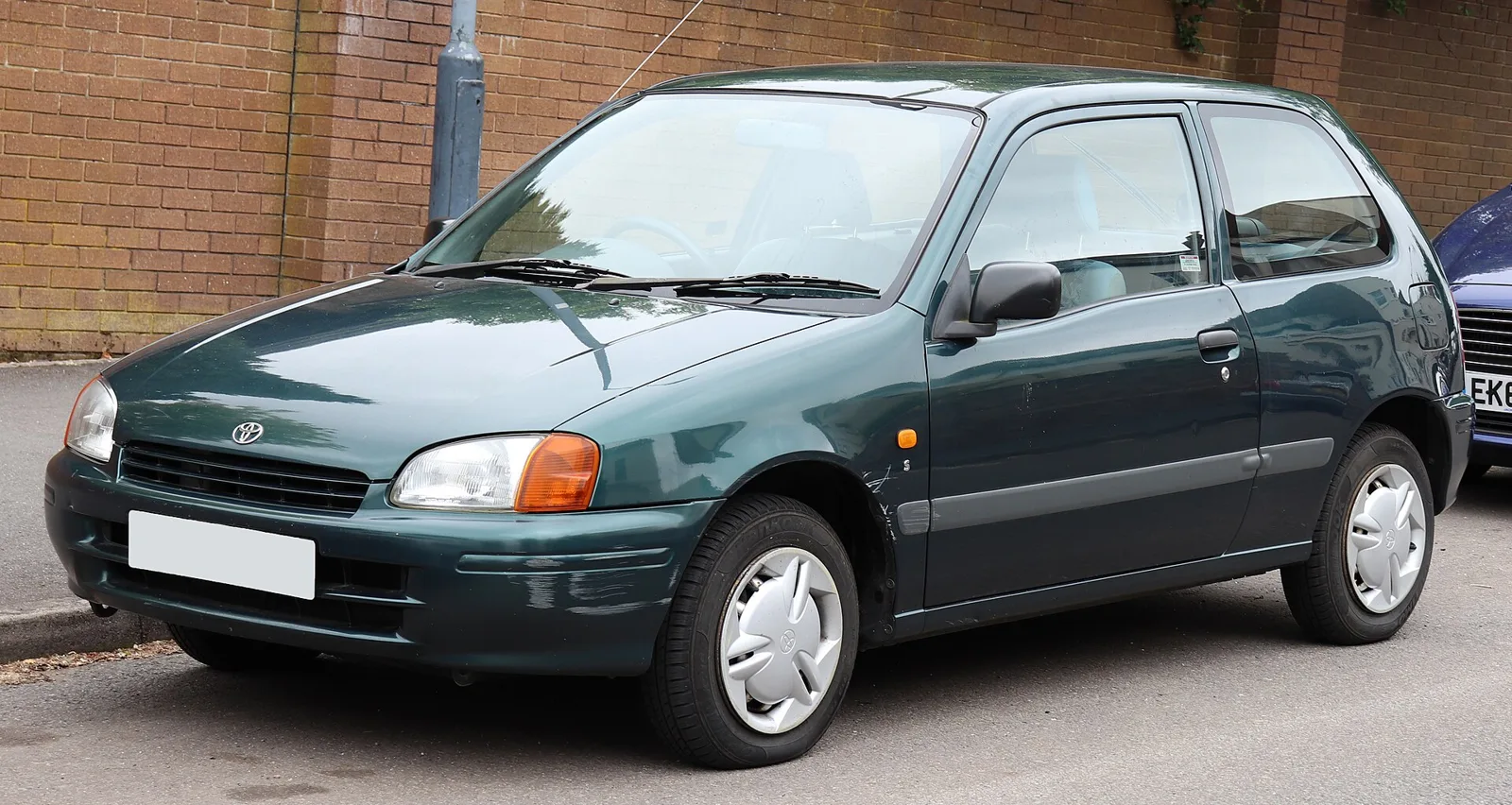
The all-new fifth generation arrived in September 1994 as a 1995 model. It was designed by Shinichi Hiranaka and Yasuhisa Hamano, and it arrived with a new exterior, a stiffer body and OBD II, making it one of few US cars with that system in 1995.
The 1.5-litre 5E-FE DOHC inline-four produced 69 kW (93 hp) and 140 N-m (100 lb-ft), a 13 percent power rise over its predecessor, plus a 15 percent gain in fuel economy. It was the most fuel-efficient four-cylinder of its time in the US, returning 5.2 L/100 km (45 mpg-US; 54 mpg-imp) on the highway with the five-speed manual.
The Tercel also came with a 1.3-litre 4E-FE petrol engine and a 1,453 cc turbocharged diesel that made 49 kW (67 PS) and 137 N-m (101 lb-ft). The line was decontented compared with its predecessor, reflecting Japan's post-Bubble economy.
For 1997 every North American Tercel was sold only as the CE, with a 13-inch wheel as standard. The dashboard gained rotary ventilation controls, and the RedHawk and WhiteHawk editions joined the BlackHawk. The BlackHawk came with air conditioning, 185/60R14 tyres on custom wheels and a rear spoiler.
How did the Tercel's production end?
The 1998 facelift brought multi-reflector headlights, a revised grille and clear-lens indicators front and rear. The Japanese facelift had arrived in December 1997 and covered the Corsa and Corolla II variants too, so the update reached buyers across the Japanese range.
US production ended in 1998, as the Echo took over, while Japan and Canada kept building the car through 1999. Taiwanese production continued until 2003.
What was the Soluna?
The Soluna was a Tercel variant with altered front and rear styling, sold in Thailand and Indonesia. It used a 1.5-litre 5A-FE engine under the AL50 code and was marketed as an Asian family car. It went on sale in Thailand in January 1997 and in Indonesia on 20 April 2000.
Trim levels were XLi, SLi (Thailand only) and GLi, with an SEi exclusive to Indonesia. The Soluna S-Limited, based on the GLi with body kits, appeared briefly. Thailand received a facelift in late 1999, and Indonesia followed in May 2001.
Production ceased in 2003, when the Vios took over as the direct successor.
How big did the Tercel get?
The Tercel stayed smaller than the Corolla for its whole life. By the close of production it had grown close to the size of North American Corollas from 1975 to 1978, models that were on sale when the first Tercel appeared.
What are the main Tercel specifications?
| Specification | Detail |
|---|---|
| Production span | 1978 to 1999, five generations |
| Japanese production total | 4,968,935 cars by 1999 |
| First-generation US engine | 1,452 cc 1A-C, 45 kW (60 hp) at 4,800 rpm |
| Second-generation US engine | 47 kW (63 hp) at 4,800 rpm |
| Third-generation US engine | 58 kW (78 hp) |
| Fourth-generation US engine | 61 kW (82 hp) at 5,200 rpm |
| Fifth-generation engine | 69 kW (93 hp); 140 N-m (100 lb-ft) |
| Fifth-generation highway economy | 5.2 L/100 km (45 mpg-US; 54 mpg-imp) |
| Four-wheel-drive gearing | 4.71:1 extra-low first gear, 17.6:1 final drive |