Rear drive ruled until the late 20th century, front drive took over, and electric cars are now swinging the pendulum back. What each layout does and how AWD differs from 4WD.
The drive layout decides which wheels get the engine's power. Front drive saves space and dominates today's cars, rear drive keeps a sporty reputation and is returning with electric cars, and all-wheel drive aims at traction in poor conditions. In North America, 4WD generally means an off-road system, and AWD an on-road one.
Rear-wheel drive was the default layout for cars until the late 20th century. Today most cars are front-wheel drive, and electric cars are quietly bringing rear drive back.
What does the drive layout actually change?
It decides which wheels receive the engine's power: the front pair in a front-wheel-drive car, the rear pair in a rear-wheel-drive car and all four in an all-wheel-drive car. That choice shapes how much room is left for people, how weight is spread, how well the car grips and how much mechanical complexity it carries.
Engine position goes with it. By far the most common front-wheel-drive layout puts the engine and gearbox at the front, mounted across the car. Rear-wheel drive usually means a front engine mounted lengthwise, driving back through a shaft. Rarer variants exist for both: mid-engined and rear-engined cars, or a front engine with its gearbox at the rear in a unit called a transaxle. Alfa Romeo, Lancia, the Porsche 944, 924 and 928, and the Chevrolet Corvettes from C5 to C7 use that arrangement for a more balanced weight distribution.
The packaging advantages of front-wheel drive do not apply to electric cars.
Why did front-wheel drive take over?
Packaging and fuel prices. Alec Issigonis's 1959 Austin Mini put a water-cooled four-cylinder engine across the nose, which left eighty percent of the floor plan for passengers and luggage. After the 1973 oil embargo and the 1979 fuel crises, American makers also began phasing out rear drive in mainstream cars.
The idea is far older than the Mini. Nicolas-Joseph Cugnot's steam tractor of 1769 or 1770 was front-driven, and the Sutton Autocar built in Australia in 1899 may have been the first front-driven car. J. Walter Christie patented a design and built a prototype in 1904, and he raced several of his cars. Even so, the idea languished outside racing for decades. Alvis put a front-drive racer on sale in 1928 and it was not a success.
The Cord L-29 of 1929 was the first American front-drive car offered to the public, and the first series-built front-drive car fitted with constant-velocity joints, which feed power smoothly to steered wheels. Buyers wanted more than its top speed of 80 mph (130 km/h), and with the Great Depression it was dropped by 1932 after about 4,400 sales. The real commercial breakthrough was the 1931 DKW F1 from Germany, which sold 4,353 units in its first two years and is credited as the first front-drive car sold in large numbers. DKW eventually built about 270,000 cars on the design.
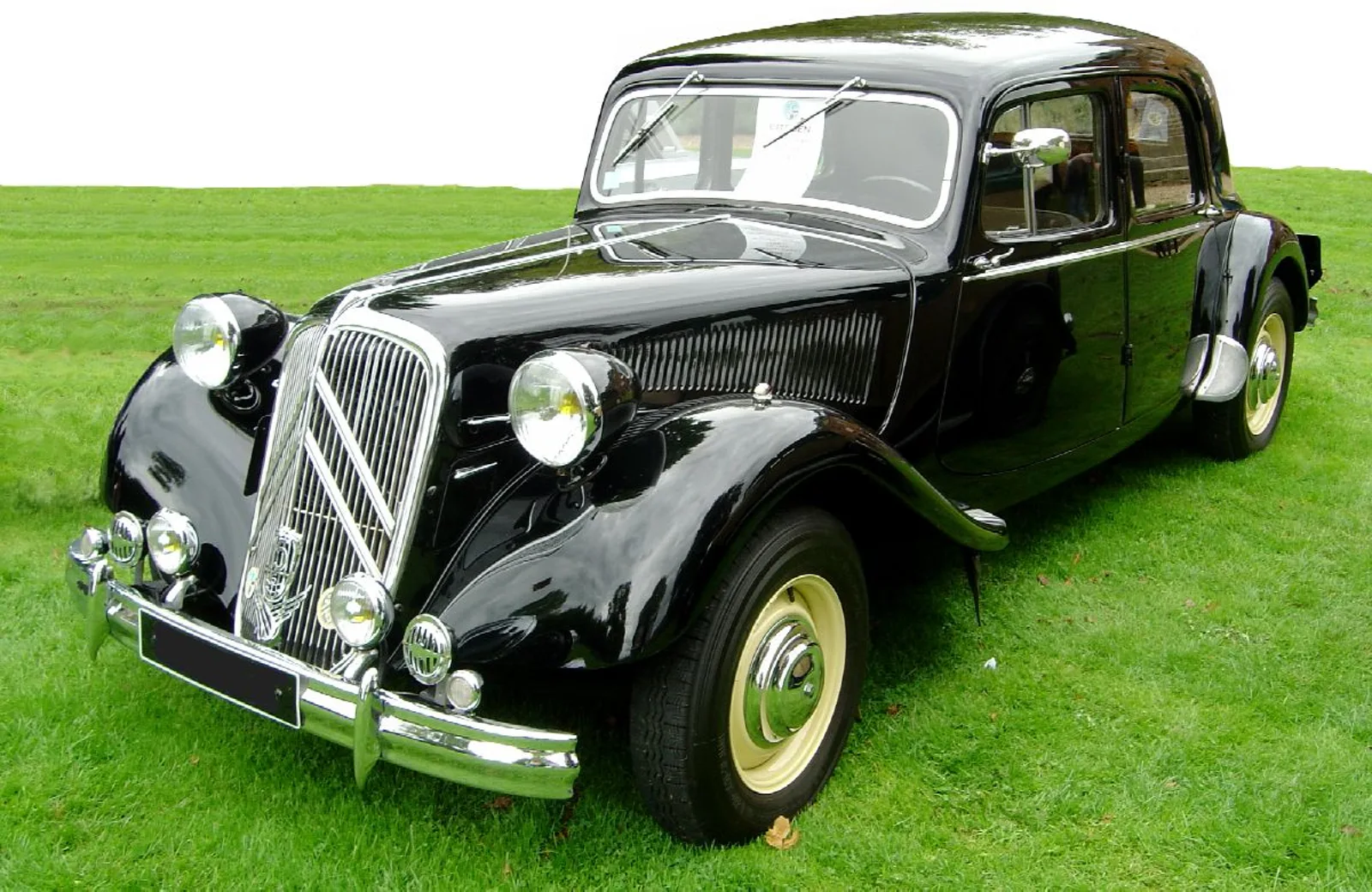
France supplied the layout's steadiest champion. Citroen built some three-quarters of a million Traction Avant cars through 1957, and added the 2CV in 1948 and the DS in 1955. Except for Citroen, the layout was largely abandoned for twenty years after the 1930s.
What the layout gives is sharp turning and favourable weight distribution, because the heaviest components sit near the centre of the car and keep its resistance to rotation low. Alfa Romeo built a transverse front-drive compact called the 33 in 1954, but it never reached production, and the Mini became the model for the modern European small car. Renault 5 and Volkswagen Golf followed, and front drive was adopted for all mainstream European cars.
How did rear-wheel drive lose its lead?
Rear drive had a long run first. The 1895 Panhard was the first rear-driven car with its engine at the front, a layout once known as the Systeme Panhard, and its advantage was low mechanical complexity. Gearbox and final drive were split, so the shaft could spin faster for the same power, carry less torque and be built lighter. In an era of cheap petrol and heavy cars it stayed almost universal until the 1970s.
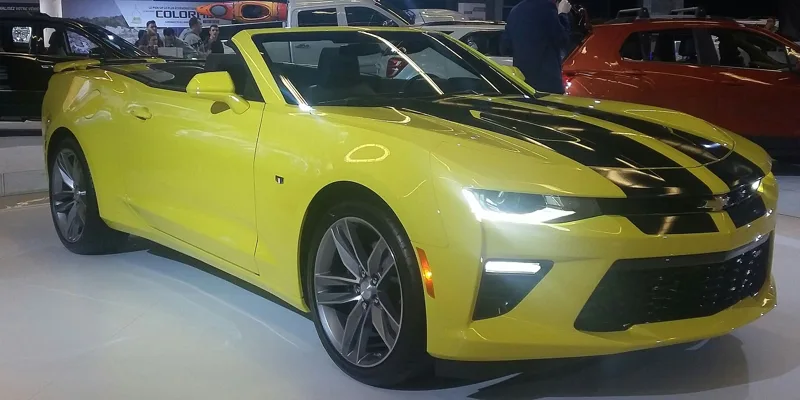
Then fuel prices moved. Chrysler went entirely front-drive by 1990, and General Motors followed by 1997 in American production, with only the Corvette, Firebird and Camaro excepted. Ford kept the Mustang rear-driven to preserve a sporty presence, and kept its Panther-platform saloons until 2011. In Australia, rear-drive cars stayed popular, with the Holden Commodore and Ford Falcon selling strongly until the late 2010s. Mercedes-Benz, BMW and Jaguar mostly resisted the trend, and Toyota was almost entirely rear-drive until the late 1970s and early 1980s, when the Tercel became its first front-drive car.
The layout has costs. A driveshaft needs a large tunnel between the rear seats, so the Mazda RX-8 and Porsche Panamera drop the centre rear seat altogether. Yet in the 21st century rear drive is coming back as a rival to large SUVs. GM brought it back to luxury cars with the 2003 Cadillac CTS, followed by the Chevrolet Camaro in 2009 and the Chevrolet SS in 2013. Chrysler and Dodge put the 300 and Charger on rear-drive platforms, and the Subaru BRZ is rear-driven too.
Why are electric cars bringing rear-wheel drive back?
The packaging advantages of front drive do not apply to electric cars, while their generally more powerful drivetrains gain from the better traction that rear drive gives during acceleration. Modern electronic stability control largely negates the harder handling that rear drive can bring in difficult conditions.
The Kia EV6, the Volkswagen ID.4 and the Tesla Model 3 are all rear-driven in single-motor form. Electric cars also escape the old layout rules altogether. Many have separate motors driving each axle or even each wheel, with no centre differential, and the dual-motor Tesla Model S manages its torque split electronically. Some hybrids drive the front wheels with the engine and the rears with a motor, which may be marketed as eAWD.
What is the difference between AWD and 4WD?
There is no universally accepted terminology, and manufacturers' labels often reflect marketing more than engineering. In North America, 4WD generally means a system tuned for off-road driving with a transfer case that switches between two- and four-wheel drive, while AWD means a system aimed at on-road traction, especially in poor weather.
Historically the two terms meant the same thing, and AWD was used for four-wheel drive at least as early as the 1920s. The shorthand 4x4 counts axle ends: the first figure is the total and the second is how many are powered. A 4x2 is a four-wheeler that powers two ends, front or rear, and a 6x4 has three axles with two of them driven. SAE International's standard J1952 recommends using only the term all-wheel drive, then sorts systems into three families.
- Part-time: the driver couples and uncouples the second axle, and there is no centre differential.
- Full-time: both axles are driven all the time through an interaxle differential. A standard bevel-gear unit splits torque 50:50, while a planetary one can split it unevenly, such as 30:70.
- On-demand: the car runs mostly with one driven axle and sends torque to the other through a coupling when needed. An independently powered axle, such as an electric motor on a hybrid, also counts.
Those three families split further into eight systems in total. For a buyer the useful point is what each does on a firm road. A part-time system rigidly locks the axles, which does not allow any speed difference between them and causes wind-up in the driveline, so it is recommended only for off-road and loose surfaces. Full-time and on-demand systems can be used anywhere. Typical AWD works well on all surfaces but is not meant for extreme off-roading.
Why does a car need differentials?
When a car turns, the wheel on the outside of the curve travels farther than the one on the inside. A differential lets the two wheels on an axle turn at different speeds. Without one, a wheel is forced to slip or the car hops and strains. Think of a marching column wheeling around a corner, where the outer rank takes longer strides.
A plain open differential has a weakness. It sends equal torque to both sides, so when one wheel sits on ice or gravel and spins, the wheel with grip receives little or none, and in extreme cases the car cannot move. Limited-slip differentials restrict the slip, and locking differentials temporarily tie the two output shafts together. Electronic traction control copies them by braking the spinning wheel. It cannot prevent slip in advance, however, because it has to let a wheel slip before it reacts.
Four driven wheels bring a trade-off. A four-wheel-drive car has twice as many wheels to lose traction, but each receives roughly half the torque of a two-wheel-drive car, which reduces the chance of slipping. That is the reason the extra wheels help on slippery roads without being a guarantee of grip.
Where did all-wheel drive come from?
Driving all four wheels is an old idea. In 1893 an English engineer, Bramah Joseph Diplock, took out a patent on a steam traction engine with all four wheels driven. Ferdinand Porsche built a four-wheel-driven electric vehicle in 1899, shown at the 1900 Paris World's Fair, after his Lohner-Porsche of 1897 with a motor in each front wheel. The Four Wheel Drive company was building such vehicles from 1909.
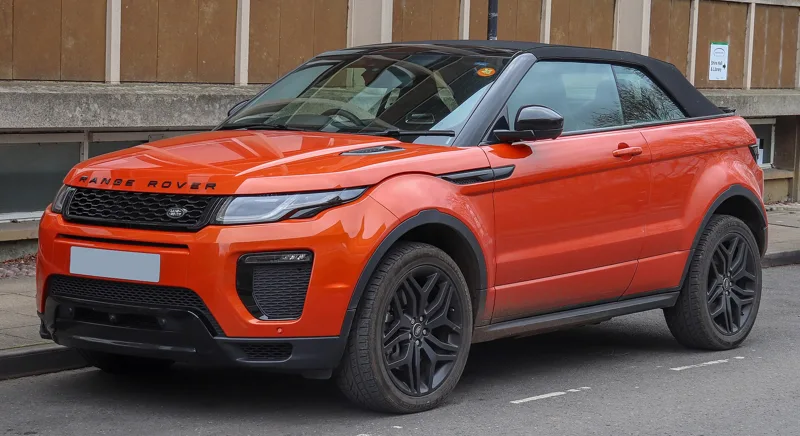
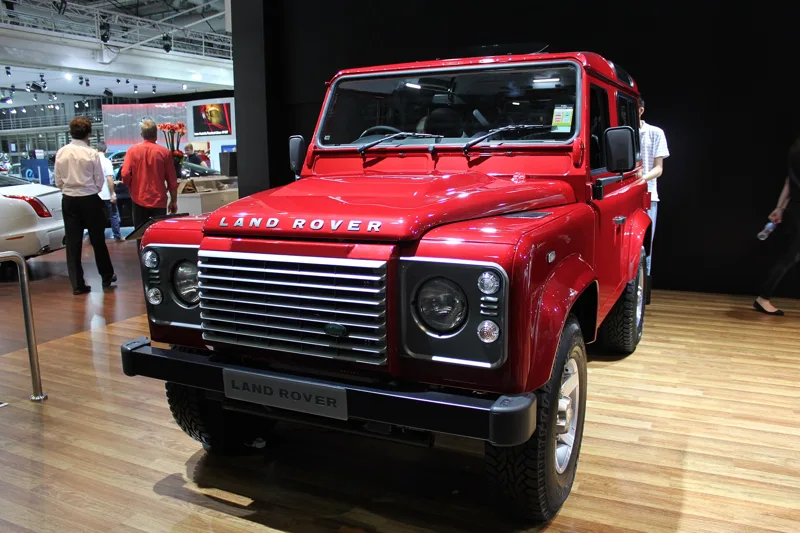
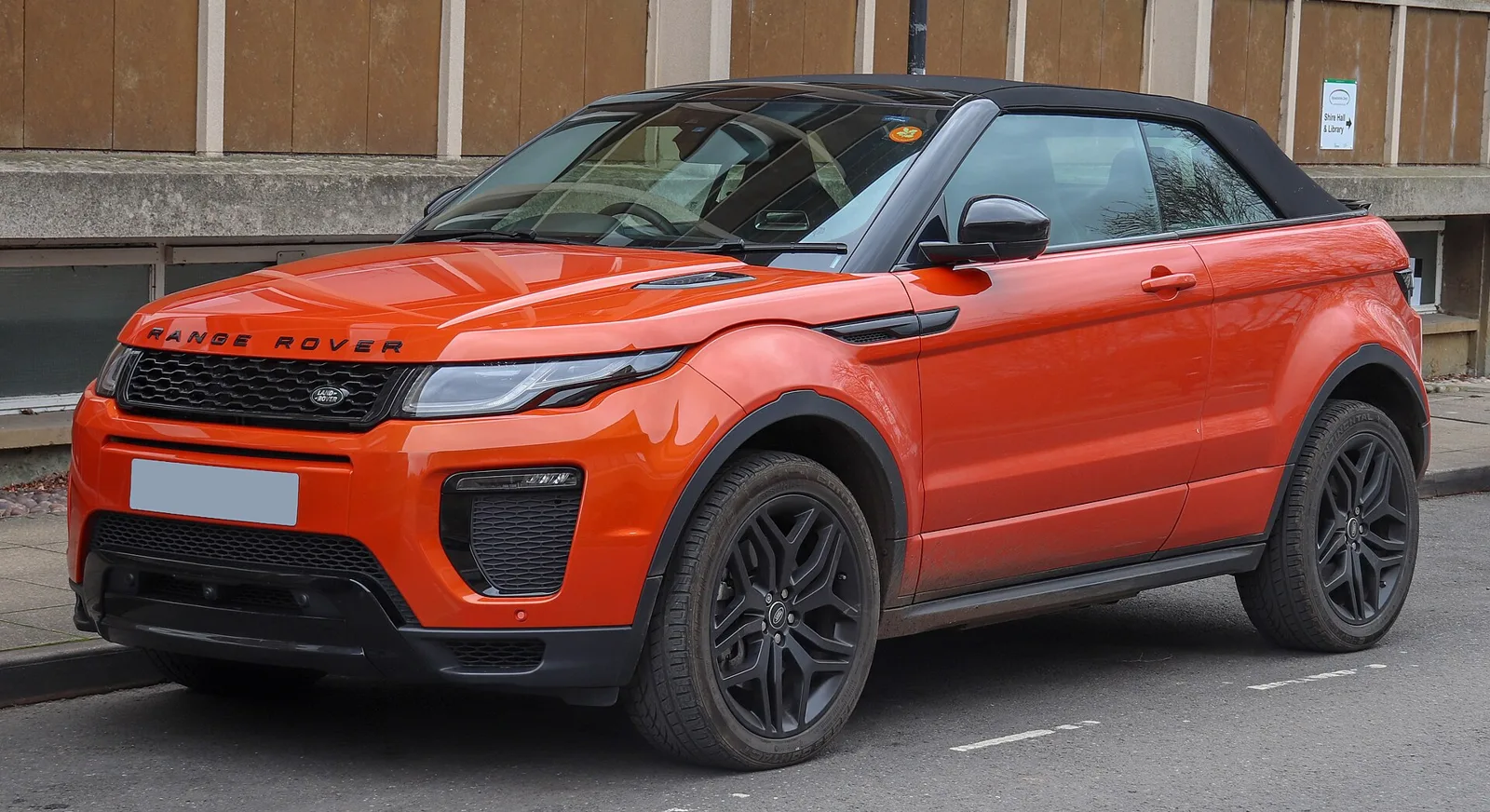
Early off-road vehicles such as Jeep and Land Rover models used a selectable system, because a basic dog clutch in the transfer case avoids wind-up without needing a differential. Interest in giving ordinary cars the same advantage started in the 1960s, when tyres gave better winter performance, and the target was snow, ice and wet roads, not rough ground. The Jensen FF, AMC Eagle, Subaru Leone and Audi Quattro were the first high-speed road cars with the system, and the Quattro in particular developed the use of viscous couplings and differentials. The Range Rover chose permanent all-wheel drive instead of manual selection.
How do front, rear and all-wheel drive compare?
| Feature | Front-wheel drive | Rear-wheel drive | All-wheel drive |
|---|---|---|---|
| Wheels driven | Front pair | Rear pair | All four, full-time or on demand |
| Usual engine layout | Mounted transversely at the front | Mounted longitudinally at the front | Varies; often a transfer case or centre differential |
| Space | Mini left eighty percent of the floor plan for people and luggage | Driveshaft tunnel; some cars drop the centre rear seat | Extra shafts and differentials |
| Handling notes | Sharp turning; low polar inertia | Harder handling in difficult conditions, largely offset by stability control | Works well on all surfaces; not for extreme off-road use |
| Where it stands today | Most cars, including front-engined economy cars | Upscale marques and sporty models; more common again in electric cars | Winter and wet-road traction; electric cars with a motor per axle |
| Early landmark | 1931 DKW F1; 1959 Mini | 1895 Panhard | Jensen FF, AMC Eagle, Subaru Leone and Audi Quattro were the first fast road cars |
Which drive layout suits your driving?
- Front-wheel drive: the default for economy cars and the choice if interior space matters, since the engine sits across the nose and leaves most of the floor for people and luggage.
- Rear-wheel drive: the layout upscale and sporty marques kept, and the one Ford held on to for the Mustang to preserve a sporty presence. Accept a centre tunnel in return. In electric cars it gives better traction under hard acceleration.
- All-wheel drive: aimed at traction in snow, ice and rain, and fine on any surface short of extreme off-roading. It adds differentials and couplings, so more mechanical parts to carry.
- Four-wheel drive: the off-road choice. A part-time system should be used only on loose surfaces, because the locked axles cause wind-up on firm roads.