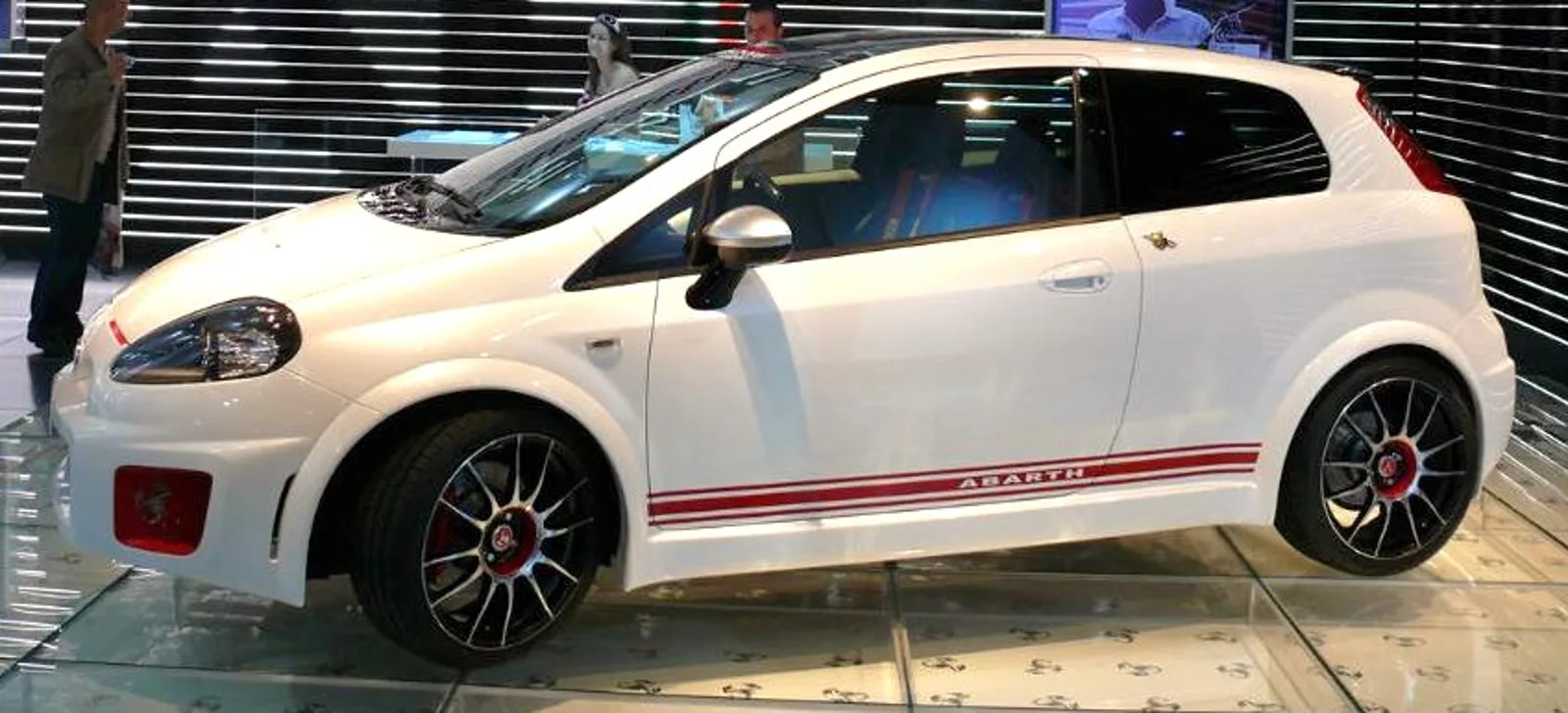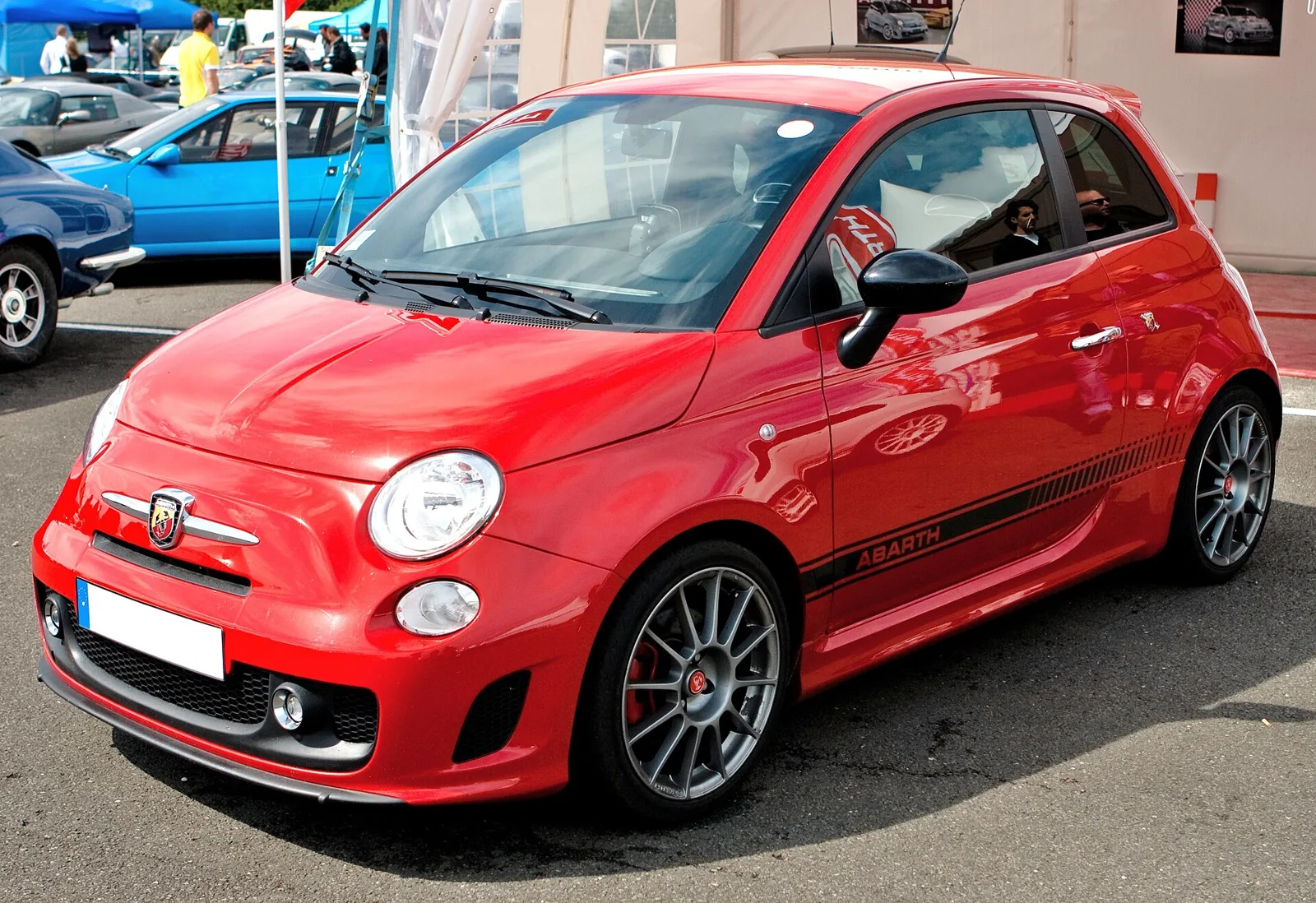
A tuned Fiat 500 with a 1,368 cc turbo four, a long run of limited editions and a set of anniversary cars that reached Japan in small numbers.
The Abarth 500 is a tuned Fiat 500 hot hatch with a 1,368 cc turbo four, first shown in 2008 and sold in Japan from April 2009. Its 595 and 695 variants included many limited editions, among them collaborations with Ferrari and Maserati.
The Abarth 500 is a hot hatch built on the third-generation Fiat 500 and sold under Fiat's Abarth brand. Abarth tuned the base car with a 1,368 cc (83.5 cu in) turbocharged four-cylinder engine, and over the years the range grew into the 595 and 695 families.
The car was first shown at the 2008 Geneva Motor Show as the 500 Abarth. Japanese sales began in April 2009, and the model went on to produce a long line of limited editions, including collaborations with Ferrari and Maserati.
What makes the Abarth 500 different from the Fiat 500?
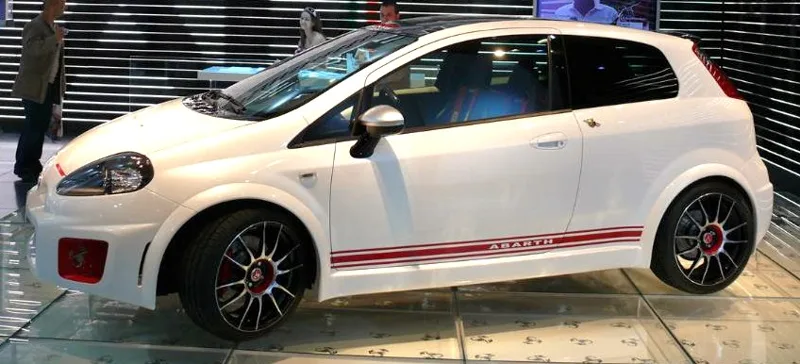
Abarth fitted its own bumper with a large air intake, overfenders, side skirts and a roof spoiler. Inside, the seats, aluminium pedals and flat-bottomed steering wheel are Abarth-only parts, so the changes run through both the body and the cabin.
The exterior changes are easy to see, but the mechanical work matters more. The engine is a 1,368 cc (83.5 cu in) inline-four DOHC turbo, paired with a 5-speed manual or a 5-speed semi-automatic branded Abarth Competizione.
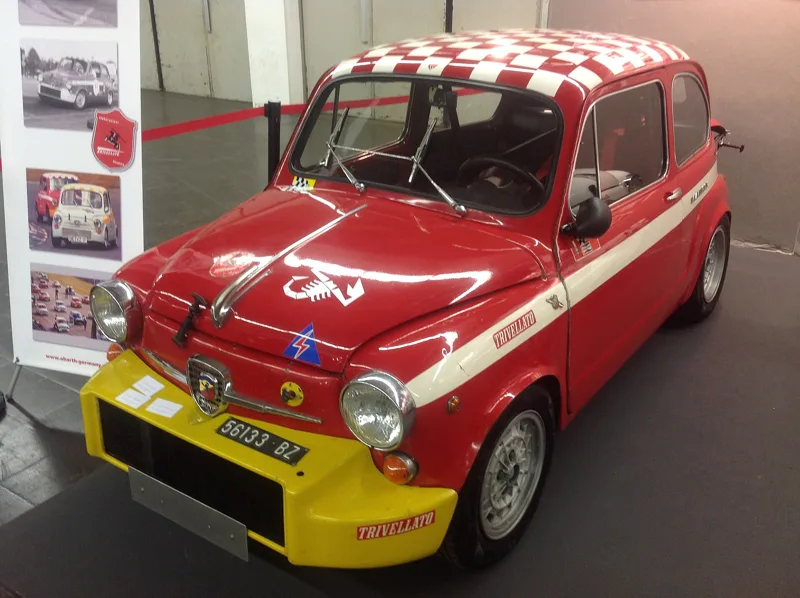
Abarth also offered a sports seat developed jointly with a seat specialist, the Abarth Corsa seat, which came as standard on some models. Side stripes and roof decals with a checkered motif were carried over from earlier Abarth models, giving the car a visual link to the marque's history.
A tuned Fiat 500 that Abarth turned into a family of limited editions, one small run at a time.
What is the Record Monza exhaust?
Record Monza is a variable exhaust system that comes as standard on some Abarths and as an option on others. Two of its four tailpipe openings are straight pipes with no silencer. Normal exhaust flow goes through the inner pair, and above 3,000 rpm under high load a valve opens so the outer pair takes exhaust too.
The 595 Competizione carried Record Monza as standard when the 595 series was announced, which makes the system a core part of that sportier version.
How did the 500 reach Japan?
The 500 was announced for Japan on 2 April 2009 and went on sale on 18 April 2009, with only a 5-speed manual gearbox. A left-hand-drive version followed on 1 October 2009. The open-top 500C arrived on 5 October 2010 with only a 5-speed semi-automatic.
The 500 stayed manual-only in Japan until March 2014, when a 5-speed semi-automatic with 140 PS (138 hp; 103 kW) was added to the 500.
How much power did the esseesse kit add?
The esseesse kit, sold from mid-December 2009, lifted maximum output to 160 PS (158 hp; 118 kW) through a dedicated ECU and air cleaner. It also brought stiffer springs, a lower ride height, 17-inch diamond-polished wheels and drilled front and rear discs.
Front brake pads were changed to a high-performance specification, and the kit carried dedicated engine cover and rear badges. Including fitting, the kit cost 462,000 yen.
When did the 595 name arrive?
The 595 and 595C were announced on 11 January 2013 as higher-specification versions of the 500 series, with richer equipment and an engine and chassis matching cars fitted with the earlier esseesse kit. In the 2017 facelift every catalogue model took the 595 name.
The 595 range launched in three versions: the Turismo, focused on comfort and a feeling of quality; the Competizione, focused on sportiness with Record Monza as standard; and the open-top 595C Turismo. The 695 name first appeared on limited editions from 2010, and in 2023 the 695 models were listed as catalogue models.
How many cars were in each limited run?
Run sizes ranged from 20 Anno del Toro cars to a world total of 2,000 cars for the Scorpioneoro and the Yamaha-inspired edition. Japan received allocations in several runs: 150 of the 1,696 Tributo Ferrari cars, 100 of the 499 Edizione Maserati cars and 50 of the 299 50th Anniversary cars.
Several runs were split by steering wheel position or by gearbox, with a separate count for each.
What were the Ferrari and Maserati editions?
Two collaboration editions shaped the early limited runs. The Tributo Ferrari was announced in October 2010, and the Edizione Maserati of 2013 shared its powertrain. Both were limited runs with dedicated 17-inch wheels, with a carbon-shell Abarth Corsa seat in the Tributo and sand beige leather in the Maserati edition.
The Tributo Al Giappone was a Japan-only version limited to 50 cars, with reservations from 24 March 2012. It wore a pearl white called Bianco Fuji and magnesium grey wheels, and part of its vehicle price went to reconstruction after the Great East Japan Earthquake.
The Edizione Maserati, announced in 2013, was a collaboration with Maserati. It came in a three-layer metallic paint called Pontevecchio Bordeaux, with a 17-inch wheel based on the Maserati emblem, sand beige leather seats and a premium sound system. Its powertrain was shared with the Tributo Ferrari.
Which motorsport links does the Abarth 500 have?
The 695 Biposto was the road-going counterpart of the 695 Assetto Corse. Abarth's racing arm sells that car for competition use only. It debuted at the 2014 Geneva Motor Show and went on sale on 1 September 2015, producing 190 PS (187 hp; 140 kW), with torque of 25.5 kgm.
The Biposto was a two-seater with the rear seats removed. Lightweight parts were used throughout, including 18-inch alloy wheels and an aluminium bonnet. The full-spec version added a dog-leg gearbox and a four-point seatbelt, with torque rising to 27.5 kgm.
Motorsport also shaped later editions. The 2021 Yamaha-inspired edition took its cue from the factory YZR-M1 that competes in the MotoGP class, and the Settantanni rear wing drew on the 1970 Fiat Abarth 1000 TCR.
Which later editions followed?
The Scorpio of November 2015 was a special edition of the 595 Competizione, limited to 200 cars and offered in four body colours, including metallic blue and metallic red. Its electric door mirrors, front and rear emblems and door handles were finished in dark grey, and the esseesse brake kit was also fitted.
The Stile of October 2019 put more weight on ease of getting in and out, and on everyday usability, than on the racy image of the base car. It carried brown full-leather sports seats with smaller side bolsters and came in white, red and grey, with 40 manual and 45 semi-automatic cars for each colour.
The Pista of May 2020 added 20 PS to the base car, reaching 165 PS (163 hp; 121 kW), and it carried a specialist FSD shock absorber at the rear. Its Blu Podio paint came with yellow accents on the lip spoiler, door mirror covers and rear diffuser, and the run was limited to 240 cars.
What set the Performance Packages apart?
The Performance Package of July 2017 carried the mechanical limited-slip differential from the 695 Biposto on a 595 Competizione. Its 17-inch alloy wheels had a dedicated design, and the mirror covers, side stripes, lip spoiler and bumper inserts were black on the yellow cars and red on the white ones.
Performance Package II followed in August 2018, with 100 cars in total split between left-hand and right-hand drive. It kept the limited-slip differential and gained yellow-painted four-piston calipers at the front, along with black side stripes and a lip spoiler. Its body colour was the dedicated grey Grigio Pista, and the gearbox was a 5-speed manual only.
Performance Package 3 arrived on 27 June 2019 as a run of 160 cars. It used the same mechanical differential and yellow-finished calipers, with a dedicated matt grey called Grigio Opaco. The price was 4.06 million yen.
The MT Limited and Riva editions
The MT Limited of April 2018 was offered on the 595 Turismo and 595C Turismo, which had not previously been sold with a 5-speed manual. The car had 17-inch 20-spoke aluminium wheels and yellow-painted brake calipers, plus front shock absorbers that were normally fitted only at the rear. The 595 Turismo came in Trofeo Grey and the open-top 595C Turismo in Gara White, and the run was limited to 150 cars.
The 695 Rivale edition of November 2018 was a collaboration with an Italian luxury boat maker. Its dedicated blue and grey two-tone finish had an aquamarine accent line, and it added 17-inch wheels, a carbon-finish high-performance exhaust, 695 RIVALE emblems and chrome trim. Limited to 150 cars, it came with a 5-speed semi-automatic only.
Later limited runs, 2020 to 2022
The esseesse of September 2020 was a 305-car run based on the 595 Competizione. It replaced the standard Record Monza system with a dedicated exhaust, and its body colour was Grigio Campovolo grey with side stripes and white 17-inch aluminium wheels.
The Scorpioneoro of November 2020 was limited to 2,000 cars worldwide, with 200 allocated to Japan. Its body was mainly black with gold accents and a matt black checkered roof, the brake calipers were black and the 17-inch wheels were gold. It paid tribute to the Autobianchi A112 Abarth Targa Oro built in 1979.
The Anno del Toro of January 2021 was a 20-car run in Blu Podio with a checkered roof, grey overfenders and side sills, and vintage-style logo badges. The Momento of March 2021 had 80 cars in matt grey, with 12-spoke 17-inch aluminium wheels, a yellow centre hub cap, yellow-finished four-piston brake calipers and the mechanical limited-slip differential.
The 2021 Yamaha-inspired edition used a two-tone finish combining black with Blu Podio blue, plus a logo sticker on the bonnet and team lettering on the sides. Of 2,000 cars worldwide, 60 went to Japan. The 695 esseesse followed in May 2022, on sale from 28 May with 1,390 cars worldwide and 400 allocated to Japan.
How did Abarth mark its anniversaries?
Abarth was founded in 1949, and the Settantanni Anniversario edition marked the company's 70th anniversary in 2019. It was based on the 595 Competizione, with a dedicated green colour called Verde Monza 1958 that takes its name from the Fiat 500 Elaborazione Abarth Record. That car set six speed records at Monza in 1958.
The 50th Anniversary edition of the 595 marked 50 years since the Fiat Abarth 595 was introduced in 1963. It used original-style side stripes, red-lined 17-inch alloys and red and white leather seats, and its engine matched the Maserati and Ferrari editions at 180 PS and 25.5 kgm.
The esseesse name is the Italian reading of SS, and it links the current 595 series to the 1960s Fiat Abarth 595 Esseesse. The 2022 esseesse edition in turn modelled itself on the 1964 Fiat Abarth 695 Esseesse.
Did a Japanese edition support earthquake recovery?
Part of the vehicle price of the Tributo Al Giappone was set aside for post-disaster recovery in eastern Japan. That Japan-only version of the 695 Tributo Ferrari was limited to 50 cars.
The Japanese allocation of the later Settantanni edition also grew during the run. An extra 100 cars were announced at the official ABARTH DAYS 2019 event at Fuji Speedway.
Key specifications
| Specification | Detail |
|---|---|
| Engine | 1,368 cc (83.5 cu in) inline-four DOHC turbo |
| Gearbox | 5-speed manual or 5-speed semi-automatic (Competizione) |
| Esseesse kit | 160 PS (158 hp; 118 kW) |
| 2017 595 base | 145 PS (143 hp; 107 kW) |
| 2017 Turismo versions | 165 PS (163 hp; 121 kW) |
| Tributo Ferrari | 180 PS (178 hp; 132 kW); 25.5 kgm torque |
| Pista | 165 PS (163 hp; 121 kW) |
| 695 Biposto | 190 PS (187 hp; 140 kW); 25.5 kgm, or 27.5 kgm full-spec |
| Brake rotors on the 595 kit | 305 mm floating discs |