How Abarth turned the humble Fiat 600 into a touring car that beat much larger machines, from the 850TC Berlina to the Nurburgring and SCCA legends.
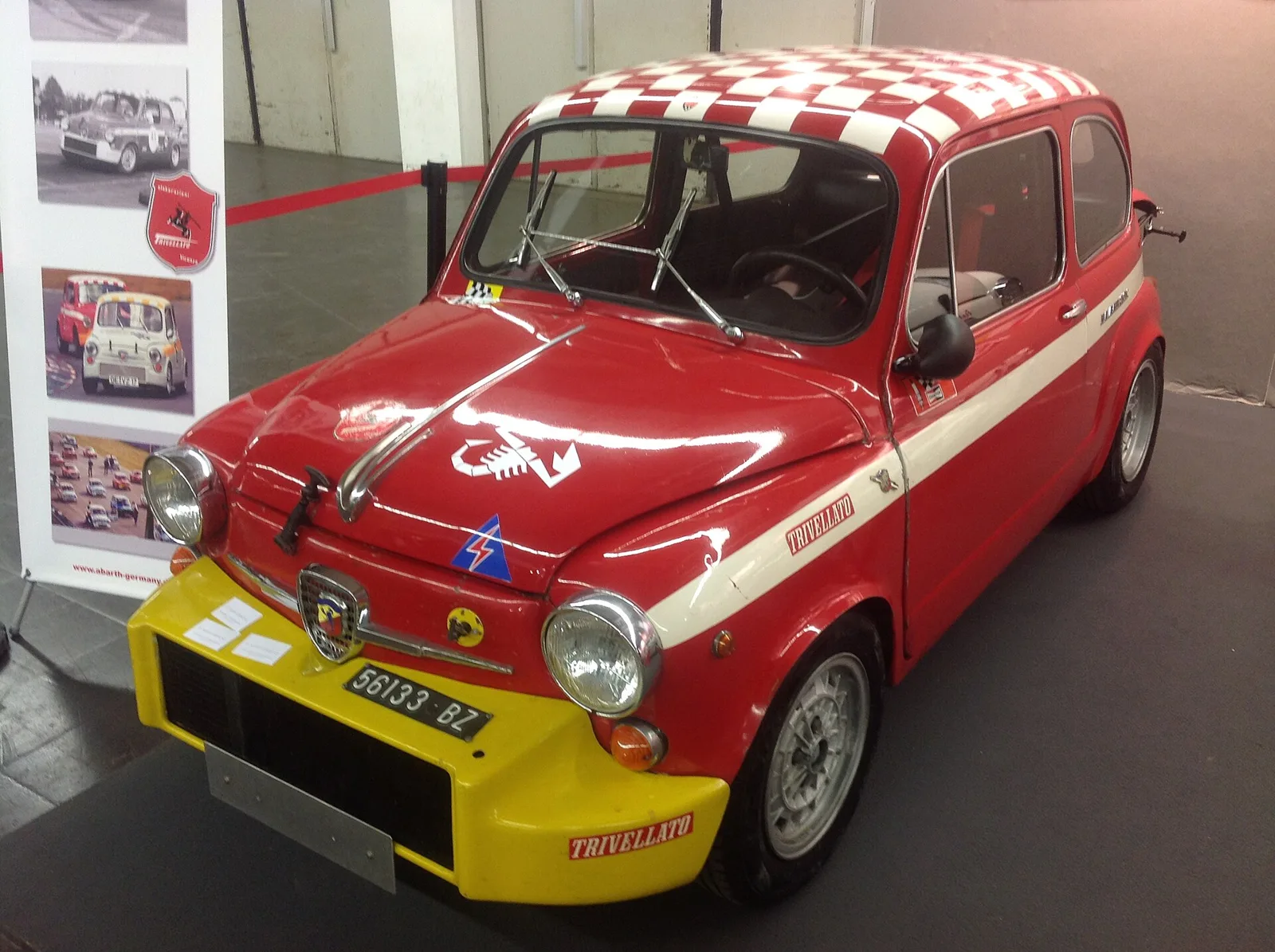
Built by Abarth on the Fiat 600, the 850TC ran from 1961 to 1969 with an 847 cc engine giving 52 CV. The name Berlina referred to the standard bodywork, while TC stood for touring competition, and the car earned the Giant Killer nickname.
The Fiat Abarth 850TC Berlina was a touring car built by Abarth on the Fiat 600 platform, sold between 1961 and 1969. Its name stood for Turismo Competizione, and it won international races against much larger machines.
What was the Fiat Abarth 850TC Berlina?
The 850TC Berlina was a Group 2 touring car specification built by the Italian firm Abarth & C. of Turin on the Fiat 600 base. It was introduced towards the end of 1960 and was manufactured between 1961 and 1969, staying in the price lists until 1966.
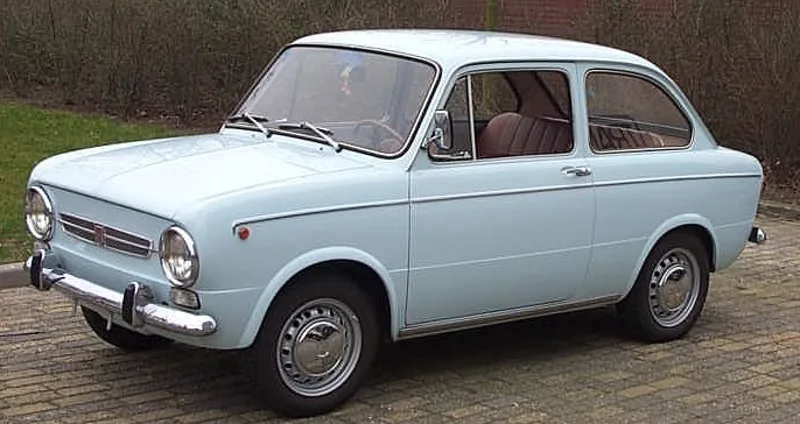
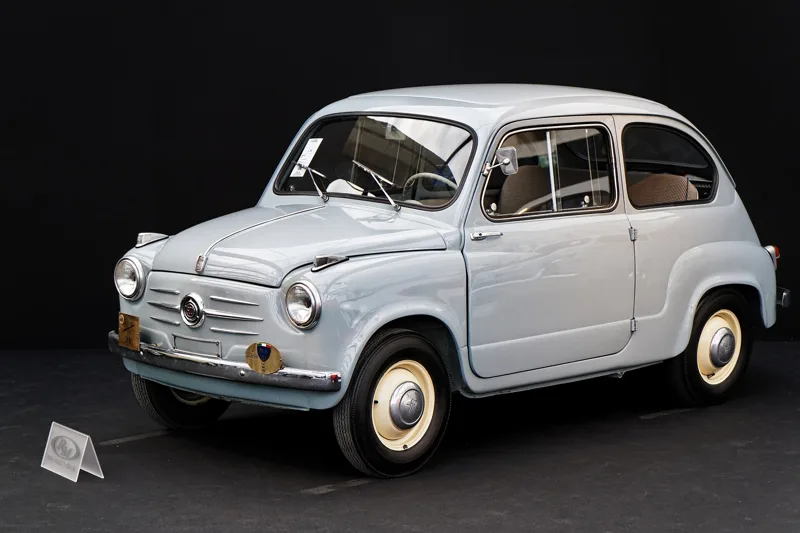
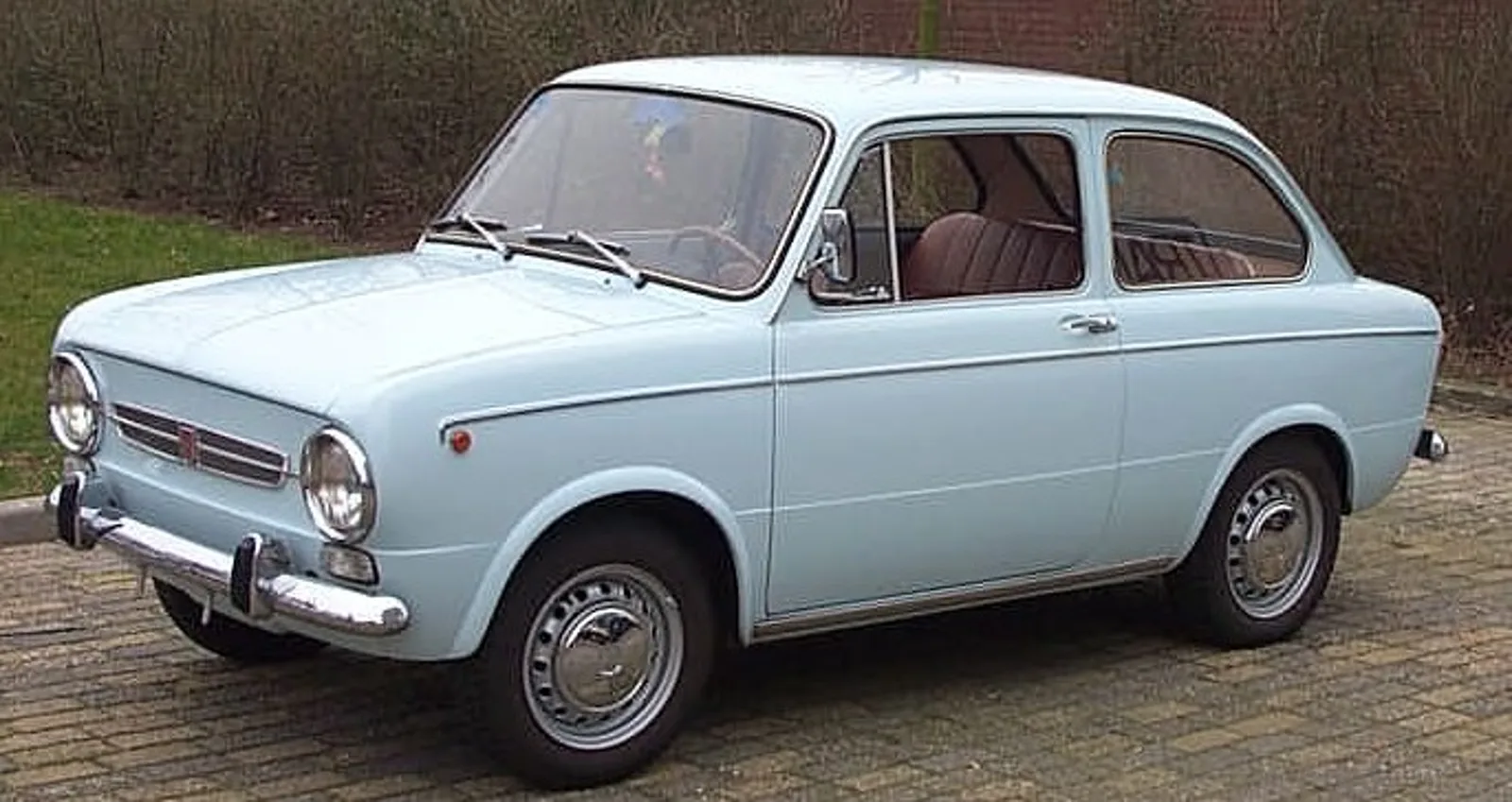
It used the Fiat 600 bodywork with modifications, and its engine was a four-cylinder unit based on a Fiat design, displacing 847 cc. The car is best understood as a competition derivative of an everyday small Fiat rather than a new design from scratch.
A Fiat 600 turned into a touring car that beat machines far larger than itself, and earned the Giant Killer nickname.
How did the Abarth 600 family begin?
The 210 A Spyder came first, in late 1955, only a short time after the 600 went on sale. The 750 family that followed used the same base. It used the standard 600's bottom plate and a modified engine, and its sleek bodywork came from Boano.
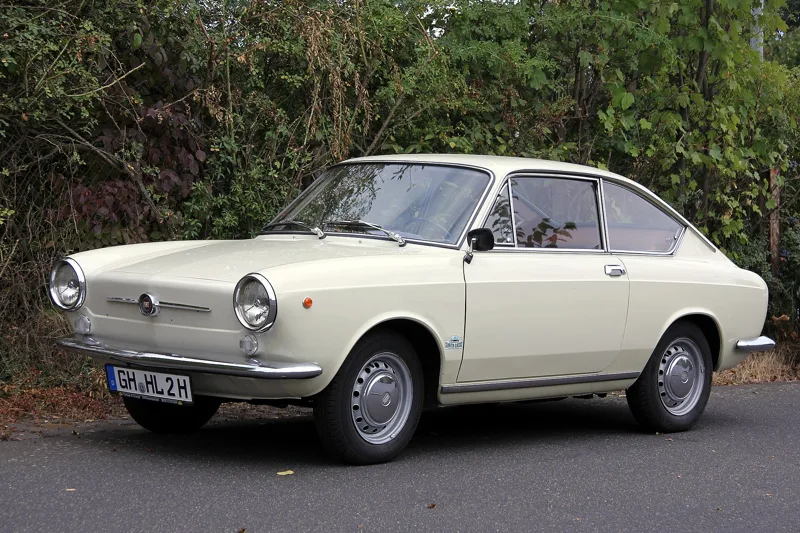
In 1956 Abarth presented twin concept models, the 215 A Coupe and 216 A Spyder, both designed by Franco Scaglione at Bertone. The Fiat 600 base was the common thread, and the 750 derivative quickly followed.
Abarth offered its 750 derivative both with the original Berlina bodywork and with more slippery bodywork from others. The most famous of these was the aerodynamic Zagato-bodied range, whose double-bubble design became a Zagato signature.
The first Abarth product to use the standard Fiat bodywork was the 750 Gran Turismo Derivazione, which appeared in early 1956. Fiat delivered these cars incomplete, which made the performance work cheaper and easier for Abarth to carry out.
The 750 Zagato double bubble was first presented at the 1955 Turin Motor Show. Its single-cam engine produced 43 CV (32 kW; 42 hp), and the all-aluminium body carried the double-bubble roof that gave the model its name.
Siata, a failing Fiat modifier, was owned by Abarth from 1959 until 1961. Its 600-based Amica, with a 735 cc engine, was sold as the Siata-Abarth 750, although there was little real Abarth involvement.
Three distinct Zagato models followed: the 750 Double Bubble, the 750 Record Monza and the 750 Sestriere. The Sestriere used a single-cam pushrod engine, and most were built in steel.
A very rare Zagato Spyder was shown at the 1957 Turin Auto Show, and only a handful were built. Its 44 CV (32 kW; 43 hp) gave a top speed of 153 km/h (95 mph) in a period road test.
To suit the reshuffled Gran Turismo classes, a 698 cc version appeared at the 1959 Turin Auto Show. Its twin-cam engine produced 64 CV (47 kW; 63 hp) at 7,100 rpm, and a Zagato-styled example managed 31 laps at the 1960 Le Mans.
How did the Bialbero engine change the family?
The 750 GT Bialbero appeared at the 1958 Turin Auto Show with a new twin-cam engine producing 57 CV (42 kW; 56 hp) at 7000 rpm. Gioacchino Colombo had to work around an engine mount that blocked the natural routing for the cam chain.
The Fiat 600 engine also prevented a classic crossflow layout, so the carburettors were mounted between the camshafts. As the carburettors grew, Abarth developed a banana-shaped intake manifold, which made the Bialbero engine quite tall and created the bulges seen on lower designs.
The first Bialbero run was 100 cars, the number needed to homologate it for Gran Turismo competition. In the USA, the Record Monza raced for the Franklin D. Roosevelt Jr team and became Abarth's most successful racer.
Where did the 850 name come from?
For the 1960 Gran Turismo racing season the classes changed to under 700 or under 1000 cc, and national competitions also featured an 850 cc class. Abarth responded with engines suited to the new classes, and that response made the 850 a natural name for the Berlina.
The Abarth 850 Spider, with bodywork by Allemano, was first shown in the spring of 1960. Its single-cam Fiat-based engine developed 52 CV (38 kW; 51 hp) at 6,000 rpm, and a coupe version was later developed that was more comfortable but heavier.
The 850TC Berlina was the touring car that brought the 850 name into competition. It was built to Group 2 touring car rules and sold alongside the Spiders.
How was the 850TC built?
The body was the Fiat 600's, changed chiefly by a box-shaped nose ahead of the front bumper that housed the oil cooler. Its rear fenders were usually blistered to accommodate larger wheels, which gave the car a purposeful stance.
Overall length was 3,090 mm (122 in), and overall width was 1,400 mm (55 in), with a height of 1,380 mm (54 in). The wheelbase was 2,000 mm (80 in), and the front and rear track measured 1,160 mm (46 in).
The fuel tank held 5.9 imperial gallons.
What engine did the 850TC use?
The engine was a four-cylinder model based on a Fiat unit, with 847 cc of capacity and a rating of 52 CV (38 kW; 51 hp) CUNA. Its output was quoted in CV, the Italian horsepower unit. That output was the baseline for the car's competition career.
In 1962 the 850TC Nurburgring was introduced, with 55 CV (40 kW) at 6500 rpm. The name celebrated the class victory of an Abarth 850TC at the 1961 Nurburgring 500 km race.
The 850TC/SS added two more horsepower, and the car was then renamed the 850TC Nurburgring Corsa towards the end of 1962.
How did the 850TC race and win?
Between 1962 and 1971 the 850 and 1000 cc class cars won hundreds of races around the world, including in the USA. They earned the nickname Giant Killers because they regularly outpaced far larger cars, and the nickname stuck. Their results were recorded across Europe as well.
The most famous episode came in the USA, where Alfred Cosentino of FAZA was barred from using the Radiale engine in his 1970 Berlina Corsa 1000 TCR. The car was faster than many V8-powered rivals, especially in wet conditions.
The SCCA authorities required FAZA to use an earlier, non-Radiale engine from the 1962 model. Even so, the team still achieved 51 victories from 53 races, the most in SCCA racing history.
The 1000 Bialbero took the European GT title in the under-1,000 cc class in 1962 and again in 1963. Ugo Zagato received a Compasso d'Oro award in 1960 for the Abarth 1000 Zagato design.
The first Fiat 600-based Abarth with the larger 982 cc Bialbero was a Zagato-bodied Berlinetta, first shown at the October 1960 Paris Motor Show. Twin Weber carburettors and a 9.3 to 1 compression ratio helped it reach a top speed quoted at 205 km/h (127 mph).
What were the 1000 TC and Monomille?
The Abarth 1000 TC and its variants were fierce racing machines with international success. The 1000 TC also gained a Group 5 development, the TCR, with the Radiale head. The 1000 TC produced 85 hp (63 kW) at 7,600 rpm, and the car weighed 583 kg (1,285 lb).
The Monomille used the pushrod 982 cc motor and sold alongside the twin-cam Bialbero as a lower-priced, less complicated alternative. Its 9.0:1 compression ratio and Solex carburettor produced 60 PS (44 kW) at 6,200 rpm.
A Group 5 development called the 1000 TCR used Abarth's Radiale cylinder head, and it produced 112 hp (82 kW). The Radiale head also featured in the FAZA dispute.
Which names did the Berlina carry?
The Berlina bodywork appeared under many names as models changed. The dates in the list show how quickly the naming shifted. The list runs from the Fiat derivazione Abarth 750 Berlina of 1956 to 1959, through the Fiat Abarth 850 TC Berlina of February 1961 to December 1964.
The 850 TC Nurburgring Berlina ran from November 1961 to December 1964, the 1000 Berlina from July 1962 to December 1964, and the 1000 Berlina Corsa and 850 TC Corsa, group 2 versions, from 1963 to 1969.
The Radiale-engined TCR cars took the story into 1968 and 1969, when the 1000 TCR and 850 TCR appeared as group 5 cars. A final 1000 TCR group 2 car appeared in 1970.
What were the 850 Spider and Allemano models?
The 850 Spider had bodywork by Allemano and measured 3,600 mm (140 in) long, 1,420 mm (56 in) wide and 1,200 mm (47 in) high. It weighed 610 kg (1,345 lb), with a claimed top speed of 154 km/h (96 mph).
Allemano bodywork was later made available with the larger 1000 engine. Cisitalia's Argentinian daughter company also used the same bodywork, building the car with 760, 800 or 850 cc engines.
Fiat Abarth 850TC Berlina specifications
| Specification | Detail |
|---|---|
| Production | 1961 to 1969; introduced late 1960 |
| Specification | Group 2 touring car |
| Engine | 847 cc four-cylinder, 52 CV (38 kW; 51 hp) CUNA |
| Nurburgring, 1962 | 55 CV (40 kW) at 6500 rpm |
| Length | 3,090 mm (122 in) |
| Width | 1,400 mm (55 in) |
| Height | 1,380 mm (54 in) |
| Wheelbase | 2,000 mm (80 in) |
| Track, front and rear | 1,160 mm (46 in) |
| Fuel tank | 5.9 imperial gallons |
| 1000 TC output | 85 hp (63 kW) at 7,600 rpm, 583 kg (1,285 lb) |
| Monomille output | 60 PS (44 kW) at 6,200 rpm |
| TCR output | 112 hp (82 kW) |
| Price list | Remained listed until 1966 |