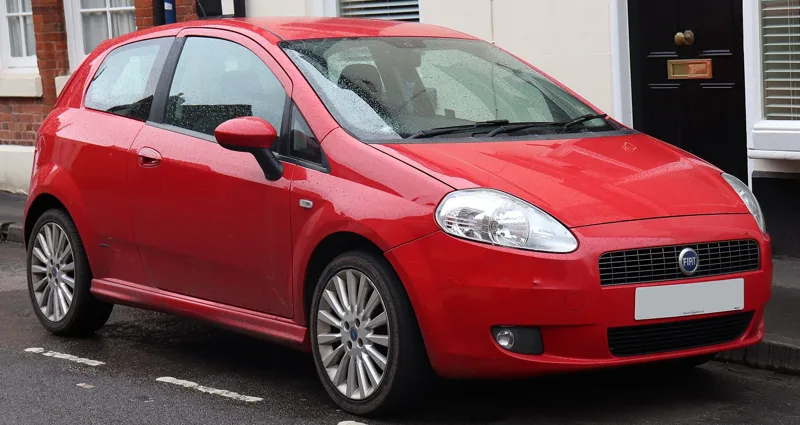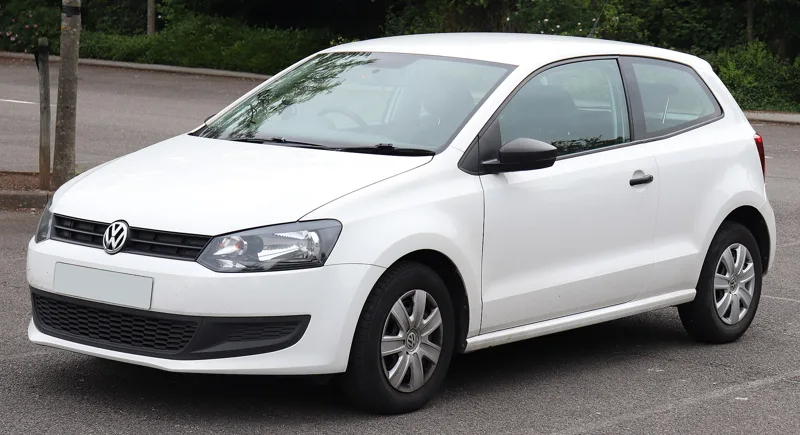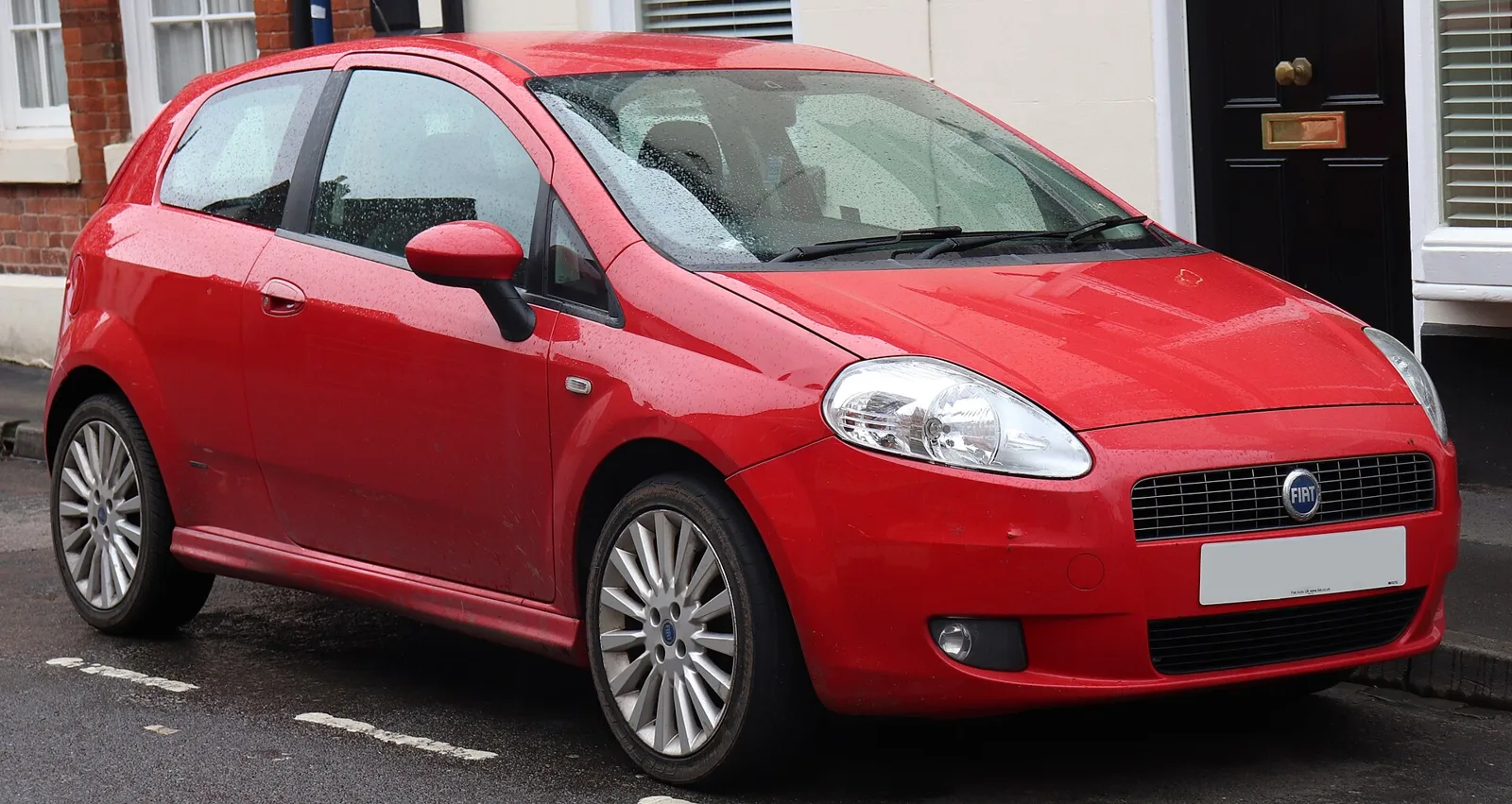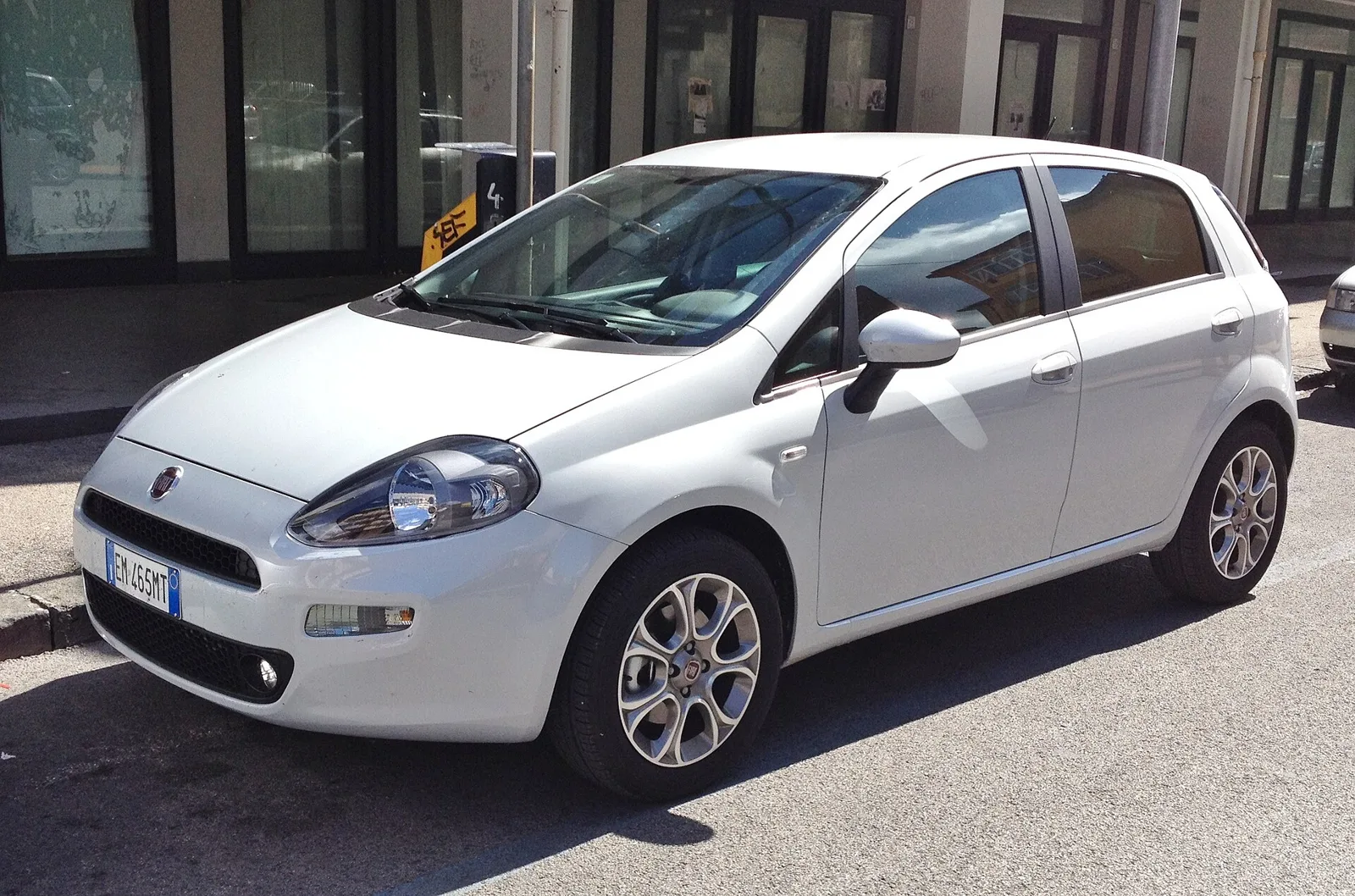
A Giugiaro-styled Italian supermini from 2005 and a Volkswagen Polo from 2009, set against each other on engines, the hot models that followed and the awards each won.
Set side by side, the Grande Punto and the Polo Mk5 split on character. The Grande Punto offers Giugiaro styling and a long Punto name, while the Polo won the 2010 European Car of the Year prize and offers the quicker GTI.
The Fiat Grande Punto and the Volkswagen Polo Mk5 were both built to win the supermini class in the late 2000s. The Grande Punto was the third generation of Fiat's Punto, launched in 2005, and the Polo Mk5 followed in 2009. Both carried clean, modern shapes and a wide range of petrol and diesel engines, and both went on to hot variants that sold on performance as well as price.
Were the Grande Punto and Polo rivals?
They were. The Punto was a rival of the Polo long before the Grande Punto arrived. In 1995 the first Punto won the European Car of the Year title, beating the Volkswagen Polo by 370 points to 292.
The two cars then met again in the same market over the following decade. The Grande Punto competed in a segment where the Polo Mk5 was a new arrival, and the two were judged on the same criteria of economy, practicality and value.
Giugiaro's Italian shape against a Volkswagen that won European Car of the Year with a 180 PS hot model.
How did the Grande Punto arrive?
Project 199, the third-generation Punto, was shown at Frankfurt in 2005 and reached showrooms before the year ended. It was marketed as the Grande Punto from 2005 to 2009, and it was then sold as the Punto Evo, before the one-word Punto name came back.
The car was styled again by Giorgetto Giugiaro, and it sat on the Fiat Small platform developed in a joint venture with Opel and General Motors. Although it kept the Punto name, a large number of its components were new, including the chassis and body shell.
Across the whole Punto family, nearly nine million had been sold by May 2013. The first generation accounted for 3.43 million units, the second 2.96 million, and the third 2.67 million.
How did the Polo Mk5 arrive?
The Polo Mk5, internally Typ 6R, was unveiled at the Geneva Motor Show in March 2009, and its three-door version followed at the Frankfurt show that September. It sat on the PQ25 architecture, also used by the SEAT Ibiza Mk4 and Audi's A1, and a team led by Walter de Silva styled it.
Production for the UK started in August 2009, with first deliveries in October that year. Work in South Africa was confirmed in November 2009, and the car reached India in February 2010 as the brand's first mass-volume product there since 2007.
The Polo took the 2010 European Car of the Year prize, ahead of the Toyota iQ and the Opel Astra. The Punto had taken the same prize in 1995, when it beat the Polo in the vote.
Specifications side by side
| Specification | Fiat Grande Punto | Volkswagen Polo Mk5 |
|---|---|---|
| Launch | Frankfurt Motor Show, 2005 | Geneva Motor Show, March 2009 |
| Platform | Fiat Small, developed with Opel and General Motors | PQ25, shared with the SEAT Ibiza Mk4 and Audi A1 |
| Body styles | Three and five-door hatchback | Three and five-door hatchback; sedan as the Vento in some markets |
| Petrol engines | 1.2 8v Fire, 1.4 8v Fire, 1.4 16v StarJet; 1.4 T-Jet from 2007 | 1.4 TSI turbo and supercharged GTI; three-cylinder units from the facelift |
| Diesel engines | MultiJet 1.3 and 1.9 units, 1.6 MultiJet from late 2008 | Diesel units replaced by a 1.4 three-cylinder in the facelift |
| Hot model | Abarth at 155 PS (114 kW), shown at Frankfurt in 2007 | GTI, 180 PS (132 kW), later 192 PS (141 kW) |
| 0-100 km/h | Not published for the Abarth | 6.9 seconds on the GTI |
| Top speed | Not published for the Abarth | 229 km/h (142 mph) on the GTI |
| Boot | Not given in this comparison | 280 L, 952 L with the seats folded |
Which car was quicker?
The Polo GTI is the clearer performance figure here. It reached 100 km/h from rest in 6.9 seconds and could run on to 229 km/h (142 mph), with 180 PS from its 1.4-litre turbo and supercharged engine.
The Grande Punto's Abarth model produced 155 PS (114 kW), but no sprint or top speed figure appears for it here. The two cars cannot be ranked on speed without that figure, so the comparison leans on engine output and specification.
How did the Grande Punto's engines work?
The petrol range began with a 1.2 8v Fire engine producing 65 PS, a 1.4 8v Fire at 77 PS and a 1.4 16v StarJet with 95 PS. The engines were all Euro IV compliant, which mattered for markets with strict emission rules.
Diesel buyers had MultiJet units with 75 PS and 90 PS from the 1.3 16v, and 120 PS and 130 PS from the 1.9. The 1.9 diesel was replaced by a 1.6 MultiJet at the end of 2008.
In 2007 a turbocharged 1.4 16v T-Jet with 120 PS (88 kW) arrived in the petrol line-up.
How did the Polo Mk5's engines develop?
The GTI's 1.4-litre unit combined a turbo with a supercharger, producing 180 PS (178 hp; 132 kW). It went with a seven-speed double-clutch gearbox and drove the front wheels. Volkswagen said the GTI reached 100 km/h in 6.9 seconds and topped out at 229 km/h (142 mph).
The 2014 facelift replaced the 1.4 TSI with an Audi-developed 1.8-litre TSI with 192 PS (189 hp; 141 kW). The manual version gained 320 N m of torque, while the DSG was limited to 250 N m.
The facelift also replaced the 1.2 and 1.6 diesels with a 1.4-litre three-cylinder unit, and in India the 1.2 petrol gave way to a 1.0-litre engine in 2018.
How did the two cars compare on size?
The Polo Mk5 was 44 mm (1.7 in) longer and 32 mm (1.3 in) wider than its predecessor, and it sat 13 mm (0.5 in) lower to the road. Its boot grew by 10 litres to 280 L, and with the seats folded down it offered 952 L.
The Mk5 was also 7.5% lighter than the car it replaced. It came with thorax airbags and a five-star Euro NCAP crash rating, and a seven-speed dual-clutch transmission and touchscreen navigation were offered for the first time in a Polo.
Each car had its own sedan approach. The Polo became the Vento in several markets, with a wheelbase of 2,552 mm (100.5 in) and extra rear legroom, while the Grande Punto's sedan relative, the Fiat Linea, was a separate model.
How did the cars perform in their markets?
The Grande Punto was launched in Australia in July 2006, the first Fiat sold there since 1989, and it was sold only as the Punto. Sales were slow, and the car was withdrawn in 2009 before a 2013 return and a final exit in 2015.
In Mexico the Grande Punto went on sale in November 2006, and it was also sold in South Africa from 2006. In India it debuted at the January 2008 Delhi Auto Expo, and sales started in June 2009.
The car was also relaunched in South Africa as the Polo Vivo in February 2018. In Mexico the Vento became the best-selling Volkswagen model from 2016 onwards.
How did each car's hot variant compare?
The Grande Punto Abarth was the hot model of the 2005 generation, with 155 PS (114 kW) from a version branded as an Abarth rather than a Fiat. Fiat introduced it at the 2007 Frankfurt show.
The Polo GTI was presented at the Geneva show in early March 2010, and it went on sale from late May 2010. It added a battery moved to the spare wheel well and an extended electronic limited-slip differential to reduce understeer.
The GTI's power then grew to 192 PS in 2014, with the 1.8 TSI taking over from the 1.4. That made the Polo the more powerful of the two hot variants on the figures available in this comparison.
How did the Punto's and Polo's sales records compare?
The Punto family reached 5,000,000 units at the start of 2003, and The 6,000,000th Punto came off the line at Melfi on 1 June 2005. Across three generations it became a volume product for the group.
Polo Mk5 sales were strong in Europe and beyond, and its CrossPolo crossover variant added a higher-riding option from 2010. Brazil was skipped entirely, because the previous Polo's high price had kept sales low there.
How did the first Punto start the family?
The first Punto, Project 176, was announced in September 1993 as the replacement for the ageing Uno. It went on sale at the end of 1993 or the start of 1994, depending on the market, and it was launched in the UK at the London Motorfair that October.
Giugiaro's design had begun as a 1990 proposal for a Renault project that became the Clio. When Renault passed on it, Giugiaro took the idea to Fiat, which accepted it, and Giugiaro later won the Compasso d'Oro in 1994. Body choices were a hatchback in three or five doors, a two-door cabriolet and a panel van.
The cabriolet was made by Bertone, not in Fiat's main works, and about 55,000 were made between April 1994 and June 1999. The first generation was also the model that Fiat's rivals had to answer, because it beat the Polo for the 1995 European Car of the Year prize.
What set the Polo GTI's chassis apart?
The GTI sat about 15 mm (0.6 in) lower on a sports suspension. It also had an extended electronic limited-slip differential, which braked the inside front wheel in fast corners to reduce understeer, and its 17-inch alloys came with red brake calipers.
Its battery moved from the engine bay to the spare wheel well, which improved the weight balance but cost luggage space, cutting the boot from 280 litres to 204 litres. Fog lights, a roof spoiler and a chrome twin tailpipe completed the sporting look.
What did the Polo Mk5 look like?
The Mk5 took its styling cues from the Scirocco Mk3 and the Golf Mk6, which gave it a clean, rounded profile that sat close to the road. Its three-door version arrived six months after the five-door, and the same body was later used for the Vento sedan in several markets.
The CrossPolo, shown in June 2010, went the other way. It was a five-door crossover with extra ground clearance from an aluminium distancing block, plastic wheel-arch claddings, silver roof rails and 17-inch alloys, and its sports seats and leather wheel marked it as a step above the standard car.
Which car suits which buyer?
A buyer who wants the more powerful hot hatch on the figures here will look at the Polo GTI, which pairs strong performance with the Polo's build quality and a 2010 European Car of the Year pedigree.
A buyer who wants Italian styling, a long-running name and a lower price point will look at the Grande Punto. Its Abarth variant offers a sporting option with an Italian character.
Neither car is better across the board. The Polo offers the bigger, better-finished package and the faster hot model, while the Grande Punto gives Giugiaro's design and a family name with a long history.