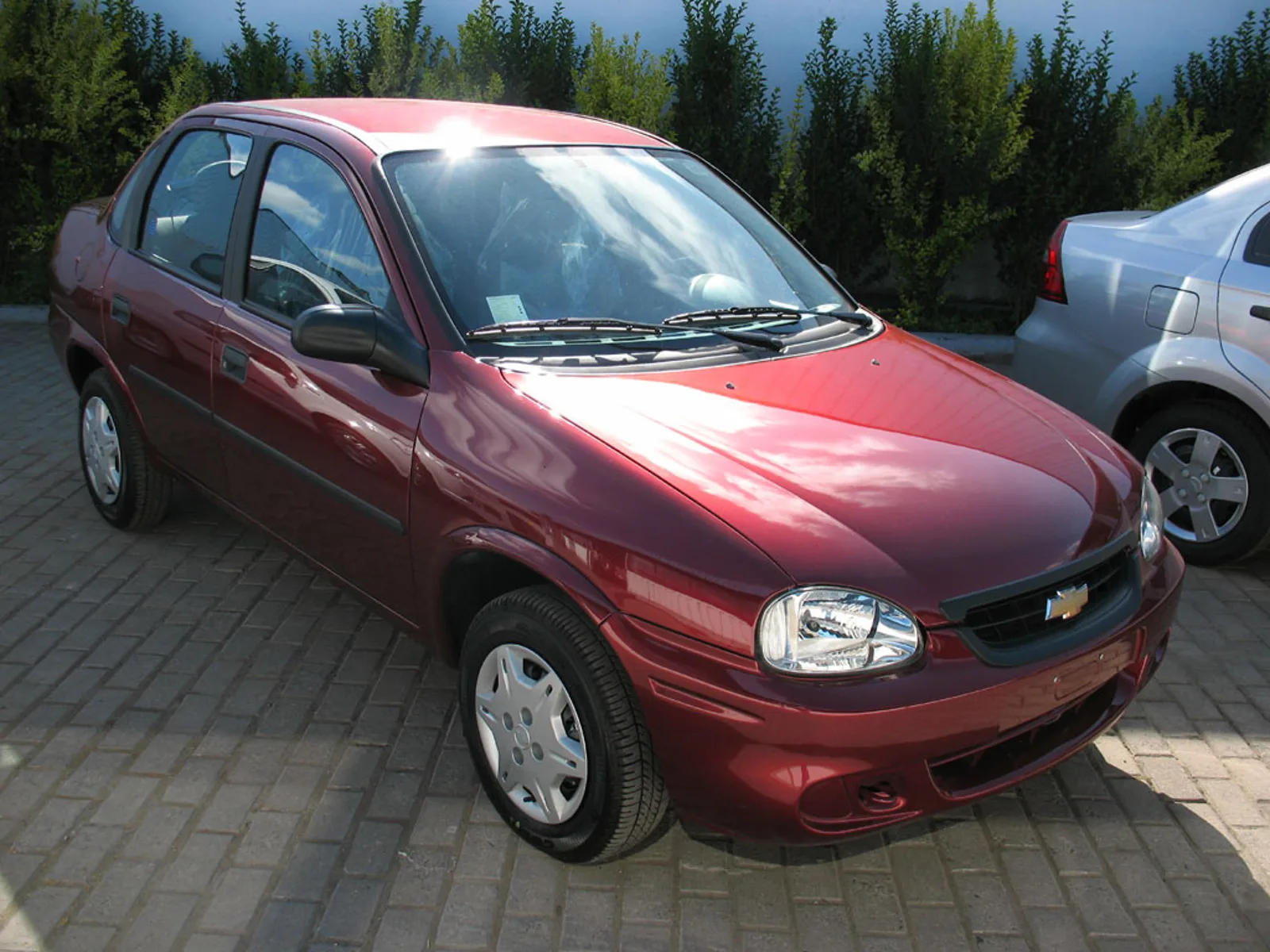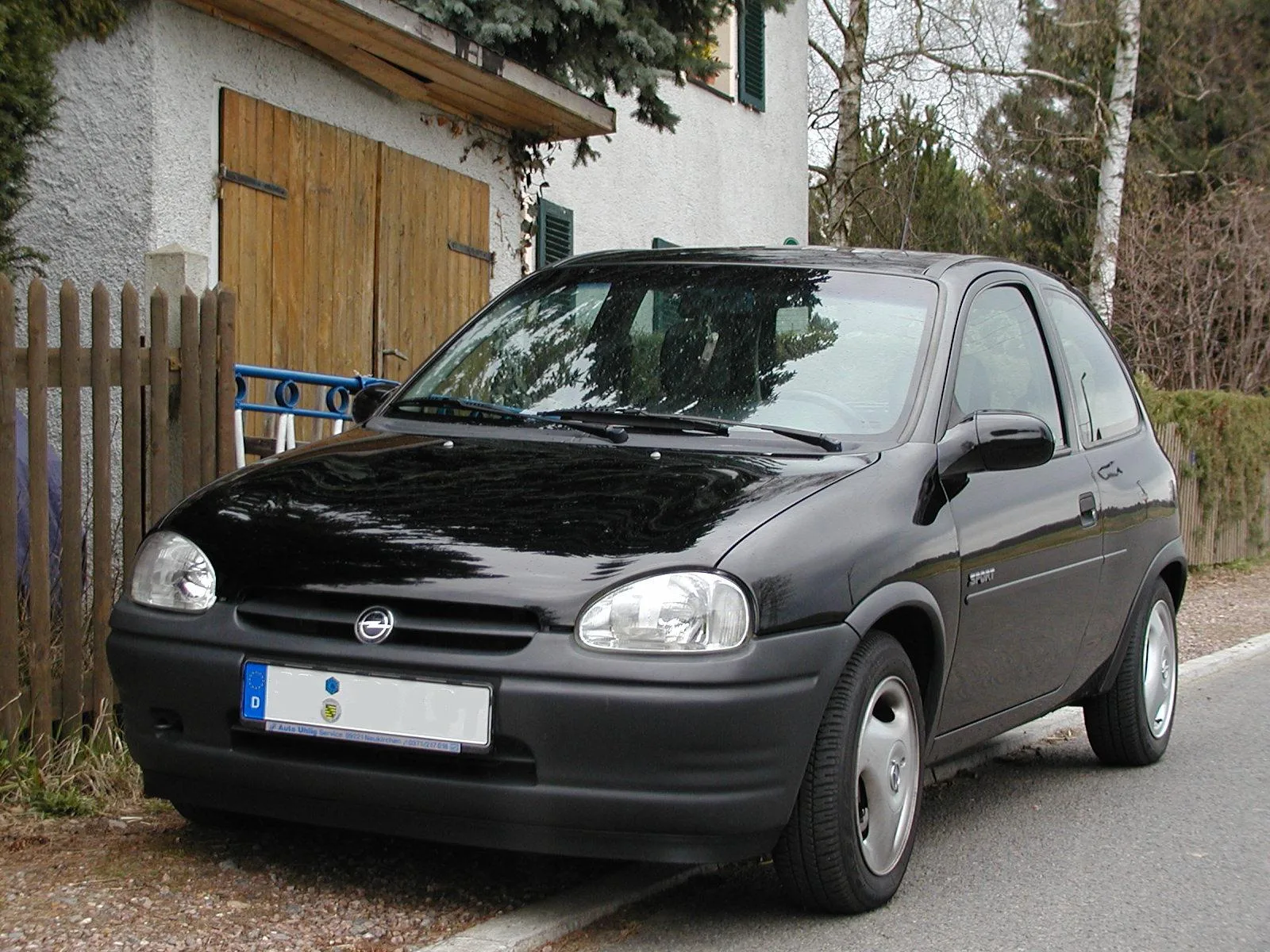
The second-generation Corsa arrived in 1993 with rounder lines, fuel injection for Euro 1 and worldwide production that passed one million a year by the end of 1998.
Built from 1993 to 2000, this supermini was the second Corsa generation. Its rounder body, fuel-injected engines and range from the 1.2i to the 1.6 16v GSi made it popular with young drivers, and the Corsa C replaced it at the end of 2000.
The Opel Corsa B was the second generation of the Corsa supermini, built from 1993 to 2000. It made its debut at the Geneva Motor Show in 1993 with rounder styling, fuel-injected engines to meet Euro 1, and a range that ran from a 1.2i to a 1.6 16v GSi. Its successor, the Corsa C, arrived as 2000 closed.
Why did Opel need a new Corsa in 1993?
By the early 1990s much of Opel's line-up was getting old. The Omega needed a restyle, the Senator was due for replacement, and the Kadett was about to give way to the first Astra. The Corsa, whose first series had sold more than 3 million examples, faced fierce competition in the supermini class. The Renault Clio arrived in 1990, the Peugeot 106 in 1991, and the Fiat Uno, VW Polo, SEAT Ibiza and Peugeot 205 had recently been updated.
The new Fiat Punto was planned for mid-1993 to take over the Uno's place, which made the pressure even stronger. Opel also had to bring its whole output into line with the Euro 1 emissions rules, which took effect on 1 January 1993. Competition and regulation together made a new car a practical necessity.
Rounder lines, fuel injection for Euro 1 and a range that stretched from the 1.2i to the GSi.
How did the Corsa B look?
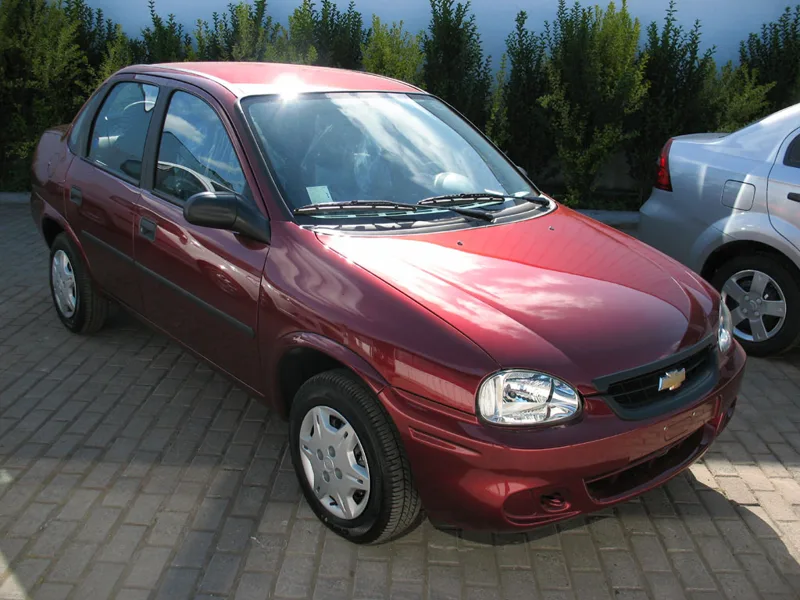
The Corsa B came in two body styles, both two-box designs with three or five doors. Its lines were much more rounded than the Corsa A's, in keeping with the style of the decade, and the headlamps, tail lamps and side window shapes were all softened. The three-door had two side windows per side, while the five-door had three, because its rear pillar sloped far less and left room for the extra small window.
The two body styles had different tailgates and light clusters, and even the more modest versions carried arched wheel arches that emphasised the rounded look. Inside, the dashboard, centre console and steering wheel were redrawn with softer forms. A large hood sat over the instrument panel, and a small display in the upper console showed the time, the date and the outside temperature.
Few things carried over from the old cabin. The position of the hazard warning switch, which stayed in the middle of the centre console, was among the few similarities with the Corsa A's driving position.
What were the Corsa B's safety and chassis features?
The Corsa B made a significant step in passive safety. The body shell was reinforced at several points, including the pillars, the sills and the door frames, and anti-intrusion side bars were added. The mechanicals, by contrast, repeated much of the layout of the previous Corsa, with an independent MacPherson-type front suspension and a rear axle with interconnected wheels and a longitudinal arm.
Braking used discs at the front and drums at the rear. ABS was not standard, but it was on the options list across the whole range, starting with the basic version. A five-speed gearbox became standard on every version, and some models could be ordered with a four-speed automatic.
Which engines did the Corsa B have at launch?
At launch the Corsa B carried mostly the engines of the previous series, but the 1-litre unit was dropped for the time being. Every engine offered at the start was fuel-injected, as Euro 1 required from the beginning of 1993. The four launch engines covered petrol and diesel, from the economical 1.2i to the 1.5 Turbodiesel.
The 1.2i used a 1,196 cc (73.0 cu in) engine producing 45 PS (44 hp). The 1.4i had a 1,389 cc (84.8 cu in) unit with single-point injection and 60 PS (59 hp). The 1.5 Diesel was a naturally aspirated engine of Isuzu origin with 1,488 cc (90.8 cu in) and indirect injection, rated at 50 PS (49 hp). The 1.5 Turbodiesel used the same engine with a turbocharger, which lifted the output to 67 PS (66 hp).
| Engine at launch | Displacement | Output | Notes |
|---|---|---|---|
| 1.2i | 1,196 cc (73.0 cu in) | 45 PS (44 hp) | Petrol, fuel-injected |
| 1.4i | 1,389 cc (84.8 cu in) | 60 PS (59 hp) | Single-point injection |
| 1.5 Diesel | 1,488 cc (90.8 cu in) | 50 PS (49 hp) | Naturally aspirated, Isuzu origin, indirect injection |
| 1.5 Turbodiesel | 1,488 cc (90.8 cu in) | 67 PS (66 hp) | Turbocharged version of the 1.5 Diesel |
How did the Corsa B's engine range develop after 1993?
Shortly after launch a Corsa 1.4 SE arrived, with a multipoint-injection version of the well-known 1.4 litre that produced 82 PS (81 hp). By the end of 1993 the range had a sporty top model, the Corsa 1.6 16v GSi. Its engine was a development of the earlier Corsa GSi unit, with four valves per cylinder and a double overhead camshaft. Output rose from 98 PS (97 hp) to 109 PS (108 hp), and the GSi reached 192 km/h (119 mph). It came with ABS as standard.
In September 1994 the 1.4 SE was replaced by the 1.4 16V, which also had four valves per cylinder and two overhead camshafts. The 1.4 16V, rated at 90 PS (89 hp), was the sporty runner-up behind the GSi, and ABS could be ordered for it. The 82 PS version stayed on some price lists until September 1995. Replacing the C16XE with the X16XE took 3 PS from the GSi 16V, leaving 106 PS (105 hp), and the car lost its side skirts and sporty bumper.
The updated X16XE prevailed because it met the Euro 2 standard, which other makers were also adopting at the time. Late in 1996 a naturally aspirated 1.7 litre (103.7 cu in) diesel appeared, followed by a 1.5 Turbo Diesel that also came in a Sport version. The naturally aspirated 1.5 diesel went out of production as a result.
A feature shared by several petrol engines was an engine control unit that changed its calibration with the position of a special electronic key. The key selected the octane rating of the fuel in use. Petrol of 91 and 95 octane was available as standard, and a key could be ordered to suit 98 octane. Used with the same fuel, it could also change the power and torque characteristics.
How well did the Corsa B sell?
The Corsa B sold strongly from the start. In its debut year, which was not a full production year, 396,000 examples were built by the end of 1993. By the end of 1994 the total had reached 584,000, and it had risen to 796,000 by the end of 1995. Production at other plants helped push those figures up.
It quickly became a favourite with young drivers, especially in the top Sport versions, which meant the three-door SE, and in the GSi. Diesel versions were also much appreciated. The five-door versions were less common, but they were fairly sought after. By 1998 annual production worldwide had passed one million units.
What did the 1997 facelift change?
The 1997 restyle changed the bumpers, enlarged the front grille, and updated the rear badges and the alloy wheels. Inside, the seats received new upholstery, and the driver's airbag became standard on almost the whole range. The most notable mechanical change was a new three-cylinder engine of 973 cc (59.4 cu in), which marked the return of a 1-litre unit after three years away. It was the X10XE, the only non-four-cylinder engine ever fitted to a Corsa up to that time. It had four valves per cylinder and multipoint injection, and it produced 54 PS (53 hp).
The three-box saloon was dropped from the range, although it had been sold in Africa, India and, under the Chevrolet name, in South America. Pick-up and convertible versions were introduced, and an estate based on the pre-facelift car was offered in Europe, notably in Italy. The estate did not sell well. A van with limited load capacity was also sold in some markets, Italy among them.
The 1998 World Cup special marked the debut of a new 1.2 16V Ecotec engine. It was made entirely of light alloy, had hollow camshafts and produced 65 PS (64 hp). In effect it was a four-cylinder version of the earlier three-cylinder 1.0 12V. Cars with airbags also received a new three-spoke steering wheel borrowed from the Astra G. Its chrome, raised Opel logo replaced the four-spoke wheel with a drawn Opel symbol.
How did the Corsa B's career end?
From the middle of 1998 there were no further significant updates. The commercial decline began in 1999. To keep customers interested while the new model was on its way, special versions appeared, including the "100" of 1999, which celebrated the centenary of the Opel brand, and the 2000 Edition, which marked the arrival of the new millennium.
The Corsa C was launched at the end of 2000, which ended production of the Corsa B, although remaining stocks were sold off until 2001. In 2000 the car underwent a crash test to measure the progress made in passive safety through the refinements of its career. The original two Euro NCAP stars from 1997 became three, which confirmed the quality of the engineers' work.
Where else was the Corsa B built?
Production began at Eisenach and at Figueruelas near Zaragoza, and it also started at the Azambuja plant in Portugal a few months after launch. From 1994 the Corsa B formed the base of the second-generation Combo van.
In South America the car was sold under different names in different countries. Production started in 1994 at Sao Jose dos Campos near Sao Paulo, where it was sold as the Chevrolet Corsa and was named the local Car of the Year, a title it won again the following year. Brazilian-built cars included pick-up and three-box saloon variants that were new for European markets. Mexico began assembling it at Ramos Arizpe in late 1995, and Argentina built it at Rosario under the Chevrolet name. In 1996 production extended to Colombia, Ecuador and Venezuela.
From 2000 the old platform was still used in South America for the Chevrolet Celta, which was a reworked Corsa B on a two-box body, and the Prisma, a three-box car whose styling came from the Celta. The Prisma was withdrawn in 2012 for a new generation based on another GM model, while the Celta was still listed in Brazil in early 2015.
Elsewhere, the car was built in Kenya as the Opel Vita and exported to Japan under that name. It was exported without local production to Thailand, Taiwan, New Zealand and Australia, and in the two Oceanian countries it sold as the Holden Barina. Production in South Africa began in 1996 at Struandale, not far from Port Elizabeth, and continued until 2004. From 2000 the South African version was called Corsa Swing, and the brand used there was Opel.
In India the car was sold as the Corsa Sail, and in China as the Buick Sail. The Buick Sail was assembled at the Shanghai-GM plant, and it was also exported to Chile. It was produced in China until 2005, after which it became the Chevrolet Sail. In the United Kingdom the car was sold under the traditional Vauxhall name.
Did the Corsa B spawn an economy prototype?
The Eco3 was an experimental car unveiled at the 1995 Frankfurt Motor Show. It was designed to test whether fuel use could fall below 3 l/100 km (94.2 mpg-imp; 78.4 mpg-US), and it used a 1.7 litre (103.7 cu in) diesel. It was the conceptual successor of an Eco3 built in 1992 on the Corsa A. The rounded, aerodynamic lines of the Corsa B were refined for the prototype, and the 3-litre target was met.
During a consumption test in 1996, a figure of 2.69 l/100 km (87.4 mpg-US; 105.0 mpg-imp) was reported. The result earned the Eco3 an award for its technical innovations. It was also helped by a heavy weight reduction, achieved through carbon-fibre body panels.