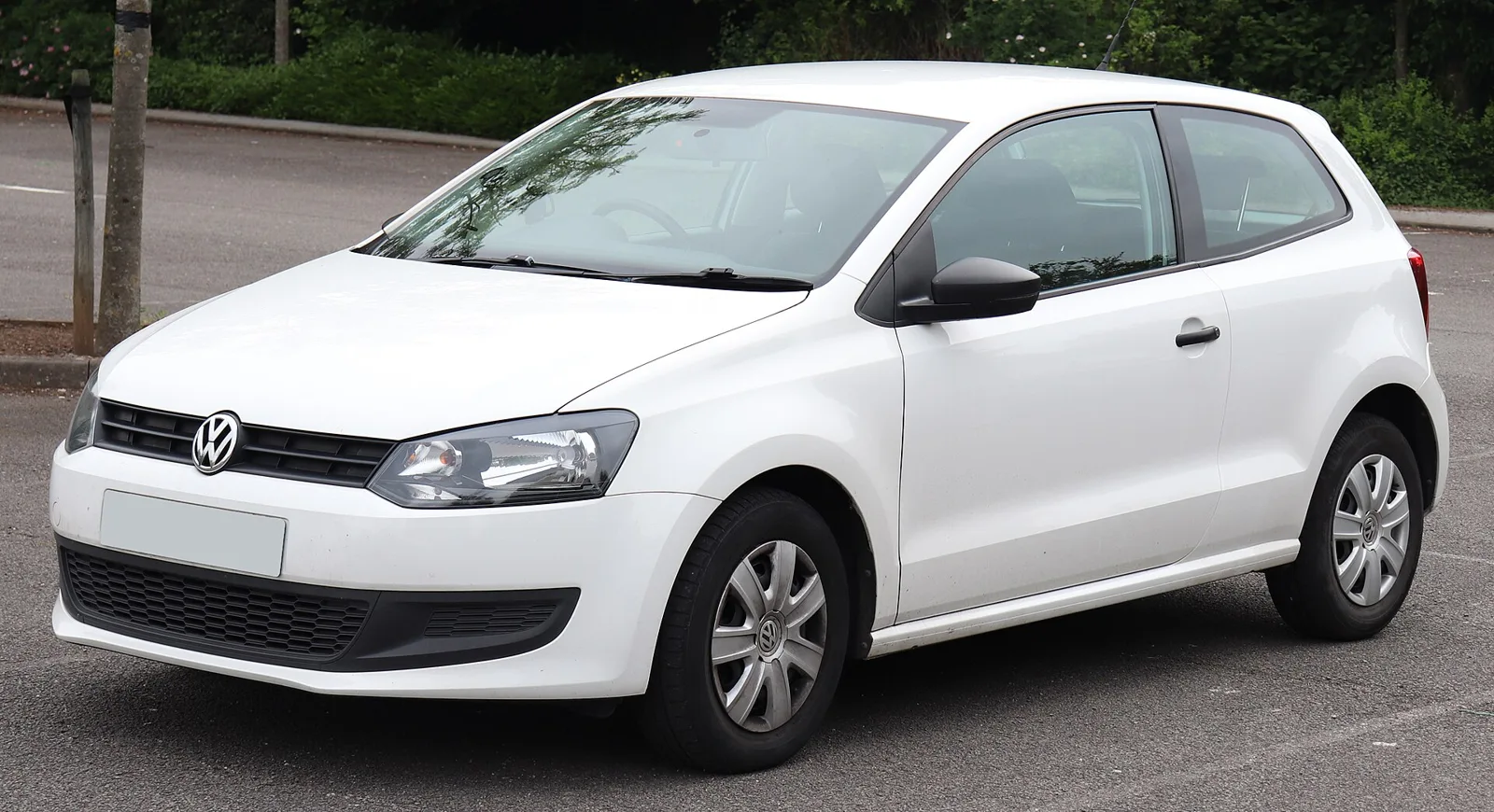
A supermini on the PQ25 platform that won the 2010 European Car of the Year title, gained a hot GTI and lived on as a sedan and as the South African Polo Vivo.
Built from 2009 on the PQ25 platform, this supermini won the 2010 European Car of the Year title. A 180 PS GTI, a family of sedans and the South African Polo Vivo followed for export and emerging markets.
The Volkswagen Polo Mk5 is the fifth generation of Volkswagen's supermini, built from 2009. It was unveiled at the Geneva Motor Show in March 2009, and it went on to win the 2010 European Car of the Year title. Its life extended well beyond Europe, with sedan versions sold in emerging markets and a South African Polo Vivo that was still in production in 2024.
Where did the Polo Mk5 come from?
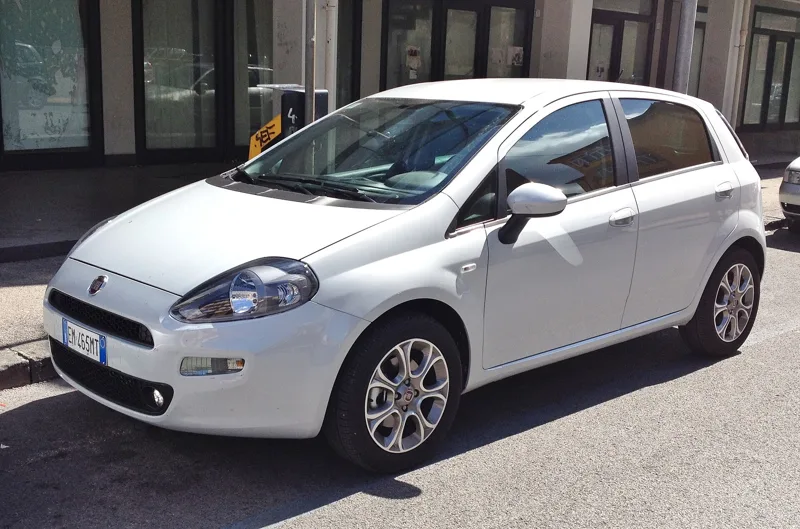
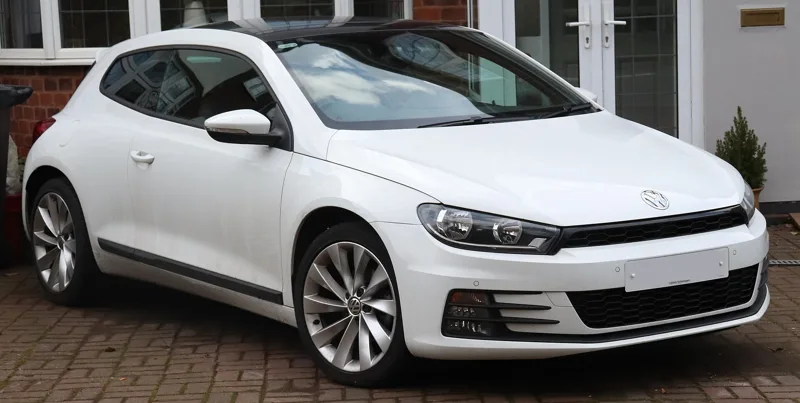
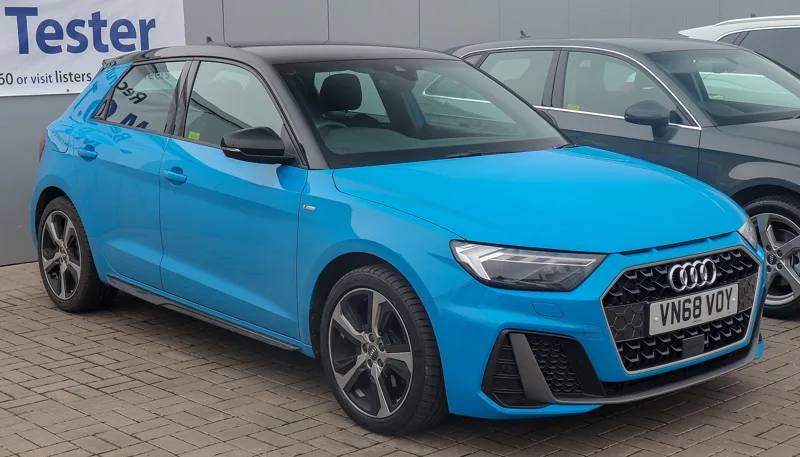
The Polo Mk5 was designed under Walter de Silva, and it was internally designated Typ 6R. It rode on Volkswagen's PQ25 platform, which also underpinned the Ibiza Mk4 from SEAT and the A1 Mk1 from Audi. The styling followed the direction set by the Scirocco Mk3 and the Golf Mk6, giving the Polo a more upmarket look than its predecessor.
The three-door version was revealed at the Frankfurt Motor Show in September 2009. British production started in August 2009, with the first deliveries in October that year. Volkswagen announced South African production in November 2009, building five-door right-hand drive cars for export to markets such as the UK, Ireland, Australia, Singapore and Malaysia.
A supermini that won Europe's top car award in its first year, then kept selling for more than a decade.
How did the Polo Mk5 change its size and weight?
Compared with the car it replaced, the Mk5 measured 44 mm (1.7 in) more in length and 32 mm (1.3 in) more in width. It also sat 13 mm (0.5 in) lower to the road, which gave it a more planted stance without losing its supermini footprint. Volkswagen made it 7.5% lighter than its predecessor, a meaningful saving for a small car.
Boot space rose by 10 litres to 280 L (9.9 cu ft), and folding the rear seats opened up 952 L (33.6 cu ft). For the first time in a Polo, buyers could also choose a 7-speed dual-clutch transmission and a navigation system with touchscreen controls.
How safe was the Polo Mk5?
The Mk5 came with thorax airbags and earned a five-star Euro NCAP crash rating. On the European version, electronic stability control with Hill Hold Control was standard, with exceptions for the French and Turkish markets. Head-thorax airbags were built into the front seatbacks, and belt tensioners and force limiters completed the package.
Rear protection was equally thorough. Three rear head restraints and Isofix child seat preparation were fitted as standard in Europe. The Indian version took a different path, and it was sold with a higher ground clearance of up to 168 mm.
Which trim levels did the Mk5 offer?
In Germany, India, South Africa and most of Europe, the Mk5 was offered in Trendline, Comfortline and Highline trim in every version. Buyers in France, Italy and Romania could only choose Comfortline or Highline, which left the entry grade out of those markets.
In Croatia, Bosnia and Herzegovina and Slovenia, the trim picture was less settled. Special trims such as Rabbit, Fresh and Lounge appeared in those markets in the early 2010s, reflecting local sales decisions rather than a single range.
What was the Polo GTI like?
The Polo GTI was shown at the Geneva Motor Show in March 2010 alongside the CrossPolo, and it went on sale at the end of May that year. It was the hot version of the Mk5, distinguished by redesigned front and rear bumpers, widened side skirts, a roof spoiler and standard fog lights. Red brake calipers and 17-inch (430 mm) alloy wheels finished the look, along with a chrome-plated twin tailpipe.
The GTI also received a sports suspension sitting about 15 mm (0.6 in) lower, plus an extended electronic limited-slip differential. The differential brakes the inside front wheel in fast corners to reduce understeer. The battery was moved to the spare wheel well to improve weight distribution, which cut boot capacity from 280 litres to 204 litres (9.9 to 7.2 cu ft).
How quick was the GTI in its first form?
The 2010 to 2013 GTI used a 1.4-litre turbocharged and supercharged engine producing 180 PS (178 hp; 132 kW). It drove the front wheels through a 7-speed double-clutch transmission. Volkswagen's figures put the car from standstill to 100 km/h in 6.9 seconds, with a ceiling of 229 km/h (142 mph).
Volkswagen said the new engine cut fuel use by 25 percent against the earlier Polo GTI Cup Edition. That combined figure was quoted at 5.9 L/100 km (39.9 mpg-US) and went with CO2 emissions of 139 g/km. The early engines were the CAV and CAVE units, which were revised to CTH and CTHE for the 2013 and 2014 models.
What changed with the 2014 facelift?
For the 2014 facelift the GTI's 1.4 TSI gave way to a 1.8 TSI turbo producing 192 PS (189 hp; 141 kW), an engine developed by Audi. That model could be ordered with a 6-speed manual gearbox or the 7-speed DSG. The manual version produced 320 N m of torque, or 236 lb ft, while the DSG peaked at 250 N m.
The wider facelift also brought redesigned bumpers and a new steering wheel. The interior gained a touchscreen as standard, and Automatic Post-Collision Braking became standard across the range. CarPlay and Android Auto support arrived in June 2015, giving the Mk5 a more modern infotainment setup than its launch specification offered.
Which engines were used across the range?
The facelift replaced the older 1.2 and 1.6 diesels with a 1.4-litre three-cylinder diesel. In India, a 1.0-litre naturally aspirated petrol with 76 PS (75 hp; 56 kW) took over from the 1.2 in 2018, with 95 N m of torque.
BlueMotion versions of the 1.2 TSI also appeared in some markets. The 90 PS manual emitted 113 g/km of CO2, while the 105 PS manual and DSG versions emitted 115 g/km. The BlueGT, introduced late in 2012, used an EA211 1.4 turbo TSI with Active Cylinder Technology, which deactivated two cylinders at light loads and let the 6-speed manual car emit 107 g/km.
Were there problems with the diesel engine?
Owners reported anecdotal problems with the 66 kW diesel, including poor fuel consumption and surging under load. Volkswagen responded by altering the particle filter ECU mapping, which was the first change it made to address the complaints. The reports were not confined to a single market.
What was the CrossPolo?
Volkswagen presented the 2011 CrossPolo in June 2010 as a crossover-styled Polo. An aluminium distancing block added ground clearance, and the car was sold only as a five-door. It was distinguished by revised bumpers, black plastic wheel-arch and door claddings, silver roof rails, fog lights and 17-inch alloy wheels.
In India the CrossPolo arrived in August 2013 with a 1.2-litre diesel, and a 1.2-litre petrol followed in January 2015. Slow sales led to its discontinuation in 2017. In South Africa the CrossPolo was later repackaged as the Polo Vivo Maxx, which was mostly unchanged apart from its wheels.
How did the Polo Mk5 sedan come about?
A three-box sedan arrived in 2010 and took local names: Vento in India, Malaysia, Brunei and Mexico, and Polo Sedan in South Africa, Argentina and Russia. The name Vento means wind in Italian and Portuguese, and the car was known as the Polo Notch in the Philippines.
The sedan had a 2,552 mm (100.5 in) wheelbase and ground clearance of 168 to 170 mm (6.6 to 6.7 in). The extra 82 mm of wheelbase gave more rear legroom than the hatchback, and the three-box shape added a boot of about 500 litres (18 cu ft). It arrived in India and Russia in 2010 and reached South Africa in May 2011.
In Mexico the Vento arrived for the 2014 model year, imported from India in Style, Active and Highline trims. Buyers chose between a 1.6-litre naturally aspirated petrol and a 1.6-litre TDI diesel. In 2016 the front was redesigned to resemble the then-new Jetta Mk7, and the diesel gained a 7-speed dual-clutch automatic. By then the Vento had become Volkswagen's best-selling model in Mexico and the third best-selling model overall there.
In the Philippines the sedan was sold as the Polo Notch from late 2013, sourced from India. Volkswagen dropped it in May 2018 and replaced it with the Santana, which came from China.
Why did India get the Ameo?
The Ameo was a notchback sedan based on the hatchback Mk5, introduced for India in June 2016. It was developed to fit Indian tax rules for cars under 4,000 mm in length, which put it into the sub-four-metre sedan segment. It sat between the Polo and the Vento, and it was built in India.
The Ameo kept the hatchback's 2,470 mm (97.2 in) wheelbase and rear doors, and its front bumper was shortened by 35 mm (1.4 in). A senior Volkswagen designer, Tilo Klumpp, said early proposals had a fastback shape, but research showed that Indian buyers preferred a traditional three-box car. Its engines were a 1.2-litre three-cylinder petrol and a 1.5-litre TDI diesel producing 108 hp (81 kW) and 250 N m.
How did the Mk5 continue in South Africa?
The Mk5 returned to South Africa in February 2018 as the Polo Vivo, replacing the Mk4-based Vivo and selling alongside the Mk6 as a budget choice. Four trims were offered: Trendline, Comfortline, Highline and GT. Engines were a 1.4 and a 1.6 naturally aspirated four-cylinder petrol plus a 1.0-litre turbocharged three-cylinder.
Five-speed manuals went with the naturally aspirated versions, while a Tiptronic automatic was offered on the 105 PS 1.6. The 1.0 GT came with a 6-speed manual. The Polo Vivo was still in production in South Africa as of 2024, while Indian production of the Mk5 hatchback and sedan stopped in 2022, with the last car sold in August 2022.
Did the Mk5 compete in the World Rally Championship?
Volkswagen entered the World Rally Championship in 2013 with a Polo-based car, the Polo R WRC. To meet the homologation rules, 2,500 street versions were built between September 2013 and March 2014. The road car ran a 2.0-litre turbo making 220 PS and came only with a 6-speed manual.
Which awards did the Polo Mk5 win?
The Mk5 won the European Car of the Year 2010, beating the Toyota iQ and the Opel and Vauxhall Astra. It also took the World Car of the Year 2010 and What Car? Supermini of the Year 2010. Further honours came from Slovenia and South Africa, plus two Australian titles from Drive and Carsguide in 2010.
Specifications
| Specification | Detail |
|---|---|
| Internal code | Typ 6R, PQ25 platform |
| Dimensions versus predecessor | 44 mm longer, 32 mm wider, 13 mm lower |
| Weight versus predecessor | 7.5% lighter |
| Boot | 280 L (9.9 cu ft); 952 L (33.6 cu ft) with seats folded |
| GTI 2010 to 2013 | 1.4-litre turbo and supercharged, 180 PS (178 hp; 132 kW) |
| GTI 2014 facelift | 1.8 TSI, 192 PS (189 hp; 141 kW) |
| GTI performance | 0-100 km/h in 6.9 seconds; 229 km/h (142 mph) |
| Vento wheelbase | 2,552 mm (100.5 in) |
| Ameo wheelbase | 2,470 mm (97.2 in) |
| Polo R WRC street car | 2.0-litre turbo, 220 PS, 6-speed manual |