Built in Belgium and Spain on a Volkswagen Group platform, the A1 grew from a 2007 concept into a long run of special editions, with a performance S1 variant and a final production run that ended in 2026.
The Audi A1 is a luxury supermini that Audi launched at the 2010 Geneva Motor Show and built in Belgium and Spain until production ended in April 2026. Its performance variant, the S1, used a 2.0-litre inline-four producing 172 kW (234 PS; 231 bhp) from 2014 until 2018.
The Audi A1 was a small premium hatchback that Audi launched in 2010 and built in Belgium and Spain until 2026. It shared its basic architecture with the Volkswagen Group's compact models, and the performance S1 variant used a 2.0-litre four-cylinder. Its long list of special editions shows how the model was used.
Where did the A1 begin?
The car first appeared as a preview at Tokyo in 2007, under the metroproject concept name. The four-seat concept carried a plug-in hybrid system, with a 1.4-litre 148 bhp Turbo FSI driving the front wheels through a six-speed S tronic gearbox and a 40 bhp electric motor driving the rear.
The concept electric motor could also deliver 201 N m (148 lb ft) of torque, and both power sources could run at the same time. Its chassis used MacPherson struts at the front and a four-link rear, with electromechanical speed-sensitive steering and Audi magnetic ride adaptive damping, and the car took 7.8 seconds to reach 100 km/h (62 mph).
Audi returned to the metroproject quattro at Leipzig in 2008, where it had been renamed the A1 Project Quattro. Jurgen Lowffler, an exterior designer for Audi, presented the design, which he also showed when the car debuted in Hong Kong.
The five-door A1 Sportback concept followed later in 2008. It was based on the project quattro with longer bodywork at 3.99 m (157.09 in), and its debut came at the 2008 Paris show. Its electric-only range was 50 km (31.07 mi).
A small premium car with a long list of editions, one performance S1 and a final run that ended in 2026.
What was the first-generation A1 like?
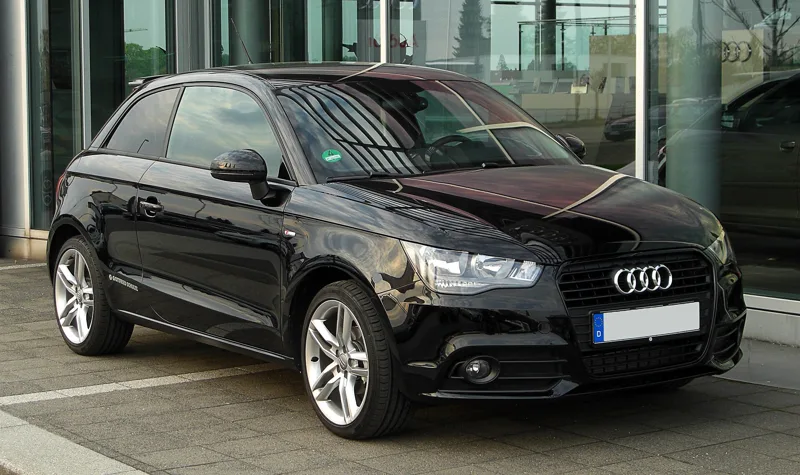
The three-door A1 reached most showrooms in late 2010. It followed a launch at the Worthersee Tour 2010, with a big public debut in Paris that year. The car was aimed mostly at young, affluent urban buyers who wanted a premium small car for city use.
Chassis engineering followed the usual compact-car pattern, with a MacPherson strut front suspension and a torsion beam at the rear. In the UK the car came in SE, Sport and S line trims. SE was the entry grade, and Sport and S line brought sports seats, sports suspension and larger wheels.
Euro NCAP put the three-door through its tests, with front and side airbags, belt pretensioners and load limiters fitted as standard, and scored it accordingly.
How did the A1 Sportback arrive?
The five-door model, which Audi named the Sportback, was revealed at the 2011 Tokyo show. It added a fifth door at the rear. Sales began in export markets during early 2012.
The Sportback ran through the 2012 to 2018 period alongside the three-door.
What engines did the A1 use?
Almost every A1 engine carried a start-stop system and an energy recuperation system. The exceptions were the 185 PS 1.4 TFSI and the 1.6-litre TDI in its S tronic form, rated at 90 hp. Through the first generation and into the second, the range moved from small turbo petrols to four-cylinder units.
| Generation | Engine | Output |
|---|---|---|
| First generation | 1.4 TFSI | 122 PS (90 kW; 120 hp) |
| First generation | 1.4 TFSI, higher-output version | 185 PS (136 kW; 182 hp) |
| First generation | 1.6 TDI | 105 PS |
| First generation | 2.0 TFSI quattro, limited run of 333 | 256 PS (188 kW; 252 hp) |
| Second generation | 25 TFSI, 1.0-litre three-cylinder | 95 PS |
| Second generation | 30 TFSI, 1.0-litre three-cylinder | 110 or 116 PS |
| Second generation | 35 TFSI, 1.5-litre four-cylinder | 150 PS |
| Second generation | 40 TFSI, 2.0-litre four-cylinder | 200 PS |
The 122 PS 1.4 TFSI appeared as the 30 TFSI in China. The second generation dropped diesel engines altogether and offered petrol units only.
What was the A1 e-tron?
The A1 e-tron was a series plug-in hybrid that used a UQM PowerPhase Select 125 motor with its controller. It produced 45 kW (61 PS; 60 bhp) continuous and 75 kW (102 PS; 101 bhp) at peak. Once charged, the 12 kWh lithium-ion pack gave up to 50 km (31 mi) of electric range.
After the battery was spent, a 254 cc Wankel engine drove a 15 kW generator, with a 12-litre fuel tank that Audi estimated would add about 200 km (124 mi) of range. The company claimed the car weighed 1,190 kg (2,624 lb), reached 100 km/h (62 mph) in 10.2 seconds, and had a top speed of 129 km/h (80 mph).
The e-tron was shown at the 2010 Geneva Motor Show and then at the 2012 Taipei Motor Show. A field test of twenty A1 e-tron cars started in Munich in late 2010, and the trials later spread to other parts of Germany.
In June 2012 a UK magazine reported that the e-tron's production run had been put on hold indefinitely as Audi slimmed down its electric plans. Audi's e-mobility director in America was quoted as saying the car had never been scheduled for production, and the project was later reported as cancelled.
How did the A1 quattro and clubsport perform?
The production A1 quattro was tested by Autocar on MIRA's wet handling track against a Nissan GT-R. The A1 was over five seconds faster around the lap, which Autocar described as a giant-killing result. The quattro was offered as a limited run of 333 units, its 2.0 TFSI giving 256 PS (188 kW; 252 hp).
The A1 quattro came with a six-speed transmission and an electronic differential lock, along with 18-inch turbine alloys and a black interior trimmed in Silk Nappa leather with red stitching. Sales opened in the latter part of 2012.
The A1 clubsport quattro was a one-off concept, shown at the 2011 Worthersee Tour. It used a reworked RS 3 2.5 TFSI, giving 503 PS (370 kW) and 660 N m, a six-speed manual, and quattro all-wheel drive from the TT RS. It reached 100 km/h (62 mph) in 3.7 seconds.
To save weight, the clubsport removed the infotainment system and speakers, replaced the rear seat with a crossbar and used fabric loops in place of the door handles. Its carbon-fibre details and widened rear sides, with 60 mm (2.36 in) blisters borrowed from the Ur-quattro, marked it out from the production cars.
Which limited editions did Audi build?
The Motto vehicles of 2010 were unveiled at the Worthersee Tour 2010. They included the Competition Kit, Follow Me, Wasserwacht, FC Bayern, Pickerljager, Fashion and Hot Rod cars, each with its own colour and special trim.
Other editions followed in different markets. The A1 Samurai Blue of 2011 to 2012 was a Japanese special edition inspired by the national football team, and another 111 cars followed in 2012. The A1 Union Square of 2012 had wine-coloured prints on its sides, trunk and mirrors.
Several editions were made for single markets. The A1 Huffer Edition was a run of 15 cars for New Zealand, produced with the clothing company Huffer. The China Limited Edition was 500 cars, with Chinese decorative details and a 1.4 TFSI with a 7-speed S tronic transmission.
The Japanese market had its own specials, including a 200-unit Sportback Urban Style Limited and a 150-unit Urban Racer. Taiwan received a 76-unit Lifestyle Sportback and a four-unit Competition Legends car. The Competition kit R18 borrowed its look from Audi's R18 e-tron race car.
How was the first-generation A1 built?
Production took place at Audi's plant in Forest, outside Brussels. The platform was the Volkswagen Group's PQ25, which also underpinned the SEAT Ibiza Mk4 and VW Polo Mk5, and Audi worked with SEAT during development. The 100,000th A1 was built at the Brussels plant on 23 June 2011.
In 2011 a version of the A1 painted by Damien Hirst sold for 350,000 pounds. Between 2010 and 2018 the Brussels plant produced nearly 910,000 A1s. The last first-generation car left the line on 1 August 2018, which marked the end of the model at that site.
What changed with the second-generation A1?
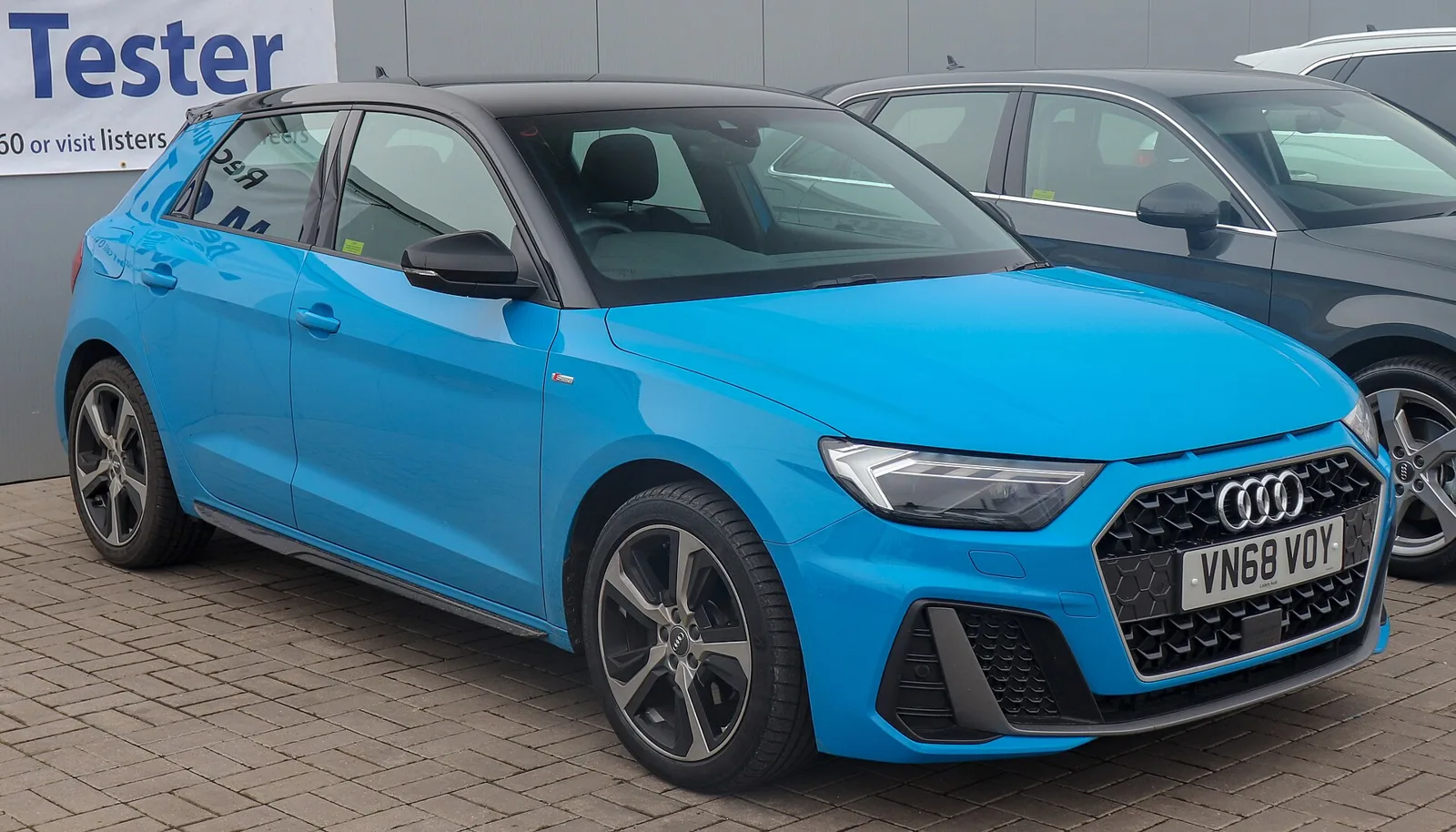
The second generation A1 launched in mid-June 2018, built on the MQB platform that also serves the Volkswagen Polo Mk6 and SEAT Ibiza Mk5. European cars reached showrooms in late 2018, after orders opened a few months earlier. The car came to Mexico on 25 October 2019.
The equipment list gained a 10.25-inch infotainment touchscreen, with Apple CarPlay and Android Auto standard. The UK range ran SE, Sport and S line from the first generation, plus three new S line trims: Competition, Contrast Edition and Style Edition.
The engine line-up dropped diesel entirely. The 25 TFSI made 95 PS from a 1.0-litre three-cylinder, paired with a five-speed manual. The 30 TFSI made 110 or 116 PS from the same 1.0-litre, the 35 TFSI used a 1.5-litre four for 150 PS, and the 40 TFSI used a 2.0-litre four for 200 PS.
Assembly shifted to SEAT's Martorell works in Spain during the second generation, part of the group's wider manufacturing plan. The Sportback sold from 2018 to 2026, and the citycarver, later renamed Allstreet, added more ground clearance and a contrasting roof.
What was the Audi S1?
The Audi S1 was released in 2014 as the performance version of the A1. It was the smallest S model in Audi's range and it was discontinued in 2018. Under the bonnet sat an EA888 2.0-litre four, rated at 172 kW (234 PS; 231 bhp) and torque of 370 N m (273 lb ft).
The S1 was a small car with a serious engine, and it was discontinued in 2018 along with the rest of the first generation.
How did the A1 end its run?
In an interview with Automotive News Europe, Audi's chief executive, Markus Duesmann, said that the second-generation A1 would be discontinued at the end of its life with no successor, because of tighter European emissions standards. The A3 would remain Audi's entry-level model.
Production of the second-generation car ended in April 2026, which closed the run of an Audi model that had been built in Brussels and later in Spain. The car's life ran from a 2007 concept to a 2026 finish.