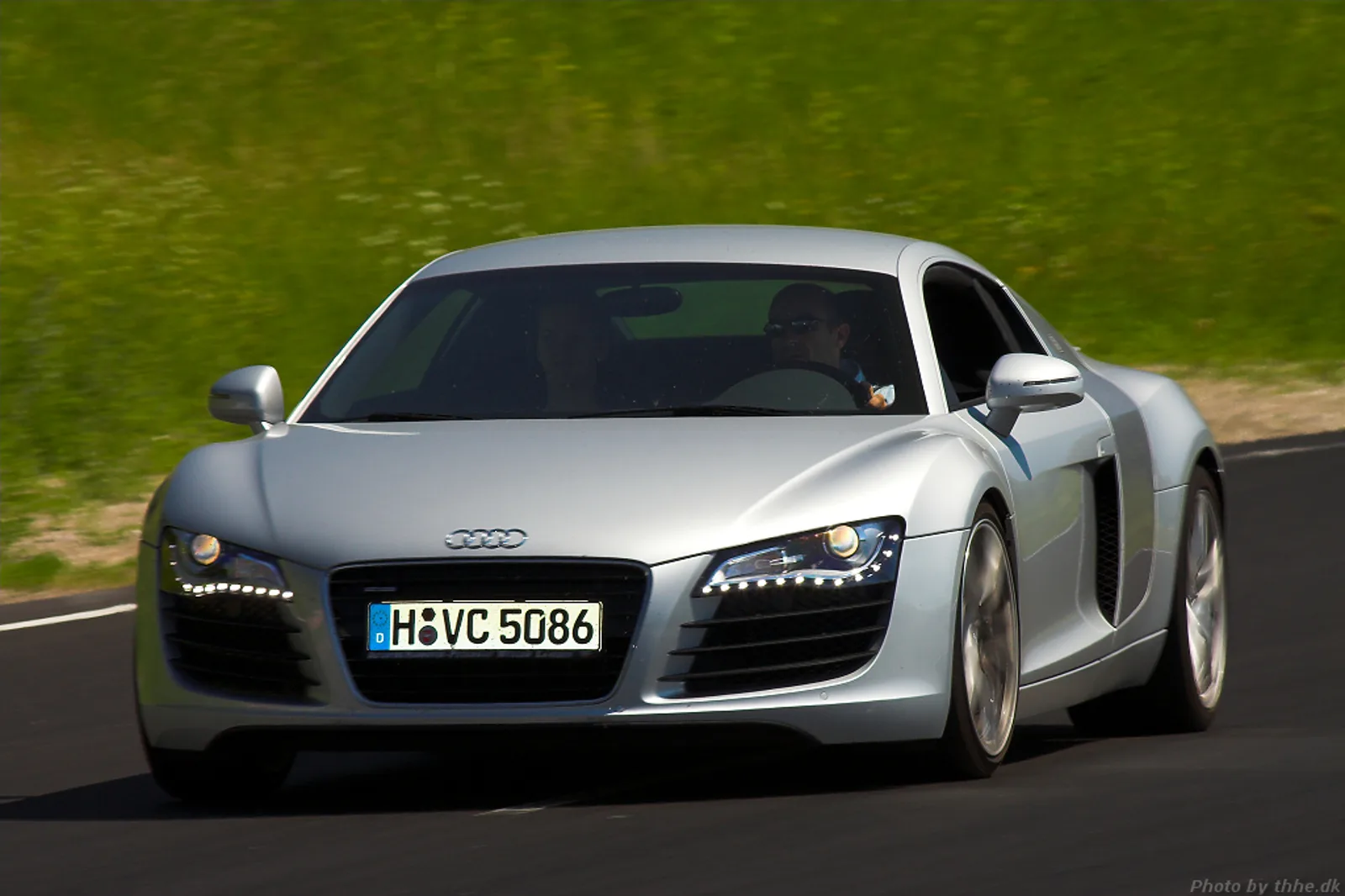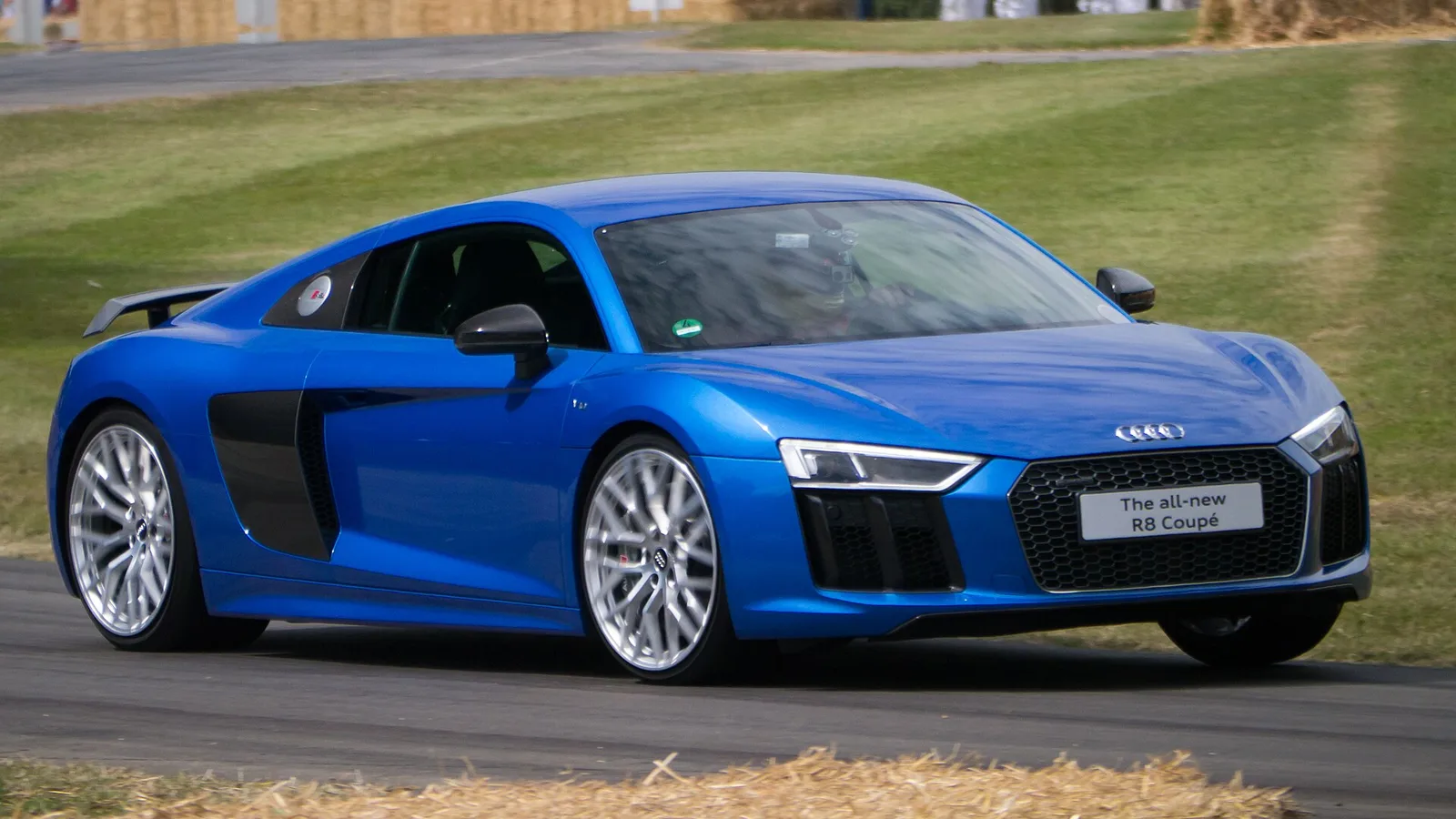
The Type 4S moved the R8 onto the Huracan platform, kept a V10 as its only engine and grew into Spyder, rear-drive, GT and racing families.
Audi's second-generation R8 launched at the 2015 Geneva show on the Huracan platform. It uses V10 engines only, with a 540 PS base model and a 610 PS V10 Plus. Over time the line-up gained Spyder, rear-drive, e-tron and racing variants, plus several limited editions.
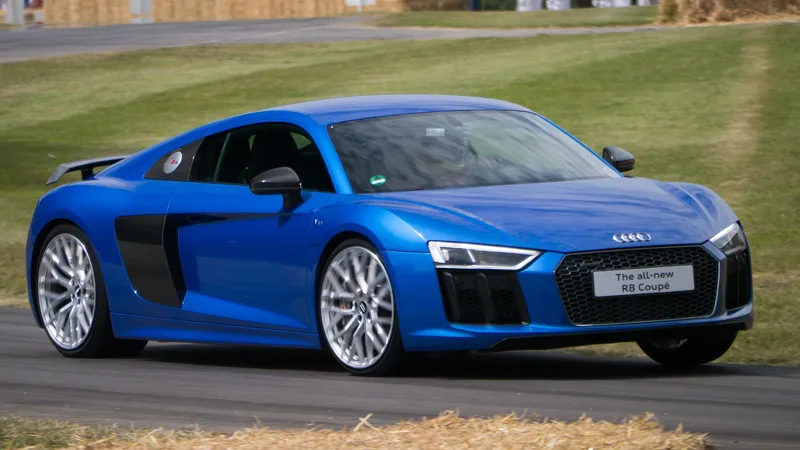
Audi's R8 entered its second generation with the Type 4S, introduced at the 2015 Geneva Motor Show. It moved the model onto the platform shared with the Lamborghini Huracan, and it dropped the V8 entirely, leaving a V10 as the only engine.
This article covers the car's development and body, the V10 engines, the Spyder and rear-wheel-drive variants, the special editions and the e-tron, the racing cars and the critical response.
Where did the Type 4S come from?
Work on the Type 4S started in 2013, and test prototypes ran from early 2014. Production began in late 2014, and the car made its public debut at the 2015 Geneva Motor Show. It sits on the Modular Sports System platform that Lamborghini also uses for the Huracan.
Rumours of a V8 for the new car proved unfounded. Audi said the V8 would be discontinued, mainly because of emissions regulations, which left the V10 as the only choice for the range.
The base model's V10 was detuned from the Huracan's engine, while the V10 Plus kept the same power output as the Lamborghini unit. The all-electric e-tron, which had been in development during the first generation's life, was also shown at Geneva in 2015 and built on the Type 4S.
A second-generation R8 that kept a V10 as its only engine and grew into open-top, rear-drive, electric and racing families.
What engines did the Type 4S use?
The base R8 used a 5.2 FSI V10 producing 540 PS (397 kW; 533 hp), while the V10 Plus produced 610 PS (449 kW; 602 hp). Both versions used all-wheel drive and a seven-speed S-Tronic, and no manual gearbox was available.
The engines are naturally aspirated. The quattro system leans slightly towards the rear, and its power split is variable.
The front differential is water-cooled, the rear is a passive limited-slip unit, and the steering is electromechanical.
How is the Type 4S body different from the first R8?
The Type 4S body is lighter and stiffer than the first car's, with carbon fibre replacing several large aluminium parts. Its design evolves the original Frank Lamberty styling, and the side blades that sat behind the doors are now split into two.
The side blades now appear on the rear side glass and beneath the beltline, and buyers could order them painted to match the body. LED headlamps came as standard, and laser units were optional in Europe only.
The Virtual Cockpit, first seen in the TT, appeared in the R8. Extra electronics in the chassis were added compared with the first generation to improve handling.
Wheels were 19-inch as standard, with 20-inch units available as an option. Carbon-ceramic brakes were also optional, and variable magnetic-ride suspension was offered only in European markets.
What were the Spyder and facelift changes?
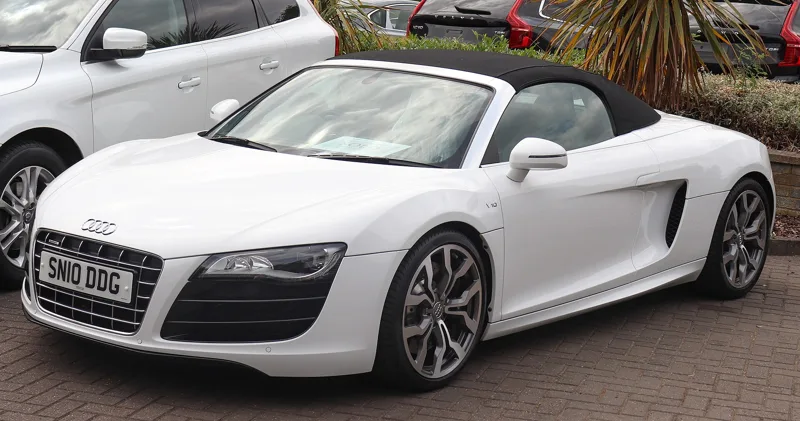
The R8 Spyder made its debut at the 2016 New York show, and its soft top could be raised or lowered below 50 km/h (31 mph). The October 2018 facelift renamed the V10 models as quattro versions and lifted their power to 570 PS (562 hp; 419 kW) and 620 PS (612 hp; 456 kW).
The Spyder launched with the standard V10, and the V10 Plus Spyder joined in mid-2017 with the more powerful engine. The facelift changed the base engine's power by 30 PS (22 kW; 30 hp) and the performance model's by 10 PS (7 kW; 10 hp).
A gasoline particulate filter went onto all models. Buyers could pick Michelin Pilot Sport Cup 2 tyres, the carbon-ceramic brakes were enlarged, and the steering rack was redesigned for a more direct response. Buyers could also specify a carbon fibre roll bar, which cut 2 kg from the weight.
Exterior changes included a squared front bumper with winglets, a larger grille that stretched between the headlights, and three small horizontal intakes between the lamps. Exposed carbon fibre side skirts and a single wide rear grille completed the look, and the interior was carried over largely unchanged.
Performance after the facelift was quoted at 3.5 seconds to 60 mph (0-97 km/h) on the base model and 3.1 seconds on the performance model. Its top speed reached 330 km/h (205 mph), and the facelift went on sale in Europe in early 2019.
Which rear-wheel-drive R8s were built?
Audi first built rear-wheel-drive R8s as limited editions, then made the RWD models permanent. The RWS launched in 2017 as a 999-unit run, and the permanent RWD range kept the 540 PS V10 that the RWS had used.
The R8 RWS debuted at the 2017 German motor show, dropping the all-wheel-drive system and saving 50 kg (110 lb). Its coupe weighed 1,590 kg (3,505 lb), and its Spyder weighed 1,680 kg (3,704 lb). A matte-black grille and airflow openings marked it out, with a gloss-black upper side blade.
Audi announced the RWD models as permanent on 19 November 2019. At 1,595 kg (3,516 lb), the coupe was 65 kg (143 lb) lighter than the quattro version, and the Spyder was 55 kg (121 lb) lighter at 1,695 kg (3,737 lb). Both models had a 40:60 weight distribution.
On 7 October 2021 Audi introduced the V10 performance RWD. It kept the 570 PS (562 hp; 419 kW) output of the quattro model but had 10 Nm less torque, at 550 Nm (406 lb-ft). It gained dynamic steering, carbon fibre stabilisers and ceramic disc brakes, and it became the only rear-drive R8 in the range.
The Coupe GT RWD was announced in October 2022 as a 333-unit special edition, lightened and upgraded for better handling and performance.
Which special editions were built?
Audi built a run of special editions, including the Decennium, a one-off Star of Lucis and US-only Final Edition and Panther models. The Decennium was limited to 222 units worldwide, with 50 going to the United States.
The Decennium debuted at the 2019 Geneva show and marked ten years of the V10 model. It was based on the V10 performance quattro and used 20-inch alloy wheels in bronze, gloss-black aerodynamic parts and a matte Daytona Grey body colour.
The V10 Quattro Final Edition arrived in July 2020, limited to 30 units for American buyers. It had 20-inch milled silver wheels, carbon exterior trim and features previously reserved for the Performance model.
The Panther Edition introduced the RWD line to the United States in December 2020. It was limited to 30 coupes, finished in Panther Black crystal effect paint with 20-inch matte black and red wheels.
The Star of Lucis was a one-off replica of the car used in Kingsglaive: Final Fantasy XV. Audi ran a raffle for the chance to buy it in 2016, and the car was later offered at auction during the 2019 Tokyo Auto Salon.
What was the R8 e-tron?
The production R8 e-tron was an all-electric sports car with two electric motors on the rear wheels, producing 462 PS (340 kW; 456 hp), with 919 Nm (678 lb-ft) of torque. Fewer than 100 units were sold, and the car was offered only in Europe.
A 92 kWh T-shaped battery powered the car, which reached 60 mph (0-97 km/h) in 3.9 seconds. Its top speed was 250 km/h (160 mph), and Audi promised an electric range of 450 km (280 mi).
The curb weight came to 1,780 kg (3,924 lb). Braking blended regenerative energy recovery with a conventional electromechanical system, which used carbon-ceramic discs for harder stops.
How did the R8 perform in motorsport?
The R8 LMS GT3 race car used a 430 kW (577 hp; 585 PS) V10 and rear-wheel drive. Later variants included the GT4 and GT2 cars, and an R8 LMS took victory at the 2018 Bathurst 12 Hour.
The LMS chassis was about 30 kg (66 lb) lighter than before, weighing 252 kg (556 lb), and its torsional stiffness rose by 39 percent. The car weighed 1,225 kg (2,701 lb) overall and used the PS1 racing seat from the R18 e-tron quattro.
Quattro GmbH built the road and race versions together at the Bollinger Hofe site in Heilbronn, and the race cars were finished in Heilbronn-Biberach. The LMS Evo arrived in 2018 for the 2019 season, followed by the LMS Evo II in 2021, which improved the aero, engine, climate, suspension and traction systems.
The GT4 version debuted at the 2017 New York show. Its 5.2-litre V10 made 496 PS (365 kW; 489 hp), and its torque was 550 Nm (406 lb-ft), and it was built as an entry-level racer for amateur drivers in 13 series.
The GT2 car was unveiled at the 2019 Goodwood Festival of Speed with 640 hp. It later won overall at the 2022 24 Hours of Zolder, and the tuner Abt Sportsline turned it into the road-legal XGT in 2023.
The R8 also served as the safety car for the DTM, the British Superbike Championship, the WEC and the 24 Hours of Le Mans.
How was the Type 4S received?
Reviewers liked the Type 4S for its daily usability, design and handling. Critics pointed to the missing manual gearbox and the lack of an affordable V8, while some features were absent from the cars sold in the US.
Car Advice liked everyday usability, modern design and tech, yet wanted a manual option and a more affordable V8.
Autocar tested the standard V10 coupe and liked its naturally aspirated engine and nimble handling. The magazine favoured the Plus, arguing that the cost difference between the two with options was simply too slim.
Car and Driver tested the V10 Plus and praised its aggressive design, quick acceleration and engine noise. It criticised the unavailability of magnetorheological dampers and laser headlamps on US market cars.
What are the Type 4S specifications?
| Specification | Detail |
|---|---|
| Platform | Modular Sports System, shared with the Lamborghini Huracan |
| Base engine | 5.2 FSI V10, 540 PS (397 kW; 533 hp) |
| V10 Plus engine | 610 PS (449 kW; 602 hp) |
| Transmission | Seven-speed S-Tronic with quattro; no manual |
| Wheels | 19-inch standard; 20-inch optional |
| Facelift base, 0-97 km/h | 3.5 seconds (0-60 mph) |
| Facelift performance, 0-97 km/h | 3.1 seconds (0-60 mph) |
| Facelift performance top speed | 330 km/h (205 mph) |
| RWD coupe weight | 1,595 kg (3,516 lb) |
| RWD Spyder weight | 1,695 kg (3,737 lb) |
| LMS GT3 weight | 1,225 kg (2,701 lb) |
| e-tron output | 462 PS (340 kW; 456 hp) |
| e-tron range | 450 km (280 mi) |