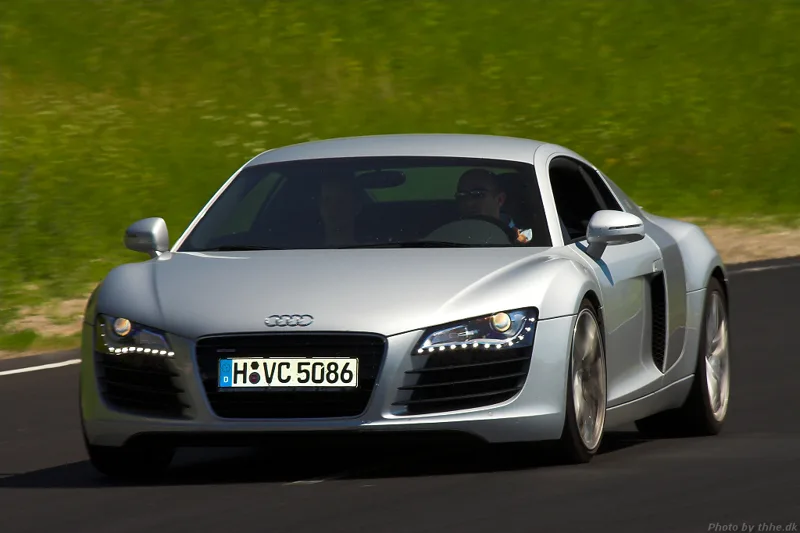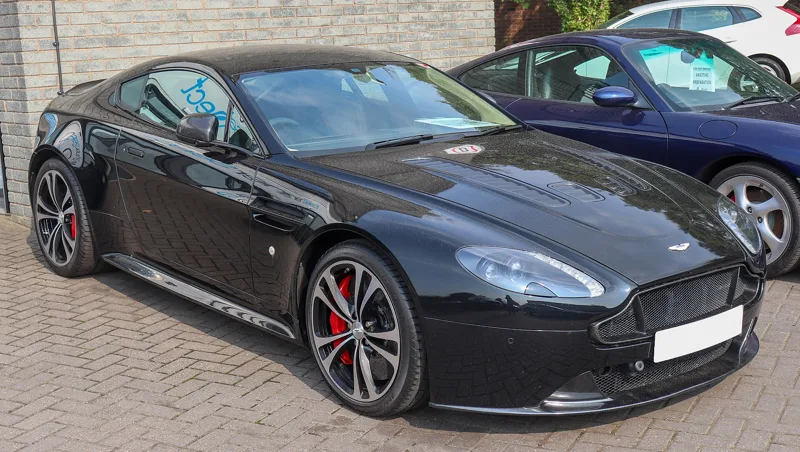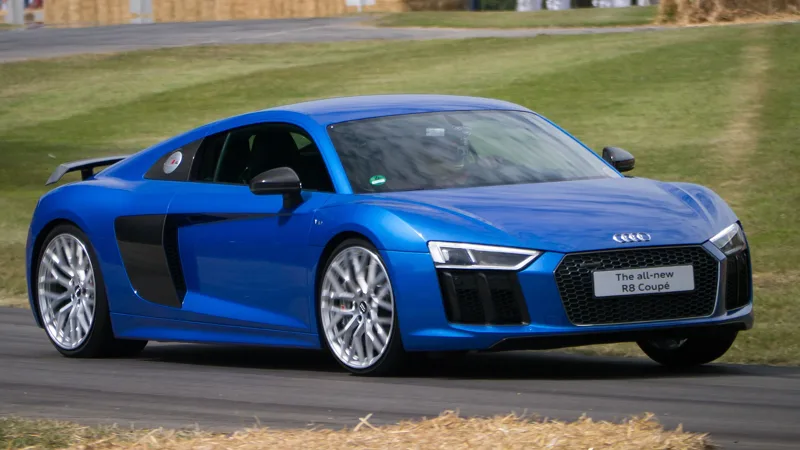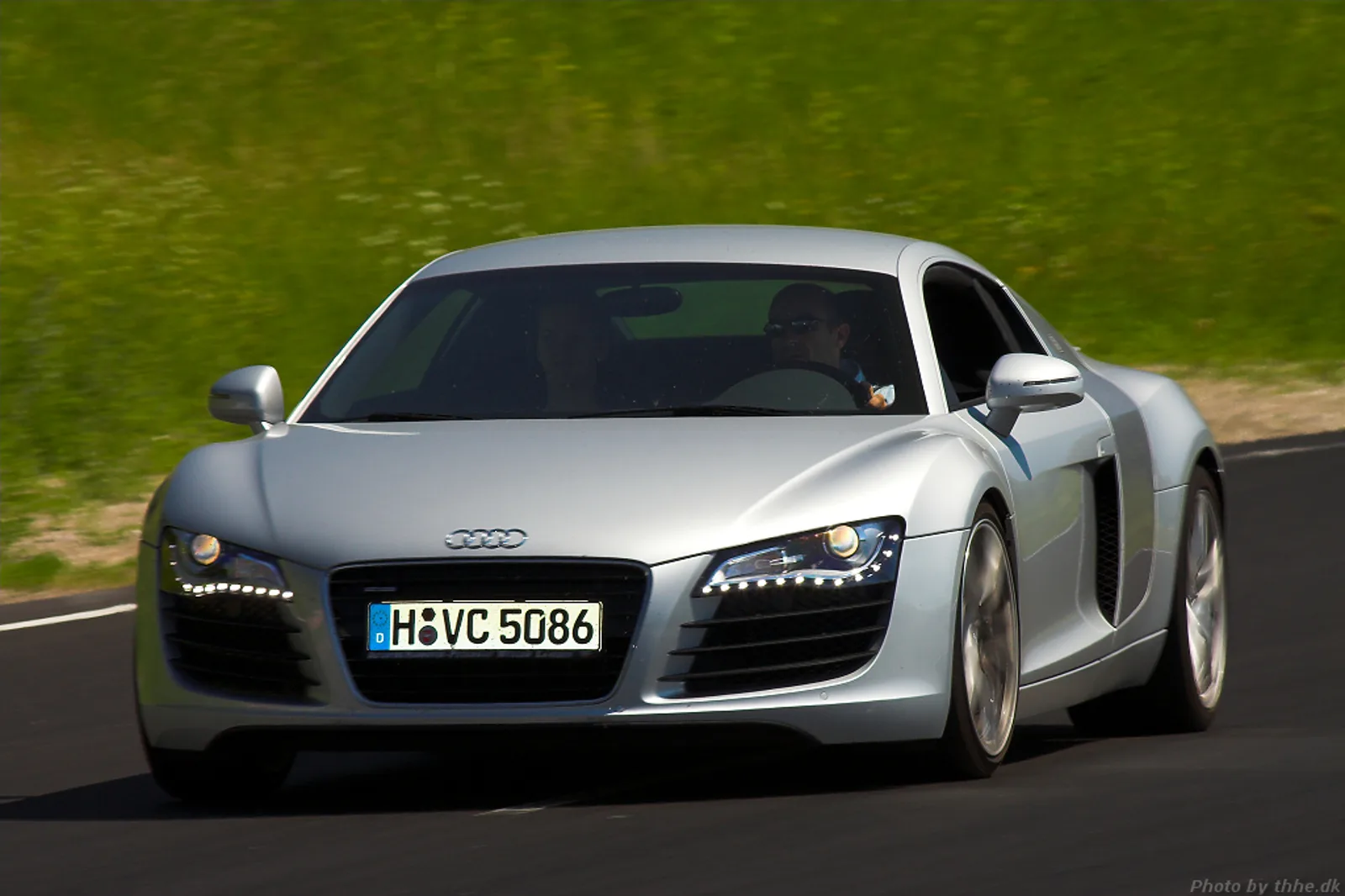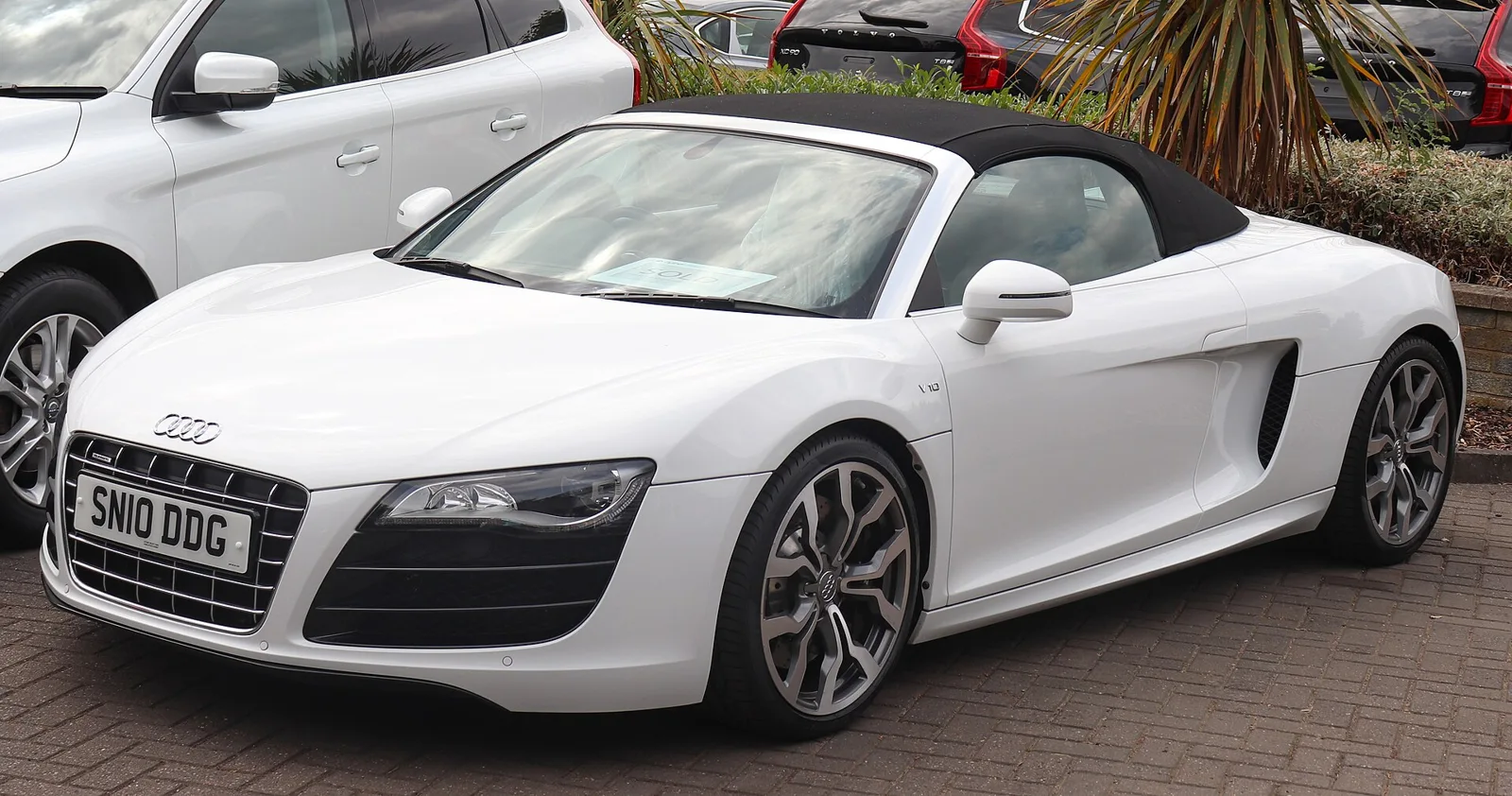
A Lamborghini-based Audi and a sixth-generation 911, each with a flagship version that pushed the road car towards the race track.
The Audi R8 Type 42 and Porsche 911 (997) overlapped on sale from 2006 to 2013. The R8 shared its chassis and engine with the Lamborghini Gallardo, while the 997 was a refined sixth-generation 911 with a range from Carrera to GT2. Both families gained track-focused GT3 versions.
The Audi R8 and the Porsche 911 (997) overlapped on sale from 2006 to 2013, and they began from very different foundations. The R8 borrowed its chassis and engine from Lamborghini's Gallardo, while the 997 was the sixth generation of Porsche's long-running 911 and an evolution of the 996 that came before it.
Both families grew well beyond their first models. Each gained open-top, track-focused and high-output versions, and both reached the race track through GT3 rules, though by different routes.
Were the Audi R8 and Porsche 911 (997) direct rivals?
Neither history describes the pair as head-to-head rivals in a single market. What they share is timing and a racing rulebook. Audi's R8 LMS was built for the GT3 rules in the FIA GT3 European Championship, while Porsche's 997 GT3 homologated racing aerodynamics and supplied customer teams. Buyers cross-shopping them were weighing two sports cars from the same years.
Each range is easier to understand as a family than as a single model. The R8 began as a V8 coupe in 2006 and gained a V10 in 2008, while the 997 started as the Carrera in 2004, with the Carrera S, Turbo, GT3 and GT2 following.
A Lamborghini-based Audi and a refined sixth-generation 911 took different routes to a similar place.
How did the R8 and 997 engines differ?
The entry R8 used a 4.2-litre V8 rated at 420 PS (309 kW; 414 hp), while the 997 started with a 3.6-litre flat-six that grew to 3.8 litres on the Carrera S. The R8's V10 was based on the unit in the Lamborghini Gallardo LP560-4 and was tuned up to 525 PS (386 kW; 518 hp).
The 997 engine story changed in 2009, when Porsche replaced the Mezger unit with a direct-injection engine. The Turbo took a different route to power, using two BorgWarner VTG turbochargers, a first for a Porsche production car.
Specifications side by side
| Specification | Audi R8 42 | Porsche 911 (997) |
|---|---|---|
| Production | June 2006 to August 2015 (Type 42) | 2004 (2005 model year) to 2013 |
| Entry engine | 4,163 cc V8, 420 PS (309 kW; 414 hp) | 3.6 L flat-six; output not published |
| Entry torque | 430 Nm (317 lbf ft) | No figure given |
| Flagship road model | R8 GT: 560 PS (412 kW; 552 hp) | GT2: 530 PS (390 kW; 523 bhp) |
| Flagship torque | 540 Nm (398 lb ft) at 6,500 rpm | 680 Nm (502 lb ft) at 2,200 rpm |
| 0-100 km/h | 3.6 seconds (GT); 3.9 seconds (V10) | 3.9 seconds (Turbo, manual); 3.4 seconds to 97 km/h (GT2) |
| Top speed | 320 km/h (199 mph) (GT); 316 km/h (196 mph) (V10) | 310 km/h (193 mph) (Turbo); 205 mph (330 km/h) (GT2) |
| Drivetrain | Quattro, up to 70% of power to the rear | All-wheel drive on Carrera 4 and Turbo; rear-wheel drive on GT2 |
| Gearbox | Manual or automated manual, both by Graziano Trasmissioni (V8) | PDK from 2009; 6-speed manual on GT2 |
| Curb weight | 1,525 kg (3,362 lb) (GT) | 1,569 kg (3,460 lb) (Turbo); 1,440 kg (3,175 lb) (GT2) |
| Price | No figure given | US$106,000 (GT3) |
What did the R8 V10 change over the V8?
The V10 arrived in December 2008 with 525 PS (386 kW; 518 hp) and 530 Nm (391 lbf ft) of torque, and Audi quoted 3.9 seconds for 0-100 km/h. It also brought V10 badging on the front fenders, larger rear brakes, a dual exhaust outlet and a Bang and Olufsen sound system.
Beyond the engine, the V10 looked more aggressive than the V8, and it had all-LED headlights, which were described as a world first. On paper it out-muscles the 997 Turbo, at 525 PS against 480 PS.
How did the 997 change in 2009?
Porsche refreshed the 997 that year with a new direct-injection engine in place of the Mezger unit, and the PDK dual-clutch replaced the five-speed Tiptronic from Mercedes-Benz. The updated cars were faster, lighter and more fuel efficient, and the Turbo could be ordered with torque vectoring.
In a preliminary review in October 2009, Car and Driver estimated that the updated Turbo with PDK should reach 0-97 km/h (0-60 mph) in three seconds. That was an estimate, not a measured time.
Which R8 variants were built?
The R8 range grew to include a Spyder shown at the 2009 Frankfurt Motor Show, a V8 Spyder from 2011, and the GT, a 560 PS (412 kW; 552 hp) V10 built in a run of 333 cars worldwide. The GT Spyder followed at the 2011 24 Hours of Le Mans and was also limited to 333 units.
Lightness was the GT's main change. Its curb weight was cut by 100 kg (220 lb) to 1,525 kg (3,362 lb), and its fixed rear wing, red brake calipers and GT badging set it apart from the standard V10. Its 0-100 km/h time of 3.6 seconds was 0.3 seconds quicker than the V10's.
Audi's V12 TDI concept of 2008 never reached production. Audi said that re-engineering the petrol R8 to fit a larger twin-turbocharged diesel was simply too costly to recover through sales.
How did the R8 Spyder come about?
The R8 Spyder was rumoured from the production announcement in 2006, and the first hard evidence came when spy shots from the film Iron Man 2 appeared online in August 2008. The car was formally unveiled at the 2009 Frankfurt Motor Show with extra chassis support and a pair of roll-over bars.
Those early photos showed a soft top and none of the distinctive sideblades that the V10 coupe carried. The convertible used the same 5.2-litre V10 as the coupe, and in 2011 Audi added the 4.2-litre V8 to the Spyder range.
The V8 Spyder made 434 PS (319 kW; 428 hp), 14 PS more than the coupe, and it reached 300 km/h (186 mph). Its 0-100 km/h time was 4.3 seconds.
What did the 997 variants add?
The 997 family ran from the Carrera and Carrera S to the Turbo, the GT3 and the GT2. The Turbo added a wide body and a retractable rear wing, while the GT2 used rear-wheel drive and a 6-speed manual only, and it was the most powerful and fastest road-going 911 at launch.
The GT2 produced 530 PS (390 kW; 523 bhp) and 680 Nm (502 lb ft) of torque at 2,200 rpm. It was also the first Porsche with launch control, and its titanium exhaust system helped to shed weight compared with the Turbo.
Porsche claimed full-throttle fuel consumption was 15 percent better than the Turbo's, despite the extra power. The GT2 weighed 1,440 kg (3,175 lb) and reached 205 mph (330 km/h), and it was the first 911 to pass the 200 mph barrier, apart from the 1998 GT1 race version.
What did the Carrera S add to the 997?
The Carrera S arrived in 2005 with 29 PS (21 kW; 29 bhp) more than the base Carrera, from a larger 3.8-litre engine. It came with lowered suspension and PASM dampers, 19-inch wheels, upgraded brakes, a sports exhaust, Bi-Xenon headlights and aluminium interior trim.
The S was offered as a coupe, cabriolet and Targa, alongside the base Carrera. The all-wheel-drive Carrera 4S had been preceded by the 996 Carrera 4S, whose success helped Porsche justify the S models.
Where did the two cars race?
Audi built the R8 LMS for the GT3 rules, using a 500 PS (368 kW; 493 hp) V10 and rear-wheel drive, because GT3 rules ban four-wheel drive. It raced in the FIA GT3 European Championship and national series, with customer deliveries planned from autumn 2010.
Porsche's 997 GT3 played a similar role for its own customer teams, and the GT2 was built mainly for GT2 class racing. The R8 LMS Evolution of 2010 improved cooling and suspension, and the R8 LMS ultra arrived in 2013 with 570 PS (419 kW; 562 hp) depending on restrictor rules.
Audi also built a Grand-Am version for the Rolex Series, which debuted at the 50th Daytona 24 Hours in January 2012. Its power was cut from 470 PS (346 kW; 464 hp) to 450 PS (331 kW; 444 hp), and it ran without traction control or ABS.
How many cars were built?
The R8 figures are limited-run numbers: 333 GT coupes and 333 GT Spyders worldwide, with 50 of the Spyders sold in the US. For the 997, the firmest total is 1,760 Targa 4 and 4S cars built worldwide in the first year, with 800 of them sold in the US.
Set against 38,922 911 models produced in total, the Targa's first-year output was small. The Targa's glass roof dropped 25 mm and slid a metre back beneath the rear window, and the car was only offered with all-wheel drive.
How did the Targa and cabriolet differ from the coupe?
The Targa carried a glass roof that could be opened at any speed, and it was only sold with all-wheel drive. The cabriolet had a canvas top, with factory hard tops available for better weather protection and a winter option.
The roof itself weighed an extra 60 kg (132 lb), so the suspension was modified to suit. When the roof was retracted, a small glass deflector rose above the windshield to aid stability.
Porsche began development with the convertible before the coupe, starting with the harder engineering problems of an open car, such as chassis stiffness. The Turbo Cabriolet followed, announced on 7 May 2007 and on sale in September 2007.
What was the 911 Club Coupe?
The 911 Club Coupe was a limited edition of 50 cars, based on the 2006 Carrera S coupe with an X51 Powerkit to mark 50 years of the Porsche Club of America. Its MSRP was US$99,911, or CDN $145,911 in Canadian dollars. It was unveiled at the club's 50th Annual Porsche Parade in Hershey, Pennsylvania.
The Azurro California paint echoed the colour of the Porsche 356. Chassis number 001 went to the Porsche Museum in Stuttgart, while chassis number 050 was won by a club member in a sweepstakes, and the remaining 48 units went to randomly chosen US and Canadian members.
Which buyer suits each car?
The R8 suits a buyer who wants an Audi with a V8 or V10, LED headlights and quattro traction, and who values an engine shared with Lamborghini. The 997 suits a buyer who wants the classic 911 shape, a range from the Carrera to the GT2, and, after 2009, a PDK automatic option.
Neither history gives luggage space, rear seating or running costs, so this comparison cannot rank practicality. On the figures given, the R8 suits a driver chasing V10 performance from a Lamborghini-based chassis, while the 997 suits a buyer who wants a 911 as a coupe, convertible, Targa or GT car.
What did reviewers say about each car?
Reviewers were mostly positive about the 997, and Jeremy Clarkson, a known detractor of Porsche cars, rated it highly. Road and Track measured the 4.2-litre R8 at 4.0 seconds to 60 mph with the manual gearbox, while Car and Driver estimated 0-97 km/h in three seconds for the updated 997 Turbo.
The automated manual version of that car took 4.3 seconds to the same speed and reached 301 km/h (187 mph). Those were test results rather than factory claims.