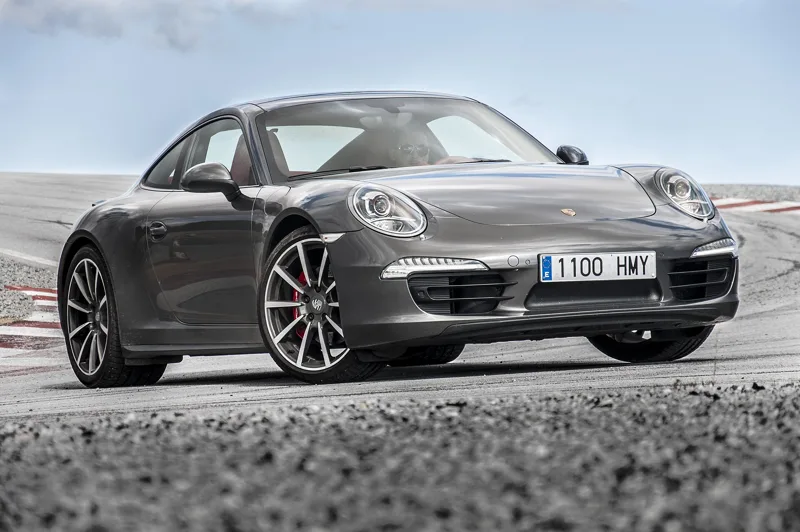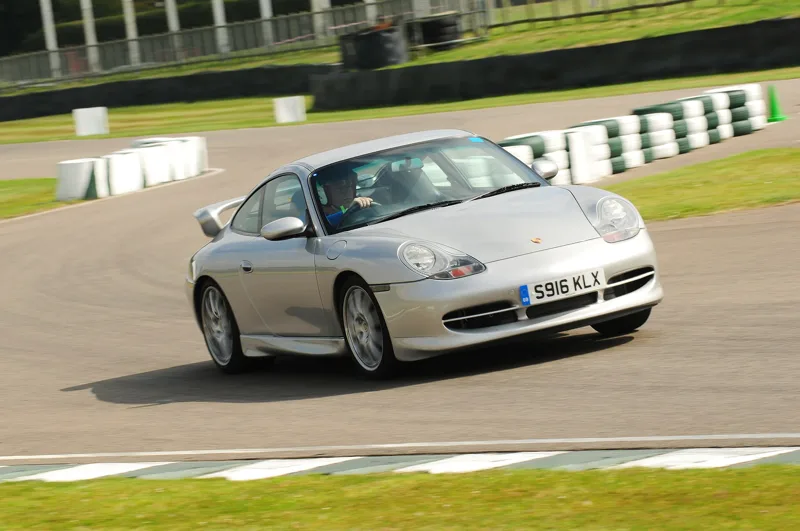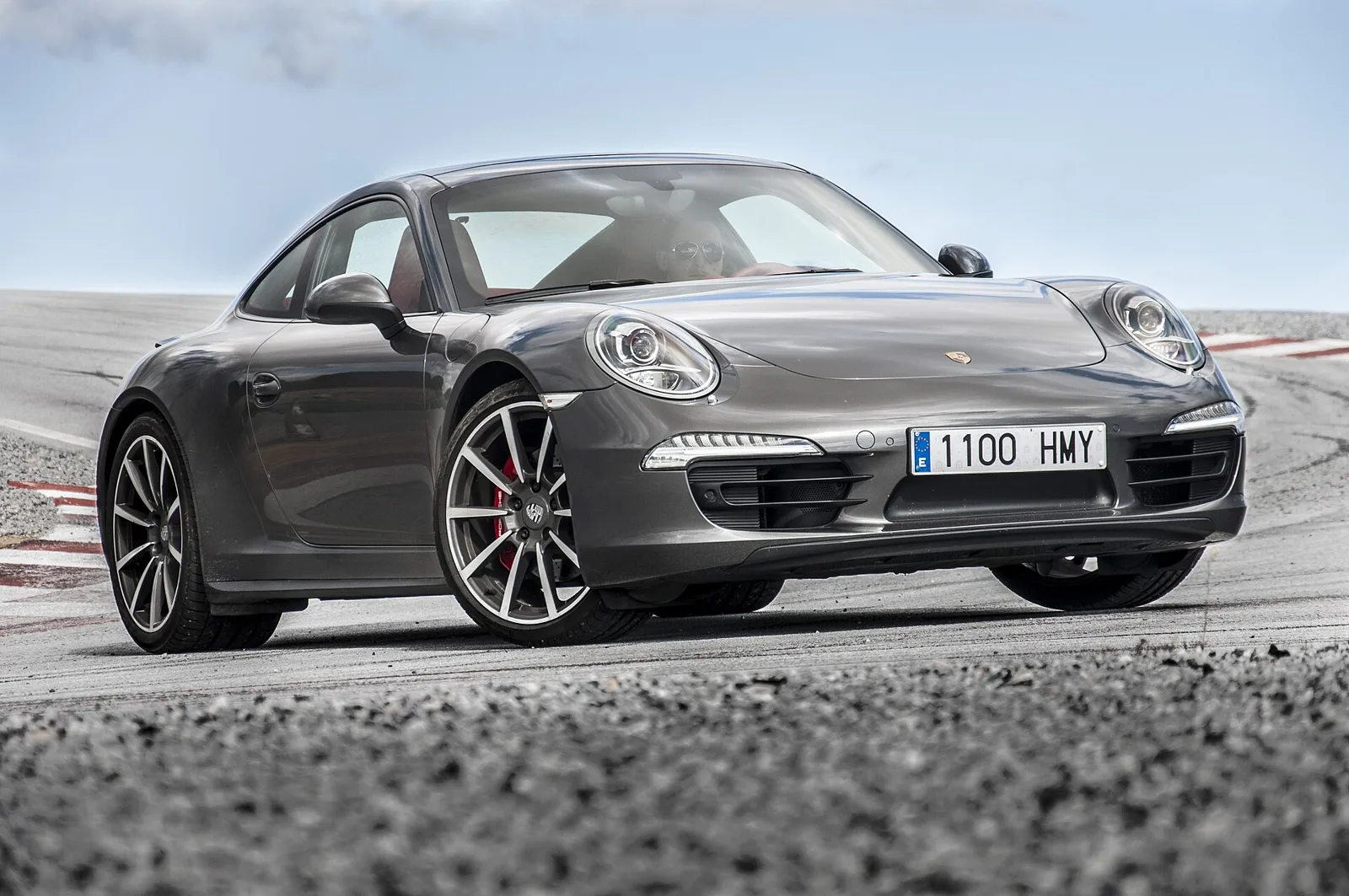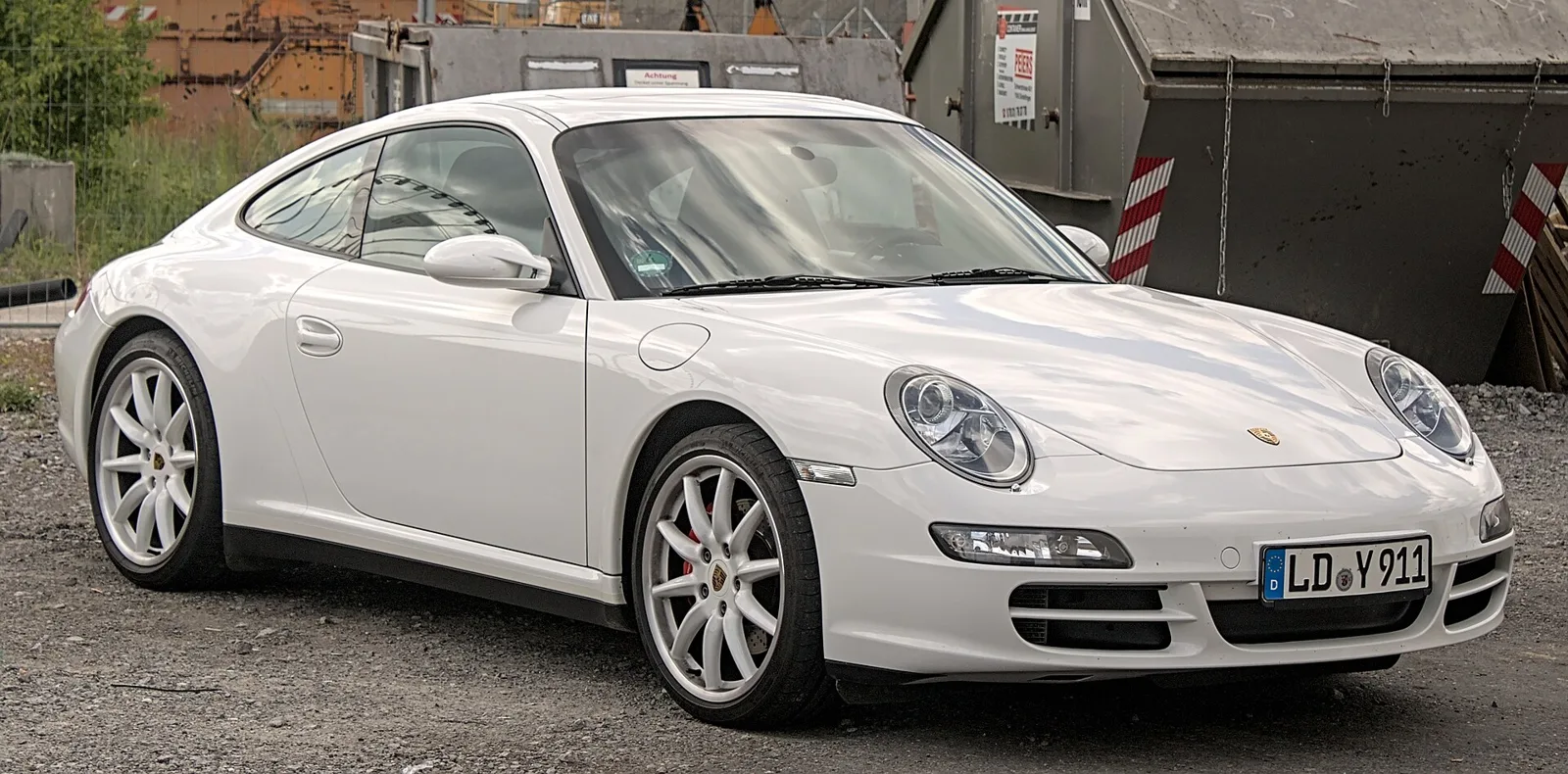
Sold from 2004 to 2013, the 997 brought back round headlamps, added a Turbo with twin VTG turbos and ended in a 500 PS RS 4.0, all on a 996-based platform.
The Porsche 911 (997) was the sixth 911 generation, sold from 2004 to 2013. It evolved from the 996 with bug-eye headlamps, and the range ran from the Carrera to Turbo, GT2, GT3 and the GT3 RS 4.0. Its engines reached 500 PS in the final RS.
The Porsche 911 (997) is the sixth generation of the 911 sports car, built by Porsche from 2004 until 2013. It evolved from the 996 but brought back round headlamps, a larger 18-inch wheel as standard and a range that ran from the base Carrera to the 500 PS GT3 RS 4.0. Turbo, GT2 and GT3 variants gave it a strong motorsport identity.
What is the Porsche 911 (997)?
The 997 was an evolution of the 996 rather than a clean-sheet design. Porsche made significant changes to the interior and exterior styling, and the most visible change was the return of the classic bug-eye headlamps in place of the 996's fried-egg units. Technically, the car was very similar to its predecessor despite many revisions.
The line-up spanned coupe, cabriolet and Targa bodies, and it included all-wheel-drive Carrera 4 models alongside the rear-drive cars. The Carrera S, Turbo, GT2 and GT3 gave buyers a wide choice of performance levels, and later refreshes brought direct injection and a new PDK gearbox.
The 997 kept the 996's bones but brought back round headlamps and a Turbo that ran on twin VTG turbochargers.
How was the 997 designed?
Development of the 997's body began in late 1998, and by February 1999 designers were already at work on it. After many reviews and full-size clay models built from 2000 into 2001, a final design by Grant Larson was approved. Early prototypes were built in late 2001 for testing.
The rear bodywork was 88 mm (3.5 in) wider than the 996's. The interior was redesigned with new controls, and it was closer in feel to classic 911 cabins than to the outgoing car. Aerodynamically, the Carrera measured 0.28 and the Carrera S 0.29 on drag coefficient.
For the first time, the cabriolet led the design and engineering effort, with the coupe following. Porsche reasoned that if the open car was made stiff enough, the coupe would be more rigid by default. The cabriolet's factory hardtop gave better protection from bad weather and a winter option.
What engines did the 997.1 Carrera use?
The base Carrera used essentially the same 3,596 cc flat-six as the 996 Carrera. The Carrera S used a new 3,824 cc flat-six, and it added 29 PS (21 kW; 29 bhp) over the base car. The S also brought PASM dampers, a lowered suspension, 19-inch wheels, upgraded brakes and a sports exhaust.
The all-wheel-drive Carrera 4 used a viscous clutch system that sent between 5% and 40% of engine torque to the front wheels as needed. The X51 Powerkit was available for the S, 4S and Targa models to raise output further. The Tiptronic automatic from Mercedes-Benz was the transmission until the 2009 refresh.
How did the 997 Turbo arrive?
The 997 Turbo debuted at the 2006 Geneva Motor Show with a wide body shell, a retractable rear wing and LED turn signal strips in the front air intakes. It was 41 kg (90 lb) lighter than its predecessor, thanks to extensive aluminium use in key areas.
The engine was based on the design of the 911 GT1, and it produced 480 PS (353 kW; 473 bhp) and 620 Nm (457 lb ft) of torque, rising to 680 Nm (502 lb ft) on overboost. Two BorgWarner VTG turbochargers were a first for a Porsche production car. Porsche Traction Management and Porsche Stability Management worked together to manage the torque.
The Turbo Cabriolet went on sale in September 2007 and matched the coupe's top speed and acceleration despite the usual drawbacks of a soft-top convertible. Ceramic brakes were available as an option, saving 17 kg (37 lb) over the standard set.
What made the GT2 and GT3 different?
The GT2 went on sale in November 2007. Its engine was based on the 3.6-litre flat-six with twin variable-geometry turbochargers, producing 530 PS (390 kW; 523 bhp) and 680 Nm (502 lb ft). Unlike the Turbo, it was rear-wheel drive to save weight, and it had a full titanium exhaust. It weighed 1,440 kg (3,175 lb) and used a six-speed manual only.
The GT2 was the first Porsche with launch control. Porsche claimed 3.4 seconds to 97 km/h (60 mph) and 7.4 seconds to 161 km/h (100 mph), and it topped out at 330 km/h (205 mph). That made it the first 911 to pass 200 mph since the 1998 GT1 race car.
The GT3 debuted at the 2006 Geneva Motor Show alongside the Turbo. Its engine was rated at 415 PS (305 kW; 409 bhp) and 405 Nm (299 lb ft), with an 8,400 rpm redline. It weighed 1,395 kg (3,075 lb), and the RS version dropped most of the comforts for track-oriented driving, with a roll cage, carbon fibre seats and a large fixed rear wing.
What did the 2008 refresh change?
The 997 received a mid-cycle refresh for the 2009 model year, revealed at the Paris show in September 2008. It brought a new engine with direct fuel injection, revised suspension, a larger front air intake and LED daytime running lights. The old Tiptronic gave way to the 7-speed PDK dual-clutch gearbox.
Pricing rose from the first generation, and the base Carrera started at US$76,300 for North American buyers. The Turbo followed at the 2009 Frankfurt Motor Show with a new 3.8-litre flat-six producing 500 PS (368 kW; 493 bhp), and the Turbo S added 30 PS more in 2010. The refreshed GT3 made 435 PS (320 kW; 429 bhp).
How fast was the 997?
Porsche claimed the Turbo could reach 100 km/h in 3.9 seconds with the manual, and 3.7 seconds with the Tiptronic. Motor Trend measured a manual Turbo at 3.2 seconds from 0 to 60 mph in 2006. The Turbo's top speed was 310 km/h (193 mph), and the refreshed Turbo claimed 312 km/h (194 mph) with PDK.
The Turbo S of 2010 reached 100 km/h in 2.7 seconds and 200 km/h in 9.6 seconds, with a top speed of 315 km/h (196 mph). In an independent test by the Swedish magazine Teknikens Varld, the GT3 RS and Carrera 4S tied for second place in the moose test at 82 km/h (51 mph), behind only the Citroen Xantia Activa V6.
Which special models came late in the 997 run?
The Sport Classic was a 250-unit limited edition of the Carrera S, inspired by the 1973 Carrera RS 2.7. It had a double-bubble roof, a duck-tail spoiler and PCCB brakes, and all 250 units sold in under 48 hours. Its 408 PS (300 kW; 402 bhp) came from a newly developed resonance intake.
The GT2 RS arrived in 2010 with 620 PS (612 bhp; 456 kW) from a 3.6-litre twin-turbo flat-six. It weighed 70 kg (154 lb) less than the outgoing GT2 and could reach 330 km/h (205 mph). The 911 GT3 RS 4.0 followed in 2011 as the final evolution of the 997, with 500 PS (368 kW; 493 bhp) and only 600 built.
The Speedster of 2011 used the Carrera GTS engine and was limited to 356 units, the number coming from the iconic 1950s 356 car. It was only offered with PDK, and it could reach 0-97 km/h in 4.2 seconds on the way to about 306 km/h (190 mph).
What mechanical issues affect the 997?
Cylinder bore scoring is the most common problem for 997.1 and 997.2 engines. It occurs when the aluminium-silicon cylinder system breaks down, leaving deep scratches in the bores and similar damage to the pistons. Affected engines lose ring seal, make more piston noise and burn more oil.
The 997.1 Lokasil block is more susceptible to bore scoring than the later engines, though the 997.2 can also suffer from it at a lower rate. Porsche's intermediate shaft bearing and rear main seal problems of the 996 were addressed on the 997.1, and failures of those parts are uncommon. Porsche used a larger, non-serviceable IMS bearing, and the engines received an updated PTFE rear main seal.
Porsche 911 (997) specifications at a glance
| Specification | Detail |
|---|---|
| Production span | 2004 to 2013, sixth generation |
| Carrera engine | 3,596 cc flat-six, from the 996 Carrera |
| Carrera S engine | 3,824 cc flat-six, 29 PS (21 kW; 29 bhp) above the base car |
| Turbo (2006) | 480 PS (353 kW; 473 bhp), 620 Nm (457 lb ft), 680 Nm overboost |
| GT2 (2007) | 530 PS (390 kW; 523 bhp), 680 Nm (502 lb ft), 1,440 kg (3,175 lb) |
| GT3 (2006) | 415 PS (305 kW; 409 bhp), 405 Nm (299 lb ft), 1,395 kg (3,075 lb) |
| Turbo S (2010) | 530 PS (390 kW; 523 bhp), 700 Nm (516 lb ft) |
| GT2 RS (2010) | 620 PS (612 bhp; 456 kW), 700 Nm (516 lb ft) |
| GT3 RS 4.0 (2011) | 500 PS (368 kW; 493 bhp), 460 Nm (339 lb ft), 1,370 kg (3,020 lb) |
| Speedster (2011) | 408 PS (300 kW; 402 bhp), 356 units |
| Drag coefficient | 0.28 Carrera, 0.29 Carrera S |