An all-new platform that kept the 911 shape, from the 3.4-litre Carrera to the 700 PS GT2 RS and the 1,948-unit Speedster.
Built from 2011 to 2019 on an all-new platform, the 991 sold 233,540 units across Carrera, Turbo, GT3 and GT2 RS models. The 1,948-unit Speedster closed the run as the final production version, after engines that ranged from 350 PS to 700 PS.
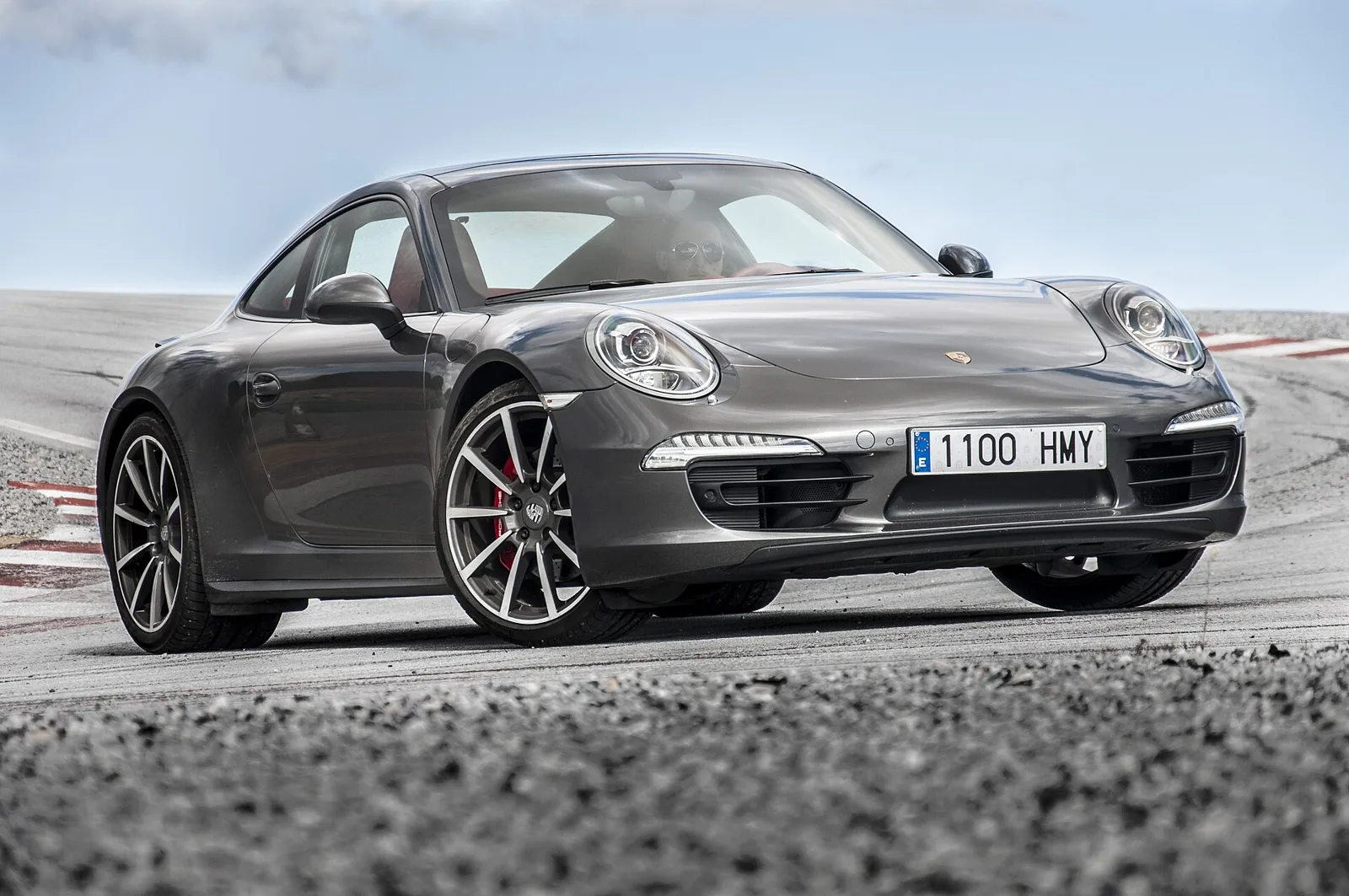
The Porsche 991 was the seventh generation of the 911 sports car. Porsche unveiled it at the 2011 Frankfurt Motor Show as the replacement for the 997, and production ran until 20 December 2019 with 233,540 units built. It was an entirely new platform, and it kept the 911's familiar silhouette.
What was the 991, and why did it matter?
The 991 was only the third new platform in the 911's history, following the original car of 1963 and the 996 of 1999. Its arrival meant a clean break from the 997. Porsche built the car in two phases, the 991.1 from 2011 to 2016 and the 991.2 from 2016 to 2019.
The phases were distinguished by their engines and styling changes. The 991.1 used naturally aspirated flat-sixes in the base models, while the 991.2 gave every model a 3.0-litre twin-turbo unit. That change meant the base 911 had turbocharged power for the first time.
A new platform that kept the 911 shape and made turbo power standard across the range.
How did the 991 differ from the 997?
The 991 was slightly larger than the 997. Its wheelbase grew by 100 mm (3.9 in) to 2,450 mm (96.5 in), and its overall length rose by 70 mm (2.8 in) to 4,490 mm (176.8 in). A new transaxle moved the rear wheels 76 mm (3 in) back relative to the engine, which improved weight distribution and cornering.
Porsche used high-strength steel, aluminium and some composites to keep weight in check. The manual Carrera weighed 1,380 kg (3,042 lb), while the all-wheel-drive Turbo with PDK reached 1,605 kg (3,538 lb). PDK was offered as an option on the Carrera and the Turbo, and every Carrera had auto start-stop as standard.
The PDK seven-speed was effectively two gearboxes merged into one unit, with two clutches. Gears one to six had sports ratios, and top speed came in sixth. Seventh was a long ratio that reduced fuel use by keeping revs low. ZF Friedrichshafen produced the PDK for every 991.
What engines did the Carrera use?
The Carrera, introduced at the 2011 Geneva Motor Show, had a 3.4-litre boxer with direct fuel injection. It produced 350 PS (257 kW; 345 hp) at 7,400 rpm, with 390 Nm (288 lb ft) arriving at 5,600 rpm. The Carrera S used a 3.8-litre unit that made 400 PS (294 kW; 395 hp) and peaked at 440 Nm (325 lb ft) of torque, both at the same engine speeds as the base car.
A convertible version of the 991 was announced for both Carrera and Carrera S at the 2011 LA Motor Show. In September 2012 the all-wheel-drive Carrera 4 and 4S joined the range at the Paris Motor Show, giving buyers a choice of driven wheels.
The Carrera GTS, introduced in November 2014, sat between the Carrera S and the GT3. Its 430 PS (316 kW; 424 hp) output was matched with a Sport Chrono package, a Sport exhaust, 10 mm lowered suspension and Porsche Torque Vectoring. With PDK and Launch Control, it reached 0-97 km/h in 3.8 seconds.
Which special editions did Porsche build?
Porsche made a steady run of special editions across the 991 years, many of them limited to small numbers. The Carrera S Club Coupe, shown in May 2012, was offered only in Brewster Green and had a ducktail spoiler, with thirteen cars made worldwide. The Carrera 4S Exclusive Edition was limited to 5 units for the UK in 2013.
The Carrera S Martini Racing Edition of 2014 paid tribute to Porsche's motorsport heritage and was limited to 80 units. A Carrera 4S Exclusive Swiss Edition for the Swiss market followed in November 2014, with 14 cars produced. Each of these models used the same basic platform with a different livery or trim.
The Carrera GTS Rennsport Reunion Edition, limited to 25 cars, used a 436 PS (321 kW; 430 hp) naturally aspirated 3.8-litre flat-six, available only with a manual gearbox. It came with 18-way power sports seats, PASM adaptive suspension, a Bose audio system and carbon-fibre dashboard trim.
What was the GTS Club Coupe?
The GTS Club Coupe marked the 60th anniversary of the Porsche Club of America and was built only for the 2016 model year. Just 60 were produced, and they were available only to Porsche Club of America members. The MSRP was $136,060 excluding destination fee.
The car used 20-inch alloy wheels that paid homage to the Fuchs-style wheels of classic 911s, along with special Club Blau paint and a ducktail spoiler. Its interior had Club Coupe-specific dashboard trim, door sills and a centre console lid.
What did the 50th Anniversary Edition add?
The 911 50th Anniversary Edition was shown at the 2013 Frankfurt Motor Show as the 2014 model, celebrating 50 years of the 911. It was based on the Carrera S, but it added Porsche Active Suspension Management and Porsche Torque Vectoring as standard. Its 1,963 individually numbered cars were offered only to current Porsche owners.
Cosmetically, it used the wider body of the Carrera 4S, 10 mm lower suspension and 20-inch Fuchs-style alloys. Its interior had vintage green instrument dials, white needles and retro houndstooth seat inserts. The MSRP was 121,119 euros including VAT.
What were the Targa 4 and 4S?
Porsche introduced the Targa 4 and Targa 4S at the Detroit Motor Show in January 2014. They used an electronically operated soft top that kept the original targa design, including the B-pillar and the glass dome at the rear. In January 2015 the Targa 4 GTS followed, adding the 430 PS (316 kW; 424 bhp) engine.
The Targa line also produced a run of national special editions. The Targa 4S Exclusive Mayfair Edition was limited to ten examples, all sold in the UK, and the Targa 4S Exclusive Edition shown at the 2015 Amsterdam Motor Show sold fifteen units in the Netherlands. A 30th Anniversary Porsche Italy edition sold 30 cars in Italy.
The Targa 4S upgraded engine produced 420 PS (309 kW; 414 hp) and 499 Nm (368 lb ft) of torque. Later Targa editions included the Exclusive Design Edition, which painted the car in Etna blue as a tribute to the 356B.
Why was the GT3 recalled in 2014?
The GT3 was added to the 991 range at the 2013 Geneva Motor Show, with active rear-wheel steering. It was also the first GT3 offered with an automatic transmission. In early 2014, deliveries were halted after two cars caught fire, and a recall followed to replace the engines of all 785 cars built at that point.
The recall was announced in March 2014, and production was due to restart after it.
How fast was the GT3 RS and the 911 R?
The GT3 RS was launched at the 2015 Geneva Motor Show with a 4.0-litre flat-six producing 500 PS (368 kW; 493 hp) and 460 Nm (339 lb ft). It reached 100 km/h in 3.3 seconds, 0.6 seconds quicker than the 997 GT3 RS 4.0, and 200 km/h in 10.9 seconds. Its transmission was PDK only.
The 911 R was unveiled at the 2016 Geneva Motor Show on 1 March. It shared most of its underpinnings with the GT3 RS but dropped the roll cage, rear wing and related bodywork, saving 50 kg (110 lb). It came only with a six-speed manual and had a top speed of 323 km/h (201 mph), with production limited to 991 examples.
How quick was the Turbo S?
The 991 Turbo, introduced in May 2013, used a twin-turbocharged 3.8-litre flat-six producing 520 PS (382 kW; 513 hp). The Turbo S pushed output to 560 PS (412 kW; 552 hp) and torque to 700 Nm (516 lb ft), rising to 750 Nm (553 lb ft) with overboost. Porsche claimed 0-100 km/h in 2.9 seconds for the Turbo S, though many magazine tests recorded 2.6 seconds.
Both Turbo versions had all-wheel drive and came exclusively with PDK. The Turbo S Exclusive Series arrived in June 2017 with a powerkit and carbon-fibre body panels, limited to 500 units, and braided carbon-fibre wheels were offered as an option.
What did the 991.2 facelift change?
Porsche introduced the 991.2 facelift for the 2016 model year, following its debut at the 2015 Frankfurt Motor Show. It brought updated front and rear bumpers, new dual exhaust pipes and new headlamps and tail lamps. Every engine in the range was now a 3.0-litre twin-turbo flat-six, which meant the base 911 used turbocharging for the first time.
The 991.2 carried the Carrera coupe and cabriolet from October 2015. Carrera 4 and 4S all-wheel-drive versions were unveiled in December 2015, and the Targa 4 and 4S followed in the same month. The Targa 4S used a 3.0-litre turbo engine with 420 PS (309 kW; 414 hp).
What was the Carrera T?
The 911 Carrera T, announced in October 2017, offered the base Carrera drivetrain in a lighter and more focused form. It had a shorter rear axle ratio, a mechanical differential lock, PASM and sports exhaust as standard, and its suspension sat 20 mm lower.
To save weight, the Carrera T had lighter glass for the side and rear windows, reduced sound insulation and Sport-Tex seats. The rear seats were deleted, although they could be re-added at no cost. PDK, rear-wheel steering and bucket seats were all optional.
What did the GT2 RS achieve?
The GT2 RS was launched at the 2017 Goodwood Festival of Speed alongside the Turbo S Exclusive Series. Its 3.8-litre twin-turbo flat-six produced 700 PS (515 kW; 690 hp) at 7,000 rpm and 750 Nm (553 lb ft) of torque. That gave it a power-to-weight ratio of 2.1 kg (4.63 lb) per horsepower, making it the most powerful 911 built to that point.
In late September 2017 the GT2 RS set a 6:47.3 lap of the Nurburgring. At the time, that was the fastest Porsche road car lap recorded on the track.
What was the 935 homage?
The 935 was a track-only special unveiled at Porsche Rennsport Reunion VI in September 2018, paying homage to the legendary 935 race car. It was built on the GT2 RS and styled to resemble the 935/78, known as Moby Dick, with a carbon-fibre body and an elongated whale-tail rear section.
The car was 4,865 mm (191.5 in) long and 2,034 mm (80.1 in) wide, larger in its dimensions than the donor car. It weighed 1,380 kg (3,042 lb) with all its changes, and its 700 PS engine was untouched. Production was limited to 77 units, with deliveries starting in June 2019.
What was the Speedster?
The Speedster was shown as a concept at the 2018 Paris Motor Show, marking the 70th anniversary of the marque. It used the chassis of the GT3 and the body shell of the Carrera 4 Cabriolet, with a 4.0-litre naturally aspirated flat-six rated at 500 PS (368 kW; 493 hp) and a manual gearbox.
The production car was unveiled at the 2019 New York Auto Show. It dropped the concept's Talbot mirrors in favour of standard 991 mirrors and produced 510 PS (375 kW; 503 hp) at 8,400 rpm. Carbon-ceramic brakes came as standard, and production was limited to 1,948 units to mark the year the 356 Number 1 was licensed.
The Speedster was the final edition of the 991. Production of the generation ended on 20 December 2019, with the Speedster as the last model. The last Speedster was auctioned in April 2020.
What awards did the 991 win?
The 991 was named World Performance Car in 2012, shortly after the death of the famed Porsche designer Ferdinand Alexander Porsche. The GT3 went on to win the World Performance Car of the Year title in 2014.
Porsche also sold a Design 911 Soundbar Final Edition through local centres, a set of 50 speakers that used the exhaust system from the 991 GT3.
What are the Porsche 991 specifications?
Every 991 version used a 2,450 mm wheelbase and a flat-six engine, from the base Carrera to the GT2 RS. Its generation totals were 233,540 units built between 2011 and 2019, and the table below sets out the key figures for the main models.
| Specification | Detail |
|---|---|
| Generation | Seventh-generation 911, 2011 to 2019 |
| Platform | New platform, third since the original 911 of 1963 |
| Wheelbase | 2,450 mm (96.5 in) |
| Overall length | 4,490 mm (176.8 in) |
| Manual Carrera weight | 1,380 kg (3,042 lb) |
| Carrera engine | 3.4-litre boxer, 350 PS (257 kW; 345 hp) at 7,400 rpm |
| Carrera S engine | 3.8-litre, 400 PS (294 kW; 395 hp) at 7,400 rpm |
| Carrera GTS | 430 PS (316 kW; 424 hp), 0-97 km/h in 3.8 seconds with PDK |
| GT3 engine | 4.0-litre, 500 PS (368 kW; 493 hp) |
| Turbo S | 560 PS (412 kW; 552 hp), 2.9 seconds to 100 km/h claimed |
| GT2 RS | 700 PS (515 kW; 690 hp), 6:47.3 Nurburgring lap |
| Speedster | 510 PS (375 kW; 503 hp), 1,948 units |
| Total production | 233,540 units |