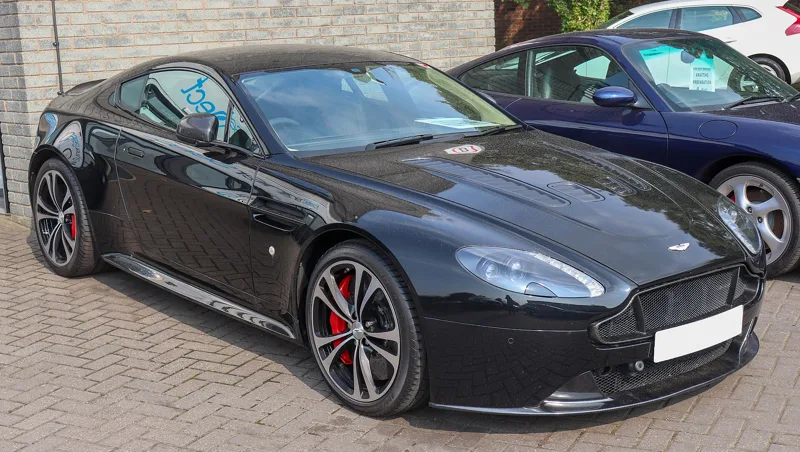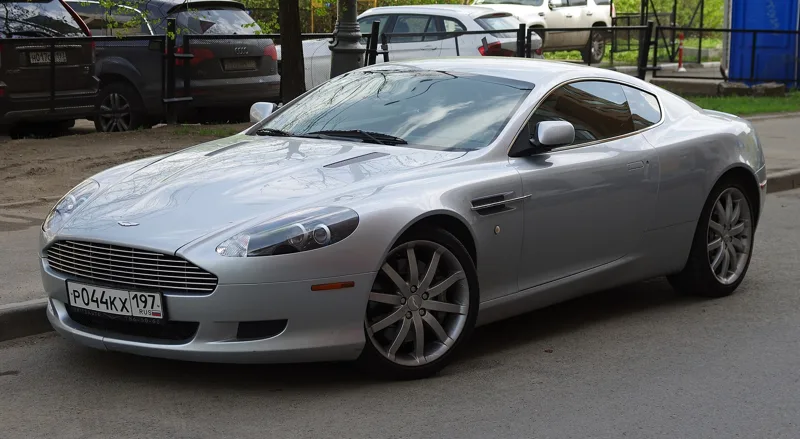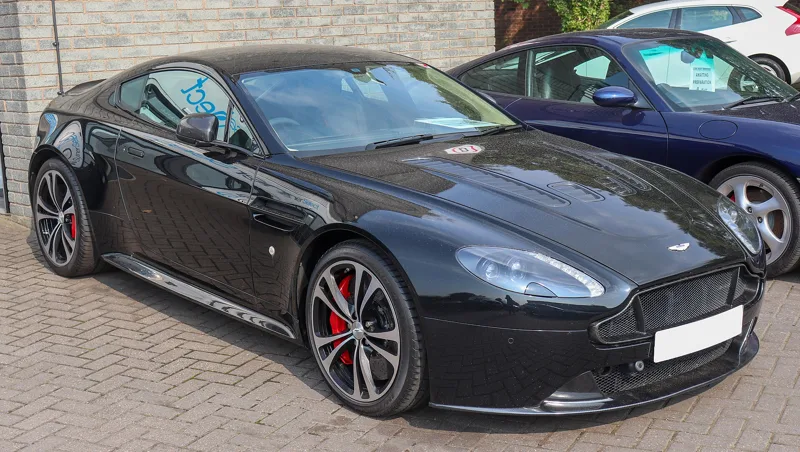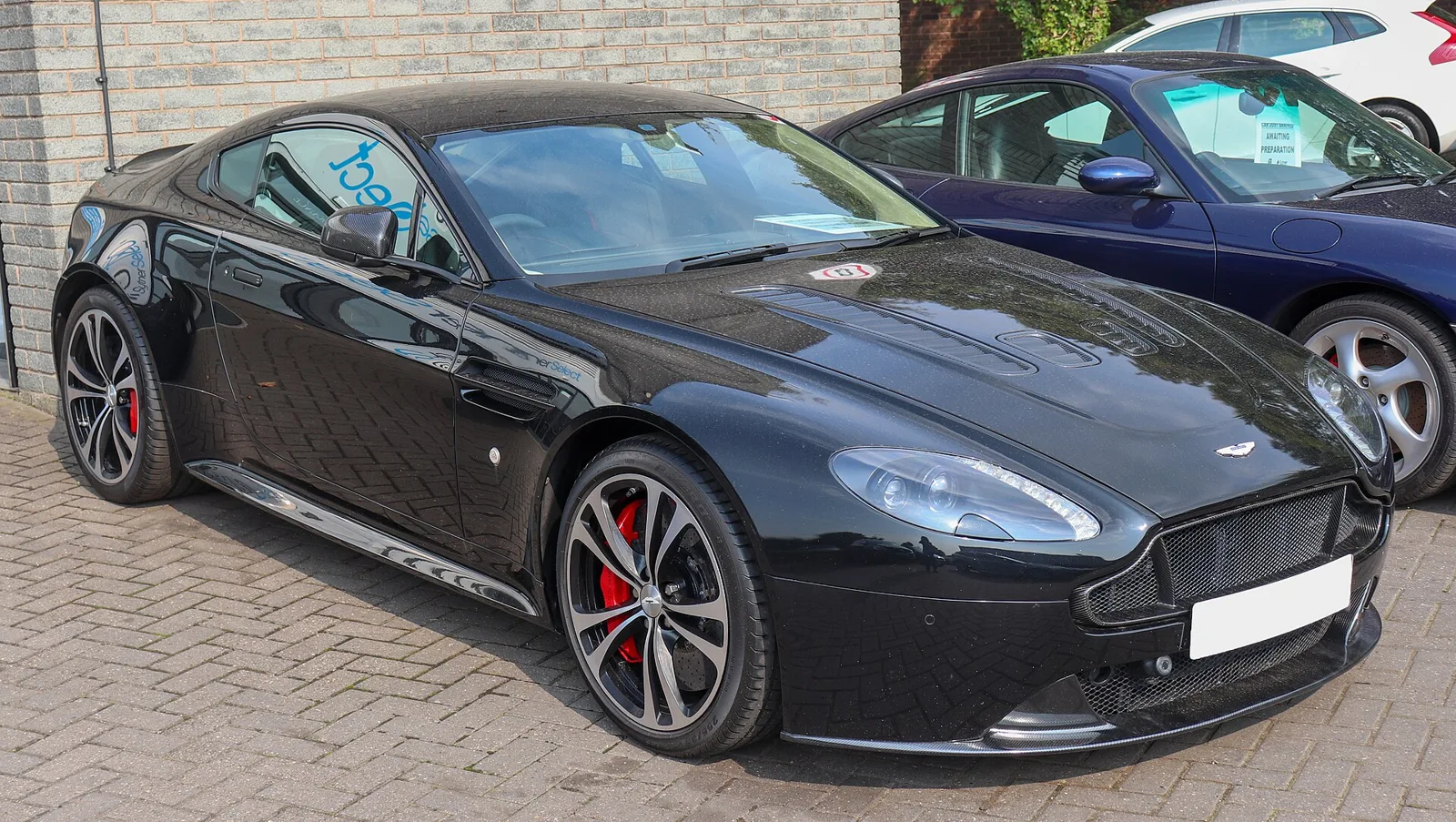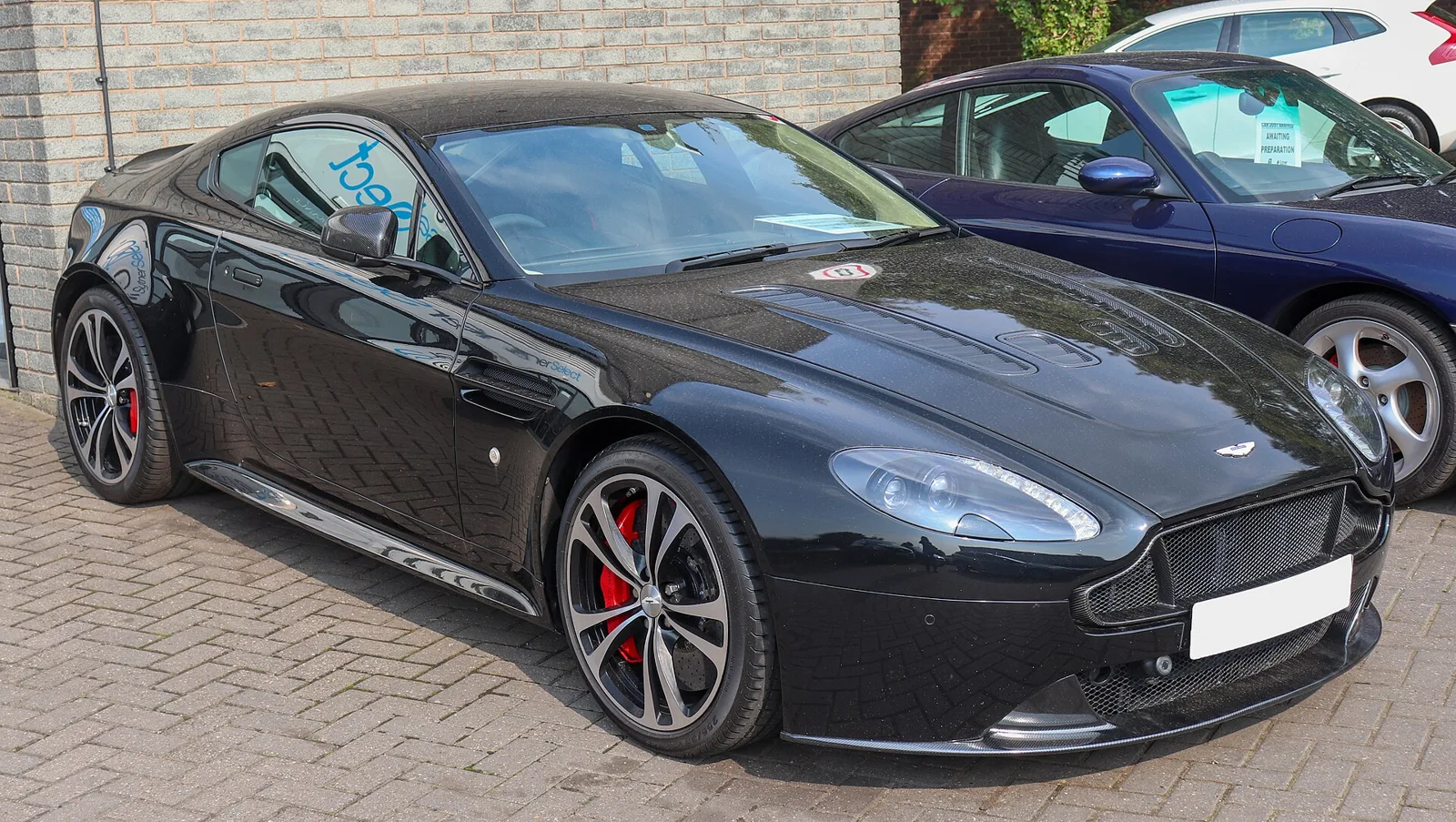
A British two-seater with a hand-built V8 against the sixth-generation 911 that Porsche sold from 2004 to 2013.
The Aston Martin Vantage was a two-seat coupe with a 4.3-litre V8 at launch and a 4.7-litre V8 from 2009. The Porsche 911 (997) was the sixth-generation 911, sold from 2004 to 2013 in coupe, cabriolet, Targa and Turbo and GT forms.
The Aston Martin Vantage and the Porsche 911 (997) were built for buyers who wanted a sharp two-door sports car rather than a grand tourer. Aston aimed the Vantage squarely at owners of the 911, while the 997 was the sixth generation of Porsche's long-running sports car. The Vantage relied on a hand-assembled V8, and the 997 offered a family of flat-six engines that ran from a base Carrera to a 523 bhp GT2.
Where did these two cars come from?
Aston Martin had used the Vantage name before, on high-performance variants of its GT models, notably a Virage-based car in the 1990s. The modern car was different in intent. It was meant to be the most agile and lean car in Aston's range, and it was pitched at buyers who might otherwise have chosen a Porsche 911 or one of the more exotic sports cars that Aston traditionally fought with.
The concept came first, shown as the AMV8 Vantage at the 2003 North American International Auto Show. The production V8 Vantage followed at the 2005 Geneva Motor Show, in time for the 2006 model year, and a Roadster joined it later that year. Porsche's 997 arrived a little earlier. The Carrera and Carrera S coupes began production in early 2004, the all-wheel-drive Carrera 4 and 4S followed in November 2005, and the Turbo and GT3 reached customers in late 2006.
A hand-built V8 two-seater from Aston against a 911 range that ran from the Carrera to the 523 bhp GT2.
Who was responsible for the Vantage's design?
Credit for the original V8 Vantage's shape is disputed. Officially, Henrik Fisker gets the design credit, as he was Aston Martin's design director when the car was introduced. Ian Callum, who had been Aston's design director before moving to Jaguar, has said that much of the car was drawn while he was there. In an interview with Car and Driver he put the figure at a good 80 percent, adding that the V8 had been started first and then shelved while the DB9 was developed, which is why the two look so alike. Car Design News readers voted the V8 Vantage the best current production car design in their 2006 survey, and Automobile magazine named it one of its 2007 All-Stars.
The 997's design story is less contested. It was an evolution of the 996, with the most visible change being a return to the classic bug-eye headlamps in place of the 996's fried-egg units. Porsche's designer Grant Larson had the final body approved after clay models were built between 2000 and 2001. The rear bodywork was 88 mm (3.5 in) wider than before, and the drag coefficient was 0.28 for the Carrera and 0.29 for the Carrera S.
How did the V8 Vantage's engine work?
The first Vantage used a 4.3-litre quad-cam, 32-valve V8 producing 380 bhp (283 kW; 385 PS) at 7,300 rpm and 410 N m (302 lb-ft) at 5,000 rpm. Its design drew loosely on Jaguar's AJ-V8 architecture, but Aston Martin designed almost everything else in house, from the block and heads to the lubrication and engine management. Each engine was put together by hand in Cologne, at the company's facility, which also built the V12 for the DB9 and Vanquish.
Race-style dry-sump lubrication let the engine sit low in the chassis, improving the centre of gravity. The engine was mounted up front, with the transaxle at the rear, and the weight split was 49-51 front to rear. Slotted Brembo brakes were standard from the start. Models built after 2008 used a 4.7-litre V8 with 420 bhp (313 kW; 426 PS) and 470 N m (347 lb-ft). A dealer-approved Power Upgrade for the 4.3-litre engine lifted its output to 400 bhp (298 kW; 406 PS) while keeping the warranty intact.
How did the 997 engines compare?
Porsche's 997 spanned several flat-six engines. The Carrera ran a 3.6-litre unit, and the S used a larger 3.8-litre with 29 PS more than the base car, along with PASM adjustable dampers, 19-inch wheels, a sports exhaust and Bi-Xenon headlamps. The 2009 refresh replaced the older Mezger engine with a direct-injection unit, which made the range faster, lighter and more efficient.
At the top of the range the 997 Turbo produced 480 PS (353 kW; 473 bhp) and 620 N m (457 lb-ft), rising to 680 N m (502 lb-ft) on overboost. It used a pair of BorgWarner VTG turbochargers, a Porsche production-car first. The GT2, sold from 2007, was rated at 530 PS (390 kW; 523 bhp) at 6,500 rpm and 680 N m (502 lb-ft) of torque, and it was the most powerful road-going 911 yet sold to the public at its launch.
How fast were the two cars?
The launch Vantage was claimed to reach 60 mph in 4.8 seconds and top out at 175 mph (282 km/h). After the 2009 update with the 4.7-litre engine, Aston quoted 4.7 seconds to 60 mph and a 180 mph (290 km/h) top speed. Car and Driver measured a 4.3-second run to 60 mph and a 12.7-second quarter mile at 112 mph on its own test.
The 997 Turbo was quicker still in the official figures. Porsche quoted 3.9 seconds to 100 km/h for the manual, and Motor Trend recorded 3.2 seconds to 60 mph for a manual Turbo in 2006. Top speed on either transmission was 310 km/h (193 mph). The GT2 managed 7.4 seconds to 100 mph and reached 205 mph (330 km/h), which made it the first 911 to pass 200 mph since the 1998 GT1 Race Version.
What was the Vantage's structure like?
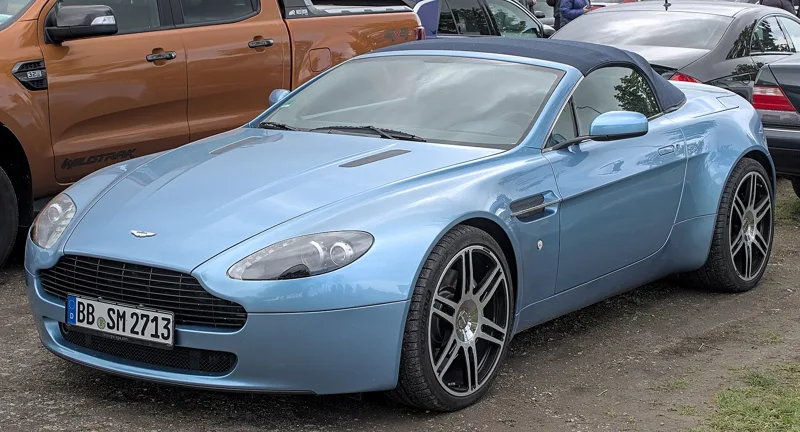
The V8 Vantage coupe was built on bonded aluminium, chosen for strength and low weight. It measured 172.5 in (4.38 m) long and featured a hatchback-style tailgate with a broad shelf behind the seats for luggage, which gave the two-seater more practicality than its proportions suggested. The Roadster weighed 1,710 kg (3,770 lb), 80 kg (176 lb) more than the coupe, and a new cross-member was added to stiffen the open body.
The Roadster's electric soft top took 18 seconds to operate, and it worked at speeds of up to 30 mph (48 km/h). The 2009 Roadster added swan-wing doors, leather and Alcantara trim, a zinc-alloy centre console and a key fob with a crystal cap, and it could accelerate to 60 mph in 4.7 seconds with the 4.7-litre V8.
How did the 997 change from the 996?
The 997 kept much of the 996's architecture, but the interior was redesigned with controls that looked back to classic 911 cabins. Larger 18-inch wheels came as standard, and the car gained a slightly higher power output. Porsche also sold a Targa version of the Carrera 4 and 4S from 2006, using a glass roof that dropped and slid back under the rear window at any speed.
Even Jeremy Clarkson, a known critic of Porsche, praised the 997 in print. The 2009 refresh introduced the PDK dual-clutch transmission in place of the five-speed Tiptronic that had come from Mercedes-Benz. The Turbo also gained a retuned all-wheel-drive system that could include torque vectoring, and Car and Driver estimated that a PDK Turbo would reach 60 mph in three seconds.
Which special editions did each car produce?
Aston Martin made 28 Vantage variants over the production run. They included the N400, a limited-edition car tuned to 400 bhp that was shown at the 2007 Frankfurt Motor Show, the GT8 and GT12 models, and region-specific cars such as the V8 Vantage GT, sold only in the United States and Australia. The Vantage also earned a place in the Top Gear mini-fridge, where the programme called it the baby Aston.
Porsche offered a wider range of 997 bodies and specifications. The Targa, the Turbo Cabriolet, the GT2 and the GT3 each had their own following, and the GT3 was priced at US$106,000 with an 8,400 rpm redline. The 911 Club Coupe was a 50-unit special built in 2005 to mark five decades of the Porsche Club of America.
How many of each were built?
Aston Martin completed its 10,000th car in the first half of 2008. A specially ordered Onyx coupe delivered to a customer in the United States marked the milestone, and only the DB9 had reached that number before it. By the end of production in 2017, the company had built 15,417 V8 coupes, 6,231 V8 roadsters, 2,551 V12 coupes and 465 V12 roadsters.
The Targa offers a sense of scale: in its first year Porsche built 1,760 cars worldwide, with 800 sold in the United States, out of 38,922 911s in total. Porsche was building more than 20,000 911s a year over the same years, and it had made more than one million 911s across all variants. That scale is the clearest contrast between the two makers' output.
Specifications side by side
| Feature | Aston Martin Vantage (V8) | Porsche 911 (997) |
|---|---|---|
| Introduced | 2005 Geneva show, 2006 model year | Sold 2004 to 2013 (2005 model year) |
| Body | Two-seat, two-door coupe; Roadster from 2006 | Coupe, cabriolet and Targa |
| Engine layout | Front mid-mounted V8, rear transaxle | Flat-six engines |
| Base engine | 4.3 L V8, 380 bhp (283 kW; 385 PS) | 3.6 L Carrera; 3.8 L in the S |
| Later base engine | 4.7 L V8, 420 bhp (313 kW; 426 PS) | Direct-injection flat-six from the 2009 refresh |
| Top road engine | 400 bhp Power Upgrade (4.3 L); N400 tuned to 400 bhp | GT2, 530 PS (390 kW; 523 bhp) |
| Torque | 470 N m (347 lb-ft), 4.7 L V8 | Turbo 620 N m (457 lb-ft); GT2 680 N m (502 lb-ft) |
| 0 to 60 mph | 4.8 s launch; 4.7 s after 2009 | Turbo manual 3.2 s (Motor Trend); GT2 3.4 s |
| Top speed | 175 mph (282 km/h); 180 mph (290 km/h) after 2009 | Turbo 310 km/h (193 mph); GT2 205 mph (330 km/h) |
| Transmission | Six-speed manual or Sportshift automated manual | Five-speed manual or Tiptronic; PDK from 2009 |
| Brakes | Slotted Brembo standard | Ceramic option (PCCB) on Turbo |
| Production | 15,417 V8 coupes and 6,231 V8 roadsters to 2017 | Over 20,000 911s a year (all variants) |
| Assembly | Hand-assembled engines in Cologne | Not listed |
Which buyer suits which?
The Vantage suits a buyer who wants a two-seat coupe with an engine built by hand, a dry-sump layout and a lineage running back to the Aston name. It was never a common car, as its production figures show.
The 997 suits a buyer who wants a 911 with a choice of body styles, from a Targa to a Turbo Cabriolet, and a range that climbs from a 3.6-litre Carrera to the 530 PS GT2. Porsche's far larger output means many more 997s exist, which the production figures make plain.
On the evidence here, neither car takes a clear overall lead. The Vantage brings the more distinctive engine and the rarer badge, while the 997 brings the broader range of models and the stronger top-end performance in its Turbo and GT2 guise. Buyers choosing between them should weigh rarity against range.