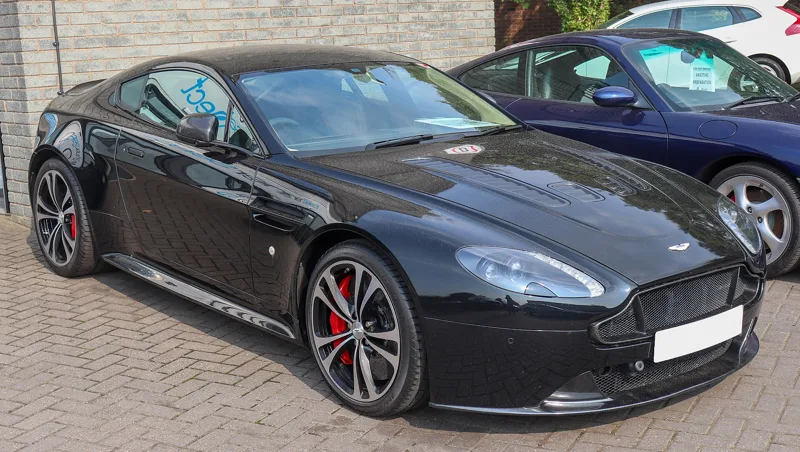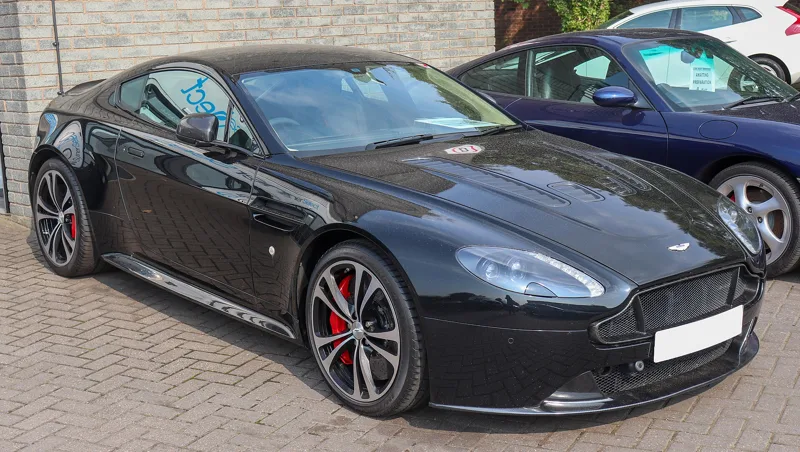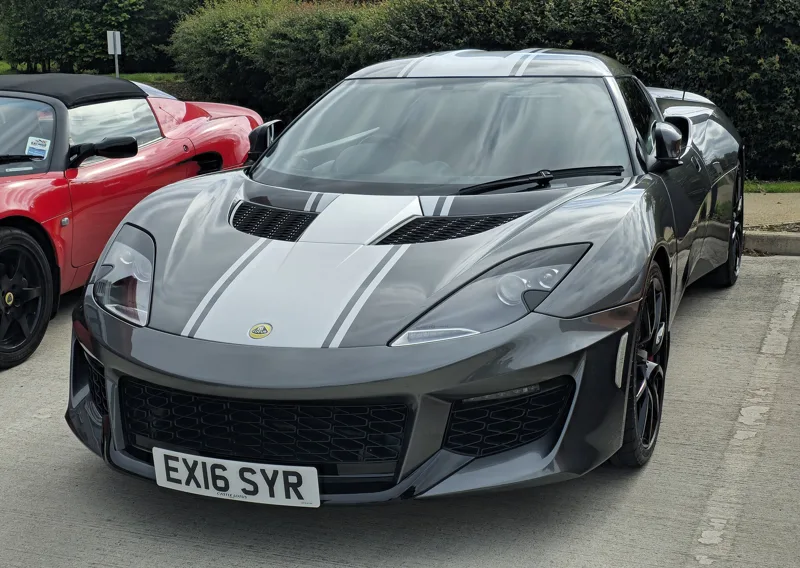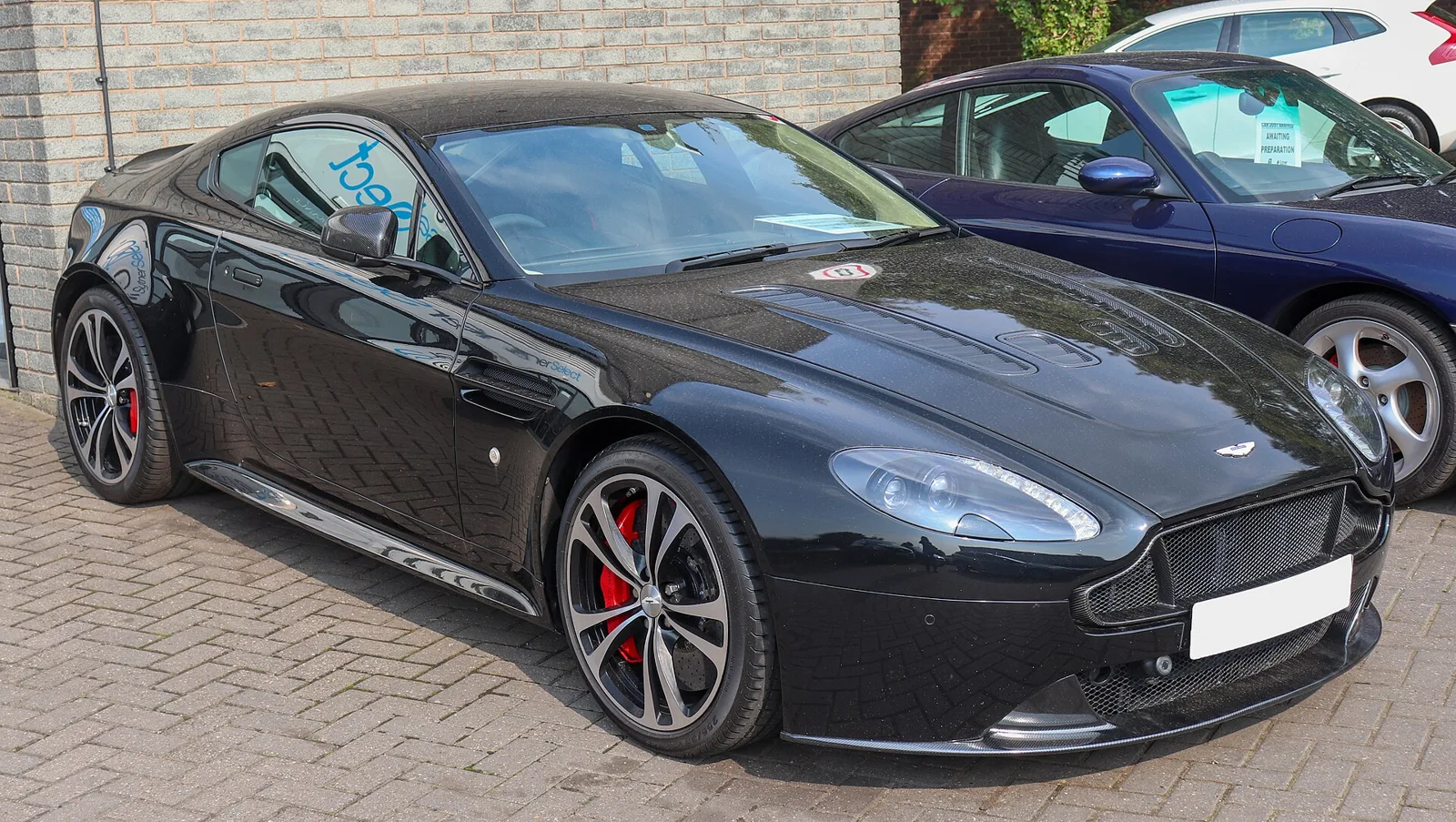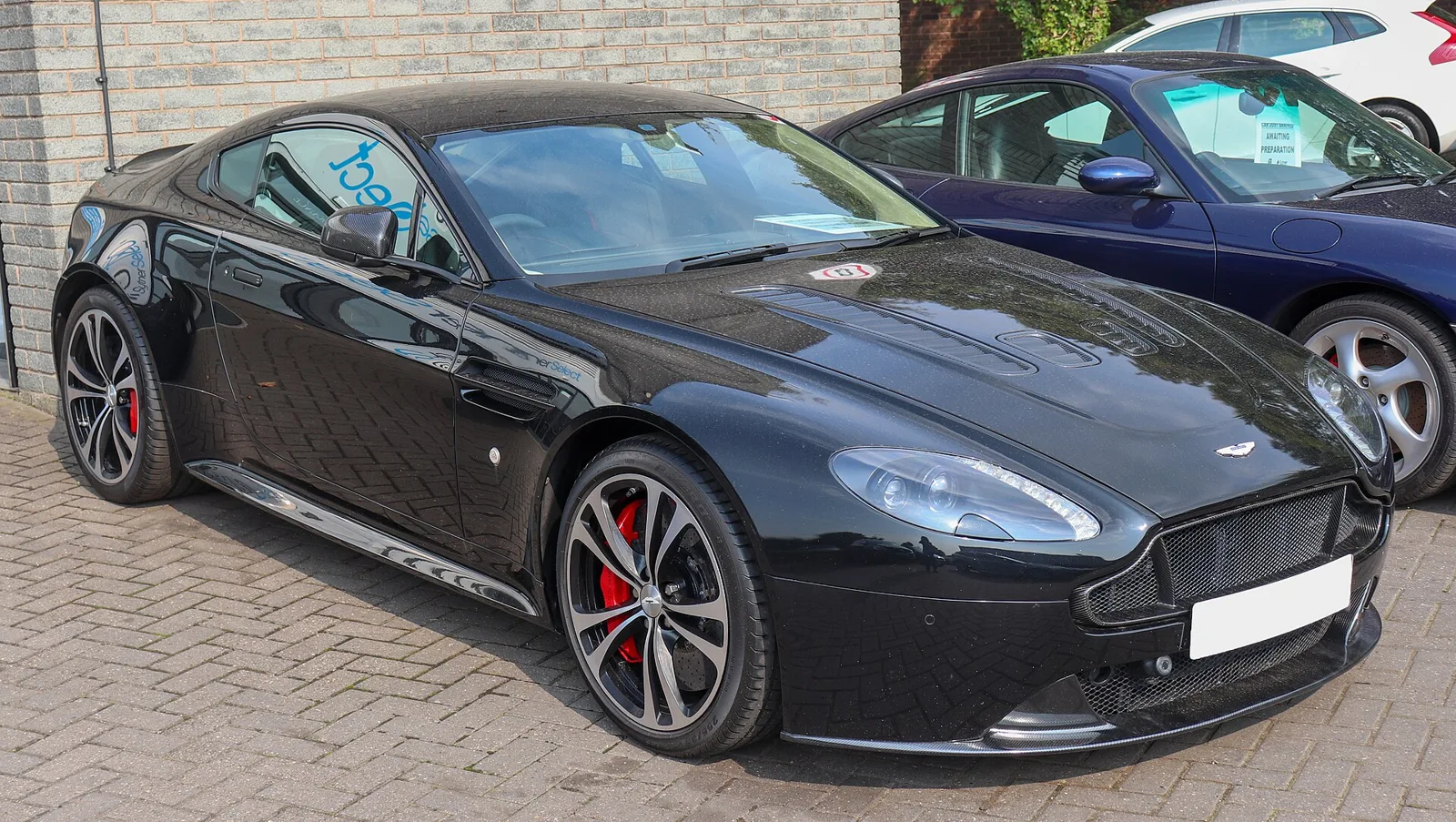
Two sports cars that both aimed at Porsche 911 buyers, one a British V8 with a long run, the other a Lotus with a Toyota-sourced V6 and a 2+2 body.
The Aston Martin V8 Vantage was a two-seat coupe from 2005 with a 4.3-litre V8 that grew to 4.7 litres in 2008. The Lotus Evora was a mid-engined coupe launched in 2008 with a Toyota-sourced 3.5-litre V6, offered as a 2+2 that Lotus also aimed at Porsche 911 buyers.
The Aston Martin Vantage and the Lotus Evora were both two-door sports cars aimed at buyers of the Porsche 911 and similar machines. The Vantage was a British V8 coupe from 2005 that became the most successful model in Aston Martin's history, while the Evora was Lotus's first all-new platform since the Elise, launched in 2008 with a Toyota-sourced V6.
This comparison covers origins, engines, performance, weight, construction, production and variants. Where a figure exists for only one car, the gap is shown rather than estimated, and metric figures come first with imperial values in brackets.
Were the Vantage and Evora direct rivals?
Yes, in the sense that both were pitched at the same buyers. The Vantage was intended to appeal to potential buyers of the Porsche 911 as well as the exotic sports and GT cars that Aston Martin traditionally competed with. Lotus intended the Evora to compete in several market sectors, including the Porsche 911 market.
The two cars overlapped from 2008 until the V8 Vantage ended in 2017. Their shared target gave them a common competitor in the Porsche 911. The record does not say how the two cars sold against each other, and it does not show which offered better value, since neither price is given.
Two sports cars aimed at the same 911 buyer: a British V8 with a long production run, and a Lotus that grew more powerful with each variant.
How did the two cars begin?
The Vantage name had been used before, on high-performance variants of Aston Martin's GT models, notably the Virage-based car of the 1990s. The modern car followed an AMV8 Vantage concept shown at the 2003 North American International Auto Show. The production V8 was revealed at the Geneva Motor Show in 2005, and it was sold for the 2006 model year.
Aston Martin planned to build up to 3,000 cars a year, with a 6-speed manual and later the Sportshift automated manual. In 2006 readers of Car Design News voted the V8 Vantage the best current production car design, from more than 1,000 responses, and Automobile magazine named it one of its 2007 All-Stars.
The Evora was the first product of a five-year plan that began in 2006 to take Lotus beyond its track-specialised offerings. It was developed under the project name Project Eagle, and it was launched on 22 July 2008 at the British International Motor Show. Lotus set a sales target of 2,000 cars a year at prices between GBP 45,000 and just over 50,000, with US sales planned from early 2010.
The name was built from the words evolution, vogue and aura, and the Evora was planned as the first of three vehicles on the same platform.
What engines did the two cars use?
The first V8 Vantage used a 4.3-litre quad-cam, 32-valve V8 producing 380 bhp (283 kW; 385 PS), peaking at 7,300 rpm, with torque of 410 N m (302 lb ft) arriving at 5,000 rpm. From 2008 a 4.7-litre version delivered 420 bhp (313 kW; 426 PS), with 470 N m (347 lb ft) of torque.
The Vantage's power rose with the 2008 power upgrade, which kept the warranty intact through dealers, lifting peak power to 400 bhp (298 kW; 406 PS) and torque to 420 N m (310 lb ft). The Vantage V8 was loosely based on Jaguar's AJ-V8 architecture, but Aston Martin designed the rest in house, and the engine used race-style dry-sump lubrication. Each engine was assembled by hand at Aston Martin's facility in Cologne, Germany, which also built the V12 for the DB9 and Vanquish.
The Evora used a mid-mounted, transverse, Toyota-sourced 3.5-litre 24-valve 2GR-FE V6. The Evora S was supercharged, and the later Evora 400 used an intercooled Edelbrock unit to reach 400 hp (298 kW; 406 PS). The engine sits behind the occupants, and the record notes a boot large enough for golf clubs, although Lotus design head Russell Carr denied that this was intentional.
Which car was quicker?
The first V8 Vantage was claimed at 4.8 seconds to 60 mph (97 km/h), with 175 mph (282 km/h) as its top speed. After the 2009 update the Vantage reached 60 mph in 4.7 seconds, with a top speed of 180 mph (290 km/h), while a Car and Driver test recorded 4.3 seconds.
The Evora S reached 60 mph in 4.6 seconds, and its ceiling was 172 mph (277 km/h). The Evora 400 managed 4.1 seconds and 186 mph (299 km/h), and the GT430 reached 3.6 seconds in automatic form. Those figures put the later Evoras ahead of the Vantage's sprint times.
How much did the two cars weigh?
The Evora weighed 1,383 kg (3,049 lb) unladen, and the automatic version weighed 1,442 kg (3,179 lb). The record lists the manual figure first. The Evora 400 weighed 1,395 kg (3,075 lb), and the lightest Sport 410 reached 1,325 kg (2,921 lb) in the record's figures.
The Vantage Roadster weighed 1,710 kg (3,770 lb), which was 80 kg (176 lb) more than the coupe. Both sets of figures come from the record's own specifications. The Roadster with Sportshift weighed 1,750 kg (3,858 lb), so the Vantage weight figures are for the Roadster while the Evora figures are for the coupe.
What changed in the Vantage's 2009 update?
The 2009 update brought a 4.7-litre engine, with the bore enlarged from 89 mm (3.5 in) to 91 mm (3.6 in). Peak power rose 11% to 420 bhp (313 kW; 426 PS) at 7,000 rpm, and torque rose 15% to 470 N m (347 lb ft) at 5,750 rpm.
The stroke rose from 86 mm (3.4 in) to 91 mm (3.6 in), for a total displacement of 4,735 cc. The update also stiffened the suspension with Bilstein dampers, lightened the flywheel and improved combined fuel economy and CO2 emissions by 13%. The sports pack added stiffer springs and new 5-spoke alloy wheels. In one test Car and Driver recorded 4.3 seconds to 60 mph and a quarter mile in 12.7 seconds, and the car was able to run to 180 mph (290 km/h).
What variants did each model produce?
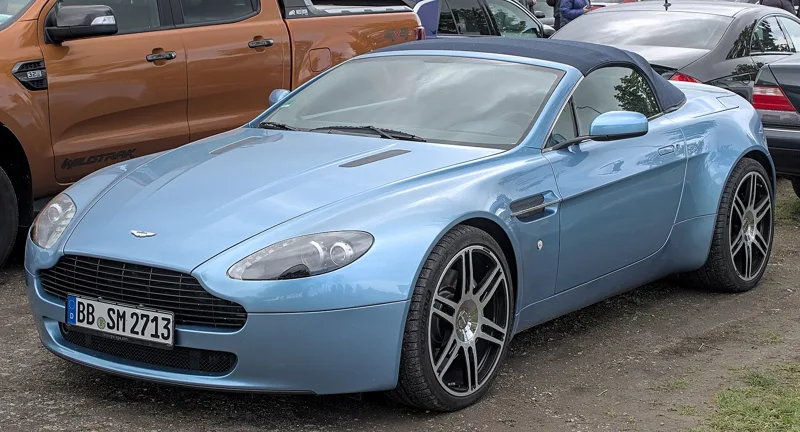
Aston Martin built 28 variants of the Vantage over its production run, from S models and the N400 to the GT12 and GT8. The Roadster was unveiled at the 2006 Greater Los Angeles Auto Show, and its soft top could be raised or lowered in 18 seconds.
Lotus built its own range of variants. The Evora S arrived in 2010, the Evora 400 was unveiled at the 2015 Geneva Motor Show, and the Sport 410 followed in 2016. The GT430 of 2017 was limited to 60 units, and the GT of 2019 was sold only in North America.
How many were built?
By 2017 Aston Martin had built 15,417 V8 coupes, 6,231 V8 Roadsters, 2,551 V12 Coupes and 465 V12 Roadsters. Chassis number 10,000 was completed in the first half of 2008, a milestone the record says only the DB9 had reached before it.
Lotus produced 6,117 Evoras overall. The record also notes that Porsche was then producing over 20,000 911s a year, a comparison that puts the Vantage's volumes in context. The Evora GT was discontinued after the 2021 model year, and the Emira replaced it in spring 2022.
Side-by-side specifications
| Specification | Aston Martin Vantage | Lotus Evora |
|---|---|---|
| Launch | Geneva 2005, for 2006 model year | 22 July 2008 at the British International Motor Show |
| Body | Two-seat, two-door coupe, bonded aluminium structure; Roadster later | 2+2 coupe; Plus Zero two-seater option |
| Length | 172.5 in (4.38 m) | not given |
| Layout | Front mid-mounted engine, rear transaxle | Mid-mounted, transverse engine |
| Engine | 4.3 L V8, then 4.7 L from 2008 | 3.5 L Toyota-sourced V6 (2GR-FE) |
| Power | 380 bhp (283 kW; 385 PS); 420 bhp (313 kW; 426 PS) later | Evora S 345 hp (257 kW; 350 PS); Evora 400 400 hp (298 kW; 406 PS) |
| Torque | 410 N m (302 lb ft); 470 N m (347 lb ft) later | Evora S 295 lb ft (400 N m); Evora 400 302 lb ft (409 N m) |
| Gearbox | 6-speed manual; Sportshift automated manual | Six-speed manual or automatic |
| 0-60 mph | 4.8 seconds initially; 4.7 seconds after 2009 | Evora S 4.6 seconds; Evora 400 4.1 seconds |
| Top speed | 175 mph (282 km/h) initially; 180 mph (290 km/h) after 2009 | Evora S 172 mph (277 km/h); Evora 400 186 mph (299 km/h) |
| Weight | Roadster 1,710 kg (3,770 lb) | 1,383 kg (3,049 lb) unladen; automatic 1,442 kg (3,179 lb) |
| Drag | not given | Cd=0.337 |
| Construction | Bonded aluminium structure | Aluminium tub with steel rear sub-frame |
| Brakes | Slotted Brembo brakes standard | not given |
| Production | 15,417 V8 coupes and 6,231 V8 Roadsters by 2017 | 6,117 overall |
| End | V8 2017; V12 2018 | Evora GT discontinued after the 2021 model year |
| Successor | Next-generation Vantage unveiled November 2017 | Emira, spring 2022 |
| Limited versions | N400, N420, N430, GT, AMR | GT430 (60 units planned); GTE road car (25 units) |
Which buyer suits each car?
On the figures available, the Vantage suits a buyer who wanted a British V8 coupe with a long run, a Roadster option and many variants. The Evora suits a buyer who wanted a mid-engined Lotus with a Toyota-sourced V6, a 2+2 body and the option of a supercharged engine.
The record also explains that the Evora's extra weight with an automatic came from its gearbox and cooling system. The later Evora variants pushed the sprint figures past the Vantage's. Neither car is shown to be better overall, and the record gives no direct comparison of their prices.
What does the record leave open?
Several points are missing. The record gives no price for the Vantage, no Evora dimensions, and no Roadster top speed beyond the claimed figures. It also gives no Vantage drag figure, so the two cars' aerodynamics cannot be compared directly.