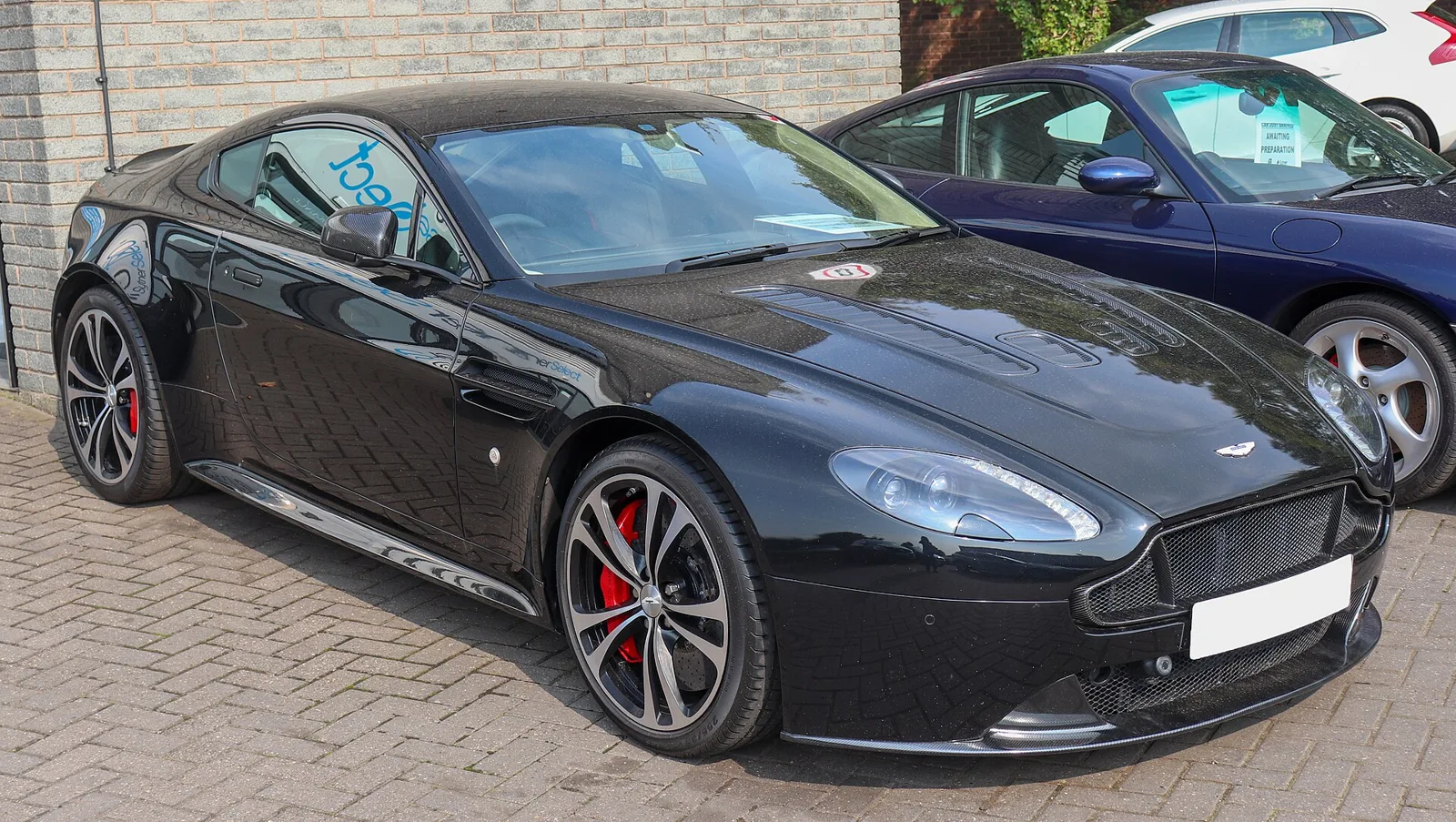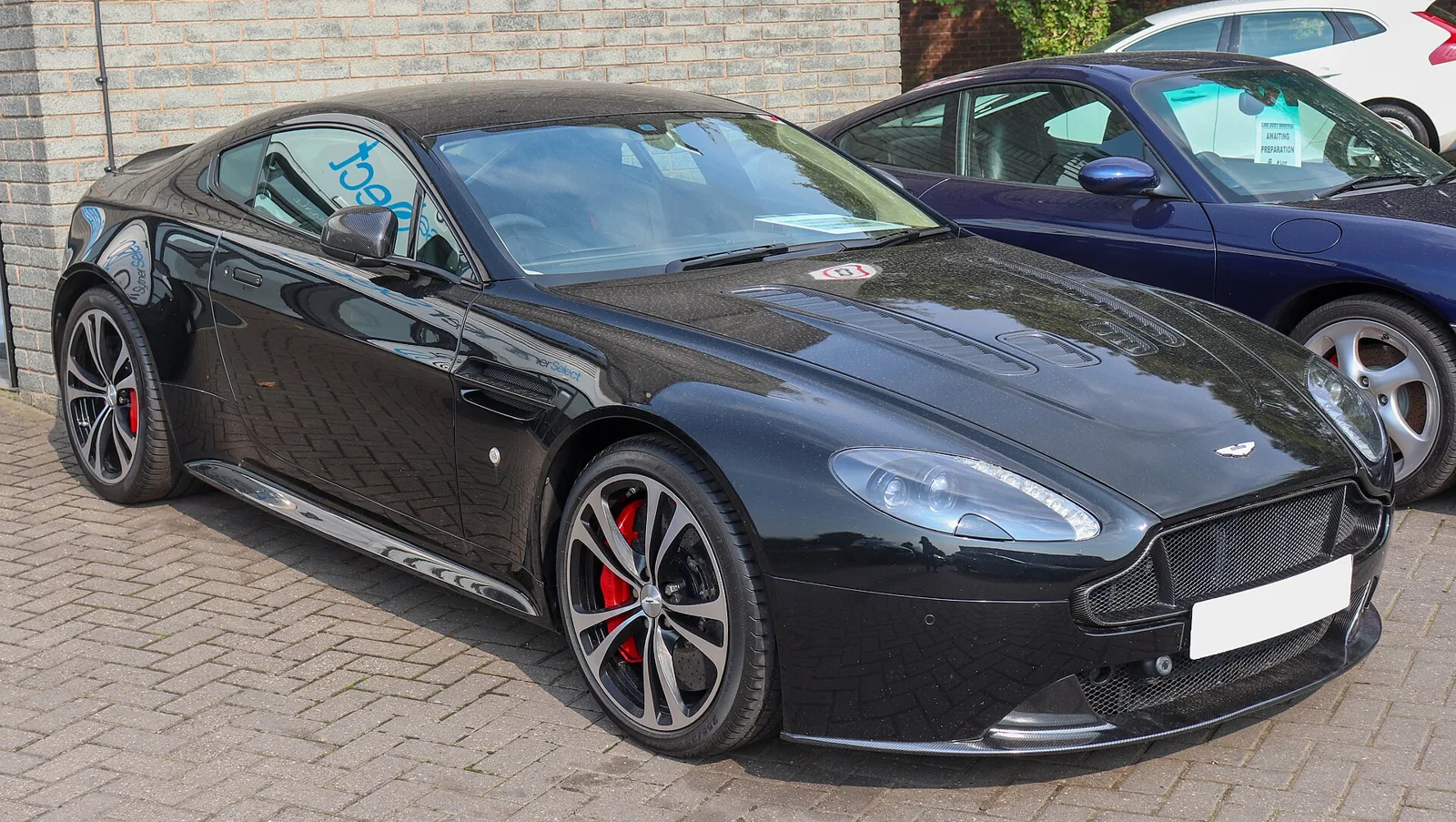
A British two-door built to reach buyers of the Porsche 911 and an Audi mid-engined supercar that shared its underpinnings with Lamborghini, compared on engines, performance and racing.
The Aston Martin Vantage and Audi R8 Type 42 were both two-seat sports cars from the mid-2000s. The R8 V10 posted the quickest sprint and top speed here, while the Vantage offered Aston's hand-built V8 and a longer line of variants.
The Aston Martin Vantage and the Audi R8 Type 42 both arrived in 2005 and 2006 as two-seat, two-door sports cars aimed at buyers who wanted exotic performance without the full price of a supercar. The Vantage was a return to the Vantage name for Aston, while the R8 was Audi's first mid-engined road car. They reached similar speeds from very different engines.
Were the Vantage and R8 rivals?
They were in the same market. Aston wanted the Vantage to be its leanest car, aimed at people weighing up a Porsche 911 against the exotic sports and grand tourers Aston usually faced.
Audi's R8 began as a concept in 2003, and its road car followed from June 2006. It used a mid-engined layout from the Lamborghini Gallardo, so the two cars were both mid-engined machines competing for the same well-heeled buyers.
A hand-built British V8 against a mid-engined Audi with a V10 that topped 316 km/h.
How did the V8 Vantage begin?
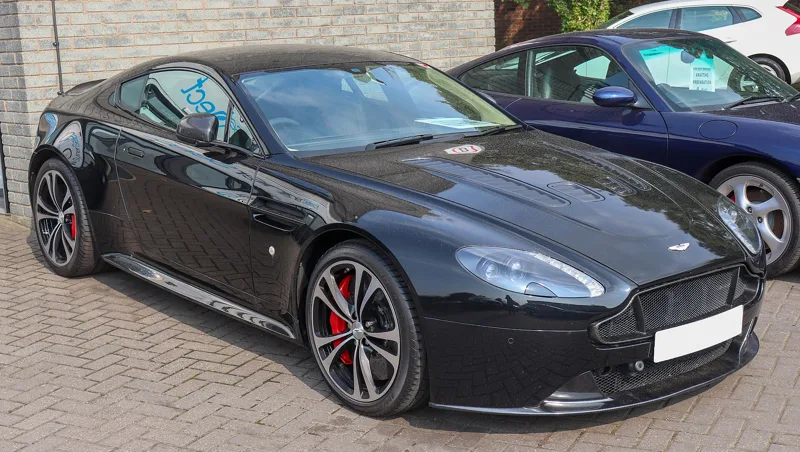
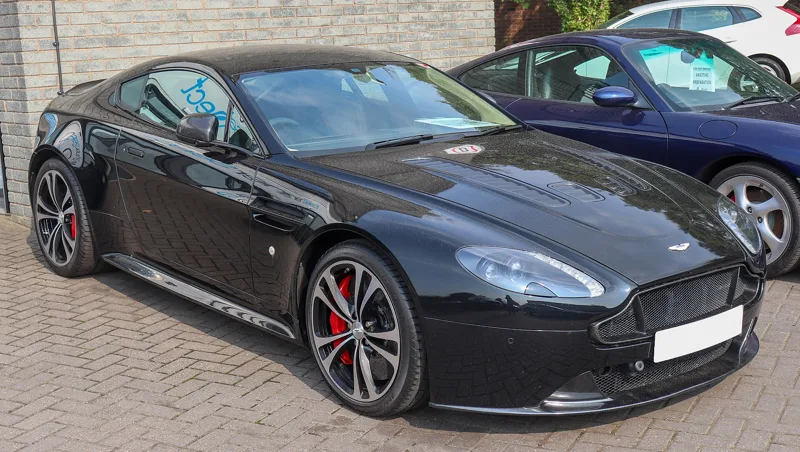
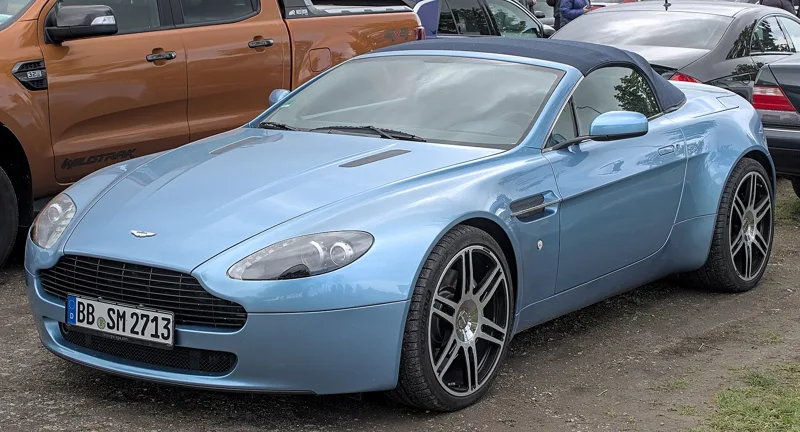
The V8 Vantage grew from the AMV8 Vantage concept, shown at the North American International Auto Show in 2003. The production car appeared at Geneva in 2005, sold as a 2006 model, and a roadster arrived later the same year.
Its body was bonded aluminium, chosen for strength and low weight. At 4.38 m (172.5 in) long it had a hatchback-style tailgate and a large shelf behind the seats.
How did the R8 come about?
The R8 was first shown as the LeMans quattro concept in 2003, designed by Frank Lamberty. The concept used an aluminium and carbon-fibre body and a twin-turbocharged V10, and its full LED headlamps were part of the package.
The production car followed from June 2006, and it was based on the Gallardo, sharing its chassis and engine. Production of the first-generation Type 42 ended in August 2015, after the Type 4S arrived at the 2015 Geneva Motor Show on a new platform.
Specifications side by side
| Specification | Aston Martin V8 Vantage | Audi R8 Type 42 |
|---|---|---|
| Launch | Geneva Motor Show, 2005; 2006 model year | Production from June 2006 |
| Engine at launch | 4.3-litre quad-cam V8, 32 valves | 4.2-litre FSI V8, 32 valves |
| Power at launch | 380 bhp (283 kW; 385 PS) at 7,300 rpm | 420 PS (309 kW; 414 hp) |
| Torque at launch | 410 N m (302 lb ft) at 5,000 rpm | 430 N m (317 lb ft) |
| Later engine | 4.7-litre V8, 420 bhp (313 kW; 426 PS) from 2008 | 5.2-litre FSI V10, 525 PS (386 kW; 518 hp) on the R8 V10 |
| 0-60 mph or 0-100 km/h | 4.8 seconds to 60 mph at launch | 3.9 seconds to 100 km/h on the V10 |
| Top speed | 175 mph (282 km/h) at launch; 180 mph (290 km/h) after 2009 | 301 km/h (187 mph) on the V8; 316 km/h (196 mph) on the V10 |
| Weight | 1,710 kg (3,770 lb) on the roadster | Not part of this comparison |
| Production | Ended in 2017 for the V8; 15,417 V8 coupes built | Ended in August 2015 |
Which car was quicker?
The R8 V10 holds the sprint figure here, reaching 100 km/h in 3.9 seconds and topping out at 316 km/h (196 mph). The Vantage's launch figures were 4.8 seconds to 60 mph and 175 mph, which were strong for the era but not as quick.
The two cars were quoted on different benchmarks, so a direct sprint comparison is not possible. The V8 R8 managed a 4.0-second run to 60 mph in manual form, which is quicker than the Vantage's launch figure as well.
How did the Vantage's engine work?
The first Vantage had a 4.3-litre quad-cam, 32-valve V8 with 380 bhp (283 kW; 385 PS) at 7,300 rpm and 410 N m at 5,000 rpm. It was loosely based on Jaguar's AJ-V8 architecture, but Aston Martin designed almost all of it in-house.
Race-style dry-sump lubrication let the engine sit low in the chassis, improving the centre of gravity. The engine was assembled by hand at Aston's Cologne facility, which also built the V12 for the DB9 and Vanquish.
From 2008 the Vantage gained a 4.7-litre version with 420 bhp (313 kW; 426 PS) and 470 N m (347 lb ft). The engine sat front mid-mounted, with the transaxle at the rear, and the car split its weight 49 to 51 front to rear.
How did the R8's engines develop?
The first R8 used a 4.2-litre FSI V8 with 420 PS (309 kW; 414 hp) and 430 N m. Its four-wheel-drive system favoured the rear, sending as much as 70% of the power backwards. Road & Track recorded a 4.0-second run to 60 mph in the manual version.
The R8 V10 used a 5.2-litre FSI V10 based on the Gallardo LP560-4, retuned to 525 PS (386 kW; 518 hp) and 530 N m. Audi quoted 3.9 seconds to 100 km/h and a 316 km/h (196 mph) top speed, while 97 to 200 km/h took 8.1 seconds.
The V8 Spyder added the 4.2-litre engine to the convertible range in 2011, with 434 PS (319 kW; 428 hp) and 4.3 seconds to 100 km/h.
How did the Vantage develop through its life?
The 2009 update brought a 4.7-litre engine with a bore and stroke of 91 mm each, giving 4,735 cc. Power rose 11% to 420 bhp at 7,000 rpm, and torque climbed 15% to 470 N m at 5,750 rpm.
Combined European fuel economy and CO2 figures also improved by 13 per cent with the update, which was a welcome gain for a car of this performance.
The update also gave the Vantage 0-60 mph in 4.7 seconds and a top speed of 180 mph (290 km/h). In a Car and Driver test it managed 4.3 seconds to 60 mph and a 12.7-second quarter mile at 112 mph.
In the MY2012.25 refresh the 6-speed Sportshift gave way to a 7-speed Sportshift II, first used on the V8 Vantage S, and the car gained six-piston front brake calipers.
How many Vantage variants were there?
Over its production run Aston Martin built 28 Vantage variants, from the V8 coupe and roadster to the S, N400, N420, N430 and GT models. The V12 Vantage, the GT12, the GT8 and the AMR versions added more range.
The roadster weighed 1,710 kg (3,770 lb), 80 kg heavier than the coupe, and Aston claimed the two cars would perform identically. Its electric soft top could be raised or lowered in 18 seconds at speeds up to 30 mph.
How did the R8's track cars compare?
The R8 LMS was built for GT3 rules, with a 500 PS V10 and rear-wheel drive, because GT3 rules banned four-wheel drive. Its six-speed sequential gearbox and the 'R16' name marked it out in Audi Sport's line-up.
The R8 LMS ultra raised power to 570 PS (419 kW; 562 hp), while the R8 Grand-Am cut its power from 470 PS to 450 PS (331 kW; 444 hp) for NASCAR's Rolex Series. It made its debut at the 50th Daytona 24 Hours in January 2012.
What was the Vantage's transmission and interior like?
Aston planned to build up to 3,000 Vantages a year at launch. The first cars came with a 6-speed manual, with leather for the seats, dashboard, steering wheel and shift knob.
An automated manual called Sportshift arrived later as an option. It was similar to the systems used by Ferrari and Lamborghini, and it gained a software update and a lighter flywheel in the 2009 update, along with a dual throttle mapping that let the driver choose sport or comfort.
Personalisation was a strong point of the Vantage range. Owners could order a wide choice of interior options, especially in the cabin, which helped each car stand out.
What did the R8 Spyder and GT add to the range?
The R8 Spyder was rumoured for years before spy shots from the film Iron Man 2 appeared online in August 2008. The convertible had a soft top, no side blades, extra chassis support and a pair of roll-over bars. It was formally unveiled at the 2009 Frankfurt Motor Show, and it used the same 5.2-litre V10 as the coupe.
The R8 GT was introduced at the 2010 Worthersee Tour and was built for the 2012 model year. It cut weight by 100 kg (220 lb) to 1,525 kg (3,362 lb) and raised power to 560 PS (412 kW; 552 hp) at 8,000 rpm. Production was limited to 333 cars, with 35 for the UK and 90 for the US.
The GT Spyder followed, unveiled at the 2011 24 Hours of Le Mans. It was limited to 333 units as well, and its carbon-fibre parts saved 85 kg (187 lb) against the standard V10 Spyder.
How did the R8 V12 TDI concept fit in?
The R8 V12 TDI concept of 2008, later renamed the R8 TDI Le Mans, used a 5,934 cc twin-turbocharged V12 diesel rated at 500 PS (368 kW; 493 hp) and 1,000 N m of torque. It was shown first at the Detroit Auto Show and then at Geneva in 2008.
Audi cancelled the development because re-engineering the petrol R8 to take the bigger diesel was too expensive, and the company judged that sales alone would not repay the investment.
How did the Vantage's track life compare?
Prodrive offered a tuning package for the V8 Vantage in 2007, with four stages covering engine, suspension, wheels and aerodynamics. The engine package added 45 hp (34 kW) to the 4.3-litre, and the wheels were 2.5 kg (6 lb) lighter per corner.
Aston also made the limited N400 for the 2007 Frankfurt Motor Show, tuned to 400 bhp (298 kW; 406 PS) to honour its racing success at the Nurburgring. Its track life was built on those upgrades rather than a dedicated racing series.
Which car was praised most?
The Vantage won praise from design readers. In a 2006 survey by Car Design News, readers voted the V8 Vantage the best current production car design, and Automobile magazine named it one of its 2007 All-Stars.
Top Gear placed the V8 Vantage in its DB9 section, a mini-fridge reserved for the coolest cars, and described it as the baby Aston. Jeremy Clarkson gave it the 2005 Best Sounding Car award, though the overall winner was the Porsche 911.
Which car suits which buyer?
A buyer who wants a British two-door with a hand-built V8, a practical tailgate and a long Aston heritage will look at the Vantage. Its 15,417 V8 coupes built by 2017 show how many buyers took the car.
A buyer who wants the quickest sprint and the most power on the figures here will look at the R8 V10. Its 3.9-second 0-100 km/h time and 316 km/h top speed are the strongest numbers in this comparison.
Neither car is better on every count. The Vantage gives Aston's engineering and hand-built V8, while the R8 gives Audi's all-wheel-drive traction and the wider racing family that came with it.