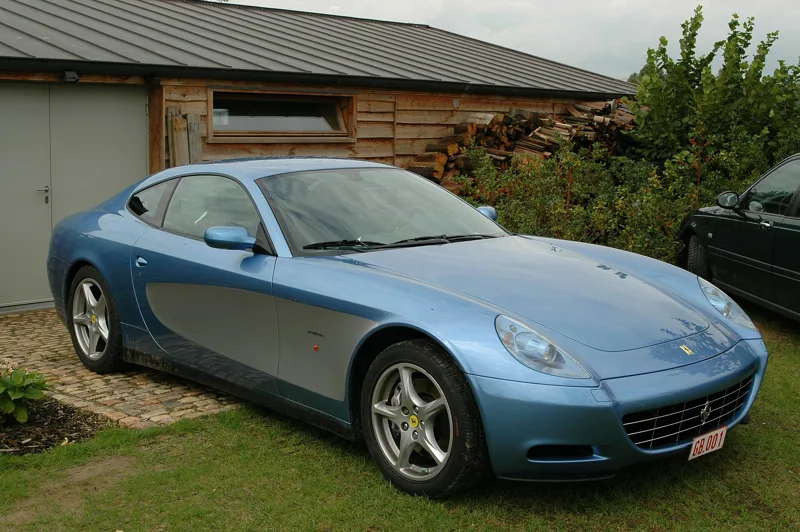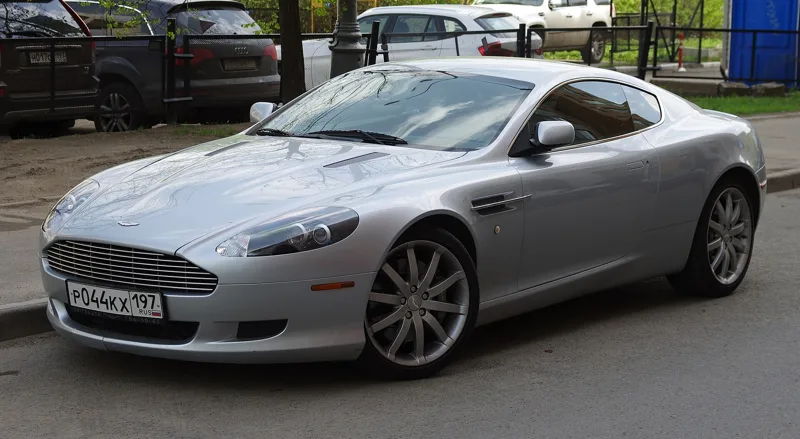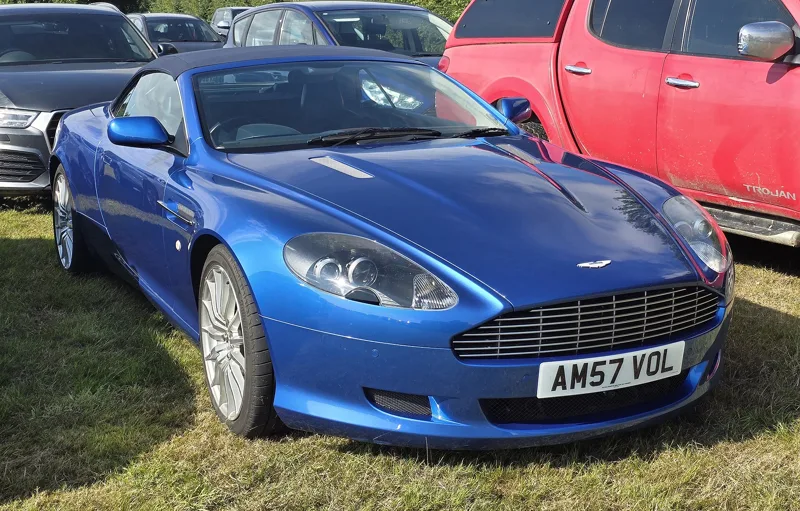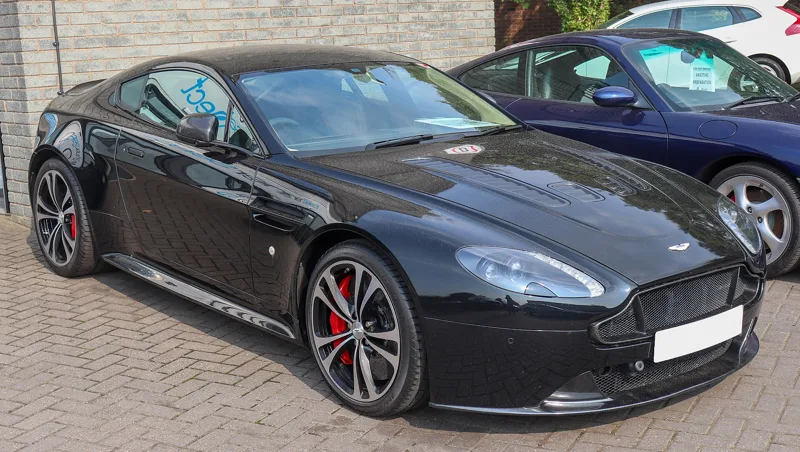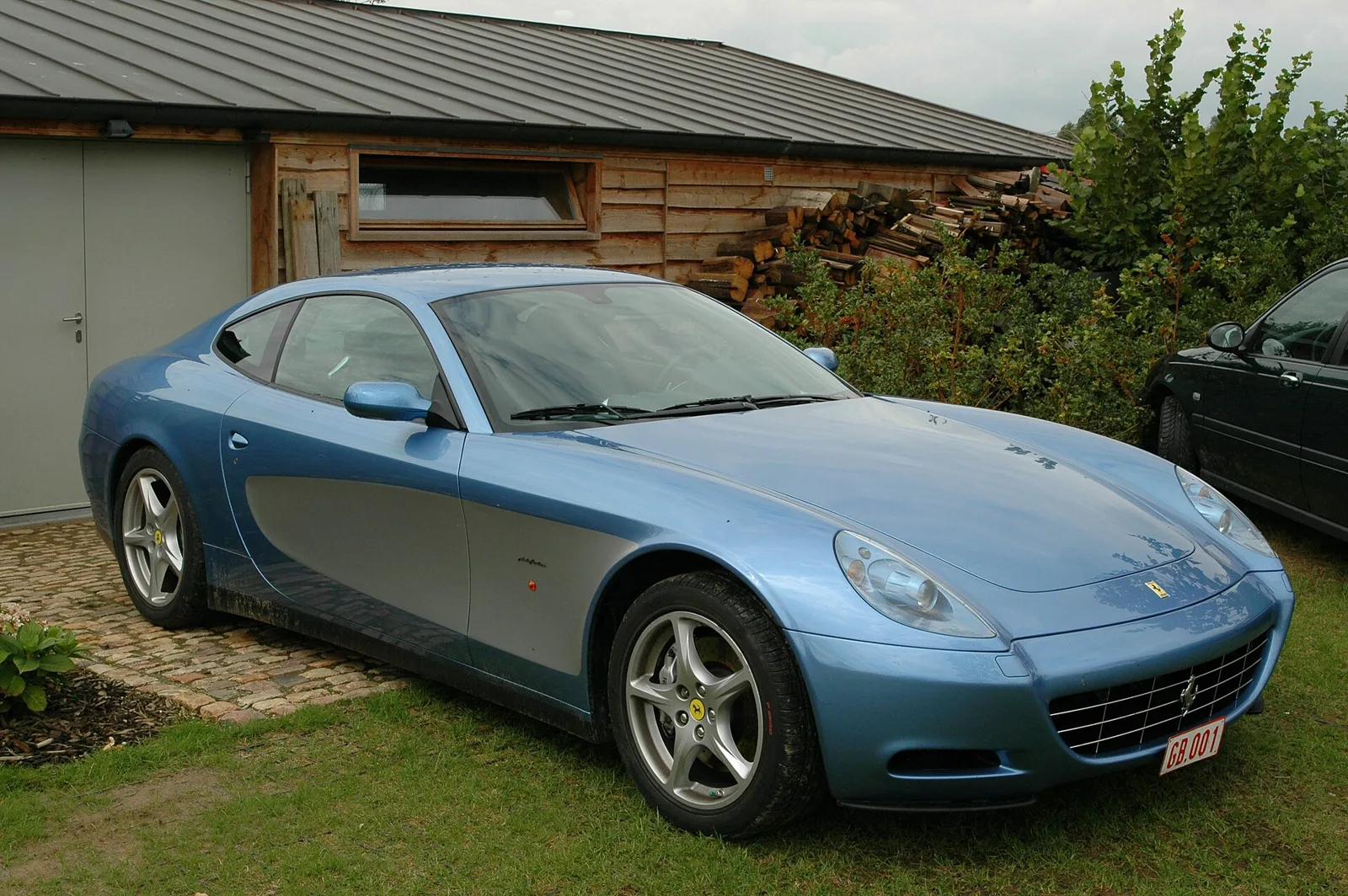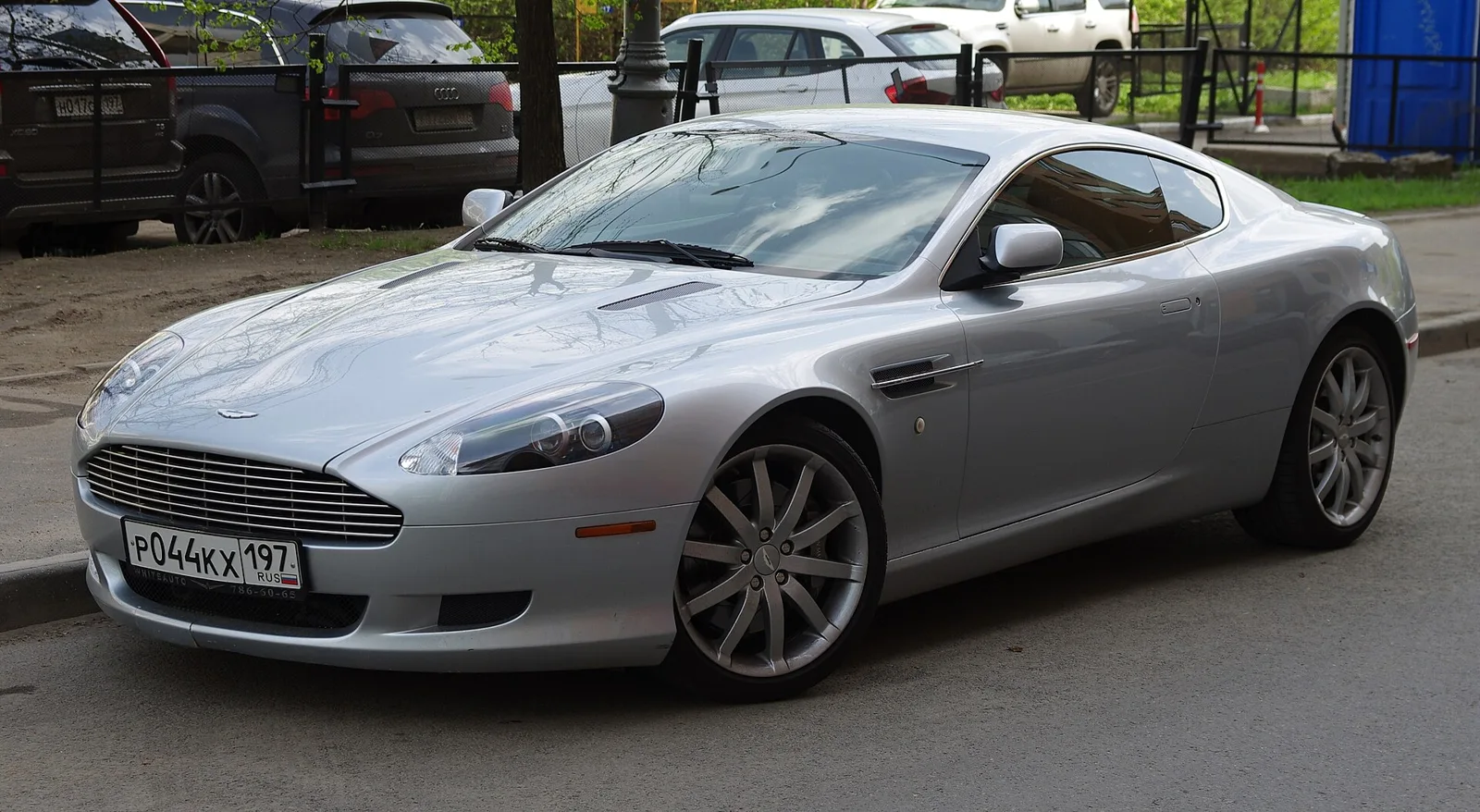
The DB9 was a two-seat British grand tourer with a convertible option, while the 612 was a Ferrari 2+2 with rear seats adults could use.
The Aston Martin DB9 was a two-door V12 grand tourer built at Gaydon from 2004 to 2016, with a Volante convertible from 2005. The Ferrari 612 Scaglietti was a 2+2 V12 coupe built from 2004 to 2011. Both cars used V12 engines and took the grand tourer role seriously.
The Aston Martin DB9 and the Ferrari 612 Scaglietti were both V12 grand tourers from makers that shared a little history through Ford ownership. The DB9 came out of Gaydon in Warwickshire and was a two-door coupe with a convertible Volante. The 612 came out of Maranello and Modena as a 2+2, with rear seats adults could actually use.
Where did the DB9 and 612 come from?
The DB9 followed the DB7, which Aston Martin built from 1994 to 2004. It was designed by Ian Callum and Henrik Fisker, debuted at the Frankfurt Motor Show in September 2003, and reached series production at Gaydon in January 2004.
The Ferrari 612 Scaglietti was built from 2004 to 2011. It was meant to succeed the smaller 456, and its larger size made it a true four-seater with adequate space for adults in the back. Ferrari's Type F137 was made at the Carrozzeria Scaglietti plant in Modena before the cars went to Maranello for the V12 and interior.
The name itself has a history. DB stands for David Brown, who ran Aston Martin from 1947 until 1972.
Two V12 grand tourers from neighbouring rival makers, one a two-seat British coupe and the other a Ferrari 2+2 that could carry adults in the back.
Why did the DB9 skip the DB8 name?
The DB9 succeeded the DB7, but Aston Martin did not name it DB8. Reports indicated that the company feared the name would suggest a V8, and the DB9 used a V12. The company also believed that DB8 would suggest a progressive evolution, when the DB9 was an entirely new car.
The DB7 had been the best-selling Aston Martin model in the company's history, with about 7,000 examples built, until the DB9 overtook it. The DB7 Vantage, added in 1999, used a V12 developed by Ford in the United States, and it quickly took sales from the six-cylinder model. The DB7 was the only Aston Martin to use a steel monocoque, and Jaguar designed it.
How was the DB9 built?
Ford invested heavily in engine and structural technology for the project, which created a new platform. At launch, Aston Martin planned to produce between 1,400 and 1,500 cars a year. That vertical/horizontal platform later underpinned most mass-produced Aston Martins from 2003 to 2016.
The DB9 used Aston Martin's vertical/horizontal platform with extensive aluminium and composite construction. The bonded aluminium structure gave more than double the torsional rigidity of its predecessor while being 25 per cent lighter.
The 612's large side scallops and headlights paid homage to the 375 MM built in 1954 for the director Roberto Rossellini, who commissioned it for his wife, Ingrid Bergman.
The 612 was Ferrari's second all-aluminium car, after the 360 Modena. Its space frame was made in collaboration with Alcoa, from extrusions and castings, and the aluminium body was welded on. The 612's chassis later formed the basis of the 599 GTB.
Aston Martin tested its prototypes heavily, amassing more than 1,000,000 miles (1,600,000 km) across Belgium, Italy, Germany and the United Kingdom, along with Death Valley, Sweden's Arctic Circle and New Zealand. Three of the cars were retained and appeared in the film Casino Royale in 2006.
How much power did each car make?
The DB9 used a 5.9-litre V12 producing 456 PS (335 kW; 450 hp) at 6,000 rpm and 570 N-m (420 lb-ft) of torque at 5,000 rpm. It reached 97 km/h (60 mph) in 4.7 seconds and had a top speed of 299 km/h (186 mph).
Under the bonnet, the 612 had a 5,748 cc V12 shared with the 575 Superamerica, and it had a compression ratio of 11:1. It reached 320 km/h (199 mph) and got from 0-100 km/h (62 mph) in four seconds.
The DB9's gearbox was either a six-speed Graziano manual or a six-speed ZF Touchtronic automatic with paddles, and the automatic lifted the 0-97 km/h time to 4.9 seconds without changing the top speed. The 612 offered a six-speed manual or the F1A automated manual, which was a refined version of the 360's F1 transmission.
How did each car change over its life?
The DB9 had three updates. The first two, in 2008 and 2010, brought minor changes to lights, engine and interior. In 2008 the V12 gained 20 hp (15 kW) through increased compression and a deeper sump, and the top speed rose to 306 km/h (190 mph). The 2008 changes also revised the wheels and gave the grille new elements.
The 2012 facelift was the most substantial. Its enlarged headlight clusters with bi-xenon lights and LED strips, a new five-bar grille and a rear spoiler integrated into the boot lid gave the car a new look. The V12 was raised to 517 PS (380 kW; 510 hp), and 0-97 km/h took 4.5 seconds.
The 612's own changes were smaller. From 2006 the HGT-S and HGT-C packages added new shock and gearbox calibration, and the HGT-C added carbon ceramic brakes. In 2007 Ferrari offered the SuperFast robotic gearbox and an electrochromic glass roof.
What about the cabin and luggage?
Inside, the DB9 was upholstered in leather with walnut trim, and its design drew on the 2001 Vanquish. Aston Martin replaced the Vanquish's red starter button with a clear glass button engraved with the brand name, which lit blue with the ignition and red when the engine ran.
Its boot held 187 litres in the coupe and 136 litres in the Volante. A seating package that removed the back seats and fitted lighter Kevlar and carbon fibre front seats saved 17 kilograms (37 lb).
Ferrari's 612 was the larger car in the pair, a true 2+2 that could carry adult passengers. Its rear seats were usable rather than storage space, which made it a different sort of grand tourer from the DB9's two-seat cabin with a stowage area behind.
Which special editions did each car get?
The DB9 Volante arrived in February 2005, after its debut at the Detroit Auto Show in January 2004. It had reinforced windscreen pillars and two deployable hoops behind the rear seats for rollover protection.
The 612 had a wider range of one-offs. The 612 Sessanta was a 60-unit anniversary model from 2007, and the Pebble Beach Bicolore was a one-off two-tone car. The GP Berne Edition used the HGTC package and carbon-ceramic brakes, and only nine were built.
Pininfarina built the 612 Kappa as a one-off for the New York collector Peter S. Kalikow, and its hood scoop, personalised door handles and electrochromic sunroof made it unique. The Italdesign GG50 concept of 2005 was a 612 with folding rear seats and a tailgate.
Ferrari also made a Russian Limited Edition, unveiled in December 2007. Only five were built, each finished in grey with a brown interior.
The Cornes 30th Anniversary Edition was a 20-unit model for Japan, unveiled in June 2006 with an MSRP of 33,980,000 yen. Its standard equipment included the HGTC package and mesh grille inserts.
The GG50 was designed by Giugiaro himself to mark his 50th anniversary as a car designer. Its folding rear seats and tailgate made entry and exit easy, and the roofline gave rear passengers more headroom.
How did the DB9 and 612 perform on the road?
The DB9's design was widely praised, though reviewers criticised its handling and limited cargo capacity. Aston Martin's 2008 changes improved the handling and softened the ride at low speed by swapping in Bilstein dampers.
A 2010 facelift, adjusted by Marek Reichman, refreshed the front bumper, gave the car clear tail-lights and more defined front wings, and added a tyre-pressure monitoring system and a Double Apex aluminium trim finish. Buyers could also upgrade to a Bang and Olufsen stereo. Reichman described the car as beautiful but subtle rather than attention seeking.
Two plants made the 612. The body came from Ferrari's Carrozzeria Scaglietti plant in Modena, then went to Maranello, where the V12 and the interior were fitted.
From early 2008, the 612 was sold only through Ferrari's One-To-One programme, unveiled at Geneva. Clients hand-picked options from leather swatches to brake calipers, and the programme was later extended across the Ferrari range.
Rear-wheel drive combined with a front mid-engine layout improved the DB9's weight distribution, and its gearbox sat at the rear behind a carbon-fibre tail shaft.
The 612 faced two recalls. In 2008 Ferrari recalled several hundred 2005 to 2007 cars because a clutch sensor in the F1 transmission could fail in heat, and a 2022 recall affected around 23,000 road cars including the 612, over a brake fluid reservoir cap.
Gaydon built the DB9 as its first model. Aston Martin's chief executive Ulrich Bez believed the company needed to be more visible and build more cars, and the DB9 was the vehicle that aimed to do it.
Aston Martin DB9 and Ferrari 612 Scaglietti side by side
| Feature | Aston Martin DB9 | Ferrari 612 Scaglietti |
|---|---|---|
| Production | Coupe from 2004, Volante from 2005, to 2016 | 2004 to 2011 |
| Body | Two-door coupe and convertible | Executive 2+2 coupe |
| Engine | 5.9-litre V12, 456 PS (335 kW; 450 hp) | 5,748 cc V12 shared with the 575 Superamerica |
| Top speed | 299 km/h (186 mph) | 320 km/h (199 mph) |
| 0-97 km/h (60 mph) | 4.7 seconds | About 4 seconds to 100 km/h (62 mph) |
| Gearbox | Six-speed manual or six-speed Touchtronic automatic | Six-speed manual or F1A automated manual |
| Structure | Bonded aluminium, vertical/horizontal platform | Aluminium space frame made with Alcoa |
| Boot | 187 litres coupe; 136 litres Volante | None given |
| Production | None described | 3,025 cars |
| Manual versions | Available on the DB9 | 199 cars with the manual |
| Late update | 2012 facelift, 517 PS (380 kW; 510 hp) | HGT-S and HGT-C packages from 2006 |
| Recalls | None described | 2008 clutch sensor; 2022 brake fluid reservoir cap |
| Successor | Platform reused for later Aston Martins | Ferrari FF from 2011 |
Which buyer suits each car?
A buyer who wanted a two-seat grand tourer with a British character, a convertible option and a choice of manual or automatic. The 612 suits a buyer who needed rear seats that could take adults and wanted a Ferrari V12 with the option of a bespoke build.
Neither car wins outright on the facts given. The DB9 was praised for design but criticised for handling and luggage space, while the 612 was the larger car and offered the more extensive personalisation.
A used buyer should check each car's recall history and the transmission. The 612's recalls concerned the F1 gearbox and brake fluid, and the DB9's 2008 update changed its dampers.
What became of the DB9 and 612?
The DB9 ended in 2016 after its run, and its vertical/horizontal platform was adapted for the Rapide, DBS, Vantage, Virage, the 2012 Vanquish and the Lagonda Taraf.
The 612 was replaced by the Ferrari FF in 2011. Its chassis had already formed the basis of the 599 GTB, which carried Ferrari's grand tourer lineage forward.
Both cars leave a record of limited editions and one-offs. The DB9 had the GT edition, which raised output to 547 PS (402 kW; 540 hp), and the 612 had its Sessanta, Kappa and GG50 variants.