An all-aluminium 2+2 grand tourer with a 5.7-litre V12, a choice of manual or paddle-shift gearbox and a bespoke ordering programme.
The Ferrari 612 Scaglietti was an executive 2+2 coupe grand tourer built by Ferrari from 2004 to 2011. Its 5,748 cc V12 pushed the car to 320 km/h (199 mph) flat out, and 0-100 km/h (62 mph) took 4 seconds. The car was replaced by the Ferrari FF in 2011, and 3,025 were produced.
The Ferrari 612 Scaglietti was a large grand tourer that Ferrari built from 2004 to 2011 as the replacement for the smaller 456. It seated four adults, carried a 5.7-litre V12 and was the second all-aluminium car the company had made. Buyers could choose a manual gearbox or a paddle-shift automated unit, and in later years they ordered the car through a bespoke programme.
Where did the 612 Scaglietti come from?
The 612 was built to replace the 456, and it was a larger car than its predecessor, making it a true four-seater with room for adults in the back. Ferrari built it between 2004 and 2011, with the body made in Modena and the car finished at Maranello.
The executive 2+2 layout was the defining point of the car. Ferrari sold it as an executive coupe grand tourer, and the extra length gave the rear seats enough room for grown adults rather than occasional passengers.
The styling leaned on history. Ferrari modelled the large side scallops and the headlights on the 375 MM of 1954, a car ordered by the film-maker Roberto Rossellini for his spouse, Ingrid Bergman. Those two features are the easiest way to spot the link between the two cars.
An all-aluminium four-seat grand tourer with a 5.7-litre V12, sold until the FF arrived in 2011.
What engine did the 612 use?
The 612 used a 5,748 cc V12 with a compression ratio of 11:1, and the same engine was fitted to the 575 Superamerica. Ferrari quoted a maximum of 320 km/h (199 mph), and the sprint from 0-100 km/h (62 mph) took 4 seconds.
The name suggests a six-litre engine, but the capacity is 5,748 cc (5.7 L). That gap between badge and capacity is worth keeping in mind when comparing the car with other large Ferrari V12s of its era.
The compression ratio and the quoted top speed are the headline engine figures for the car. They sit alongside the 4-second 0-100 km/h time, which completes the picture of the car's output.
Which transmissions did the 612 offer?
The 612 could be ordered with a 6-speed manual or the F1A, a 6-speed automated manual with paddle shifts. The F1A was a refined version of the F1 gearbox used in the 360, and it was built by Graziano Trasmissioni. Only 199 cars were made with the manual.
The split is stark. Of the 3,025 cars produced, 199 had the manual, and 60 of those were destined for the US market. Most buyers therefore took the paddle-shift car, which made the manual one of the rarer configurations of the model.
Choosing between the two was a decision about how the car would be driven. The manual suited a driver who wanted to work the lever personally, while the F1A offered quick shifts without a clutch pedal.
What were the HGT-S and HGT-C packages?
From 2006, cars built before the One-To-One programme were available with the Handling Gran Turismo Sport (HGT-S) or Handling Gran Turismo Competizione (HGT-C) package. Both packages changed the shock absorber and gearbox calibration, and the gearbox ran 150ms quicker because of it.
The gearbox also gained a mode called F1-S in place of the regular automatic mode. Both packages included the factory sport exhaust for a more marked sound and polished exhaust grilles, along with 19-inch modular wheels and painted brake calipers.
The HGT-C wheels were polished, and the HGT-C was the only one of the two packages to add carbon ceramic brakes. Beyond that, the two packages were the same.
Chassis and body construction
The 612 was Ferrari's second all-aluminium car, following the 360 Modena. Its space frame was made in collaboration with Alcoa from extrusions and castings, and the aluminium body was welded onto it. The frame later became the starting point for the 599 GTB, the flagship grand tourer that followed.
Building the frame from extrusions and castings is what the term space frame describes. The structure gives the car its basic shape and strength, and the aluminium body panels are then welded onto it, so the frame and the body work together rather than as separate units.
Production followed a two-site route. The body was built at the Carrozzeria Scaglietti plant in Modena, the former home of the coachbuilder who gave the car its name. The finished body then travelled to Maranello, where the V12 and the interior were installed.
What was the One-To-One programme?
One-To-One was Ferrari's personalisation programme, unveiled at the Geneva Motor Show in 2008. From that point the 612 was sold only through this special-order process, which let clients choose options ranging from leather swatches to brake calipers. The programme later spread across the whole Ferrari range.
The programme grew out of the Carrozzeria Scaglietti Programme, which already offered a catalogue of options. One-To-One took that catalogue a step further, and Ferrari eventually applied it to the entire range rather than the 612 alone.
Before the programme arrived, Ferrari had already announced two 612 upgrades in 2007: a SuperFast robotic F1 gearbox and an electro-chromatic glass roof that could change its tint on demand. Overall production of the 612 reached 3,025 cars.
Which special editions were made?
Ferrari made several limited and one-off versions of the 612, including the 60-unit Sessanta of 2007, the 20-unit Cornes 30th Anniversary Edition and the Russian Limited Edition with 5 units. The Pebble Beach Bicolore, the GP Berne Edition and the Kappa were one-offs or small runs as well.
Sessanta (2007). The name is Italian for sixty, and the limited run of 60 units marked the company's 60th anniversary. The kit ran to 19-inch forged aluminium wheels, black chrome tailpipe finishers and the F1 automated gearbox. Other additions were a three-position electrochromic roof, a start/stop button on the steering wheel, a Bose sound system and two-tone paint.
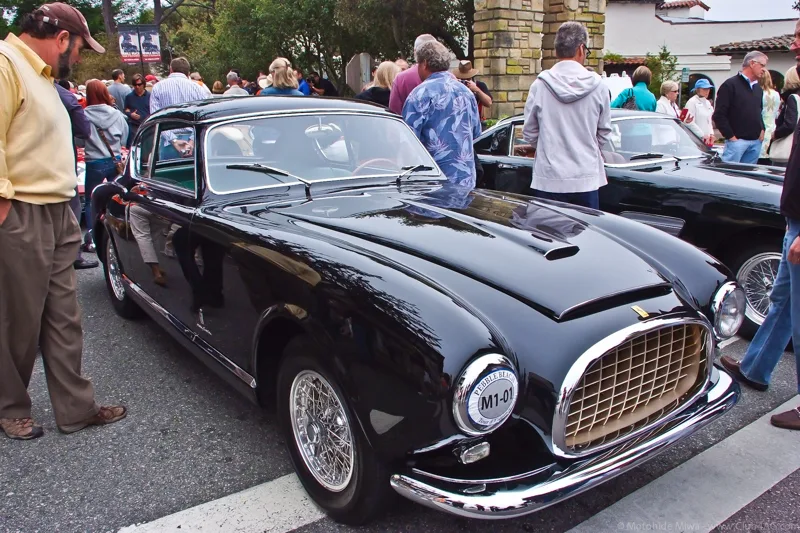
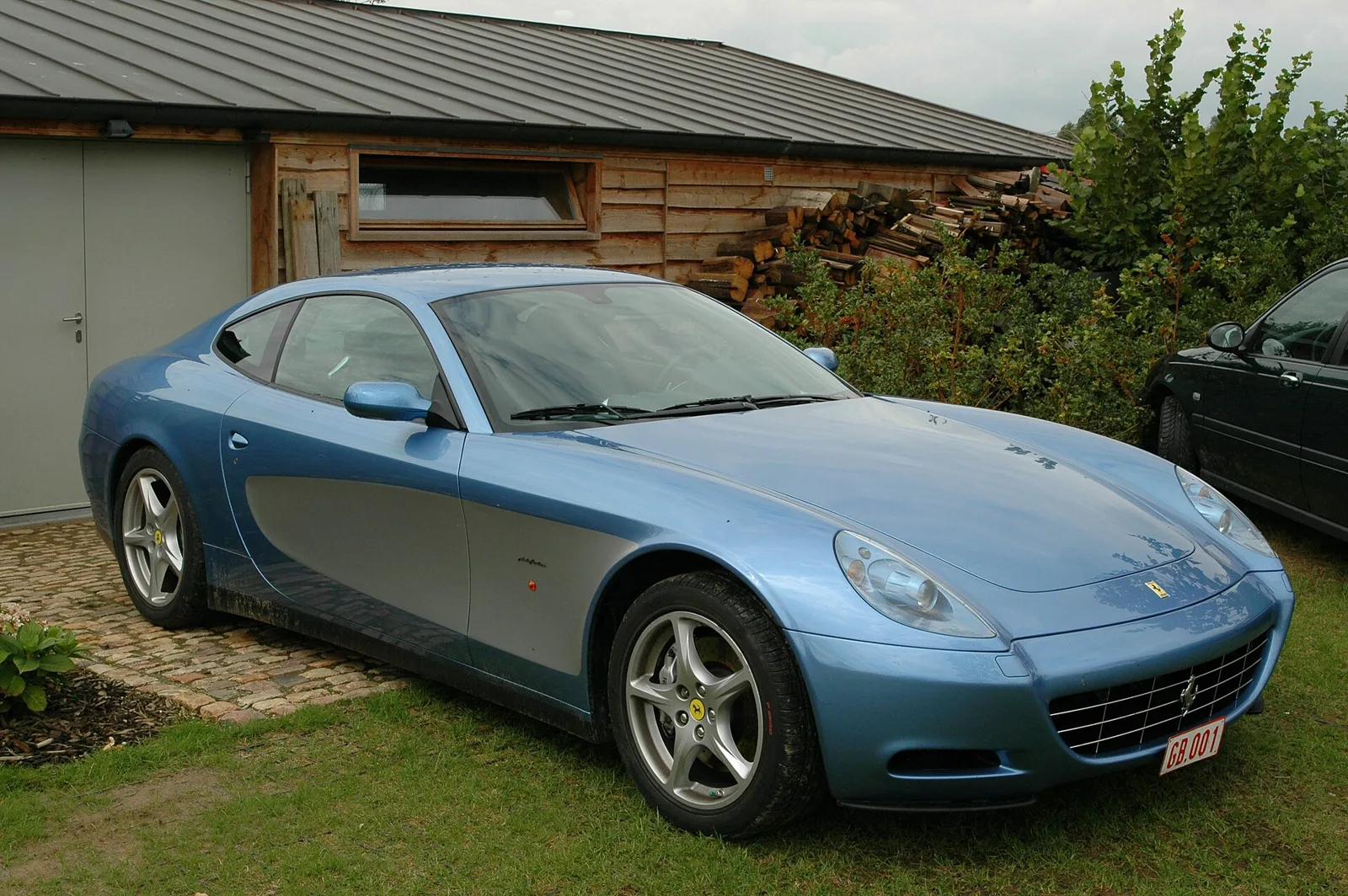
Pebble Beach Bicolore. This one-off used Nero and Silver paint. It was displayed in August 2005 at a private event during the Pebble Beach Concours d'Elegance, and press coverage later used the name 'Ferrari 612 Pebble Beach' for the car.
Cornes 30th Anniversary Edition (2006). A run of 20 units for Japan, marking the thirtieth anniversary of the importer Cornes and Co. bringing Ferrari cars into Japan. It came with the HGTC package, Blu Cornes paint, a carbon filler cap and mesh inserts for the grilles. The MSRP was 33,980,000 Yen ($304,000 USD).
GP Berne Edition (2006). 9 cars in dark grey were built to celebrate Ferrari's anniversary in Switzerland, unveiled at a Montreux event on 22 July 2006. They carried the HGTC handling package with carbon ceramic brakes, bi-colour paint and a red interior with grey trim. The MSRP was CHF425,000.
Kappa (2006). Pininfarina built this one-off for Peter S. Kalikow, who once chaired the New York Metropolitan Transport Authority and was a noted Ferrari collector. It was unveiled at the Villa d'Este Concours on 23 April 2006. Features included a functional hood scoop, air vents near the front wheels, taillights taken from the Enzo and F430, personalised door handles bearing the owner's initials and an electrochromic sunroof. At Kalikow's request, Ferrari agreed not to copy these elements in future models.
Russian Limited Edition (2007). Shown in December 2007, this batch was reserved for Russia alone, with 5 units finished in grey with a brown interior.
GG50 (2005). Italdesign Giugiaro created this concept on a 612 base to celebrate the design career of Giorgetto Giugiaro. Designed by Giugiaro himself, the fastback body had a shorter wheelbase than the donor car, folding rear seats and a tailgate for easy access, a glass roof and quad tail lamps. Its mechanicals matched a standard 612, and Ferrari supplied a rolling chassis and technical support. It debuted at the 2005 Tokyo Motor Show.
Taken together, the limited editions show how Ferrari used the 612 as a base for commemorative and client-specific cars. The Sessanta marked a company anniversary, the Cornes edition marked an importer's anniversary and the GP Berne edition marked the anniversary of the marque's presence in Switzerland. Each used the same base car, with its own paint, trim or equipment.
What recalls affected the 612?
In 2008 Ferrari issued a recall covering several hundred cars built between 2005 and 2007 that had the F1 gearbox, because a clutch sensor could malfunction from heat. In August 2022 about 23,000 road cars were recalled, including the 612, over a brake fluid reservoir cap that did not vent properly.
The 2008 fault could leave the car inoperable and could lead to a crash. It arose under normal operating conditions, so owners did not need to misuse the car for the problem to appear.
Both recalls were handled through dealers, and owners were told what to expect. The 2008 remedy dealt with a sensor, while the 2022 remedy combined a physical part change with a software warning that works as a second layer of protection.
The 2022 issue was a cap that failed to vent, creating a vacuum in the reservoir that could draw brake fluid out. If enough fluid leaked, the vehicle might lose some or all of its braking power. The remedy was a modified cap that vents correctly, plus software that gives an alternate warning if fluid levels still fall to a dangerous point. Dealers and owners were notified on September 24.
What replaced the 612 Scaglietti?
The Ferrari FF replaced the 612 in 2011, closing the run that had produced 3,025 cars. The 612's frame had earlier been the starting point for the 599 GTB, so its engineering carried on into other models in the range.
The 612 spanned 2004 to 2011, and the FF arrived at the end of that period. The FF then took the 612's place in the Ferrari line-up, so the two cars sit one after the other in the range.
What are the Ferrari 612 Scaglietti specifications?
| Specification | Detail |
|---|---|
| Type | F137, executive 2+2 coupe grand tourer |
| Production years | 2004 to 2011 |
| Predecessor | 456 |
| Successor | Ferrari FF, 2011 |
| Engine | 5,748 cc (5.7 L) V12, 11:1 compression |
| Top speed | 320 km/h (199 mph) |
| Acceleration | 0-100 km/h (62 mph), 4 seconds |
| Transmission | 6-speed manual, or F1A 6-speed automated manual |
| Chassis | Aluminium space frame made with Alcoa |
| Units built | 3,025, of which 199 had the manual |
| Sessanta | 60 units, 2007 |
| Cornes 30th Anniversary Edition | 20 units, 2006 |
| GP Berne Edition | 9 cars, 2006, MSRP CHF425,000 |
| Russian Limited Edition | 5 units, 2007 |